Lemon Scented Oils Compared: Peel, Citral and Verbena
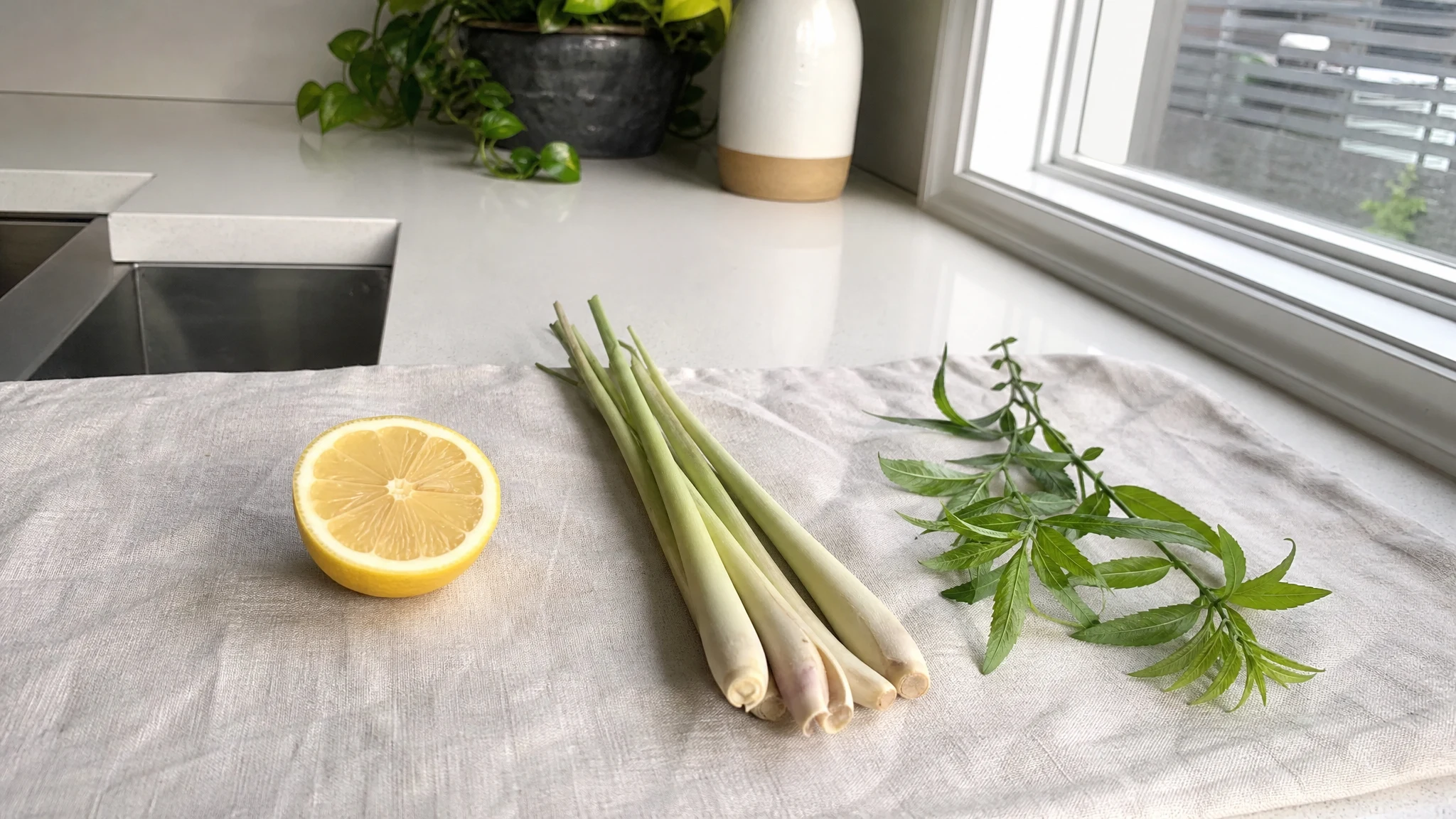
Hold a freshly cut lemon under your nose and then a stalk of lemongrass, and you will smell two different kinds of "lemon". One is the bright zest of the peel; the other is the sweeter, rounder, almost candied note of the leaf. Essential oils that get sold under the lemon banner fall into those two camps, and lemon verbena sits comfortably between them.
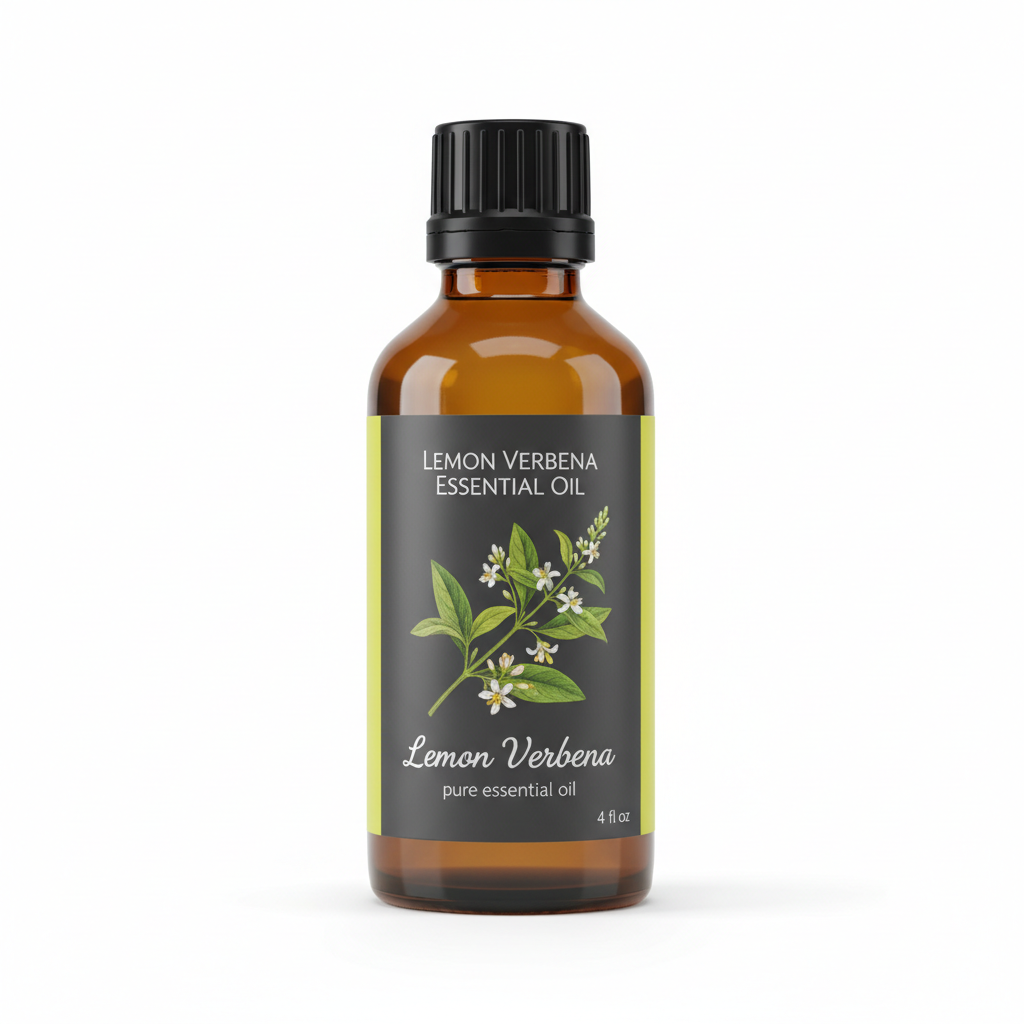
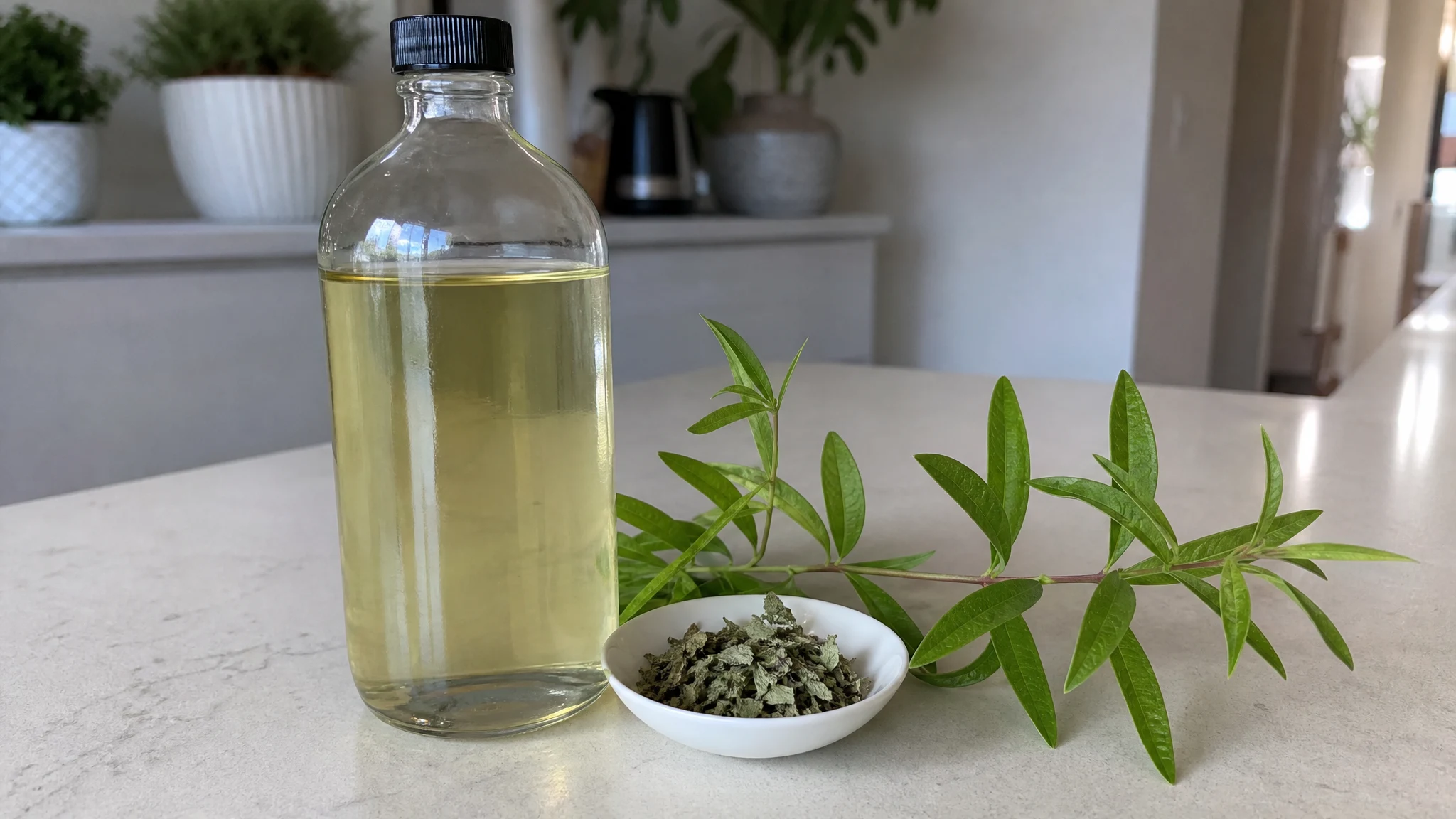
Lemon Verbena Essential Oil
Our own Lemon Verbena Essential Oil, in sizes from 0.5 oz to bulk.
From $12.99
Shop Now →Peel lemon: limonene and sparkle
Cold-pressed lemon oil comes from the rind, and it is mostly limonene. An EFSA scientific opinion on expressed lemon oil gives a specification of 60 to 73% limonene, with the two lemon-note molecules geranial and neral each sitting at only a percent or two. That is why peel oil smells sharp, zesty and clean rather than sweet. Our lemon comparison covers how the two differ in practice.
Leaf and fruit lemons: the citral family
The sweeter lemon note comes from citral, the name for the pair geranial and neral. Southwell's review of lemon myrtle calls citral the preferred source of the lemon note and considers lemon myrtle a superior source of it. Lemongrass and litsea cubeba are the other big names. One Nepali lemongrass sample measured 53.1% geranial and 36.1% neral, and a study of litsea cubeba from eight regions of China found the two together at 78.7 to 87.4%. These oils are essentially citral with a little extra, which makes them powerful, direct and a touch more "candy" than peel oil. If you are weighing lemon verbena against them, we have worked through the lemongrass, litsea cubeba and lemon myrtle comparisons one at a time.
Melissa and lemon verbena: the two that vary
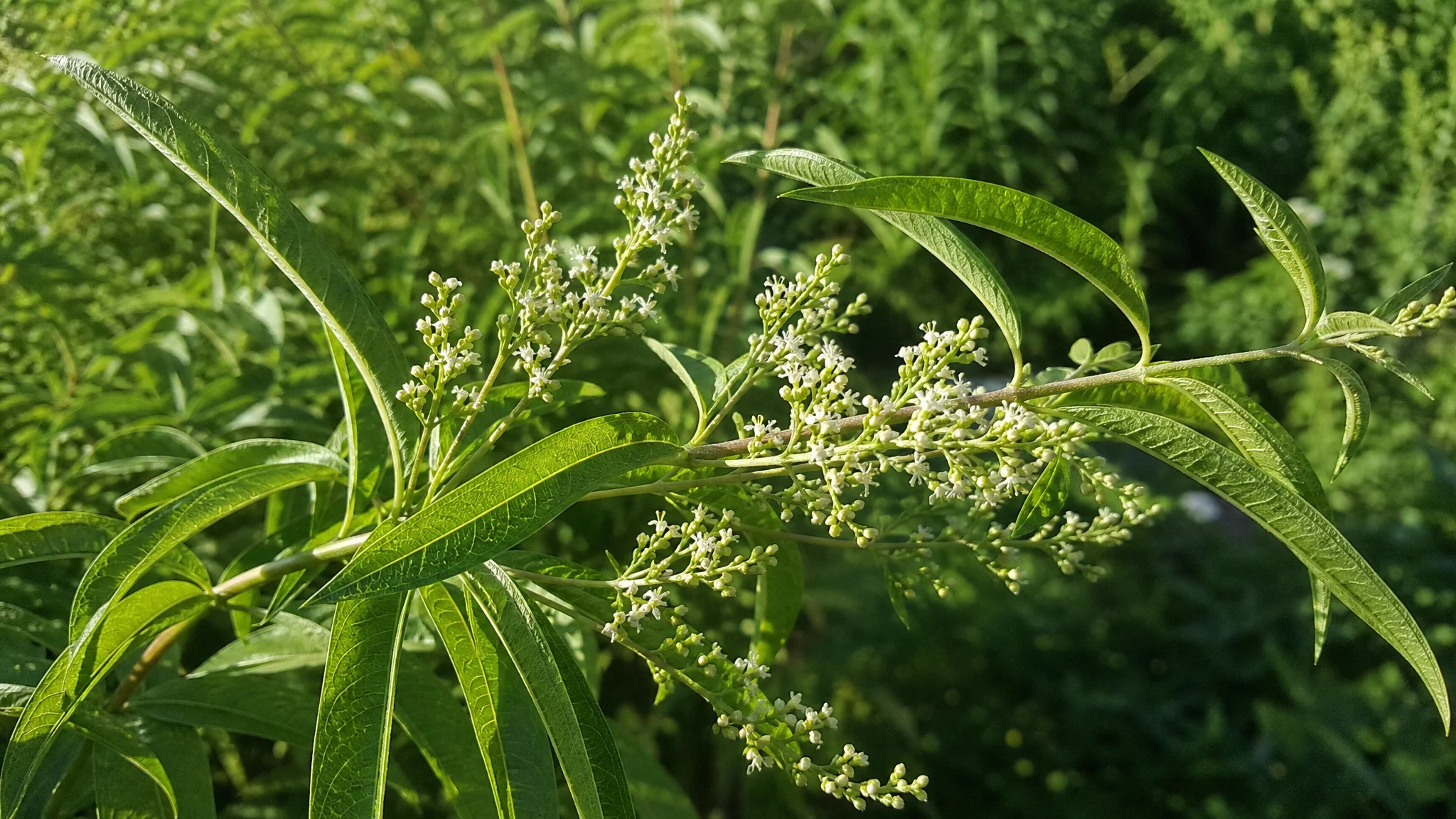
Here is what makes the last pair fun. Melissa, or lemon balm, and lemon verbena are leaf oils whose citral share depends heavily on where and how the plant was grown. A review of melissa studies reports geranial anywhere from about 6% to 51%. Lemon verbena looks similar: an Ecuadorian oil was 26.8% geranial and 21.0% neral, a Portuguese leaf oil came in around 34 to 37% for the pair, and a set of five Moroccan oils had no geranial detected at all and leaned on sesquiterpenes such as spathulenol and caryophyllene oxide instead.
So the plant name tells you about the species, and the composition report tells you about the sample. That is also why verbena is the most layered of the lemons: whatever citral it carries is softened by greener, herbal and floral company. Our scent profile follows that thread, and the melissa comparison sets the two side by side.
Why more than one lemon can be a good thing
None of these oils is the correct lemon, and we love that. A kitchen cleaner might want a snappy peel scent, while a handmade perfume calls for something more tender. Different jobs call for different lemons, and it is perfectly reasonable to keep two or three on your shelf if you make a range of things.
Where our oil fits
We describe our lemon verbena as sparkling and sweet over a soft herbal-floral heart, less acidic and more polished than lemon peel oil, and we place it in perfumery as a top-to-middle note. The Certificate of Analysis we publish for one batch records a relative density of 0.869 and a refractive index of 1.472. It does not list individual compounds, so if constituent percentages matter for what you are making, ask us in writing through the contact page before ordering, and read our guide to reading a GC-MS report so you know what to look for.
A smelling exercise for a quiet afternoon
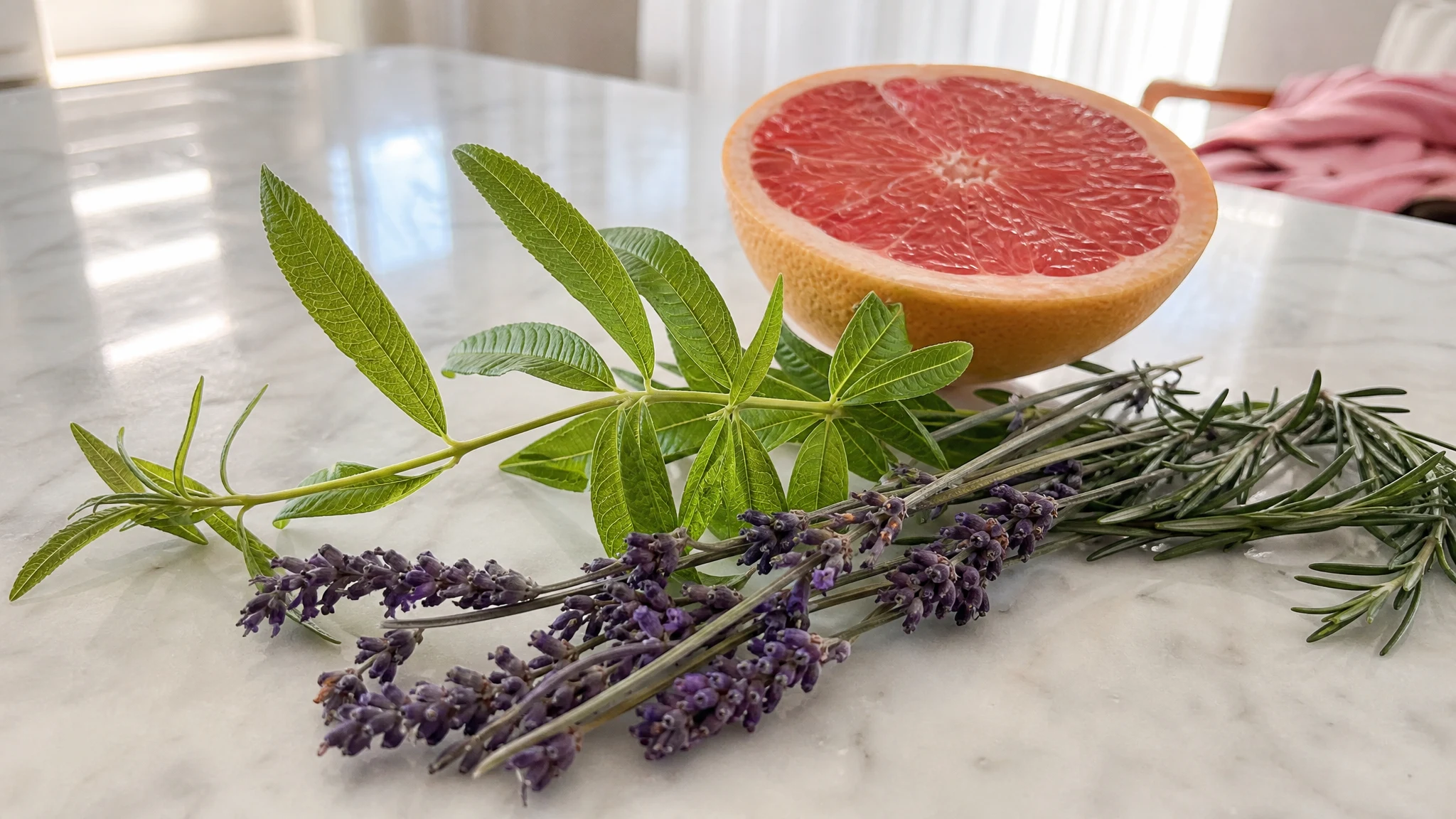
If you have a couple of these oils around, try a simple comparison. Put each on its own paper strip and write the name on the strip's end. Smell them one at a time, resting between with a breath of fresh air or a sniff of your sleeve. The peel oil will probably feel crisp and sunny, almost like cutting a lemon; the citral-rich oils will feel sweeter and more direct; and lemon verbena will feel rounder, with that herbal-floral heart showing up after a few seconds.
Write down a word or two for each as you go. You will be surprised how quickly your own vocabulary grows, and next time you choose an oil for a project you will be choosing by experience and not by a list.
Choosing the lemon for the job
- A bright, zesty top note for a clean-smelling room: peel lemon oil, from a grocery, pharmacy or craft supplier.
- The strongest, sweetest lemon note per drop: a citral oil such as lemongrass, litsea or lemon myrtle, also from a craft supplier.
- A softer, more floral, more complex lemon: lemon verbena, which is the one we make available.
One more thing to know if you plan to make products for sale. IFRA's verbena standard says verbena oils should not be used as a fragrance ingredient, and IFRA's citral standard limits the citral in a finished product by category; for body products such as oils and lotions (Category 5A) the limit is 0.15%. Our IFRA article walks through what that means, and for personal projects the safety guide is the place to begin.
All six oils can be lovely. The best way to choose is to decide first whether you want zest, sweetness or something more nuanced, and then match the oil to that.
Lemon Verbena Essential Oil
Lemon Verbena Essential Oil from our own shop, in sizes from 0.5 oz to bulk.
From $12.99
Shop Now →Sources & Further Reading
- Safety and efficacy of feed additives consisting of expressed lemon oil and its fractions from Citrus limon (L.) Osbeck and of lime oil from Citrus aurantiifolia (Christm.) Swingle for use in all animal species (FEFANA asbl), EFSA Journal, 2021.
- Backhousia citriodora F. Muell. (Lemon Myrtle), an Unrivalled Source of Citral, Southwell, Foods, 2021.
- Essential Oil Composition Analysis of Cymbopogon Species from Eastern Nepal by GC-MS and Chiral GC-MS, and Antimicrobial Activity of Some Major Compounds, Dangol et al., Molecules, 2023.
- Chemical composition of essential oils of Litsea cubeba harvested from its distribution areas in China, Si et al., Molecules, 2012.
- Melissa officinalis: Composition, Pharmacological Effects and Derived Release Systems-A Review, Petrisor et al., Int J Mol Sci, 2022.
- Chemical Profiling, Sensory Qualities, and Bioactivities of Essential Oils Obtained from Aloysia citrodora and Bursera graveolens Ecuadorian Plants Against the Mosquito Aedes albopictus (Skuse) (Diptera: Culicidae), Parichanon et al., Insects, 2025.
- Volatile Compounds and Biological Activity of the Essential Oil of Aloysia citrodora Paláu: Comparison of Hydrodistillation and Microwave-Assisted Hydrodistillation, Sprea et al., Molecules, 2023.
- Chemical Composition and Cytotoxic and Antibacterial Activities of the Essential Oil of Aloysia citriodora Palau Grown in Morocco, Oukerrou et al., Adv Pharmacol Sci, 2017.
- Verbena oil and absolute (Lippia citriodora Kunth.), IFRA Standard, 2020 (Amendment 49).
- Citral, IFRA Standard, 2020 (Amendment 49).