Lemon Verbena Oil: Which Size and Paperwork Fit Your Job
The smartest way to buy lemon verbena oil starts before you open a shop page, with a question: what are you going to make with it? A bottle for a room diffuser, a body oil for yourself, a candle line you plan to sell and a wholesale order all call for different paperwork and different amounts. Sort out the job first and the rest of the decision gets easy.
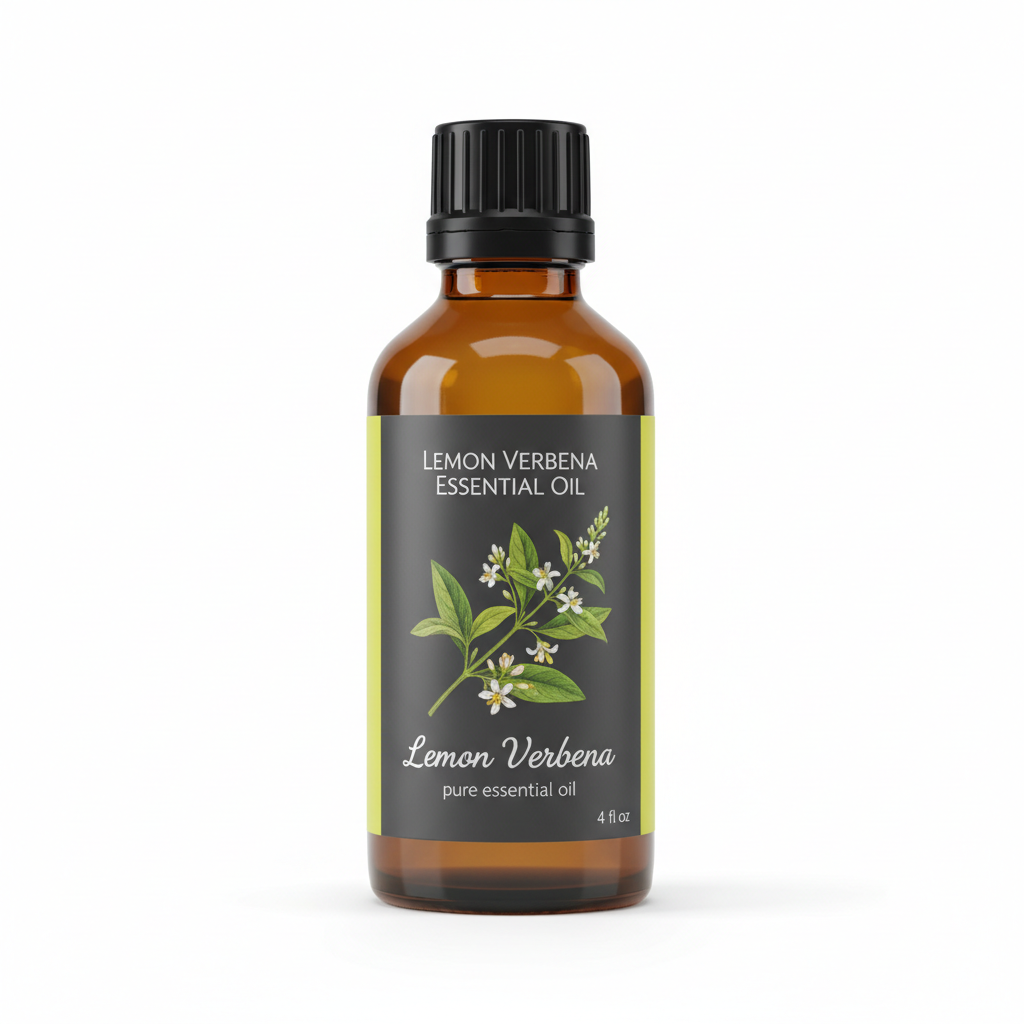
Lemon Verbena Essential Oil
Our own Lemon Verbena Essential Oil, in sizes from 0.5 oz to bulk.
From $12.99
Shop Now →For a diffuser or a room scent
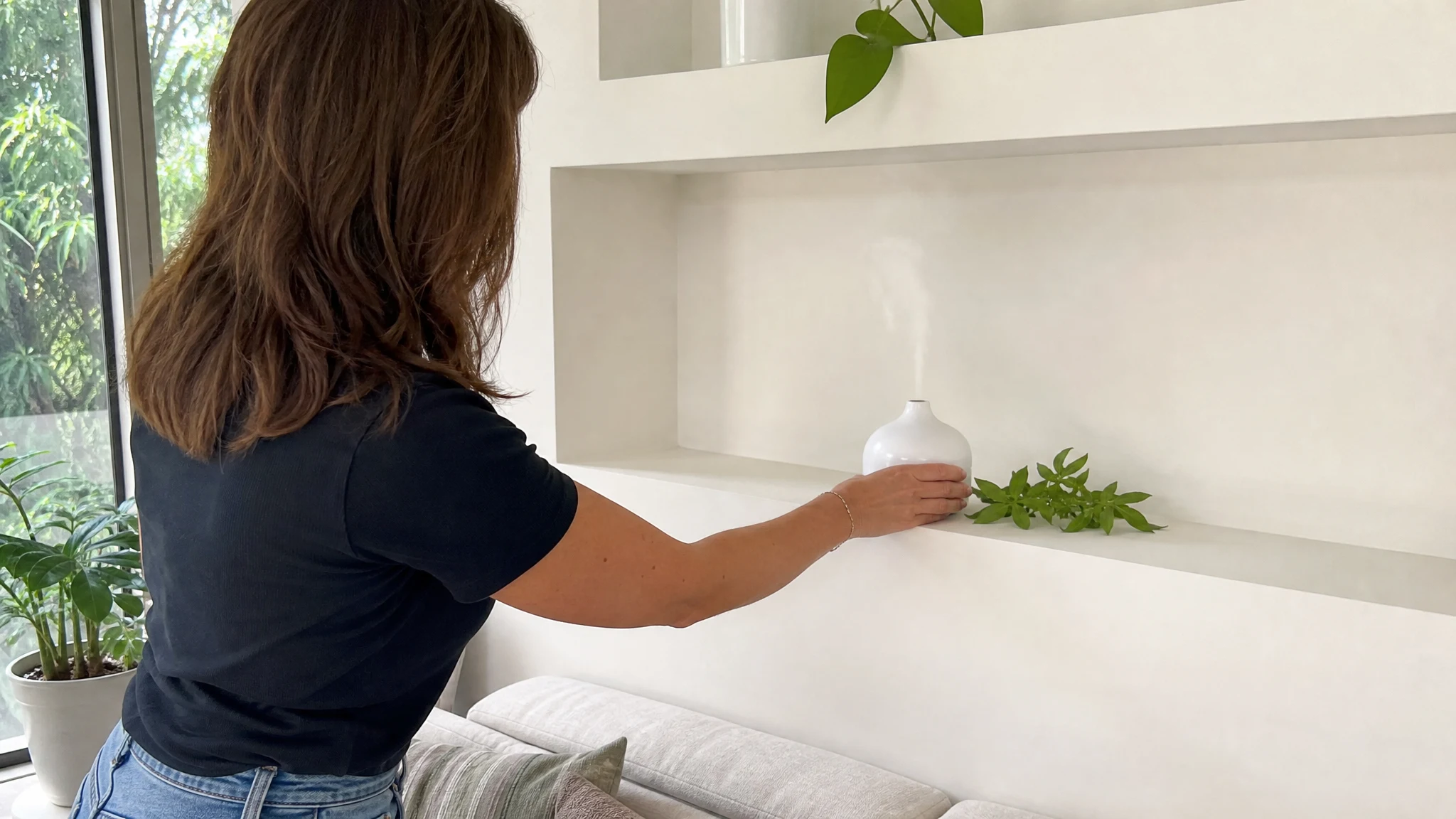
This is the lowest-stakes purchase, and a small bottle is the sensible one. Our smallest retail size is 0.5 oz, which at the 0.869 relative density on the Certificate of Analysis for one of our batches is about 12.9 g of oil, or nearly 300 drops on the usual 20-drops-to-the-millilitre convention. Droppers vary, so weigh if the number matters. IFRA's guidance puts fragranced oil for reed diffusers and lamp rings in Category 10A and candles in Category 12 (IFRA guidance, 51st Amendment), and our diffuser article covers the practical side. For this job, the plant name and plant part from the seller are enough.
For a skin product you make for yourself
Here the safety record matters more than the scent. Our oil is sold neat, and we suggest 0.5% to 2% in a carrier with a patch test first. IFRA's Standard 083 says verbena oils should not be used as a fragrance ingredient, citing sensitizing and phototoxic potential (IFRA Standard 083), so we start at the bottom of our own range and suggest you do too. At 20 drops to the millilitre, 0.5% in an ounce of carrier is about 3 drops. Our low-dose body oil and the skin article are worth reading first. Reactive or damaged skin, or skin belonging to a child or a pregnant person, is a question for a dermatologist, pediatrician or midwife, not a shopping list.
For a product you will sell
Here a bit of homework pays for itself. Three things shape the decision.
- IFRA. The verbena Standard puts the oil under a prohibition for use as a fragrance ingredient and gives category limits only for the absolute. It is voluntary for non-members, but a supplier or retailer may ask for conformity with it. Our IFRA article goes line by line.
- Citral. The oil carries citral in amounts that vary by sample, and IFRA's citral Standard caps it by category (IFRA Standard on citral).
- Labelling. In the EU, fragrance allergens must be declared above 0.001% in leave-on and 0.01% in rinse-off products (AGES). The FDA, by contrast, has no regulatory definition of "essential oils" and allows fragrance to be listed simply as "Fragrance" (FDA).
A regulatory consultant, not a bottle label, settles what you can sell where. If you need documents for your product, ask us in writing through the contact page before you buy and keep the reply. If the document you need exists only for the absolute, a perfumery supplier is where to look; our comparison of oil, absolute and hydrosol explains the difference.
For wholesale or private label
Our bulk page lists 5 lb and 25 lb pails and 100 lb and 400 lb drums, offers sample bottles, and says larger quantities can be arranged. The sensible sequence is to order a sample, try it in your own product, put your documentation questions in writing, and only then commit to a pail. The Certificate of Analysis we have for one batch lists appearance, smell, density and refractive index, so any composition or testing question for a bulk order should be asked in writing first. Current terms are on the bulk page and the wholesale page.
The honest first bottle
If we could give one piece of advice to someone about to order for the first time, it would be to start smaller than feels exciting. A bottle is easier to love when it gets used up, and a half-empty one in the back of a cupboard is a quiet disappointment. Smell it, make one thing, and see whether you reach for it again. If you do, the next order will be easier because you will know your own habits.
Questions that apply to every purchase
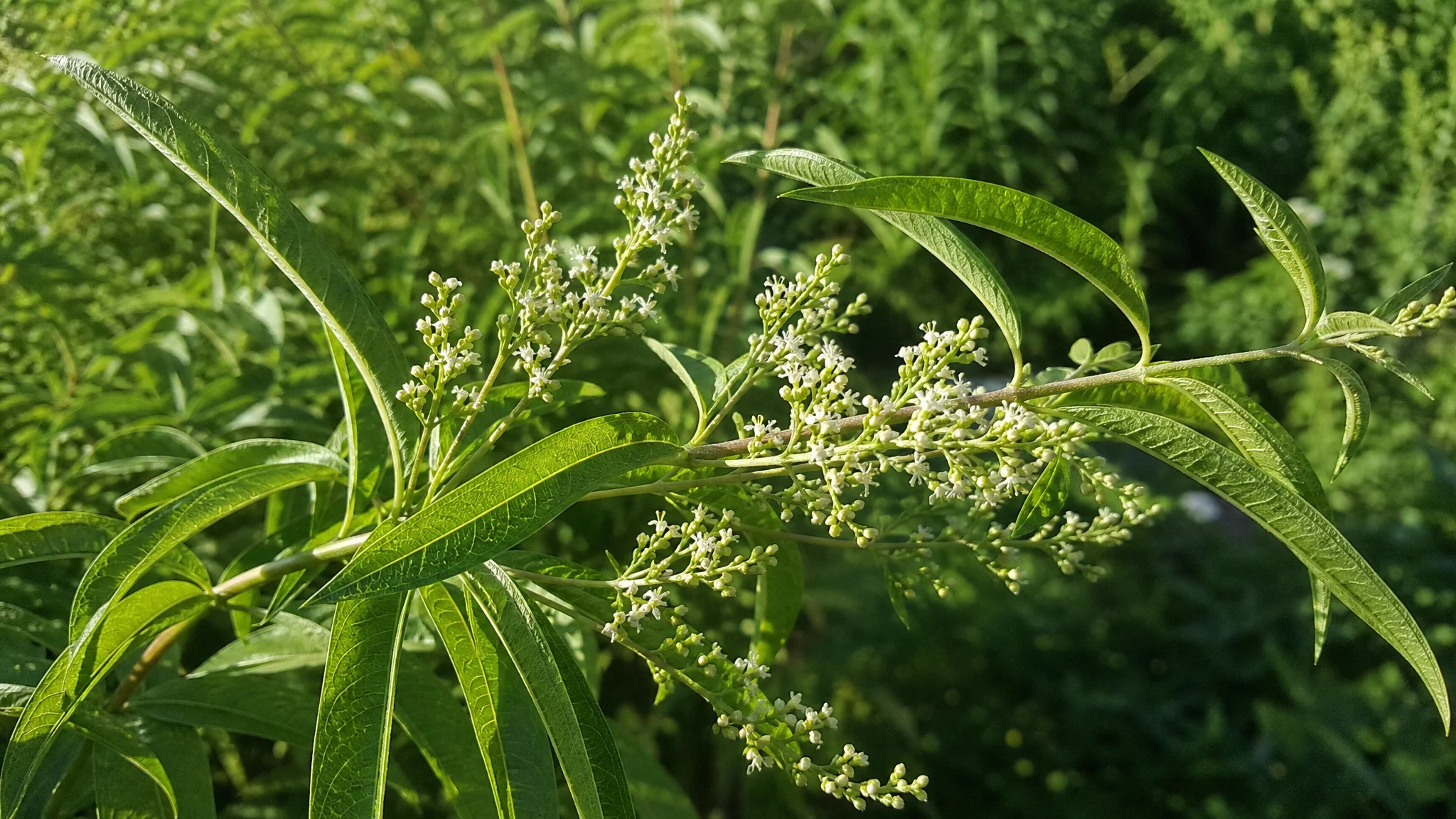
Ask for the Latin name and plant part. The accepted name is Aloysia citrodora Paláu, and Lippia citriodora and Aloysia triphylla are listed as synonyms (GBIF), so any of the three can be correct. Ask for a batch number that matches your bottle, and for a GC-MS report if composition matters to you; the published papers show wide natural variation, with geranial at 18.7% in a Portuguese oil and 26.8% in an Ecuadorian one, and none detected at five Moroccan sites (Sprea et al., 2023; Parichanon et al., 2025; Oukerrou et al., 2017). For shelf life, we say typically 1 to 2 years in a cool, dark place.
How much to buy comes down to simple arithmetic. A 0.5 oz bottle holds roughly 296 drops, and a one-ounce batch of body oil at 0.5% uses about 3 of them, so one bottle covers close to a hundred batches on paper. For a home project, smaller sizes are plenty, and larger ones make sense once a product is tested and its paperwork is in order. Our first-bottle article works through the sums, and the online buying checklist covers the seller's side.
Match the purchase to the job first and check the paper second, and you will buy the right amount of the right thing.
Whatever you decide, let the project lead and the paperwork follow, and the rest tends to fall into place.
Lemon Verbena Essential Oil
Lemon Verbena Essential Oil from our own shop, in sizes from 0.5 oz to bulk.
From $12.99
Shop Now →Sources & Further Reading
- IFRA. IFRA Standard: Verbena oil and absolute (Lippia citriodora Kunth.), 2020 (Amendment 49). IFRA_STD_083
- IFRA. IFRA Standard: Citral, 2020 (Amendment 49). IFRA_STD_021
- IFRA. Guidance for the use of IFRA Standards, 51st Amendment. ifra-51st-amendment-guidance
- AGES. New fragrance regulation in cosmetics. ages.at
- U.S. Food and Drug Administration. Fragrances in Cosmetics. fda.gov
- GBIF Secretariat. GBIF Backbone Taxonomy, Aloysia citrodora Paláu (species key 5667503). api.gbif.org
- Sprea RM et al., 2023. Volatile Compounds and Biological Activity of the Essential Oil of Aloysia citrodora Paláu: Comparison of Hydrodistillation and Microwave-Assisted Hydrodistillation. Molecules 28:4528. PMC10254266
- Parichanon P et al., 2025. Chemical Profiling, Sensory Qualities, and Bioactivities of Essential Oils Obtained from Aloysia citrodora and Bursera graveolens Ecuadorian Plants Against the Mosquito Aedes albopictus (Skuse) (Diptera: Culicidae). Insects 16:202. PMC11857052
- Oukerrou MA et al., 2017. Chemical Composition and Cytotoxic and Antibacterial Activities of the Essential Oil of Aloysia citriodora Palau Grown in Morocco. Adv Pharmacol Sci 2017:7801924. PMC5485486