How to Grow Lemon Verbena and Keep It Through Winter
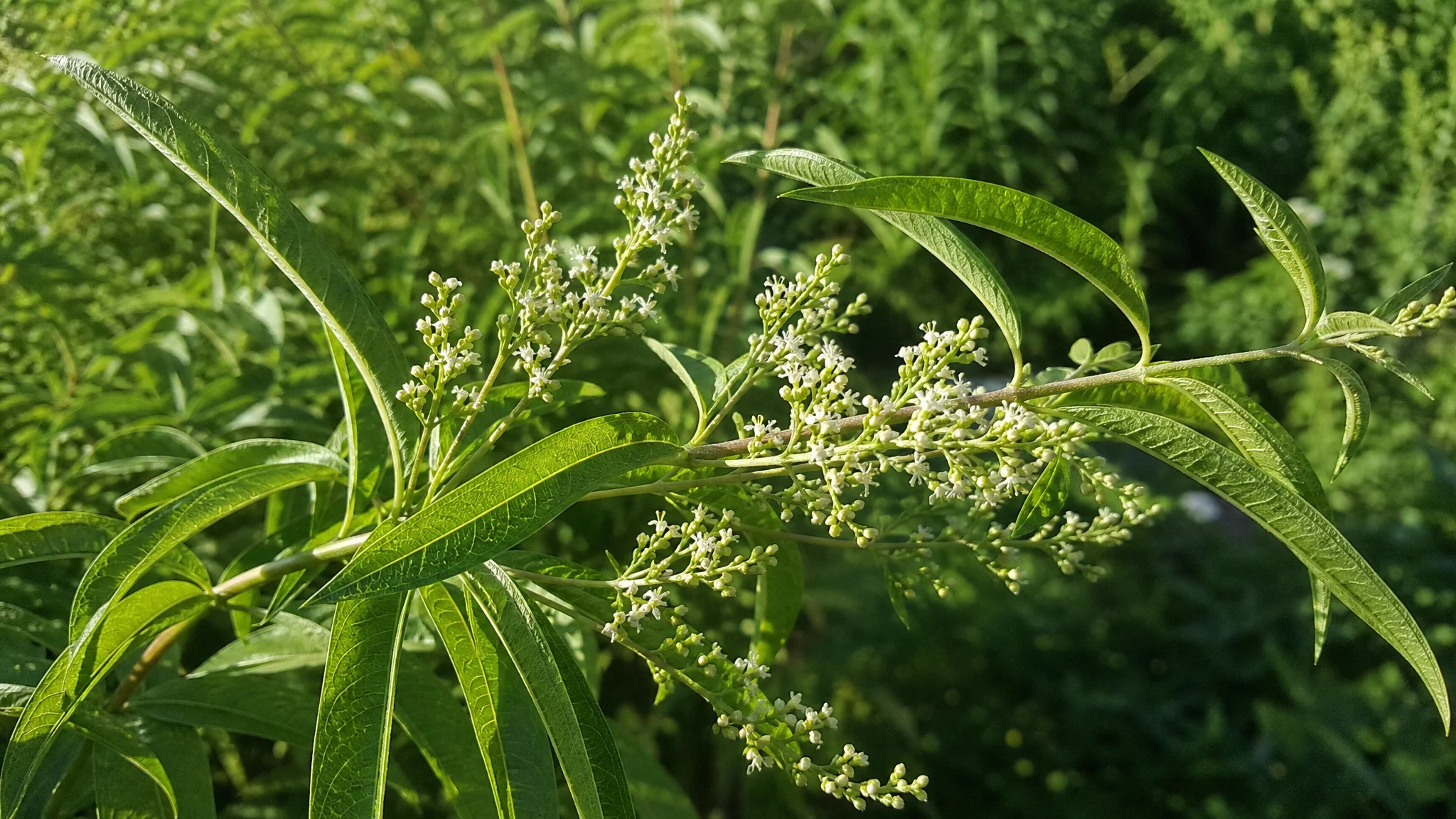
In January a potted lemon verbena can look like a bundle of bare twigs, and that is exactly when most people give up on it. The plant that gives us that sparkling lemon scent is a tender shrub from South America, and the whole trick to growing it is deciding, before you buy, where it will spend the cold months.
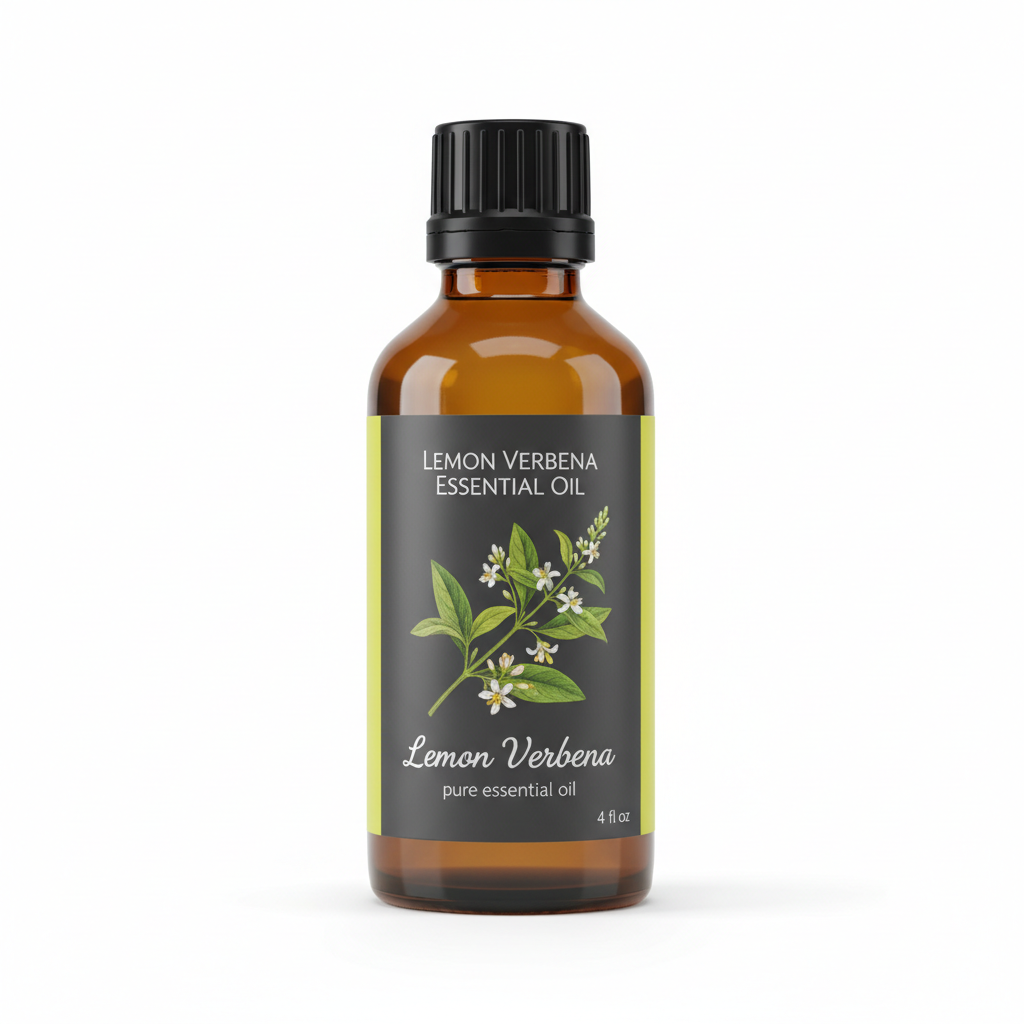
Lemon Verbena Essential Oil
Our own Lemon Verbena Essential Oil, in sizes from 0.5 oz to bulk.
From $12.99
Shop Now →Start with your winter
Three reliable gardening sources describe the plant's cold tolerance a little differently, and the differences are worth reading closely. NC State's plant database lists zones 8a to 10b and says it can be grown outdoors in zone 8 and higher. The Royal Horticultural Society rates it H3, which it describes as hardy in coastal and relatively mild parts of the UK, with a range of -5 to 1 °C (about 23 to 34 °F), and suggests winter protection in northern Britain and a mulch in autumn to protect the roots. Illinois Extension calls it frost sensitive and says to grow it in a container and bring it inside before frost.
Our reading of that spread is simple. In zone 9 or warmer, plant it out in a sunny spot. In zone 8, treat it as a plant that may be cut back by a hard winter: mulch it, and keep a rooted cutting indoors as insurance. Anywhere colder, grow it in a pot from the start and let it come inside. The RHS range is a British scale that does not map neatly onto USDA zones, so use it as a sense of how mild "mild" is rather than a conversion.
Sun, soil and a pot that drains
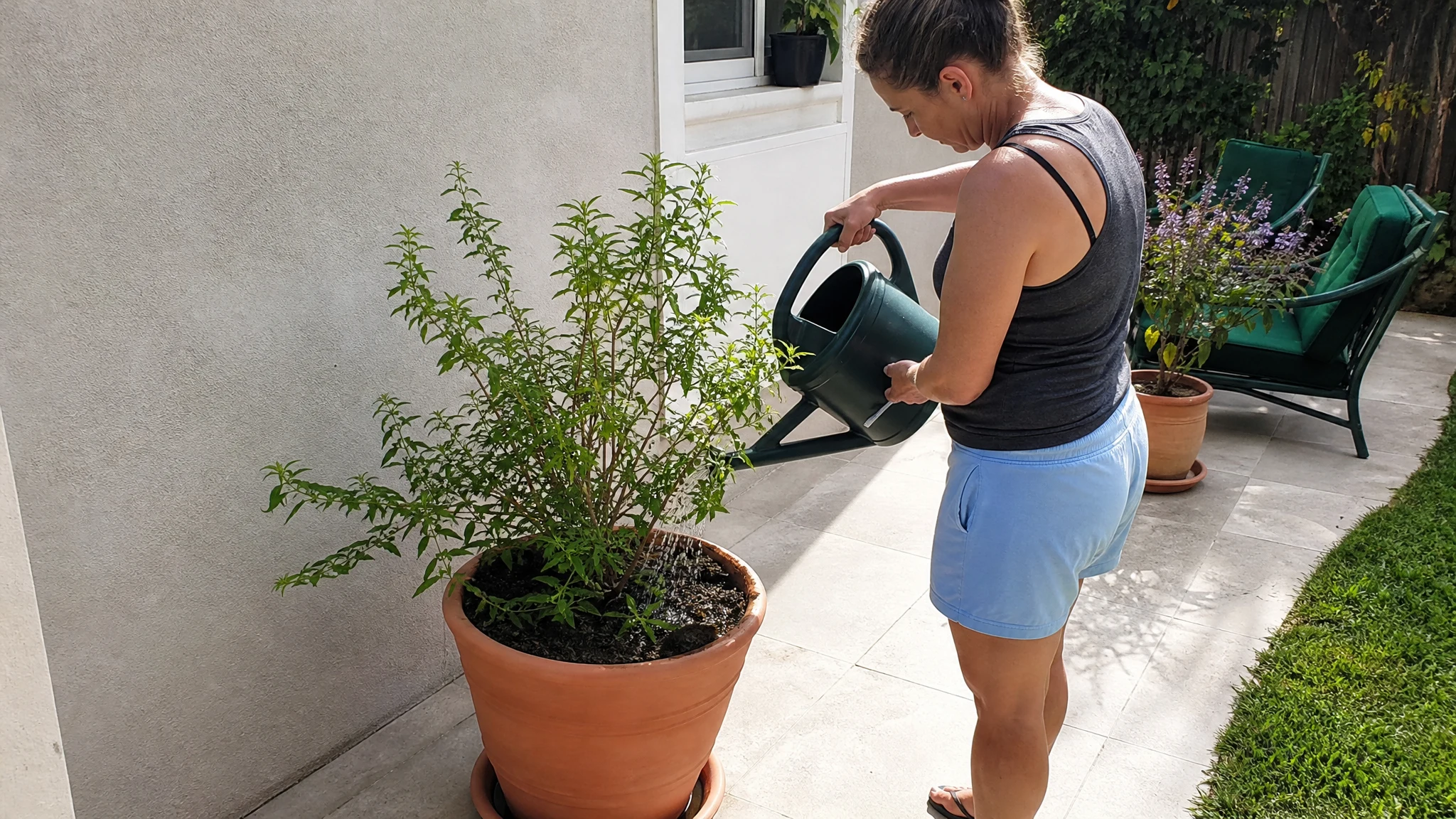
All of these sources agree on the basics: full sun (NC State defines that as six or more hours of direct light a day) and well-drained soil. NC State describes the ideal as moist, fertile and light, and the RHS says it takes chalk, loam or sand as long as water does not sit. Reasoning from that, a pot with generous drainage holes and a gritty, loam-based mix is a better home than a heavy, wet bed.
Size depends on where it grows. NC State gives 6 to 8 feet tall and wide in the ground but only 2 to 4 feet in a pot; the RHS gives 1.5 to 2.5 metres for both height and spread. If you are planting out, leave it room.
Feeding, pruning and more plants
Illinois Extension calls lemon verbena a heavy feeder: keep the potting mix evenly damp without letting it get soggy, feed with a general-purpose liquid fertilizer about every two weeks while it is growing, and cut back on feeding once the plant is indoors for winter.
For shape, NC State recommends pruning in early spring to encourage a bushier plant, and Illinois says that occasional pruning or frequent harvesting keeps it well formed. In practice that means the leaves you pick for tea or drying double as your trimming. Cuttings are the easy way to make more plants. NC State calls stem cuttings the best method because seed set is variable in North America, and Illinois says tip cuttings root easily and that older plants turn woody with fading foliage, so it suggests replacing them. Taking a few cuttings each year keeps a young, leafy plant coming along, which suits a cold-climate gardener especially well.
Little pleasures of having the plant
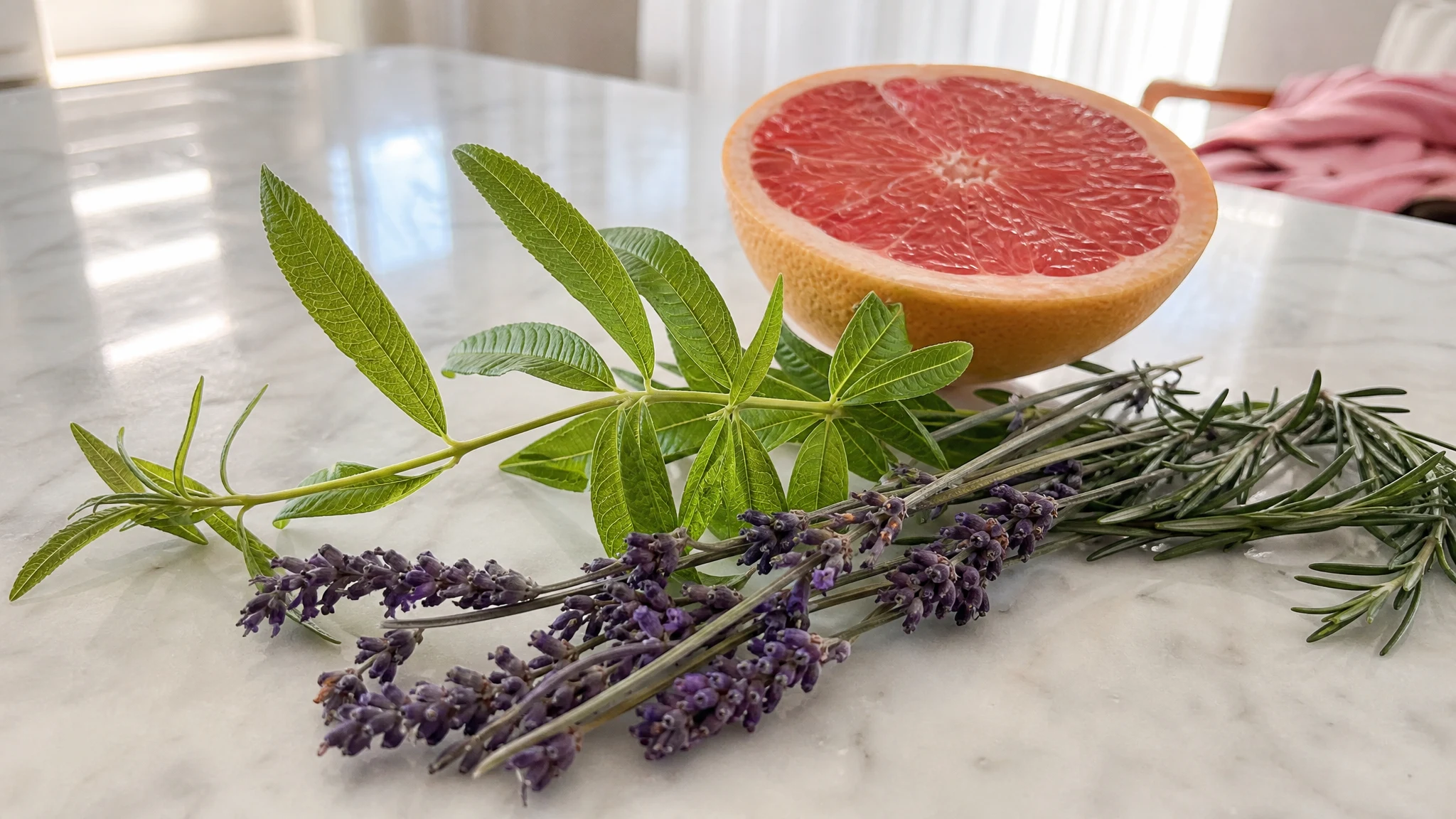
One of the nicest things about a pot of lemon verbena is where you put it. Set it beside a door, a path or a seat, and you will brush against the leaves without thinking, and each brush is a small burst of lemon. The leaves feel slightly rough, almost like fine sandpaper, and they give off the most scent when they are warm from the sun. Early in the day, before the heat, the aroma is gentler; at noon it is at its loudest.
Come autumn, when a pot plant starts dropping leaves as it slows down, do not worry that you have done something wrong. Leaf drop is how the shrub rests, and a few bare twigs in a cool, bright spot are exactly what you should expect.
From garden shrub to bottle of oil
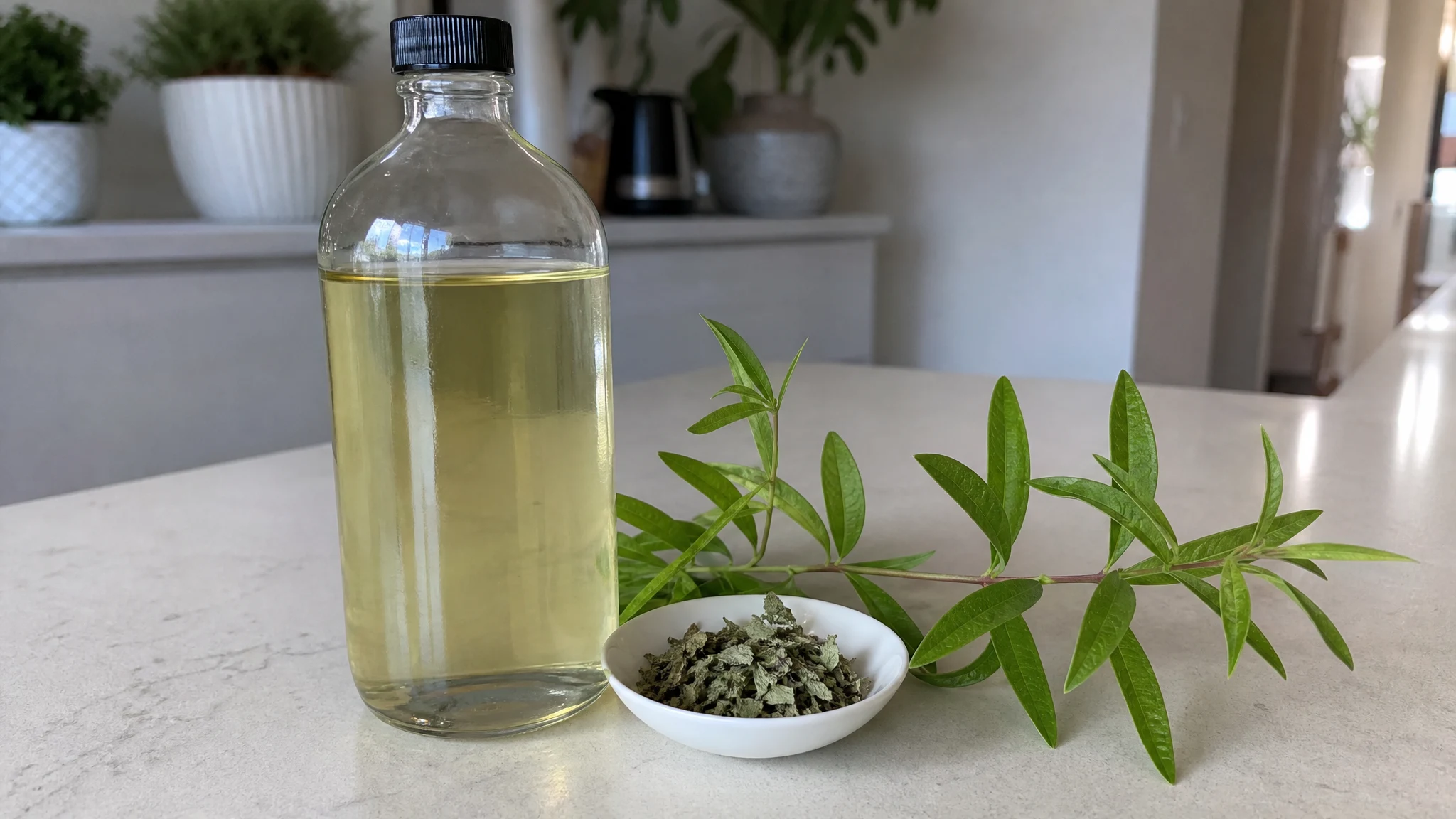
People often ask whether a few shrubs could supply their own oil. The published numbers help here. A Portuguese study distilled dried leaf and recovered 1.05% oil by one method and 1.29% by another, measured against the weight of the leaf. A Moroccan study across five sites found 0.1% to 0.2%. Take 100 g of dry leaf: at the Portuguese yields that is roughly 1.05 to 1.29 g of oil, and at the Moroccan yields 0.1 to 0.2 g. Using the relative density of 0.869 on the Certificate of Analysis we publish for one batch of our oil, and the rough convention of 20 drops per millilitre, the first is about 24 to 30 drops and the second only about 2 to 5. That is our own arithmetic, not a measurement from the studies, and it explains why a bottle of the oil represents a great deal of leaf. Our article on how the oil is made goes deeper into that.
The leaves from your own plant are a different pleasure altogether. Illinois Extension notes they can be used fresh or dried in drinks, salads, jellies and sauces, anywhere lemon is called for. We cover the leaf-versus-oil distinction in lemon verbena tea vs essential oil, and our oil is not for internal use. If you want to know more about the plant itself, the shrub behind the scent is a good next stop.
A note for households with animals
NC State's page tags the plant as a concern for cats, dogs and horses without giving detail, so if a pet has chewed yours, call your veterinarian rather than relying on a web page. Pests are minor: NC State lists aphids, whiteflies, mealybugs and spider mites as occasional visitors, and the RHS calls it generally pest-free. Plants themselves come from a nursery or garden centre, since we sell only the distilled oil.
Plant it where the sun lands, bring it in before the first frost if you live somewhere cold, and brush the leaves every time you pass. That lemony burst is the whole point of having one.
Lemon Verbena Essential Oil
Lemon Verbena Essential Oil from our own shop, in sizes from 0.5 oz to bulk.
From $12.99
Shop Now →Sources & Further Reading
- Aloysia citriodora (Lemon Beebrush, Lemon Verbena) | North Carolina Extension Gardener Plant Toolbox, NC State Extension.
- Aloysia citrodora | lemon verbena, Royal Horticultural Society.
- Lemon Verbena | Herbs | Illinois Extension | Illinois, University of Illinois Extension.
- Volatile Compounds and Biological Activity of the Essential Oil of Aloysia citrodora Paláu: Comparison of Hydrodistillation and Microwave-Assisted Hydrodistillation, Sprea et al., Molecules, 2023.
- Chemical Composition and Cytotoxic and Antibacterial Activities of the Essential Oil of Aloysia citriodora Palau Grown in Morocco, Oukerrou et al., Adv Pharmacol Sci, 2017.