Lemon Verbena Oil Online: 5 Checks Before You Order
Three browser tabs, three listings, all promising lemon verbena oil. One is a plant oil with a Latin name and a batch code, one says only "fragrance", and one is full of adjectives. Knowing which questions to ask turns that pile into something you can sort, and five of them do most of the work.
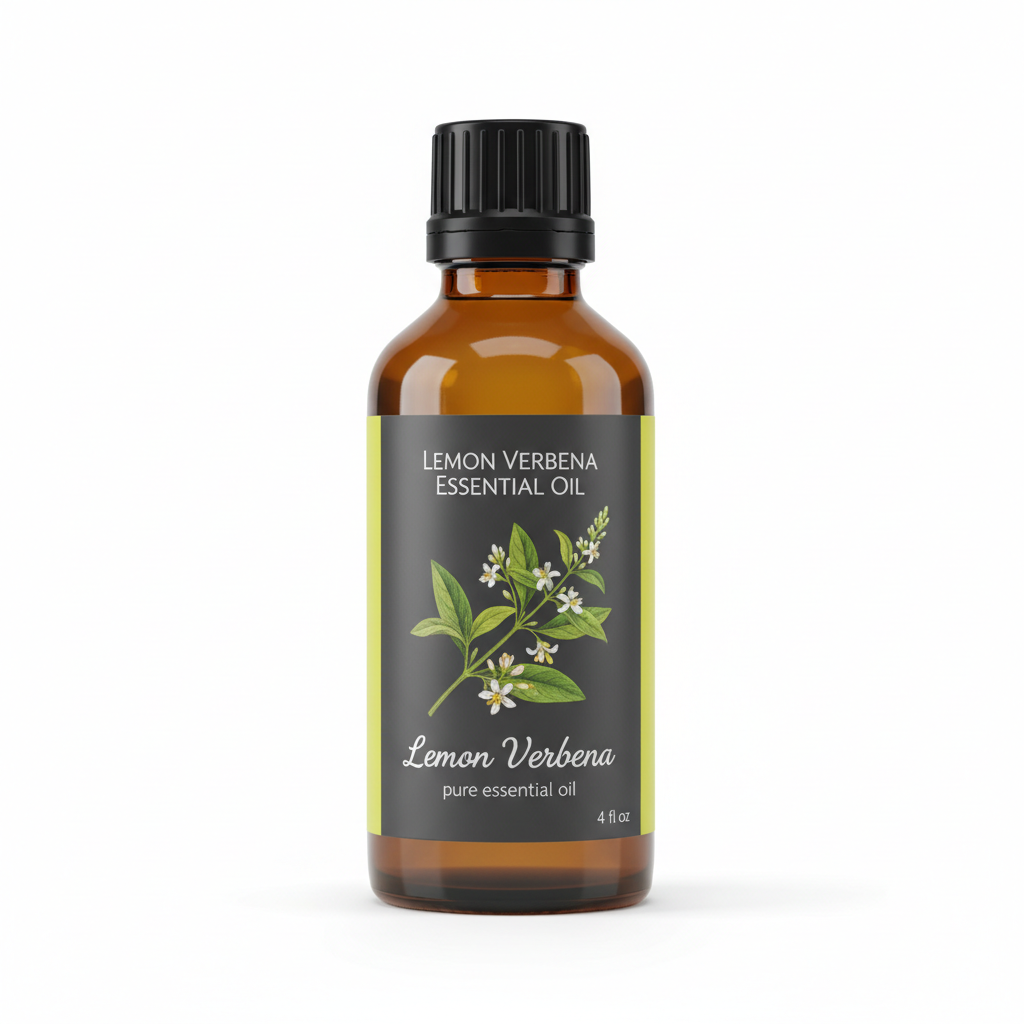
Lemon Verbena Essential Oil
Our own Lemon Verbena Essential Oil, in sizes from 0.5 oz to bulk.
From $12.99
Shop Now →1. Does the listing name the plant, the part and the method?
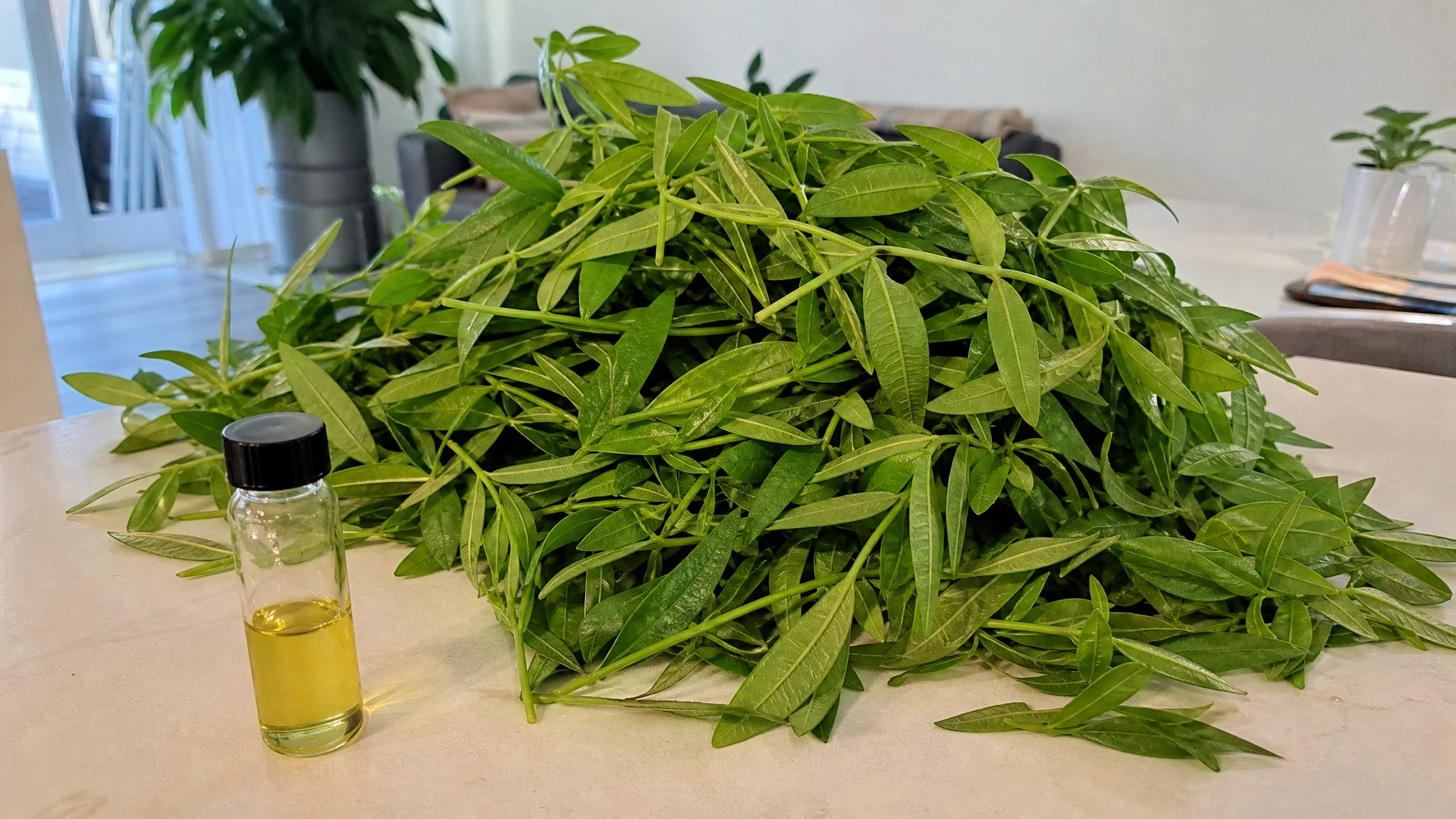
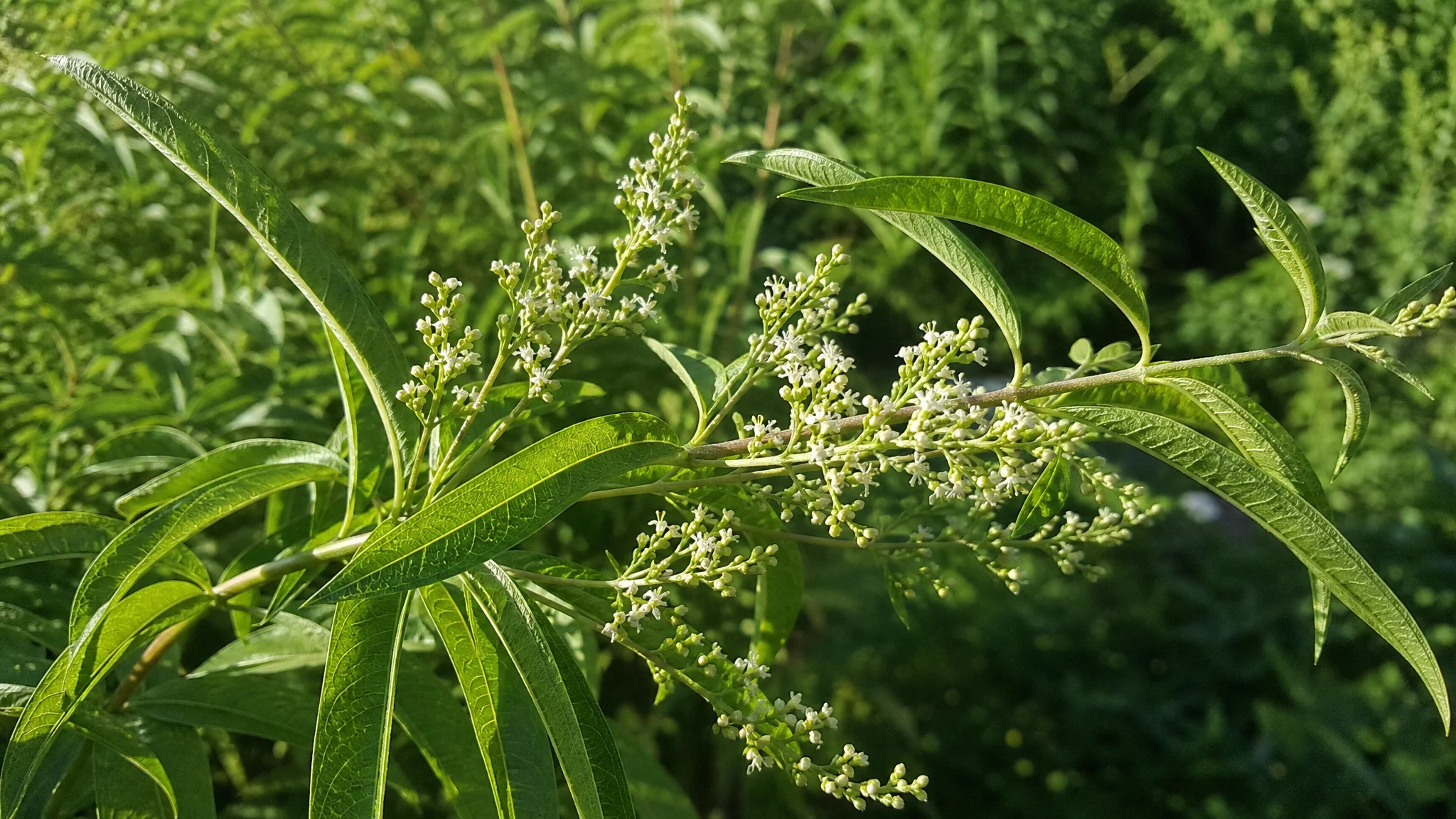
Look for Aloysia citrodora, or its older synonym Lippia citriodora. Either spelling is the same shrub, so a seller who uses either is not wrong. "Verbena" on its own is ambiguous, and our mix-ups article shows how the names tangle. After the name, look for the plant part and the extraction method. Ours is listed as leaf, steam-distilled, and a listing that gives neither leaves you guessing.
2. Is it a plant oil or a fragrance?
U.S. rules let fragrance ingredients appear on a cosmetic label simply as "Fragrance", and the FDA notes there is no regulatory definition of "essential oils" (FDA, Fragrances in Cosmetics). The same agency says it has not defined "natural" for cosmetics and has no rules for "organic" ones (FDA small-business fact sheet). So the words on the front of a bottle are a seller's description. A named plant, part and method carry more information than any adjective, and our fragrance oil comparison covers when a fragrance is the better fit anyway.
3. Is there a document, and does it match the bottle?
Ask for it by batch, in writing, and keep the reply. The reason is that lemon verbena oils really do differ. An Ecuadorian oil had geranial 26.8% and neral 21.0% (Parichanon et al., 2025), while five Moroccan oils had no detectable geranial and were led by caryophyllene oxide and spathulenol (Oukerrou et al., 2017). A composition report tells you which of those you are holding. It does not make one of them the "real" one, and that is worth knowing before a number on a page persuades you of something.
We publish a Certificate of Analysis for one batch, LMVAIULCCLC005A. It lists the botanical name, leaf as the part used, steam distillation, a best-by date, appearance and smell, a relative density of 0.869 (standard range 0.862 to 0.905) and a refractive index of 1.472 (standard 1.465 to 1.485). If you need GC-MS or compound percentages, write to us through the contact page before you order and keep whatever we send in writing. Wholesale buyers can also order a sample bottle first; the bulk page describes how.
4. What does the document actually test?
Density and refractive index tell you a batch sits inside a stated range, which is useful for spotting a bottle that is wildly off. They are not an identity test. Reasoning from the papers, other citral-rich oils could plausibly land in similar physical ranges: litsea cubeba fruit oils from eight Chinese regions had neral plus geranial of 78.7% to 87.4% (Si et al., 2012), and a lemongrass leaf oil from Nepal had geranial 53.1% and neral 36.1% (Dangol et al., 2023). Even GC-MS has limits, because it sees volatile and semi-volatile compounds and can miss a non-volatile addition (Vargas Jentzsch et al., 2019, a short overview). Our label and GC-MS article shows how to read one.
Keep your own record
Whatever you end up with, save the listing text and any reply as a note with the date. If the aroma in your hands later seems different from what you imagined, you will have the original description to compare against. It is a small habit, and it makes every future purchase easier, because you will know what a good answer looked like.
5. Does the size suit what you will do with it?
Our retail range starts at 0.5 oz, and the first-bottle article does the sums on how far that goes. Ask for the best-by date too, and plan to keep the bottle capped, cool and dark; the storage article has the details.
A calmer way to compare listings
When several tabs are open at once, it is easy to be pulled along by the prettiest page. We suggest slowing down: copy the plant name, the part and the method from each listing into a simple list side by side, and leave a blank wherever a listing says nothing. The blanks tell you as much as the words do. A page that fills in every line without strain is usually a page written by people who know what they are selling.
It also helps to write your questions before you send them. Short, specific messages tend to get short, specific answers, and you will have the replies in one place when you decide.
Reading the replies
Sort answers into three piles. A specific answer names a part, a method and a document with a batch code. A partial answer supplies a physical-properties certificate like ours, which is handy for checking a bottle against a stated range and leaves identity for you to weigh against your use. A non-answer repeats words like "premium" without naming anything you could check. For a hobby diffuser a partial answer may be plenty. For something you will sell, ask for more, and a seller who volunteers what their paper does not show has usually earned a little trust.
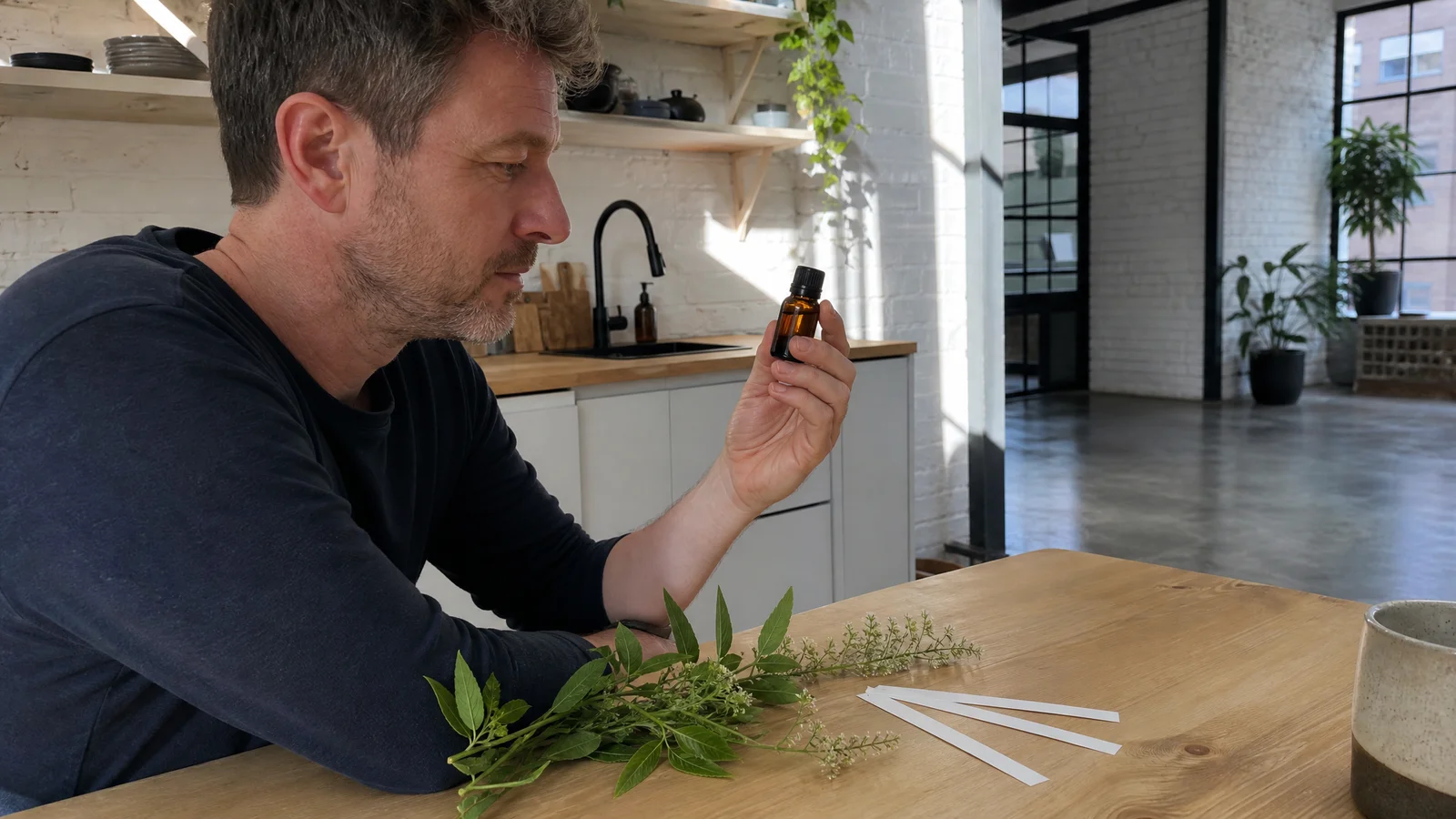
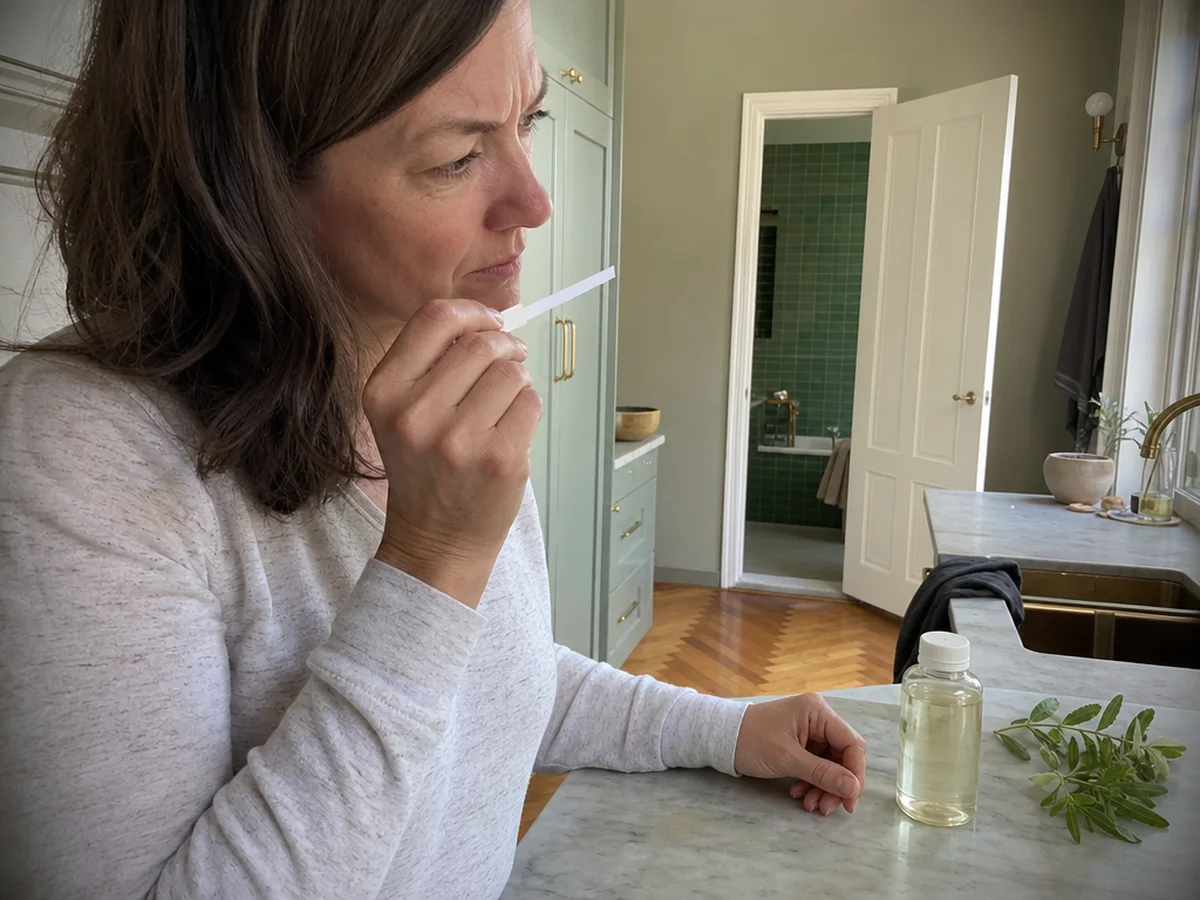
When the parcel arrives, match the batch number on the bottle to the paper, check the seal, and then smell it once. A nose cannot separate verbena from its citral-rich cousins, but it can tell you whether the aroma is the bright, sweet, lemony one we describe for ours.
Lemon Verbena Essential Oil
Lemon Verbena Essential Oil from our own shop, in sizes from 0.5 oz to bulk.
From $12.99
Shop Now →Sources & Further Reading
- U.S. Food and Drug Administration. Fragrances in Cosmetics. www.fda.gov
- U.S. Food and Drug Administration. Small Businesses & Homemade Cosmetics: Fact Sheet. www.fda.gov
- Parichanon et al., 2025. Chemical Profiling, Sensory Qualities, and Bioactivities of Essential Oils Obtained from Aloysia citrodora and Bursera graveolens Ecuadorian Plants Against the Mosquito Aedes albopictus (Skuse) (Diptera: Culicidae). Insects 16(2):202. pmc.ncbi.nlm.nih.gov
- Oukerrou et al., 2017. Chemical Composition and Cytotoxic and Antibacterial Activities of the Essential Oil of Aloysia citriodora Palau Grown in Morocco. Advances in Pharmacological Sciences. pmc.ncbi.nlm.nih.gov
- Si et al., 2012. Chemical composition of essential oils of Litsea cubeba harvested from its distribution areas in China. Molecules 17(6):7057-7066. pmc.ncbi.nlm.nih.gov
- Dangol et al., 2023. Essential Oil Composition Analysis of Cymbopogon Species from Eastern Nepal by GC-MS and Chiral GC-MS, and Antimicrobial Activity of Some Major Compounds. Molecules 28(2):543. pmc.ncbi.nlm.nih.gov
- Vargas Jentzsch, Ramos Guerrero and Ciobota, 2019. Detection of Essential Oils Adulteration: A Quick Overview and Current Challenges. American Journal of Biomedical Science and Research 4(1). biomedgrid.com