Lemon Verbena Research: Extract vs Essential Oil
Search for lemon verbena benefits and you will find sleep, stress and recovery mentioned again and again. Look closely at where those claims come from and a pattern appears: nearly every human study used a capsule of leaf extract, not the essential oil in a bottle. Those are two very different materials, and that single distinction clears up most of the confusion.
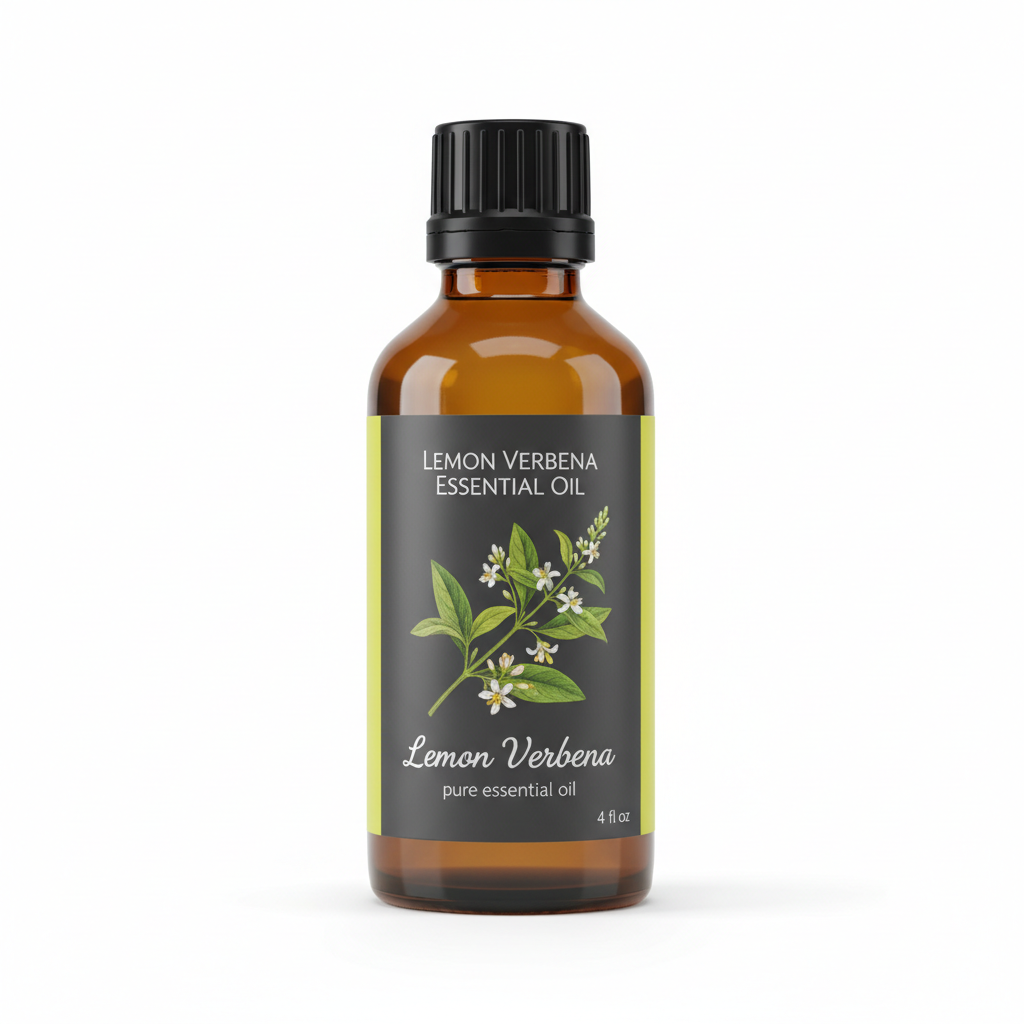
Lemon Verbena Essential Oil
Our own Lemon Verbena Essential Oil, in sizes from 0.5 oz to bulk.
From $12.99
Shop Now →Same plant, different material
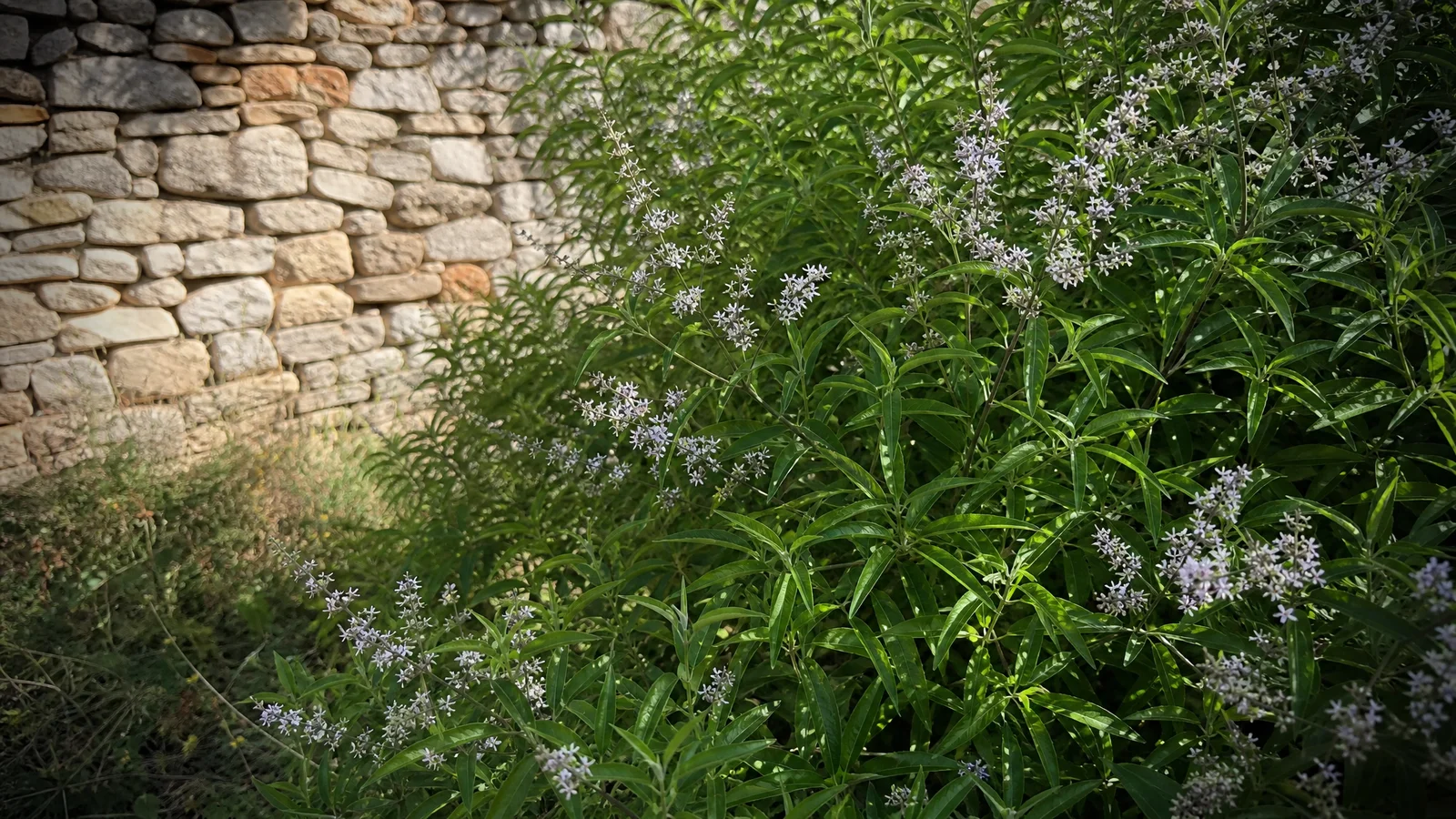
The plant is Aloysia citrodora, also written Lippia citriodora in older papers. A 2018 review of its chemistry and pharmacology reports that neral and geranial are the main ingredients of the essential oil, while verbascoside is the most significant component of the extract. An extract pulls compounds such as verbascoside out of the leaf. Essential oil is the small volatile fraction that steam distillation carries over. You would not expect them to behave alike, and the studies do not assume they do.
Even the oil itself is a moving target. One Moroccan study of five sites found spathulenol, ar-curcumene and caryophyllene oxide leading, with neral at about 10%, while other leaf oils lean on geranial and neral. We look at that spread in our guide to the oil.
A quick guide to the three materials
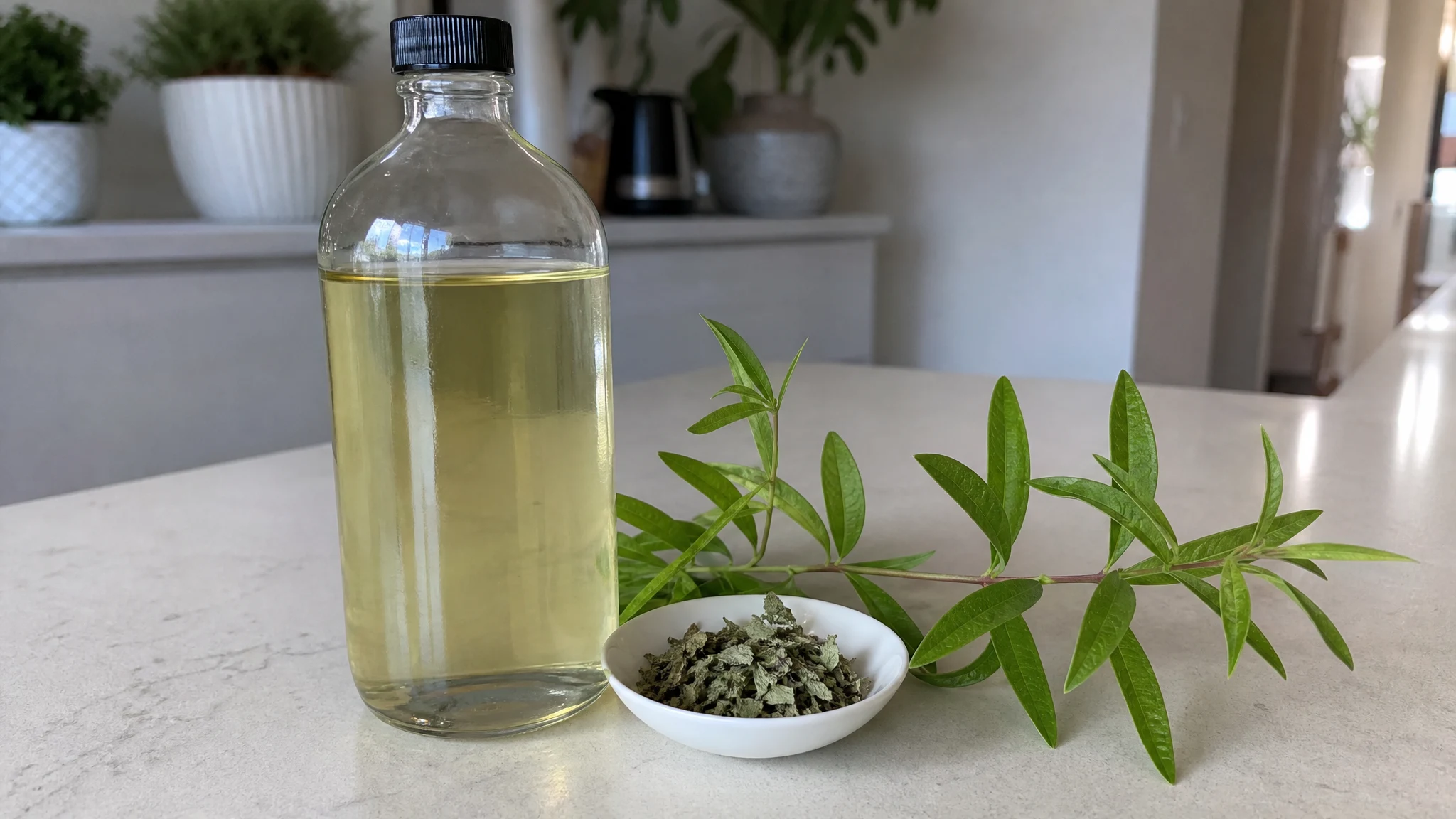
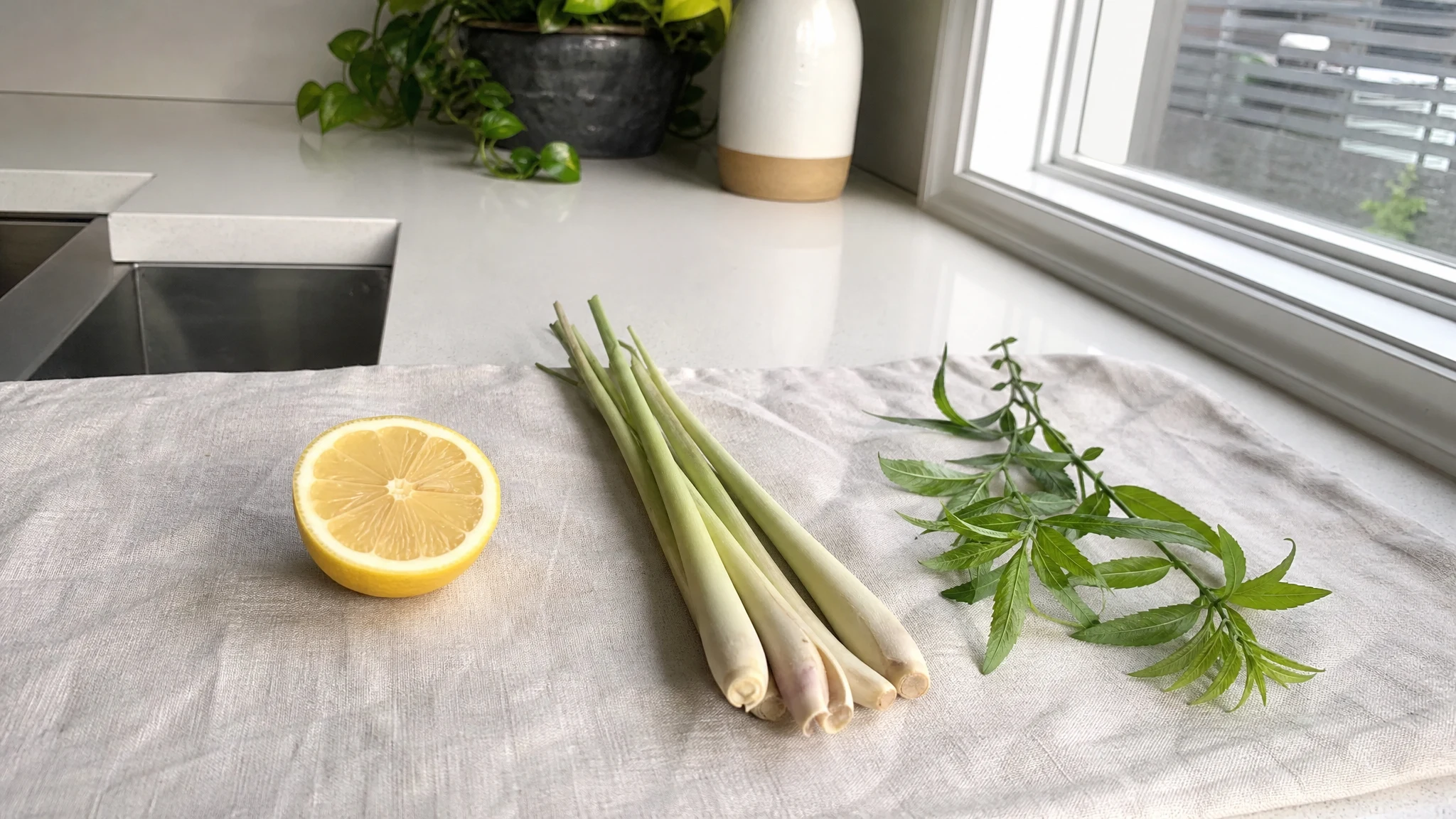
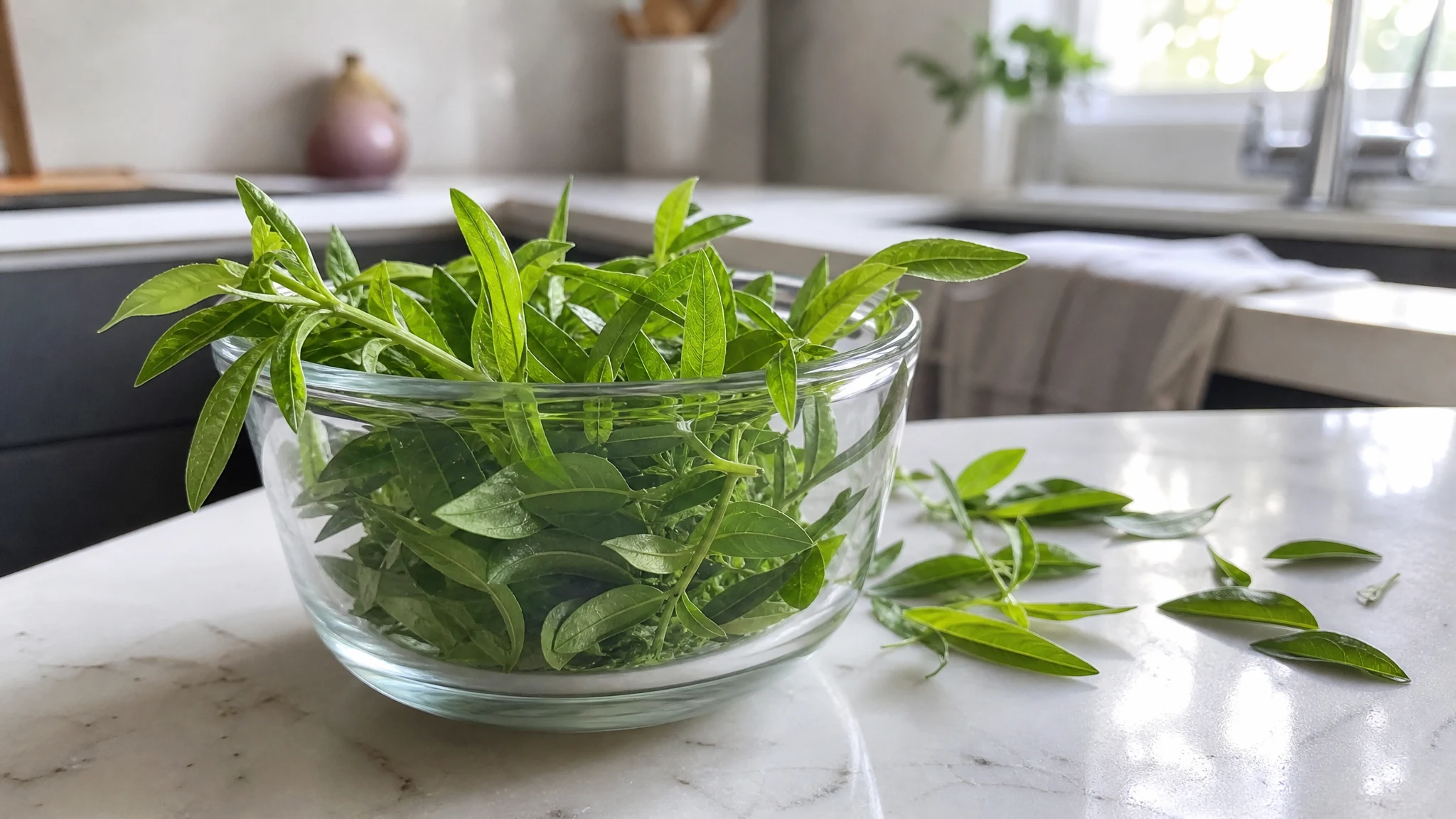
It may help to hold three pictures in mind. The leaf is what you steep in a cup. The extract is the leaf's compounds pulled out and standardised, usually into a capsule. The essential oil is the lightest, most aromatic part, carried over by steam and sold in a small bottle. They share a plant and a name, and that is where the similarity ends. When you read a claim, ask which of the three it is about, and the confusion often clears up on its own.
What the capsule trials were
Two of the better-known trials gave adults a daily capsule of lemon verbena extract for weeks. In a randomized, double-blind study of 71 healthy adults with sleep disturbances (33 on extract, 38 on placebo), the extract was taken for 90 days, and the authors reported differences between groups on sleep questionnaires and nocturnal melatonin. An 8-week study with a 4-week washout looked at perceived stress and sleep in a similar way. Both gave people a swallowed extract. For our purposes the takeaway is simple: they tell us about a dietary supplement, not about breathing in or wearing a perfume oil. We go through the details in our articles on sleep and stress and mood.
What the oil studies were
Studies on the oil itself are mostly laboratory work. The Moroccan paper measured composition and then tested the oil in cell and bacterial cultures, reporting minimum inhibitory concentrations of 2.84 to 8.37 mg/ml in broth. To make that concrete with our own arithmetic: at the 0.869 density on our published Certificate of Analysis, 2.84 mg/ml is about 3.3 microlitres of oil in each millilitre of broth. That is a bench measurement in a culture tube. It says nothing about what happens on skin, in a room or in a person, and it is not a claim we make for our oil.
A broader look at essential oils and anxiety, a network meta-analysis of 44 randomized trials covering ten oils, is a useful reminder of how unsettled that field is: it opens by noting that clinical findings on essential oils and anxiety remain disputed, and its ranked oils were lavender, jasmine, rose and citrus, not lemon verbena.
How the rules shape what we say
In the United States, whether a product counts as a cosmetic or a drug depends mainly on its intended use, and FDA's aromatherapy page lists claims that a product will help you sleep as drug claims. Our oil is an external cosmetic and craft material, so we describe its aroma and leave health effects out. If sleep or stress is on your mind, your physician or pharmacist is the right person to ask, and a capsule trial on healthy volunteers is no substitute for that conversation.
Reading with a friendly skeptic's eye
None of this should dim your enjoyment. It is wonderful that people study a humble garden shrub, and it is fine to be curious about what they find. The trick is to hold the findings lightly, enjoy the plant for what it plainly offers, and let slow, careful science do its work. A good habit is to save any study that catches your eye and read the methods section before the headline.
What the oil is good at
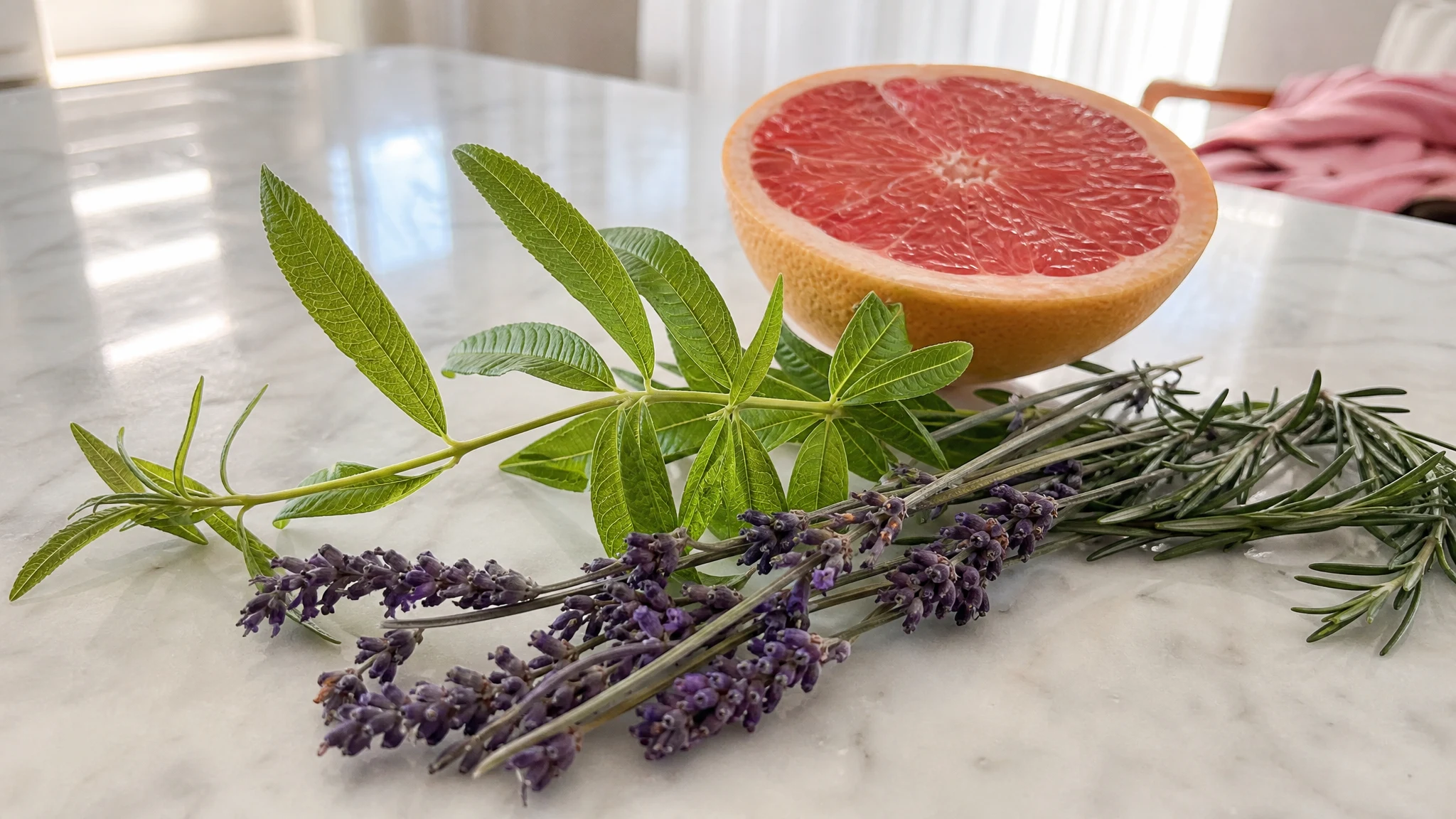
We sell lemon verbena essential oil, sold neat, steam-distilled from the leaves. It is a lovely, bright, sparkling ingredient for perfume, candle and body-care projects, with a sparkling lemon top over a soft herbal-floral heart. For skin we recommend diluting to 0.5% to 2% in a carrier oil, starting at the low end, and patch testing first. It is not for internal use, and it should be kept away from eyes, children and pets. The safety guide and skin basics cover the practical steps.
The research on lemon verbena is interesting, and it is a good reminder that a plant, an extract and an oil are three different things. We would rather tell you which is which than borrow someone else's results.
Lemon Verbena Essential Oil
Lemon Verbena Essential Oil from our own shop, in sizes from 0.5 oz to bulk.
From $12.99
Shop Now →Sources & Further Reading
- Dietary Supplementation with an Extract of Aloysia citrodora (Lemon verbena) Improves Sleep Quality in Healthy Subjects: A Randomized Double-Blind Controlled Study, Pérez-Piñero et al., Nutrients, 2024.
- Anxiolytic Effect and Improved Sleep Quality in Individuals Taking Lippia citriodora Extract, Martínez-Rodríguez et al., Nutrients, 2022.
- Aloysia citrodora Paláu (Lemon verbena): A review of phytochemistry and pharmacology, Bahramsoltani et al., Journal of Ethnopharmacology, 2018.
- Chemical Composition and Cytotoxic and Antibacterial Activities of the Essential Oil of Aloysia citriodora Palau Grown in Morocco, Oukerrou et al., Adv Pharmacol Sci, 2017.
- Essential oils for treating anxiety: a systematic review of randomized controlled trials and network meta-analysis, Tan et al., Front Public Health, 2023.
- Aromatherapy | FDA, U.S. Food and Drug Administration.