Is Litsea Cubeba the Same as Lemon Verbena Oil?
Litsea cubeba, also sold as may chang, smells so strongly of lemon that it is natural to ask whether it is just a cheaper lemon verbena. It is not. It comes from a different tree, from the fruit and not the leaf, with a chemistry that is far more uniform. Knowing how the two differ turns a vague worry into a simple question you can put to any seller.
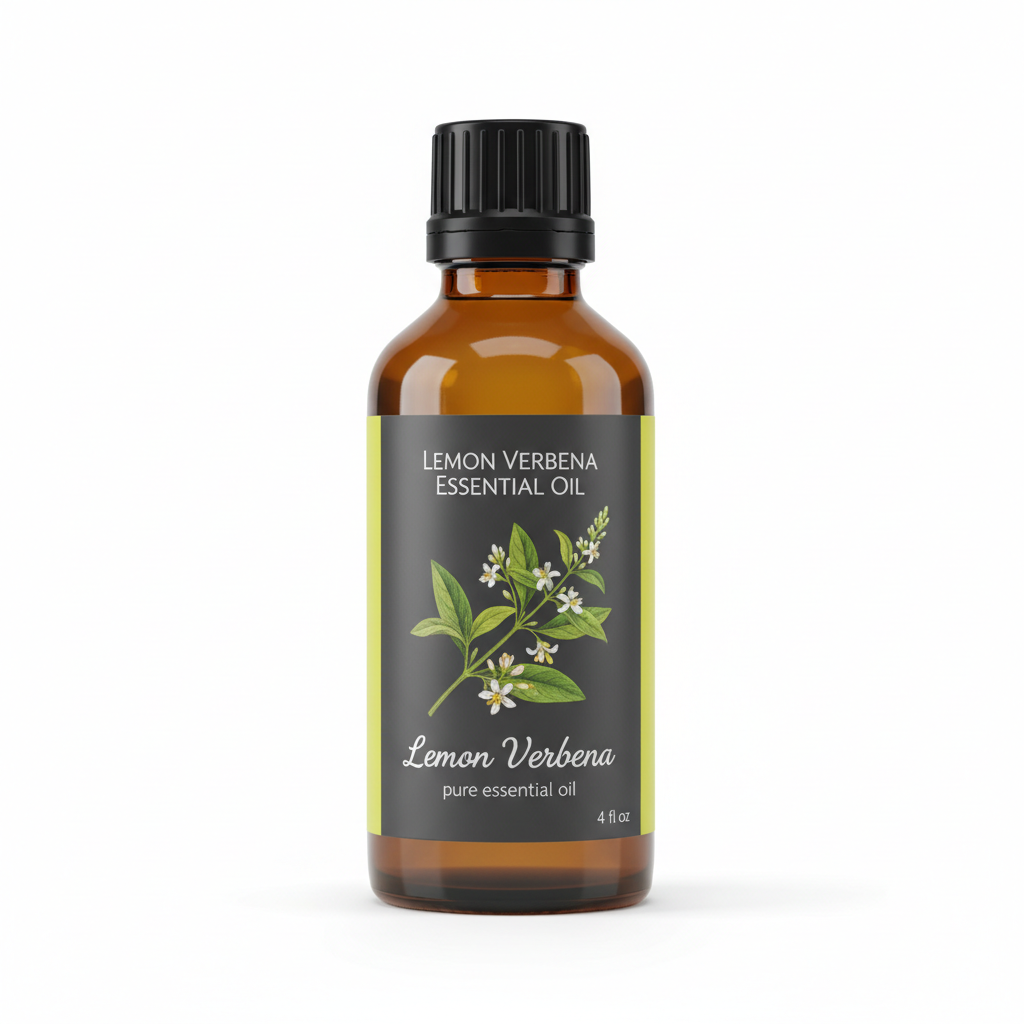
Lemon Verbena Essential Oil
Our own Lemon Verbena Essential Oil, in sizes from 0.5 oz to bulk.
From $12.99
Shop Now →A fruit and a leaf
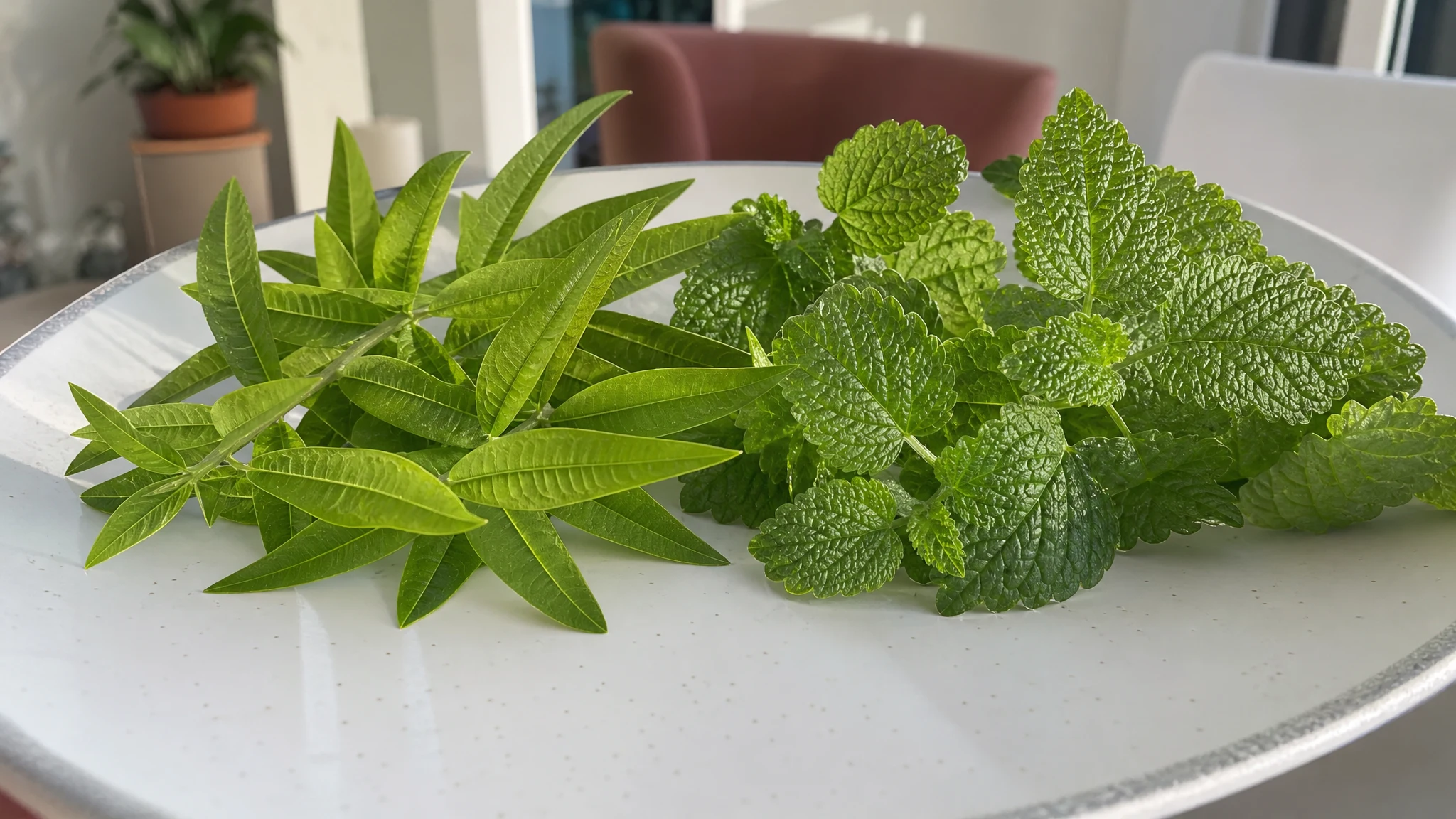
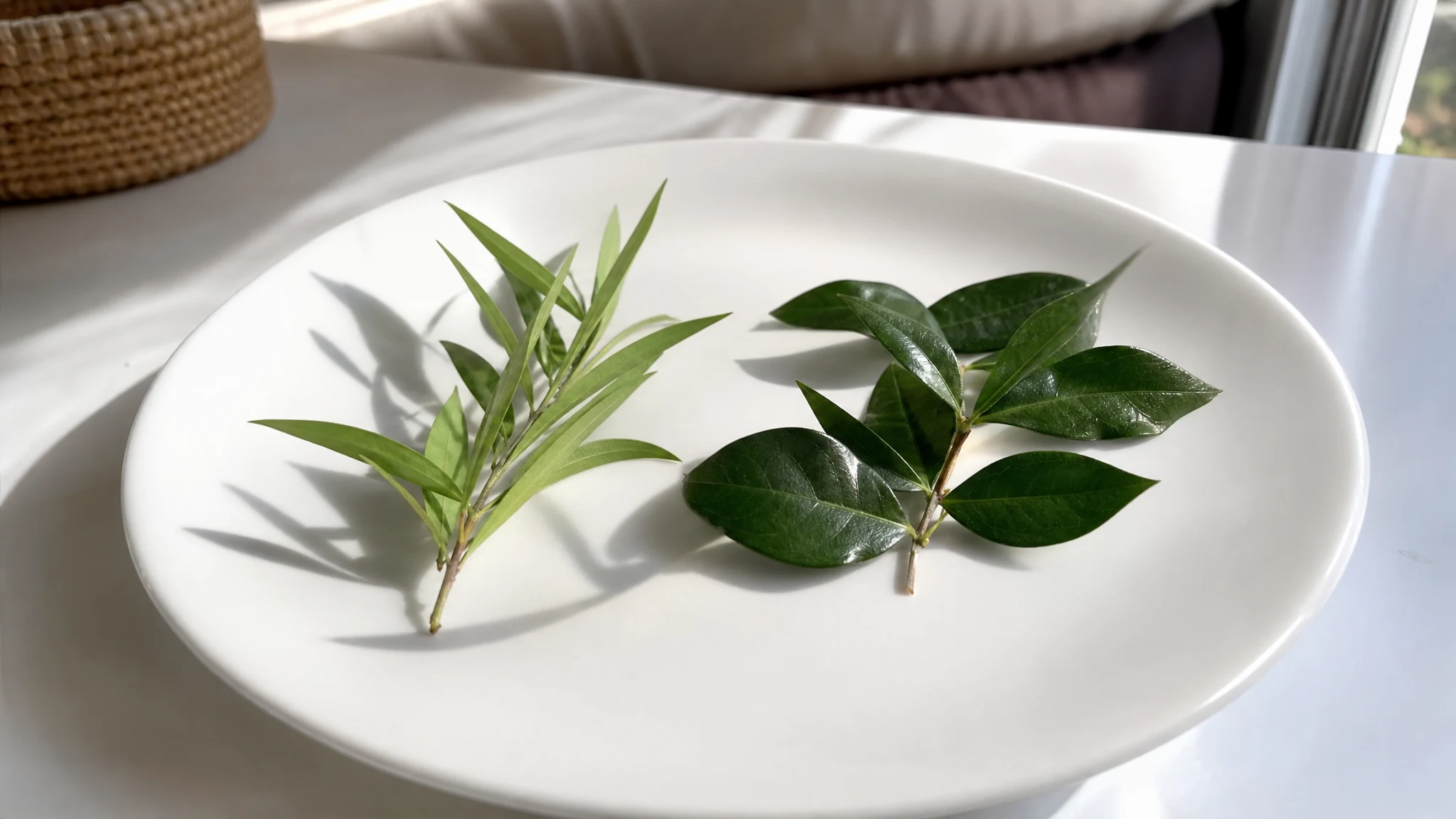
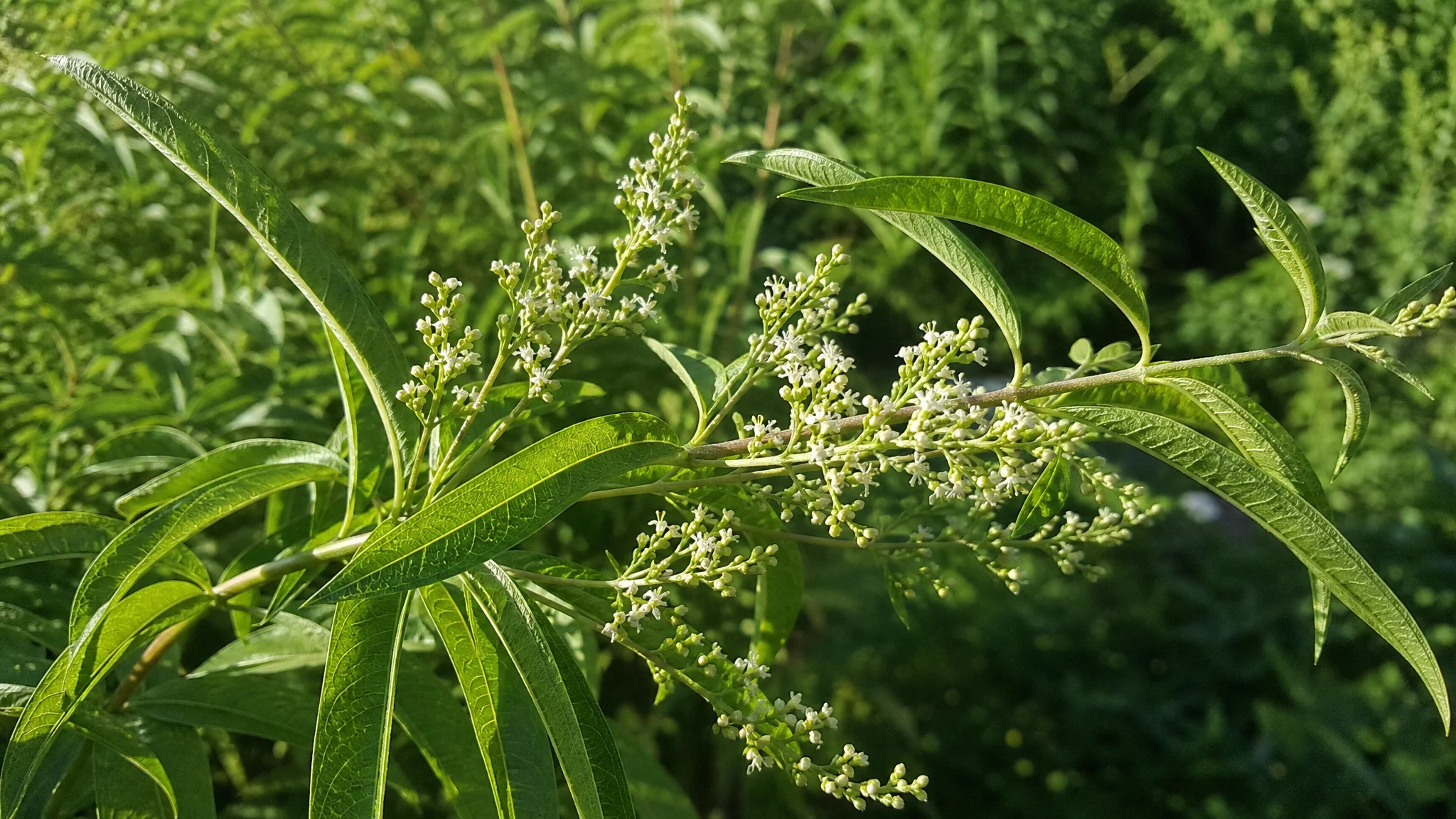
Lemon verbena oil is distilled from the leaves of Aloysia citrodora, a shrub. Litsea cubeba oil comes from the small fruits of Litsea cubeba, a tree. A study of eight Chinese regions collected wild fruit in September 2011, distilled 100 g of air-dried fruit for five hours, and obtained 3.04% to 4.56% oil by dry weight (Si et al., 2012). Verbena leaf gives far less, from about 0.1% to 1.3% in the papers cited here, though different parts and methods make that a rough contrast.
Citral-rich in two very different ways
Both oils owe their lemon note to citral, the pair of molecules called geranial and neral. In litsea they are almost the whole story: 78.7% to 87.4% of the oil in all eight regions, with limonene only 0.7% to 5.3% and monoterpenes making up 94% to 98% of each sample (Si et al., 2012). That consistency is useful to know. Litsea is a steady, strong, straightforward lemon.
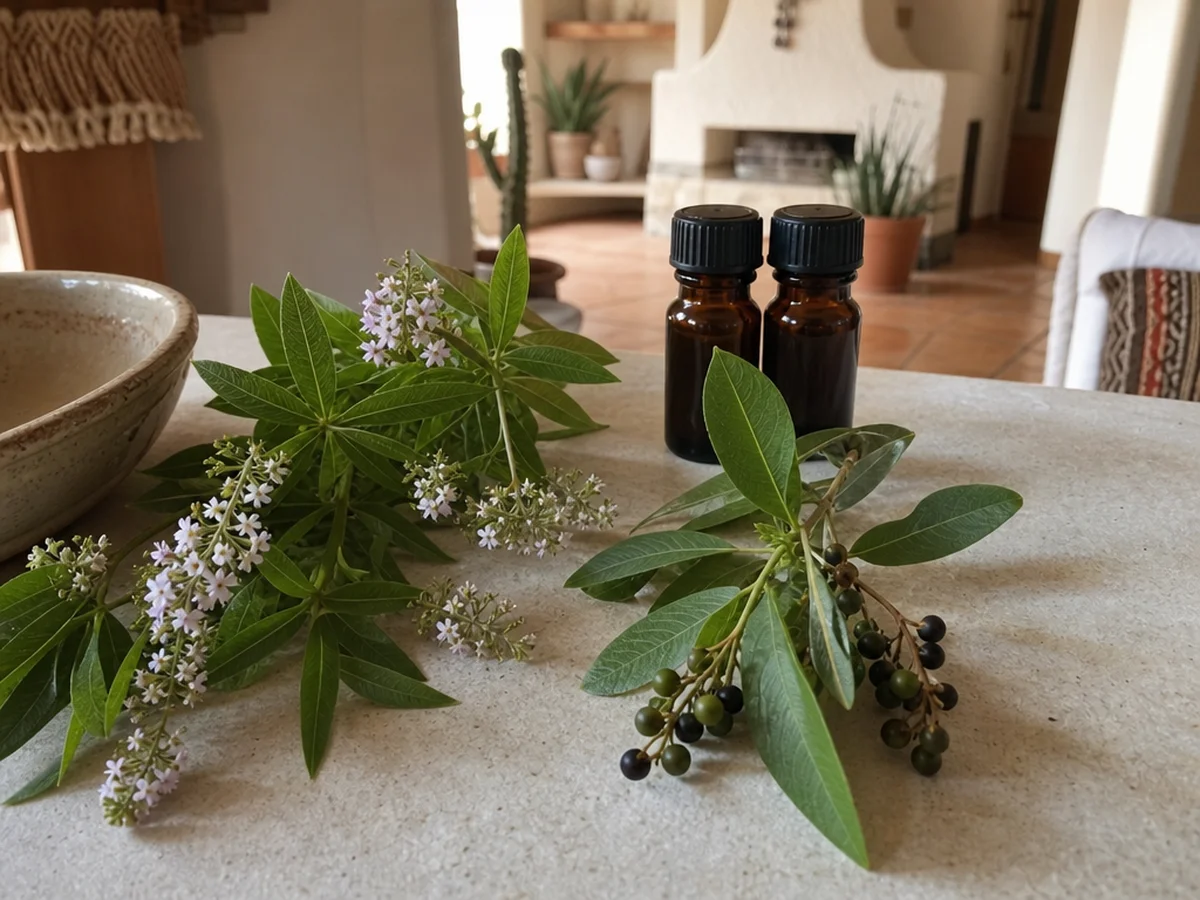
Lemon verbena is a more complicated and less predictable oil. An Ecuadorian leaf oil was about 48% citral with 7% limonene and a long tail of sesquiterpenes (Parichanon et al., 2025). A Portuguese oil was about 34% to 37% citral, with spathulenol among its other main compounds (Sprea et al., 2023). Five Moroccan sites had no geranial detected (Oukerrou et al., 2017), and a survey of 36 wild collections in northwestern Argentina found five chemotypes, with citral the main component in only two (Elechosa et al., 2017).
Putting the two together, a high citral number does not prove an oil is litsea, and a low one does not prove it is verbena. If you want to tell them apart on paper, the better clue is the supporting cast: litsea is monoterpene-dominated with very little else, while verbena leaf oils carry sesquiterpenes and oxygenated compounds in meaningful amounts. Even that is a pointer and not a verdict, and a report for the very batch you are buying matters more than any rule of thumb.
The nose test, and its limits
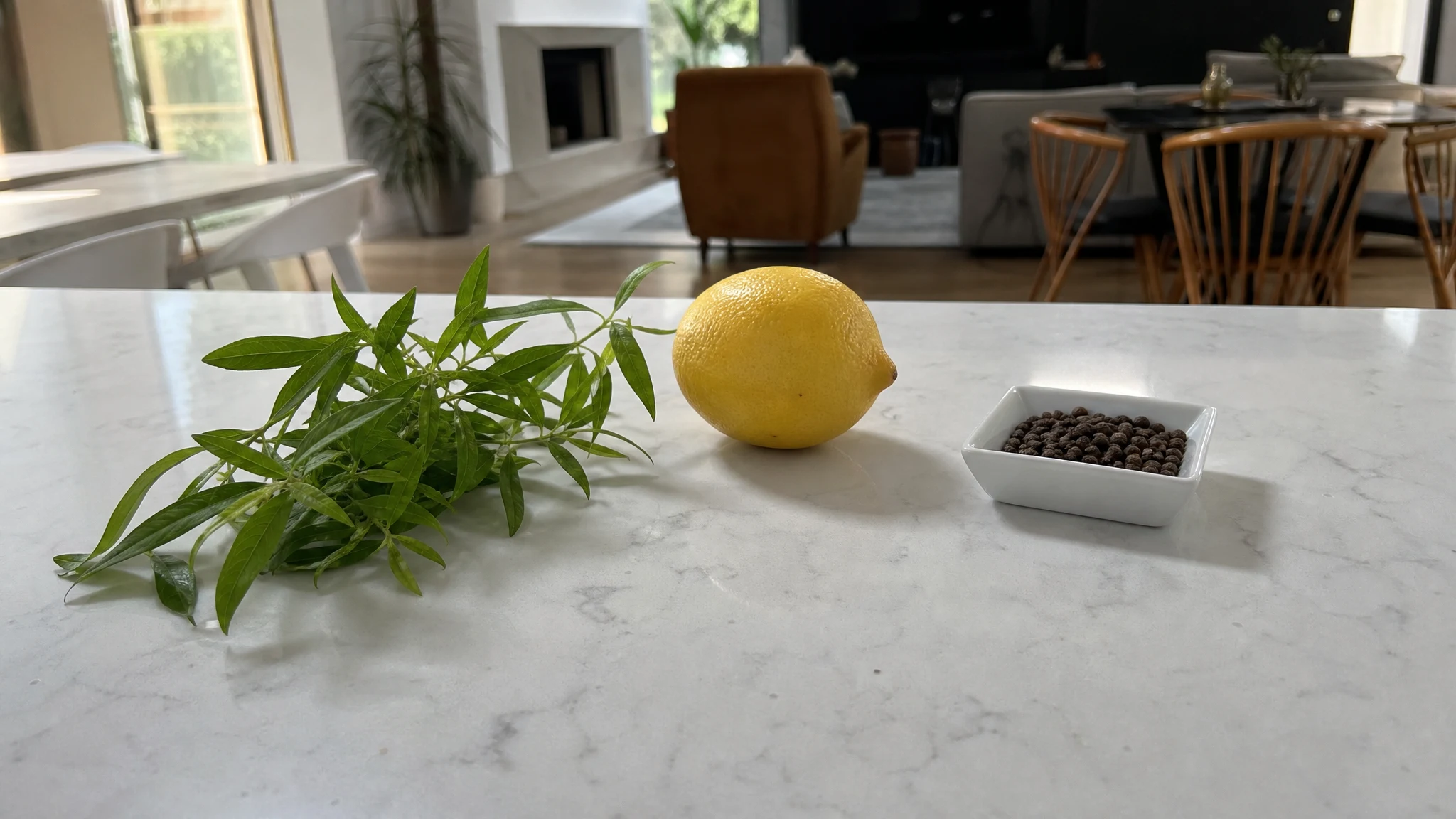
Smell the two on strips and you will often notice something. Litsea cubeba goes straight to a bold, tangy lemon, rather like a burst of fresh lemon candy. Lemon verbena is softer and more layered, with a green, herbal-floral heart behind the sweetness. It is a pleasing comparison and an easy way to learn how each smells. Remember it is a pleasure, though, and not a way to confirm what a bottle is, which is why we always suggest a name and a document alongside the nose.
What we can tell you about ours
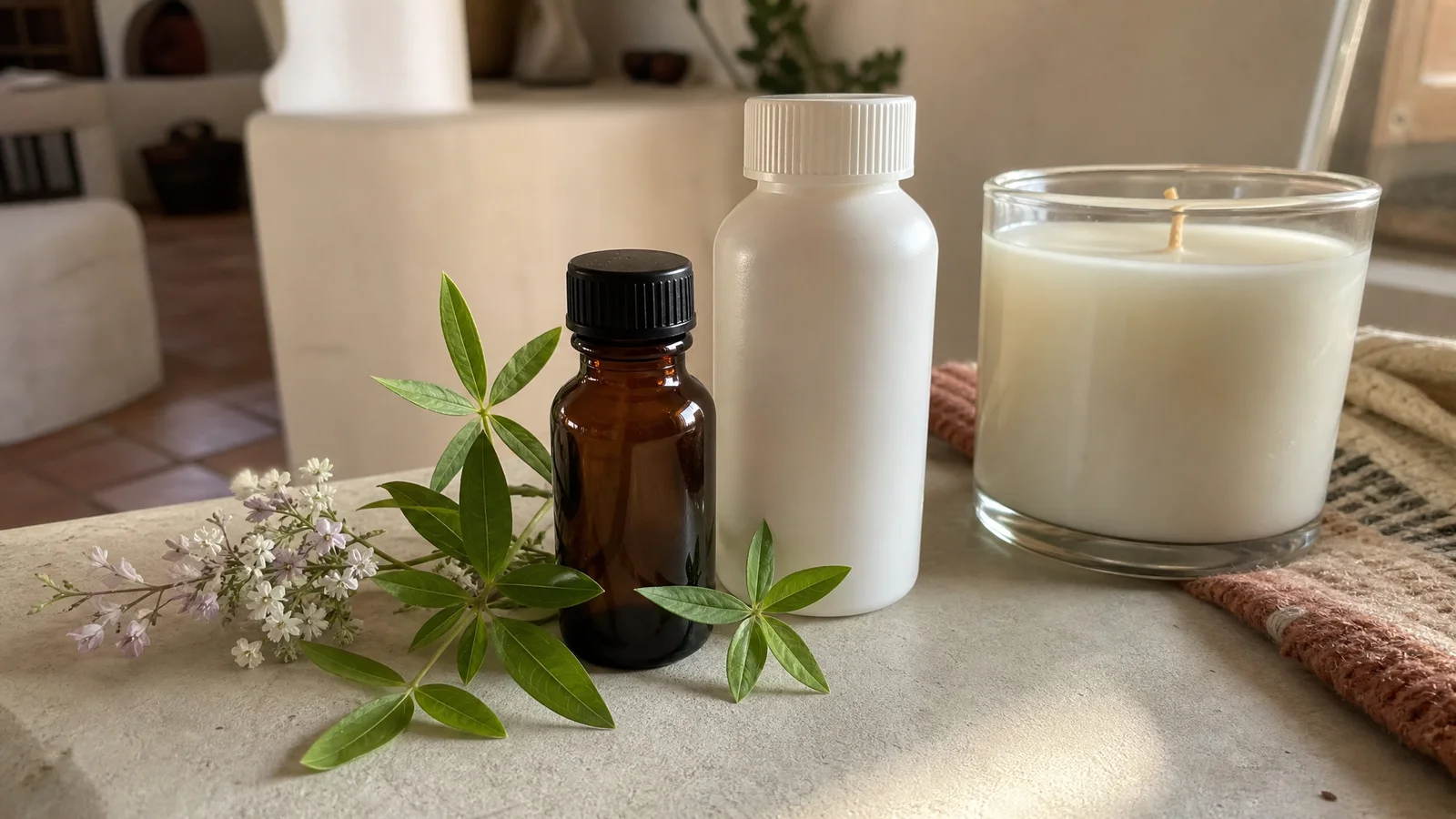
We sell one product, lemon verbena oil, steam-distilled from the leaves. The Certificate of Analysis for one of our batches lists a relative density of 0.869 and a refractive index of 1.472, which are physical checks and not a composition report. If you need to see the individual compounds, such as the citral pair, ask us in writing through the contact page before you order and keep the reply with your records. Our guide to reading a GC-MS report and the article on telling genuine oil apart go through what each line shows.
Different safety footing
The two oils are treated differently by IFRA. Litsea is handled through its citral content: the citral Standard caps citral at 0.15% of body lotions and oils, 0.60% of fine fragrance and 1.2% of some rinse-off products (IFRA Standard on citral). At the 78.7% to 87.4% citral of the Chinese samples, a 0.15% ceiling works out to roughly 0.17% to 0.19% litsea oil in a body oil, our arithmetic on one study's range.
Verbena has its own entry. IFRA's Standard 083 says verbena oils should not be used as a fragrance ingredient, citing sensitizing and phototoxic potential, and gives category limits only for the absolute (IFRA Standard 083). Our oil is sold neat and we suggest 0.5% to 2% in a carrier with a patch test first. We start at the low end ourselves and recommend you do too, since 2% sits well above the ceiling the citral arithmetic gives. Neither oil is for taking by mouth. Our safety article covers more of the detail.
A practical way to decide
Think about where the scent will live. A strong, simple lemon is good in a spray or a soap, where it needs to cut through quickly. A gentler lemon with some character is good where you want people to notice the scent slowly, such as a perfume-style blend or a room scent. Write the job at the top of a page, smell both on strips, and see which one fits the description.
Which to choose
Pick litsea when you want a bold, uncomplicated lemon and are happy to find it at a supply shop, since we do not sell it. Pick lemon verbena when you want the softer, herbal-floral lemon we describe, a more perfumed note that is less acidic than lemon peel. And if you are not sure what you were sold, ask the seller for the Latin name, the plant part, the method and a batch-matched composition report. Our lemongrass comparison works through the same questions for a third citral oil.
Litsea is no lesser oil for being a different one; it just has its own story, and the best protection for any buyer is a document that names the plant and the part.
Lemon Verbena Essential Oil
Lemon Verbena Essential Oil from our own shop, in sizes from 0.5 oz to bulk.
From $12.99
Shop Now →Sources & Further Reading
- Si L et al., 2012. Chemical composition of essential oils of Litsea cubeba harvested from its distribution areas in China. Molecules 17:7057-7066. PMC6268156
- Parichanon P et al., 2025. Chemical Profiling, Sensory Qualities, and Bioactivities of Essential Oils Obtained from Aloysia citrodora and Bursera graveolens Ecuadorian Plants Against the Mosquito Aedes albopictus (Skuse) (Diptera: Culicidae). Insects 16:202. PMC11857052
- Sprea RM et al., 2023. Volatile Compounds and Biological Activity of the Essential Oil of Aloysia citrodora Paláu: Comparison of Hydrodistillation and Microwave-Assisted Hydrodistillation. Molecules 28:4528. PMC10254266
- Oukerrou MA et al., 2017. Chemical Composition and Cytotoxic and Antibacterial Activities of the Essential Oil of Aloysia citriodora Palau Grown in Morocco. Adv Pharmacol Sci 2017:7801924. PMC5485486
- Elechosa MA et al., 2017. Essential oil chemotypes of Aloysia citrodora (Verbenaceae) in Northwestern Argentina. Biochem Syst Ecol 74:19-29. repositorio.inta.gob.ar
- IFRA. IFRA Standard: Citral, 2020 (Amendment 49). IFRA_STD_021
- IFRA. IFRA Standard: Verbena oil and absolute (Lippia citriodora Kunth.), 2020 (Amendment 49). IFRA_STD_083