Reading a Lemon Verbena GC-MS Report and Label
Two documents tend to come with a bottle of lemon verbena oil: the label, and sometimes a report. Each tells you something real, and neither tells you everything. Knowing which lines carry information turns them from paperwork into a genuinely useful tool, and it makes you a sharper buyer from any seller, including us.
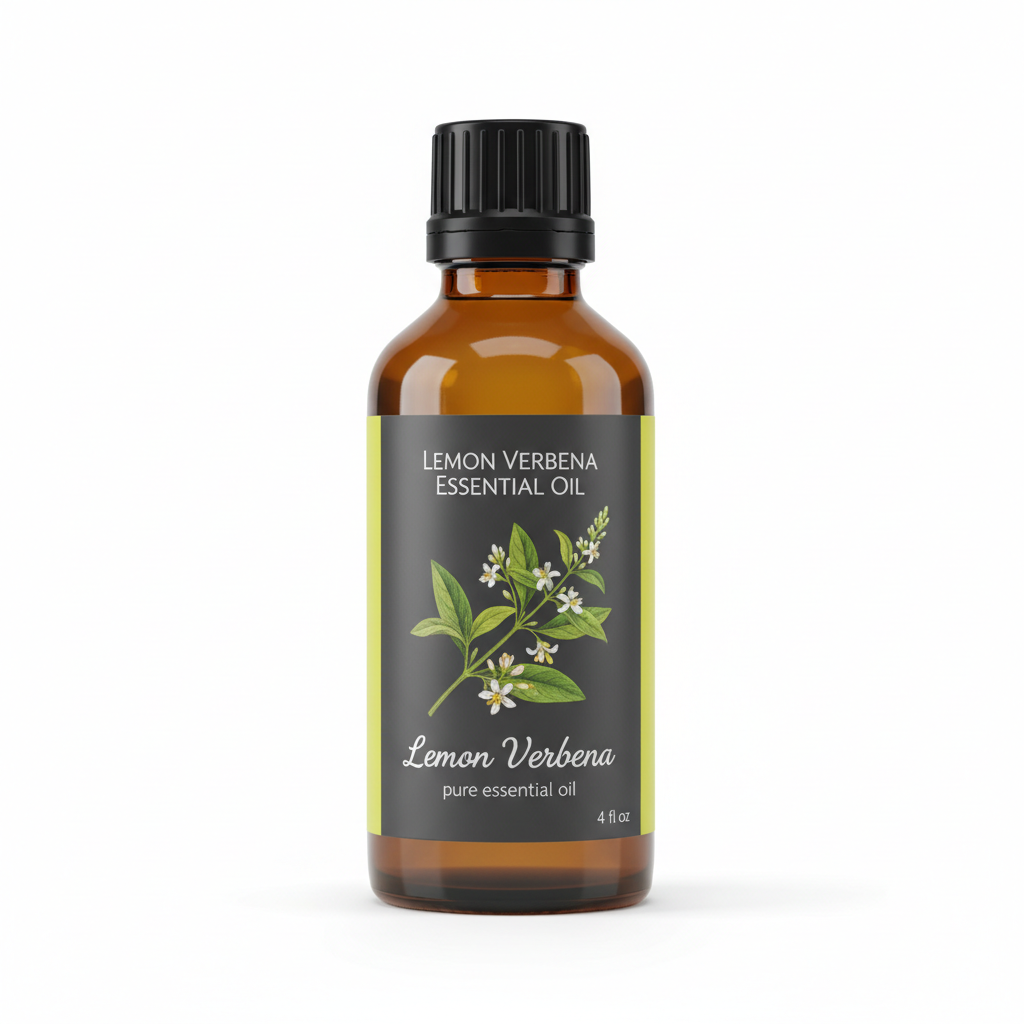
Lemon Verbena Essential Oil
Our own Lemon Verbena Essential Oil, in sizes from 0.5 oz to bulk.
From $12.99
Shop Now →The label: five lines worth reading
The Latin name. The accepted name is Aloysia citrodora. IFRA's verbena Standard lists Lippia citriodora, Aloysia triphylla and Zappania citrodora as synonyms for the absolute, so a different spelling is not a warning sign. The word "verbena" alone can be, since it may point to a different plant; our verbena and vervain article sorts that out.
The plant part. Ours is leaf, on the shop page and on the certificate.
The method. Steam distilled, in our case. As our process article shows, a method name is a short description, so it pairs best with a batch document.
A batch number and date. They let a report be matched to the bottle in your hand.
The ingredient wording. The FDA notes that fragrance ingredients can be listed simply as "Fragrance" and that "essential oil" has no regulatory definition, so a bottle labelled only "fragrance" tells you nothing about plant oil.
Inside a GC-MS report
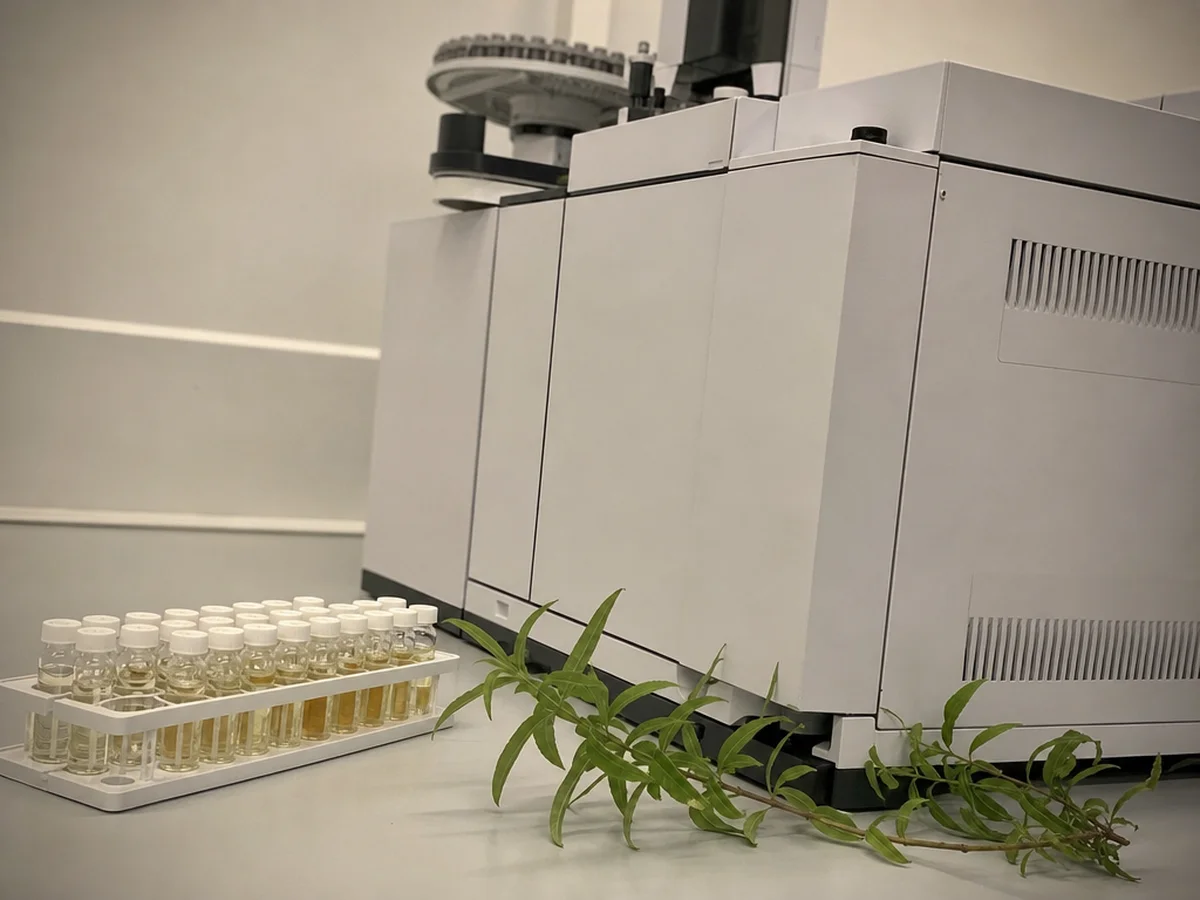
Gas chromatography separates the volatile compounds in a sample and mass spectrometry helps name each one. A readable report shows a batch or sample ID, the laboratory and date, a table of compounds, and how much of the total was identified. The published verbena papers set a good yardstick: the Ecuadorian study identified 40 compounds, the Moroccan one 64 of 72 peaks, and the Portuguese one 69 compounds covering about 88% of each oil. A sheet that names three compounds and totals 40% has told you little. Also check whether the percentages are described as relative shares of what was detected; that is what they normally are, not weights.
The compounds that earn attention
You do not need to memorise a whole table. Three families matter most.
- Geranial and neral, together citral. The lemon heart of the oil. Published values swing widely: about 48% combined in the Ecuadorian sample, roughly 34% to 37% in the Portuguese oils, and in the Moroccan oils no detectable geranial with neral at 6% to 10%. Citral is also on the EU's list of 26 fragrance allergens.
- Limonene. Around 5% to 7% in the Ecuadorian and Portuguese samples. It matters mostly for how an oil ages.
- Sesquiterpenes such as caryophyllene oxide and spathulenol. Big players in the Moroccan oils, minor elsewhere.
These are different leaves, years and methods, so they are not a ranking of origins. They simply show that a citral-light, sesquiterpene-rich report is not automatically wrong, and a citral-heavy one is not automatically right.
One conversion worth doing
The IFRA citral Standard (Amendment 49, 2020) caps citral at 0.60% in fine fragrance, including solid perfume, and at 0.15% in body oils and lotions. Divide the cap by the report's citral share and you get the most oil that rule alone would allow:
| Citral share | Fine fragrance (0.60%) | Body oil (0.15%) |
|---|---|---|
| 10% (Moroccan, upper end) | about 6% | about 1.5% |
| 34% (Portugal) | about 1.8% | about 0.44% |
| 48% (Ecuador) | about 1.3% | about 0.31% |
That is our arithmetic on published figures, and it describes none of our batches. It also overstates what is allowed, because IFRA separately says verbena oil should not be used as a fragrance ingredient. The point is the sensitivity: a single number on a report can move a dose ceiling by a factor of five. For that reason we start skin dilutions at the low end of our 0.5% to 2% guidance and do not call 2% safe.
Make it a habit
The first time you read a report it can feel like a wall of numbers. A kinder way in is to read it in the same order every time. Start with the name and batch at the top, then check the date, then look at the largest few lines, and only after that look at the rest. By the third or fourth report, you will find your eyes going to the same places without trying, and it stops feeling like homework.
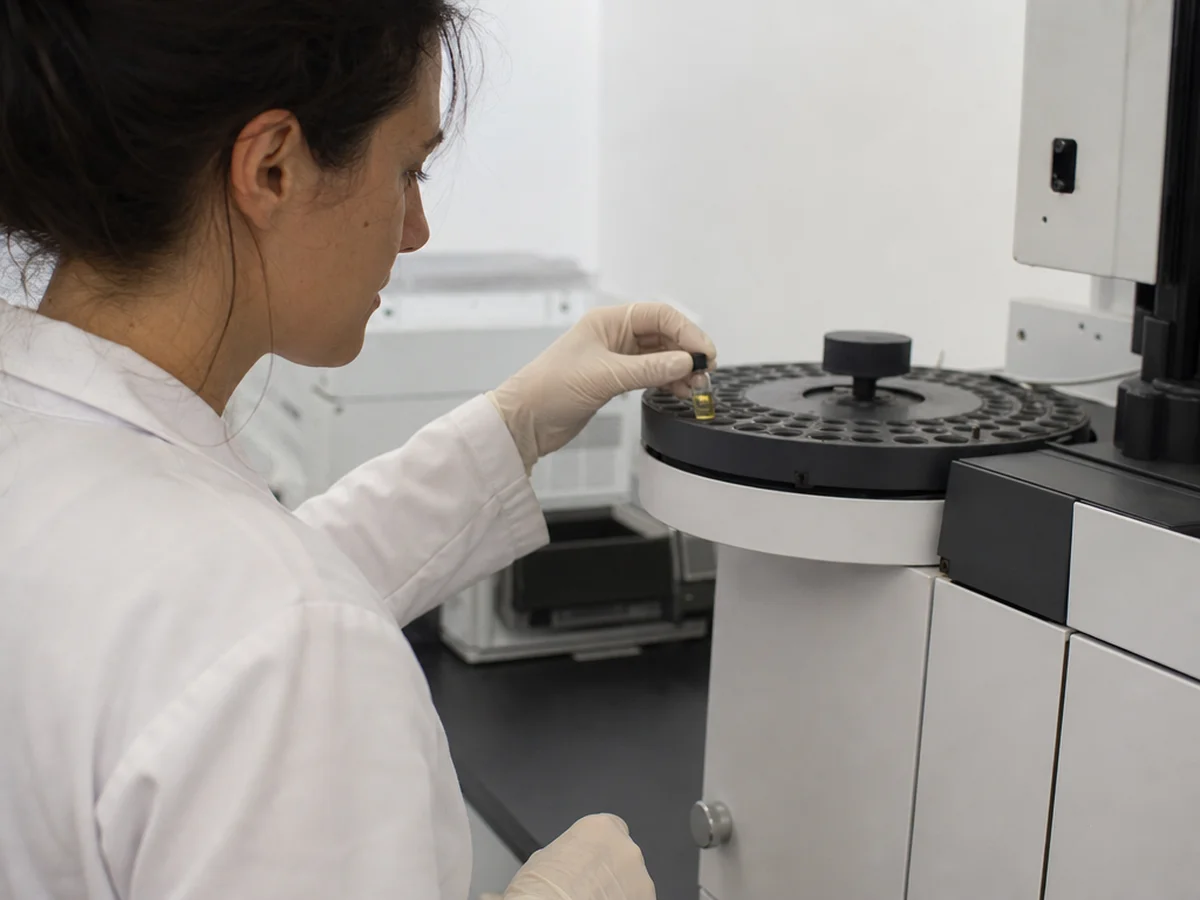
Keep a folder, paper or digital, with the report and a photo of the bottle label together. When you come back to the oil months later, you will be glad the two are side by side.
What no report can prove
GC and GC-MS detect only volatile and semi-volatile compounds, so a non-volatile additive can slip past, and a different profile can reflect region and season instead of tampering. There is overlap too: litsea cubeba fruit oils from eight Chinese regions were 79% to 87% citral, so citral alone cannot tell the two oils apart. Our litsea comparison picks that up.
Our certificate, as an example
The certificate we publish is for one batch. It lists the botanical name, the leaf, steam distillation, a best-by date, appearance and smell, a relative density of 0.869 at 20 C and a refractive index of 1.472, each within its stated range. It does not include a GC-MS or a citral figure. Density and refractive index are useful physical checks, though by themselves they cannot establish identity, which is our reading rather than a published finding. If you need composition data, ask us in writing through our contact page before you order, and keep the reply.
Questions are welcome
It is perfectly normal to write to a seller before you order, and a good one will be glad you did. Keep your message short and specific, name the batch number if you have it, and say what you plan to do with the oil. A clear question gets a clear answer, and that answer is something you can keep.
When you contact any seller, a good short list is: does a composition report exist for this batch number, which laboratory and date, how were percentages computed, is citral reported, and which origin and crop year. Our guide to checking lemon verbena oil before you buy adds the wider checks. Armed with a few good questions, you will read any label with confidence.
Lemon Verbena Essential Oil
Lemon Verbena Essential Oil from our own shop, in sizes from 0.5 oz to bulk.
From $12.99
Shop Now →Sources & Further Reading
- IFRA, 2020. IFRA Standard: Verbena oil and absolute (Lippia citriodora Kunth.), Amendment 49. IFRA_STD_083
- IFRA, 2020. IFRA Standard: Citral, Amendment 49. IFRA_STD_021
- Volatile Compounds and Biological Activity of the Essential Oil of Aloysia citrodora Paláu: Comparison of Hydrodistillation and Microwave-Assisted Hydrodistillation. Molecules, 2023. PMC10254266
- Chemical Profiling, Sensory Qualities, and Bioactivities of Essential Oils Obtained from Aloysia citrodora and Bursera graveolens Ecuadorian Plants Against the Mosquito Aedes albopictus (Skuse) (Diptera: Culicidae). Insects, 2025. PMC11857052
- Chemical Composition and Cytotoxic and Antibacterial Activities of the Essential Oil of Aloysia citriodora Palau Grown in Morocco. Advances in Pharmacological Sciences, 2017. PMC5485486
- Chemical composition of essential oils of Litsea cubeba harvested from its distribution areas in China. Molecules, 2012. PMC6268156
- Fragrances in Cosmetics. FDA. fda.gov
- Allergens in Cosmetics. FDA. fda.gov