What Blends Well With Lemon Verbena Oil?
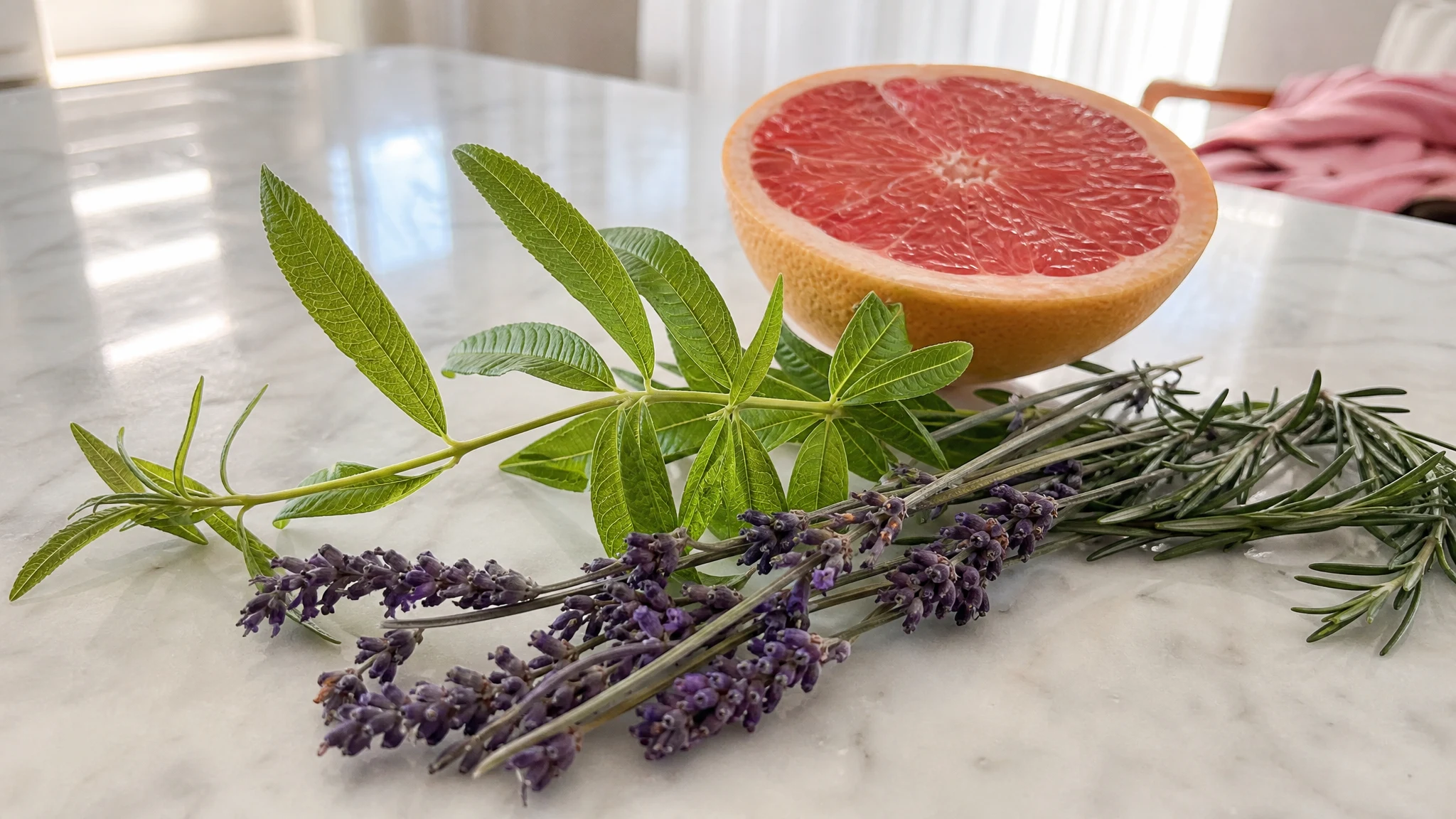
Lemon verbena already does the hard part: it smells like a sunny lemon with manners. The question that matters when you blend is what to put beside it so the sparkle stays. We say it blends well with neroli, lavender, geranium and cedarwood, and our bulk page adds bergamot and petitgrain to that list. Here is why those partners make sense.
Lemon Verbena Essential Oil
Our own Lemon Verbena Essential Oil, in sizes from 0.5 oz to bulk.
From $12.99
Shop Now →Why citrus-tree oils are the natural match
Verbena's lemon character comes mostly from citral, the pair of compounds geranial and neral. It is a bright, round lemon, and PubChem's odor notes for citral are as direct as they come: "strong lemon odor". Limonene, the main compound in citrus peel oils, gets a gentler description there: pleasant and lemon-like.
Now think about a bitter orange tree. It gives three different oils from one plant: a peel oil, neroli from the blossom and petitgrain from the leaves. A Greek study that distilled a bitter orange tree found a peel oil that was about 95% limonene, a blossom oil led by linalool (29%), and leaf oils led by linalool at 36% to 58%, depending on how old the leaves were (Sarrou et al., 2013). That helps explain the pairing. Linalool smells floral and fresh, and PubChem records its odor as similar to bergamot oil and French lavender. So neroli and petitgrain bring a floral, green softness that lemon verbena does not have, without competing for the lemon.
The partners, one at a time
Neroli. The blossom oil is led by linalool, so it brings a soft floral note that rounds the edges of the lemon and gives a blend a cologne-like feel.
Petitgrain. If neroli is the flower, petitgrain is the leafy stem. It is linalool-rich too, and comes from the leaf. The Greek study also shows that petitgrain varies with the age of the leaves, so smell your bottle before you trust a recipe.
Bergamot. The citrus partner with a built-in floral side. Linalyl acetate, one of its main compounds, is described as bergamot-lavender in odor and sweet and fruity, which is why bergamot slides so easily beside both verbena and lavender. If you use it on skin, look for bergapten-free bergamot, labelled FCF. Normal bergamot oil carries a compound that makes skin sensitive to light, and the Tisserand Institute notes that the bergapten-free version is considered non-phototoxic. Verbena already asks for sun awareness, so there is no reason to double it up.
Lavender. Lavender shares linalool and linalyl acetate with the oils above, so it behaves like a bridge between them. We would use a light hand so the lemon stays in front.
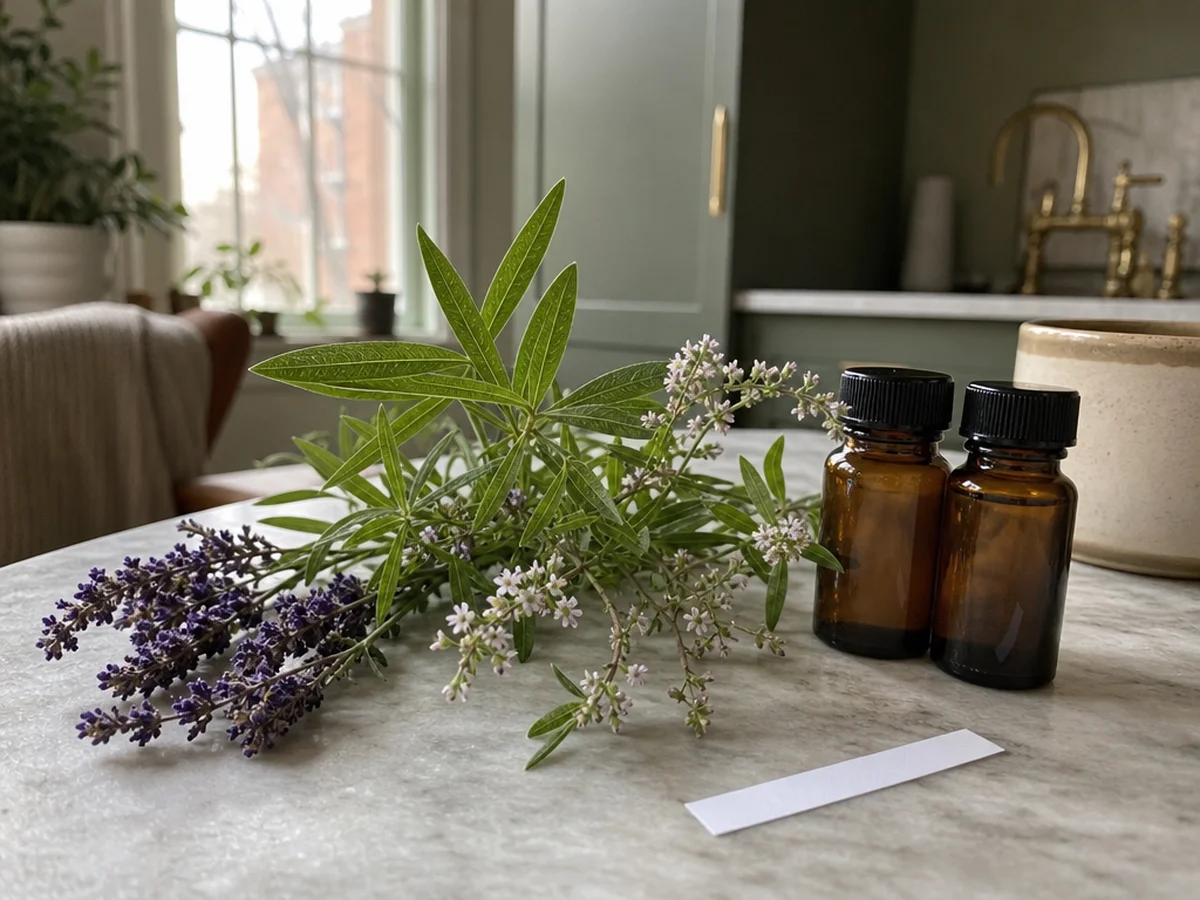
Geranium, cedarwood and sandalwood. We list all three as friends of lemon verbena. Geranium adds a floral note from a different plant family. Cedarwood and sandalwood give you a woody base for the lemon to rest on; since verbena sits at the top-to-middle of a scent, a base like that gives the blend something to stand on once the sparkle fades. Use paper strips to find a balance you like.
Picture the blend as a small garden
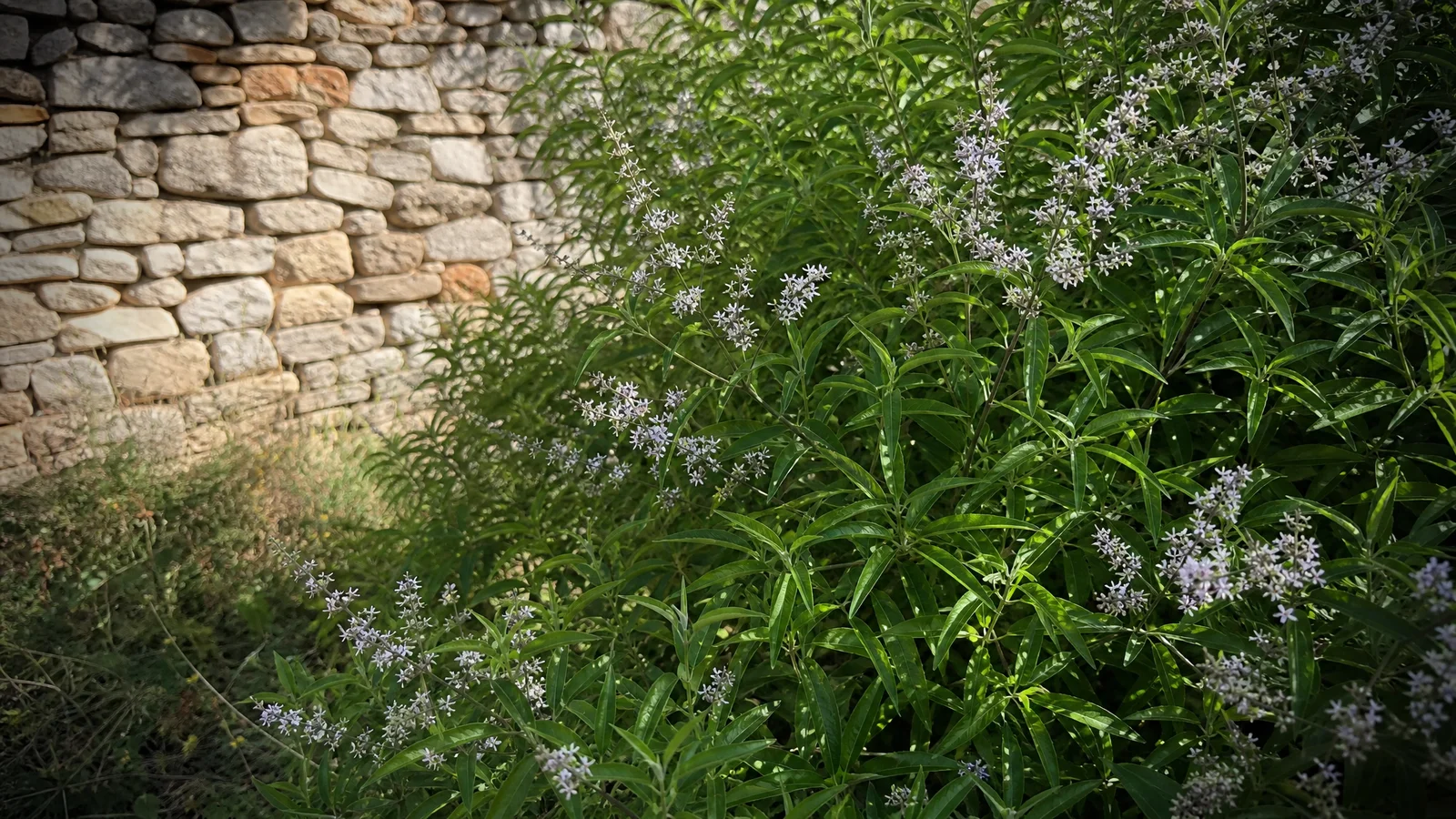
We like to think of a blend as a small garden. Lemon verbena is the bright shrub by the gate. Neroli and petitgrain are the orange tree in the corner, flower and leaf. Lavender and geranium are the soft border plants, and cedarwood and sandalwood are the stone path and the warm wall behind it. You would not plant six shrubs of the same kind side by side, and the same goes for a blend: give each oil a different job and the whole thing looks and smells settled.
Why a second lemon is not a partner
It is tempting to add litsea cubeba, lemongrass or melissa for extra lemon. All of them are rich in citral, so you are not adding something new, you are turning up the volume on what verbena already does. That also matters for safety: the fragrance industry's citral standard sets limits on citral in a finished product however many oils supplied it (IFRA). If you love the extra zing, our litsea comparison and the lemon-scented oils guide explain how these oils differ.
Little ways to compare partners
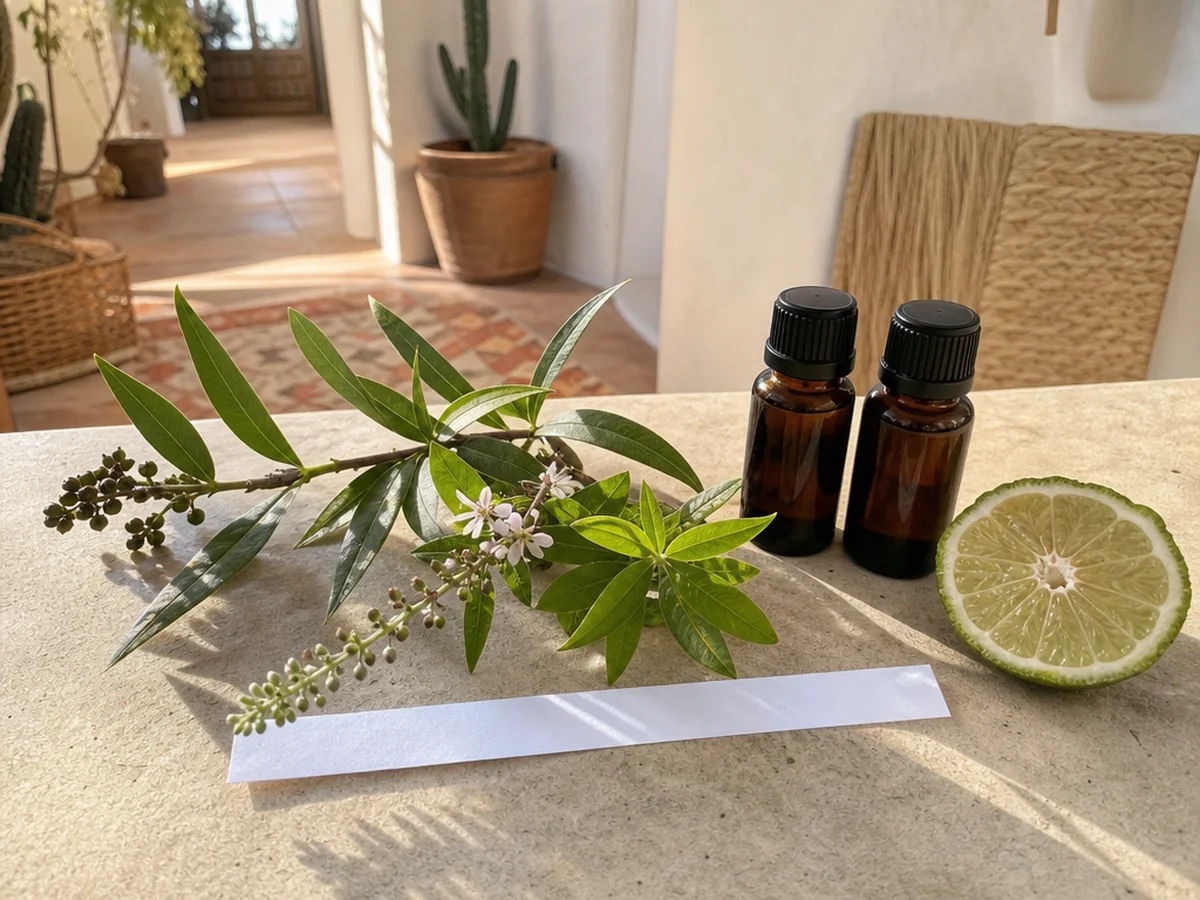
If you can, set up a tiny tasting. Put verbena on one strip, a partner on another, and a third strip with both. Smell them in that order, then breathe in some fresh air and smell them again. You will notice that the blended strip does something neither of the single ones does, a sort of third scent. Do this with two or three partners in a row and you will quickly find which companions make you smile and which just make the room crowded.
How to try a blend
- Smell on paper first. Put the verbena and one partner on separate strips, wave them together and decide before you open a diffuser. The scent profile article shows how.
- Change one oil at a time. A mix of four new oils tells you nothing about any of them.
- Keep verbena in front. We would start with more verbena than partner and adjust. That is a starting suggestion, not a rule, and our ratio article works through parts.
- Buy partners from a craft or aromatherapy supplier. We sell only lemon verbena oil. Ask for a batch GC-MS report on anything you buy, and for composition data on ours, ask us in writing through the contact page.
We would keep these blends in the air. IFRA's verbena standard advises against verbena oil as a fragrance ingredient, so a diffuser or a candle is a gentler home than skin; our safety article collects what each authority says. Households with a cat, dog or bird should read the pets article before diffusing.
The best pairing is the one that leaves you smiling when you lift the strip, so trust your nose over any list, including ours.
Lemon Verbena Essential Oil
Lemon Verbena Essential Oil from our own shop, in sizes from 0.5 oz to bulk.
From $12.99
Shop Now →Sources & Further Reading
- Volatile constituents and antioxidant activity of peel, flowers and leaf oils of Citrus aurantium L. growing in Greece, Molecules, 2013
- PubChem: Linalool (CID 6549), odor section
- PubChem: Linalyl Acetate (CID 8294), odor section
- PubChem: Citral (CID 638011), odor section
- Phototoxicity: essential oils, sun and safety - Tisserand Institute
- IFRA Standard: Citral, 2020 (Amendment 49)
- IFRA Standard: Verbena oil and absolute (Lippia citriodora Kunth.), 2020 (Amendment 49)