Lemon Verbena vs Melissa: Same Citral, Different Plants
Put lemon verbena and melissa side by side on a shelf and your nose says "lemon" twice. Both are leaf oils, both are talked about in the same breath, and both owe much of that lemon character to citral, a pair of compounds called geranial and neral. The more interesting question is how reliably each oil delivers it, and the research gives a livelier answer than the shelf does.
Lemon Verbena Essential Oil
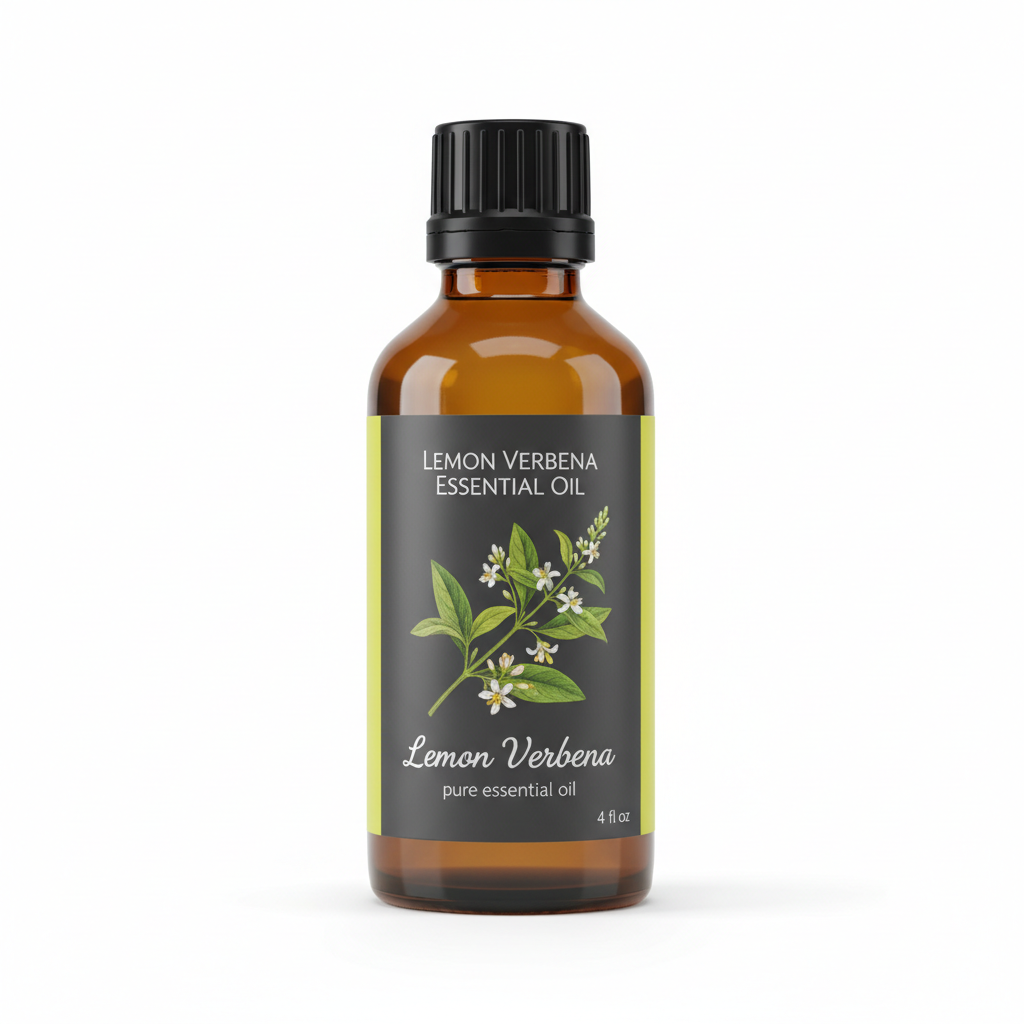
Our own Lemon Verbena Essential Oil, in sizes from 0.5 oz to bulk.
From $12.99
Shop Now →Two unrelated plants with one shared trick
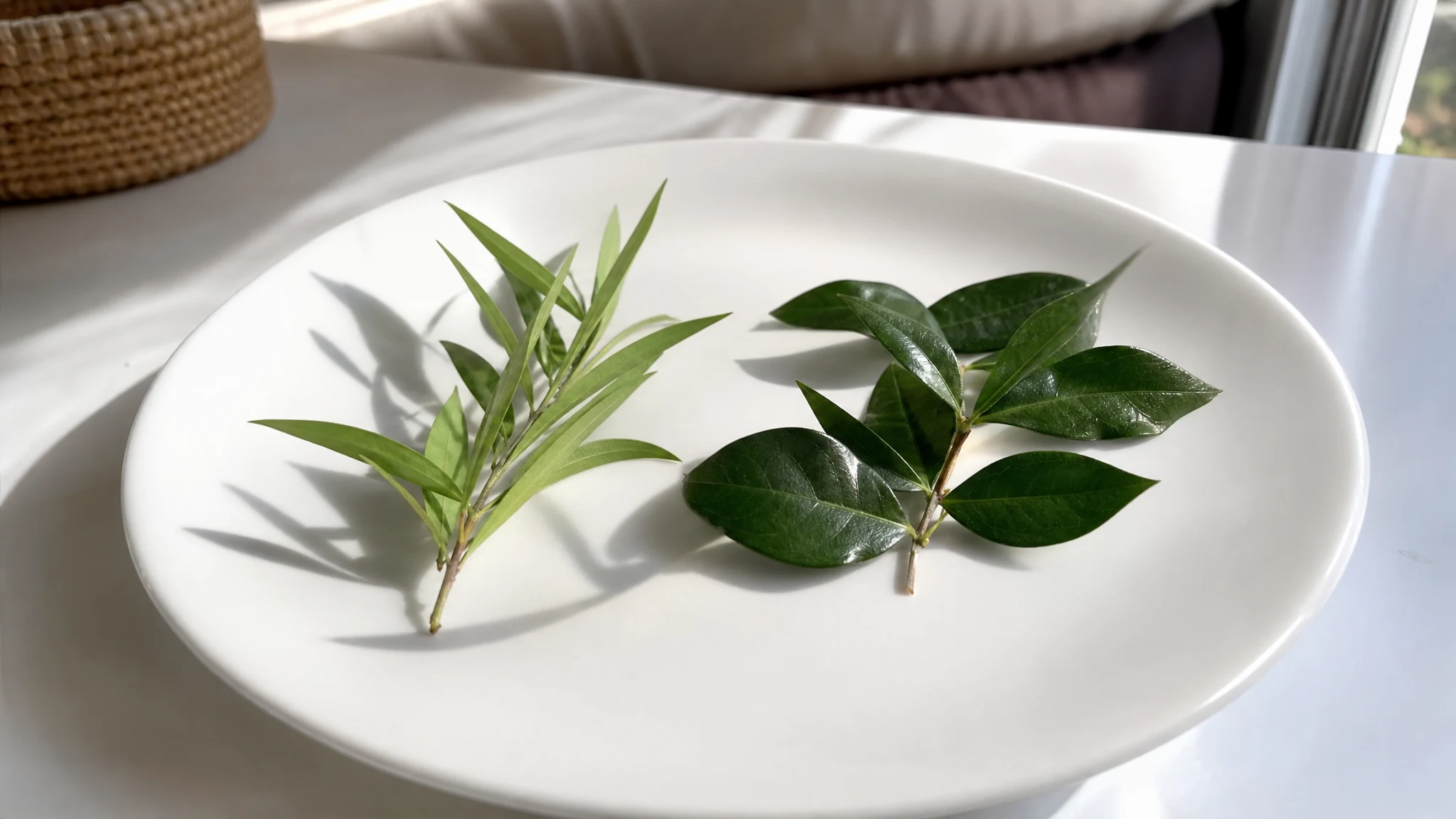
Lemon verbena is Aloysia citrodora, in the verbena family. Melissa, also called lemon balm, is Melissa officinalis, in the mint family. They share a flavour of lemon and very little else. We sell the verbena, steam-distilled from the leaves, so this is a guide to how the two compare in the literature, not a pitch for melissa.
On the strip
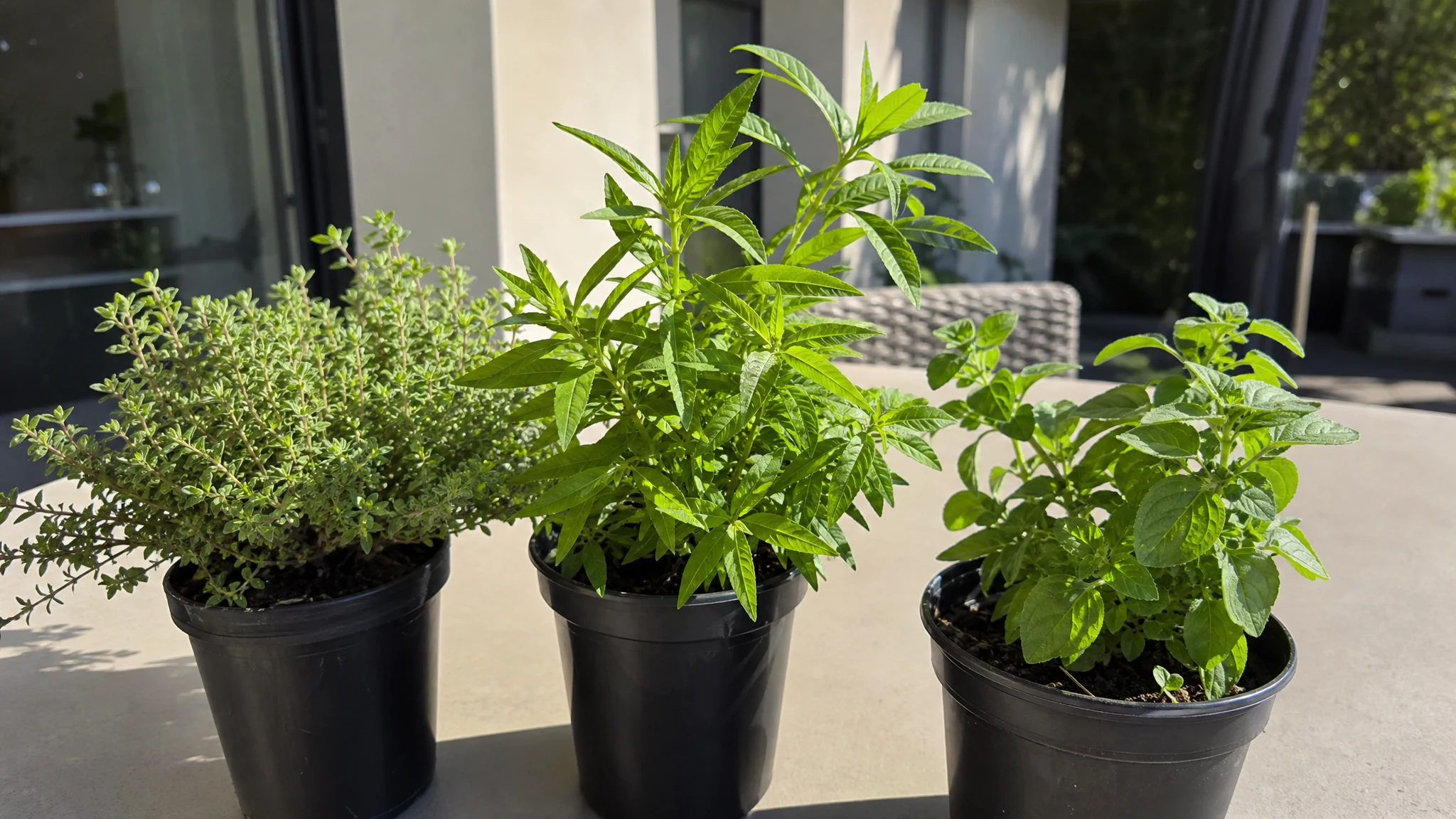
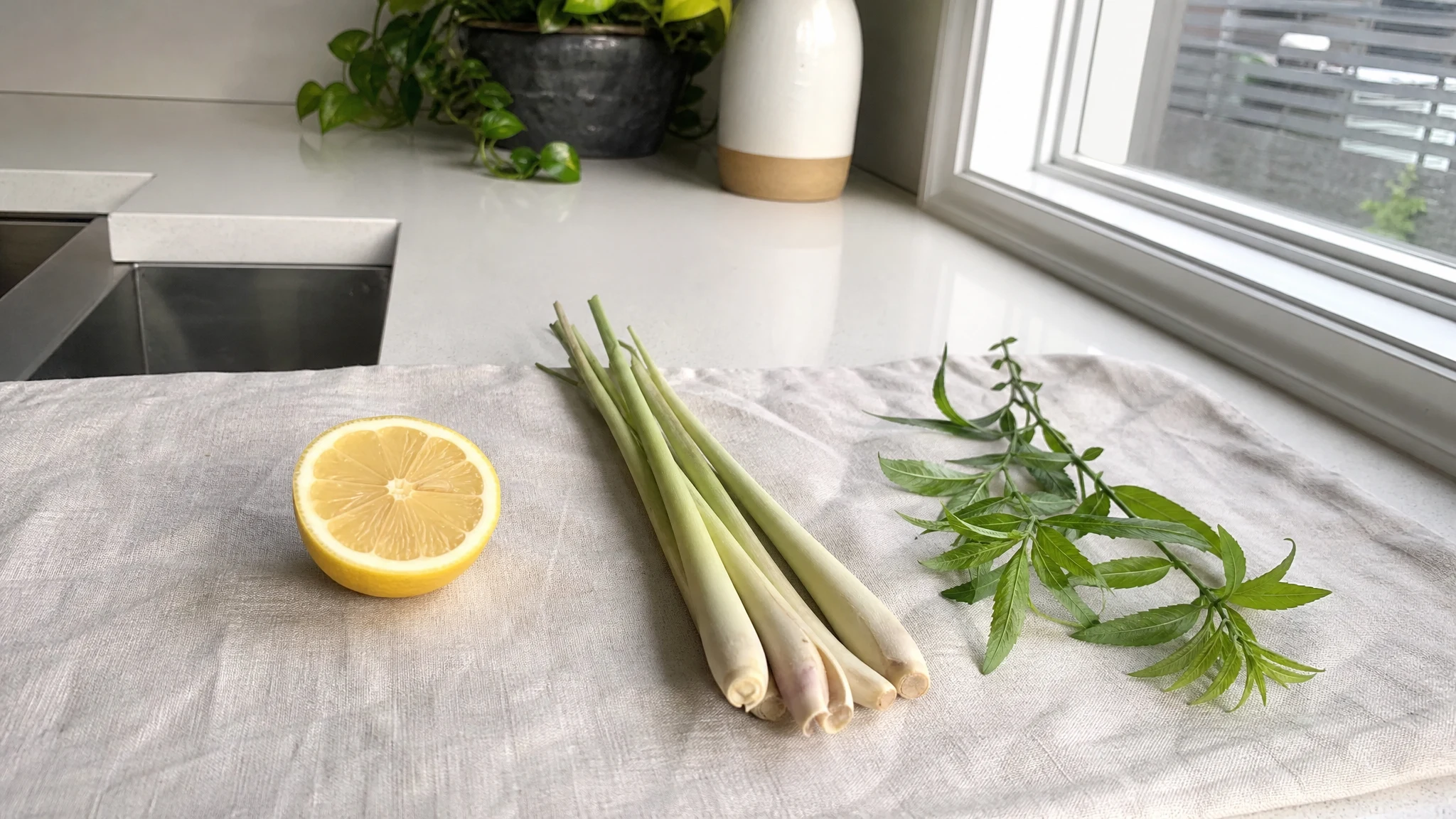
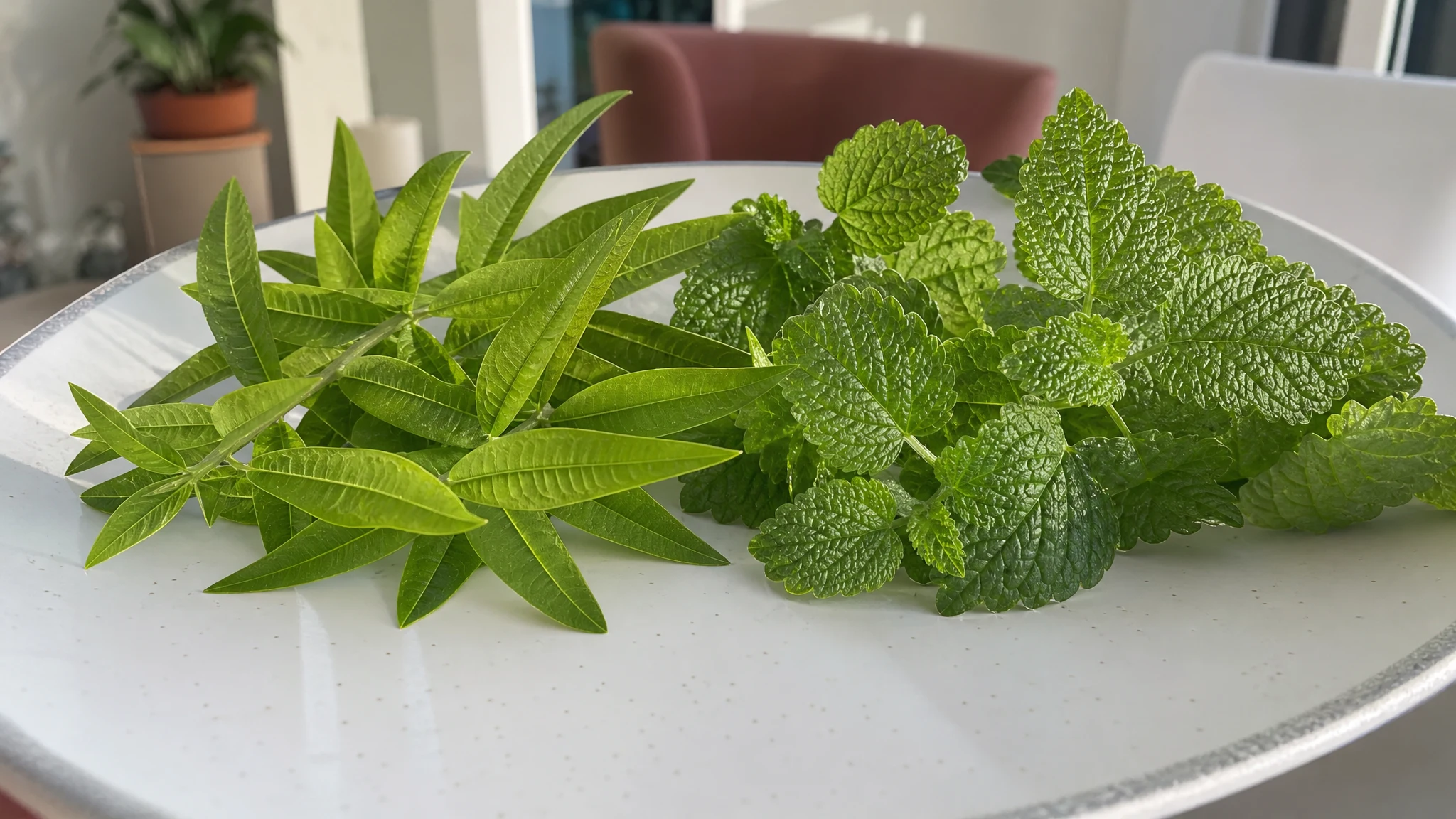
Smell them together and the family resemblance is clear, though the personalities are not the same. Lemon verbena is sparkling and sweet, with a soft herbal-floral heart. Melissa has a lemon of its own, often described as green and gentle. If you have only ever smelled the leaves of the plants in a garden, you will recognise the idea: crush a lemon balm leaf and a lemon verbena leaf and they smell related, but not twins.
Citral side by side
The table sets published analyses next to each other. They come from different places, harvests and stills, so read them as a feel for the range, not as a ranking.
| Oil and source | Geranial | Neral | Also notable |
|---|---|---|---|
| Melissa, review of many studies (Petrisor et al., 2022) | 6.22 to 51.21% | 4.28 to 35.02% | Citronellal up to 20.3%; caryophyllene oxide up to 43.55% |
| Melissa, German collection, second cut (Chizzola et al., 2018) | Together 80 to 90% | First-cut oils varied far more | |
| Verbena, Ecuador (Parichanon et al., 2025) | 26.8% | 21.0% | Limonene 7.2% |
| Verbena, Portugal (Sprea et al., 2023) | 18.7 to 21.1% | 15.3 to 16.2% | Two distillation methods |
| Verbena, Morocco (Oukerrou et al., 2017) | Not detected | 6.37 to 10.02% | Led by caryophyllene oxide and spathulenol |
Two things stand out. Melissa is nearly as variable as verbena: the review's geranial figures run from about 6% to over 50%. And the German collection shows how much timing matters. The second cut of the season was uniformly citral-rich while the first cut was not, so one plant at two moments gave two different oils. For verbena the Moroccan samples make the same point from another direction, with no geranial at all. Either name on a label tells you the plant, not the profile.
Yield does not settle the story
It is often said that these two are rare because the plants give up so little oil. The papers are less tidy. For melissa the review lists single studies at 0.08 to 0.37% and one collection of 28 accessions spanning 0.01 to 0.72%. Verbena runs from 0.1 to 0.2% in the Moroccan and Ecuadorian work up to 1.05 and 1.29% in the Portuguese study. Those ranges overlap, so on this evidence neither plant is the clear low-yielder. We leave pricing to the shop page, since yield on its own cannot explain it.
What a citral oil means for dilution
Both oils run into the same rule. IFRA's citral standard caps citral in the finished product, whichever oil it comes from: 0.15% in body lotions and oils (Categories 5A to 5C) and 1.2% in rinse-off products like soap (Category 9) (IFRA citral Standard, Amendment 49). Applying that to a whole oil is our own arithmetic: the oil share equals the cap divided by the oil's citral fraction. A verbena like the Ecuadorian sample reaches 0.15% citral at about 0.31% oil, and like the Portuguese sample at about 0.44%. A melissa at 85% citral reaches it at about 0.18%.
That is why we give our 0.5% to 2% skin guidance as a range to work down from. We start at the low end, patch test first, and treat 2% as a ceiling to check against your own formulation. IFRA's separate verbena standard also advises against the oil as a fragrance ingredient (IFRA, 2020), and our IFRA article walks through its wording. The certificate we publish for one batch lists density and refractive index but not citral, so if composition matters to your project, ask us in writing through the contact page before you order.
What to ask any seller
Whichever one you are drawn to, a few plain questions keep you on firm ground. Ask for the Latin name, the plant part, how it was made, and the batch number. Ask whether there is a written report for that batch, and keep the reply with your records. These questions work for any lemony oil, and a seller who answers them calmly is one you can trust to answer the next ones.
Do not be shy about starting small. A little of each, a few paper strips and an afternoon of sniffing will teach you more about your own taste than any table, and you will know exactly which one you want more of. When you do, larger sizes are on our bulk page, and our guide to buying lemon verbena oil in bulk covers what to check before buying more.
Choosing between them
Our verbena smells sparkling, sweet and lemony over a soft herbal-floral heart, less acidic and more polished than lemon peel oil. For the comparison with the other lemon-note oils, lemongrass and litsea cubeba each have their own page. Whichever leaf you pick, the pleasure is in the lemon, and a little goes a long way.
Lemon Verbena Essential Oil
Lemon Verbena Essential Oil from our own shop, in sizes from 0.5 oz to bulk.
From $12.99
Shop Now →Sources & Further Reading
- Petrisor et al., 2022. Melissa officinalis: Composition, Pharmacological Effects and Derived Release Systems-A Review. International Journal of Molecular Sciences 23(7):3591. pmc.ncbi.nlm.nih.gov
- Chizzola, Lohwasser and Franz, 2018. Biodiversity within Melissa officinalis: Variability of Bioactive Compounds in a Cultivated Collection. Molecules 23(2):294. pmc.ncbi.nlm.nih.gov
- Parichanon et al., 2025. Chemical Profiling, Sensory Qualities, and Bioactivities of Essential Oils Obtained from Aloysia citrodora and Bursera graveolens Ecuadorian Plants Against the Mosquito Aedes albopictus (Skuse) (Diptera: Culicidae). Insects 16(2):202. pmc.ncbi.nlm.nih.gov
- Sprea et al., 2023. Volatile Compounds and Biological Activity of the Essential Oil of Aloysia citrodora Paláu: Comparison of Hydrodistillation and Microwave-Assisted Hydrodistillation. Molecules 28(11):4528. pmc.ncbi.nlm.nih.gov
- Oukerrou et al., 2017. Chemical Composition and Cytotoxic and Antibacterial Activities of the Essential Oil of Aloysia citriodora Palau Grown in Morocco. Advances in Pharmacological Sciences. pmc.ncbi.nlm.nih.gov
- IFRA, 2020. IFRA Standard: Citral, Amendment 49. d3t14p1xronwr0.cloudfront.net
- IFRA, 2020. IFRA Standard: Verbena oil and absolute (Lippia citriodora Kunth.), Amendment 49. d3t14p1xronwr0.cloudfront.net