
Lemon Verbena Oil and IFRA Standards: What the Text Says
IFRA's published Standard on lemon verbena says the oil should not be used as a fragrance ingredient at all. Only the absolute, a different material, has category limits. We sell the steam-distilled oil, so this page starts with that plain fact and then explains what it does and does not mean for a perfumer, soap maker or candle maker who reads it.
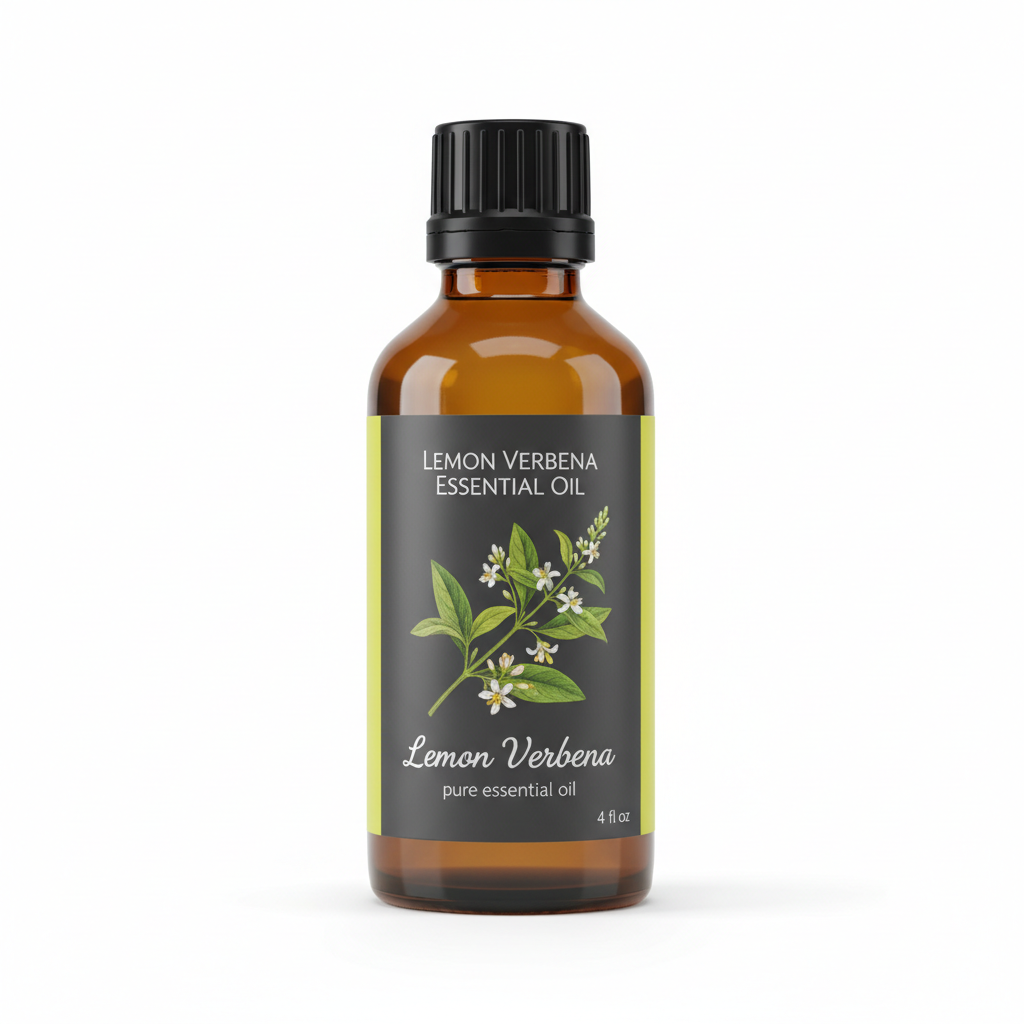
Lemon Verbena Essential Oil
Our own Lemon Verbena Essential Oil, in sizes from 0.5 oz to bulk.
From $12.99
Shop Now →What the Standard says, line by line
The text is "Verbena oil and absolute (Lippia citriodora Kunth.)", published in 2020 as part of Amendment 49 (IFRA, 2020). The Amendment 49 text cited here is the copy hosted by IFRA's Brazilian affiliate; IFRA's older numbered link for this Standard now opens a different Standard, so the numbering has moved. Its recommendation line reads "RESTRICTION / PROHIBITION". The two halves are:
- Oil (CAS 85116-63-8): "Verbena oils from Lippia citriodora Kunth. should not be used as a fragrance ingredient, based on its sensitizing and phototoxic potential." The Expert Panel for Fragrance Safety added that it recommends "not to use Verbena oil in any finished product application."
- Absolute (CAS 8024-12-2): restricted by category, because of phototoxicity, with the note "Only Verbena absolutes from Lippia citriodora Kunth. can be used as a fragrance ingredient."
Implementation dates were February 10, 2021 for new submissions and February 10, 2022 for existing fragrance compounds, and IFRA states they apply to the supply of fragrance mixtures, not to finished products already on shelves. The plant is Aloysia citrodora today; IFRA's synonym list includes Aloysia triphylla and Lippia citriodora, which is why a search under the current name can miss it.
Is it still current? IFRA's 51st Amendment index, dated 30 June 2023, still lists the entry as both Restriction and Prohibition with a 2020 publication year (IFRA, 2023). IFRA's own news page says a 52nd Amendment consultation closed on 12 June 2026, with notification expected in January 2027. That package withdraws eight individual natural complex substance Standards and revises three phototoxicity Standards, and I could not tell from the page whether the verbena entry is among them (IFRA, 2026). Check the library before you rely on any number here.
Who is actually bound
IFRA calls its Standards voluntary and also "mandatory for IFRA members, as part of the IFRA Code of Practice"; it says members produce around 80 per cent of global fragrance volume, and that companies must still follow national and local law (IFRA, 2026). So the Standard is not a statute. In practice it binds the fragrance houses that belong to IFRA, and it travels down the chain as a certificate request: a brand may ask its supplier for a certificate of conformity with the Standards.
The law that does name verbena is European. Commission Directive 2009/164/EU records that verbena oil was banned in cosmetics on the SCCNFP's finding of "sensitising potential", that derivatives other than the absolute remain prohibited "when used as a fragrance ingredient", and that the absolute may not exceed 0.2% in the finished cosmetic (European Commission, 2009). That Directive amended a law since replaced by the Cosmetics Regulation, and I did not read today's consolidated annex, so a maker selling into the EU needs a regulatory consultant to confirm the current entry.
For the United States, FDA does not pre-approve cosmetics or their ingredients (colour additives aside) and holds the company responsible for safety and labelling (FDA, 2026). Nothing I fetched from FDA mentions IFRA, so the IFRA text works as the benchmark you would be asked to justify departing from, not as a rule FDA enforces.
Where the categories come in, and why they do not rescue the oil
IFRA sets limits per product category, 12 of them since Amendment 49, each grouped by how the product is used. The Guidance document places body creams and oils in Category 5A, fine fragrance in Category 4, bar soap and bath oils in Category 9, and candles in Category 12 (IFRA, 2023). The table sets the absolute's limits beside the separate Citral Standard, because citral is the constituent most often discussed in lemon verbena oil (IFRA, 2020).
| Category | Typical products (IFRA Guidance) | Verbena absolute limit | Citral limit |
|---|---|---|---|
| 2 | Axilla products | 0.037% | 0.032% |
| 4 | Fine fragrance | 0.69% | 0.60% |
| 5A | Body creams, oils, lotions | 0.17% | 0.15% |
| 9 | Soap, shower gel, bath products | 1.3% | 1.2% |
| 12 | Candles, no direct skin contact | No restriction | No restriction |
The verbena column belongs to the absolute and does not transfer to the oil. The Standard names no category in which the oil is allowed, and the Expert Panel wording covers "any finished product application", candles included. This is where I part company with the common advice to look up your category and dilute to the number: there is no number for the oil in the IFRA text I read.
The conversion you can still do: citral arithmetic
A buyer who holds a GC-MS report can ask a different question: how much oil would keep citral under its own Standard, ignoring the verbena prohibition? The answer is the citral limit divided by the citral share of the oil. Published shares vary widely. A Portuguese study of dried leaf found geranial 18.7% and neral 15.3% by Clevenger distillation (34.0% together) (Sprea et al., 2023); a Palestinian study found geranial alone at 47.62% and 43.46% in two oils (Jaradat et al., 2021). The figures below are illustrations built on those studies, not a statement about our oil, whose published Certificate of Analysis carries no constituent data.
| Citral share assumed | Cat 5A (0.15%) | Cat 4 (0.60%) | Cat 9 (1.2%) |
|---|---|---|---|
| 20% | 0.75% oil | 3.0% oil | 6.0% oil |
| 34% | 0.44% oil | 1.8% oil | 3.5% oil |
| 47.6% | 0.32% oil | 1.3% oil | 2.5% oil |
Turn one cell into drops. A 0.5 oz roller bottle holds 14.79 ml. Taking Category 4 at a 34% citral share, 1.8% oil is 0.26 ml, about 5 drops at 20 drops per ml (droppers vary, so weigh: 1 ml of our batch is about 0.869 g, from the relative density on the published COA). Now the sobering part. The shop's own skin guidance runs 0.5% to 2% in a carrier. At 34% citral, 0.5% oil already contributes 0.17% citral, above the Category 5A citral limit of 0.15%, and 2% contributes 0.68%. That is reasoning from another lab's oil, and it is why I would not call the dilution range a compliance figure.
What we do and do not hold
We publish no IFRA certificate, no SDS and no allergen declaration, and the published COA records appearance, smell, a relative density of 0.869 and a refractive index of 1.472 for the batch it names. If you formulate for sale, get any certificate or GC-MS report from a supplier in writing before you order, not afterwards. IFRA's Guidance also lists "aromatherapy applications" among uses outside the scope of the RIFM assessments behind the Standards; I report that line as written and draw no conclusion from it about any product.
Who to ask: a regulatory consultant or cosmetic chemist for the category, the claim and the market, and your retailer for what paperwork it wants. For making and personal use rather than selling, the skin side is in our skin basics post, the wider hazard picture is in the safety guide, and a body-oil formulation worked from this arithmetic is in the skincare recipes post. We sell only the oil; if you want the material IFRA does set limits for, an absolute comes from a perfumery supplier, and oil, absolute and hydrosol compared explains the difference.
The short version: read the Standard yourself, treat the oil as outside IFRA's allowed list, and let a professional confirm anything you plan to sell.
Lemon Verbena Essential Oil
Lemon Verbena Essential Oil from our own shop, in sizes from 0.5 oz to bulk.
From $12.99
Shop Now →Sources & Further Reading
- IFRA, 2020. IFRA Standard: Verbena oil and absolute (Lippia citriodora Kunth.), Amendment 49. abifra.org.br/213-Verbena-oil-and-absolute
- IFRA, 2020. IFRA Standard: Citral, Amendment 49. perfumersworld.com/IFRA-Standards/Citral.pdf
- IFRA, 2023. Index of IFRA Standards, 51st Amendment, and Guidance for the use of IFRA Standards. ifra-51st-amendment-index
- IFRA, 2026. IFRA Standards overview and 52nd Amendment end of consultation letter. ifrafragrance.org/52nd-amendment
- European Commission, 2009. Directive 2009/164/EU. legislation.gov.uk/eudr/2009/164
- FDA, 2026. Cosmetics and U.S. Law. fda.gov/cosmetics-us-law
- Sprea et al., 2023. Molecules 28(11):4528. PMC10254266
- Jaradat et al., 2021. BMC Complement Med Ther 21:143. PMC8130314