Lemon Verbena Blends for Spring and Summer Rooms
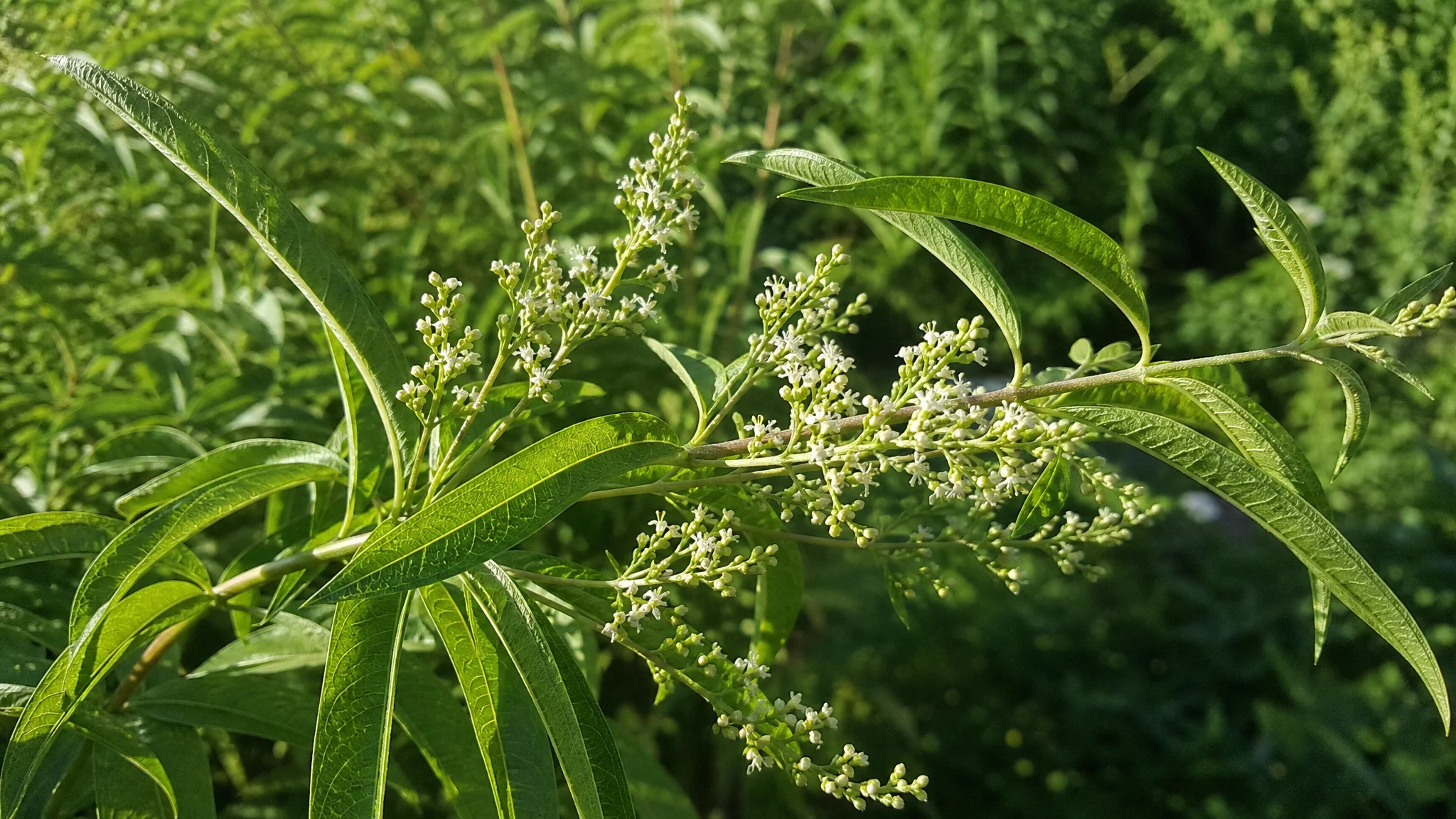
Lemon verbena is a summer scent by nature: bright, sweet and lemony, with a soft herbal-floral heart. When the windows open, it is the kind of oil that seems to belong in the air. The pairings below are for rooms, and we share them as ratios worked out from published compositions. We sell the lemon verbena oil only, so the partner oils come from a perfumery-supplies or aromatherapy seller.
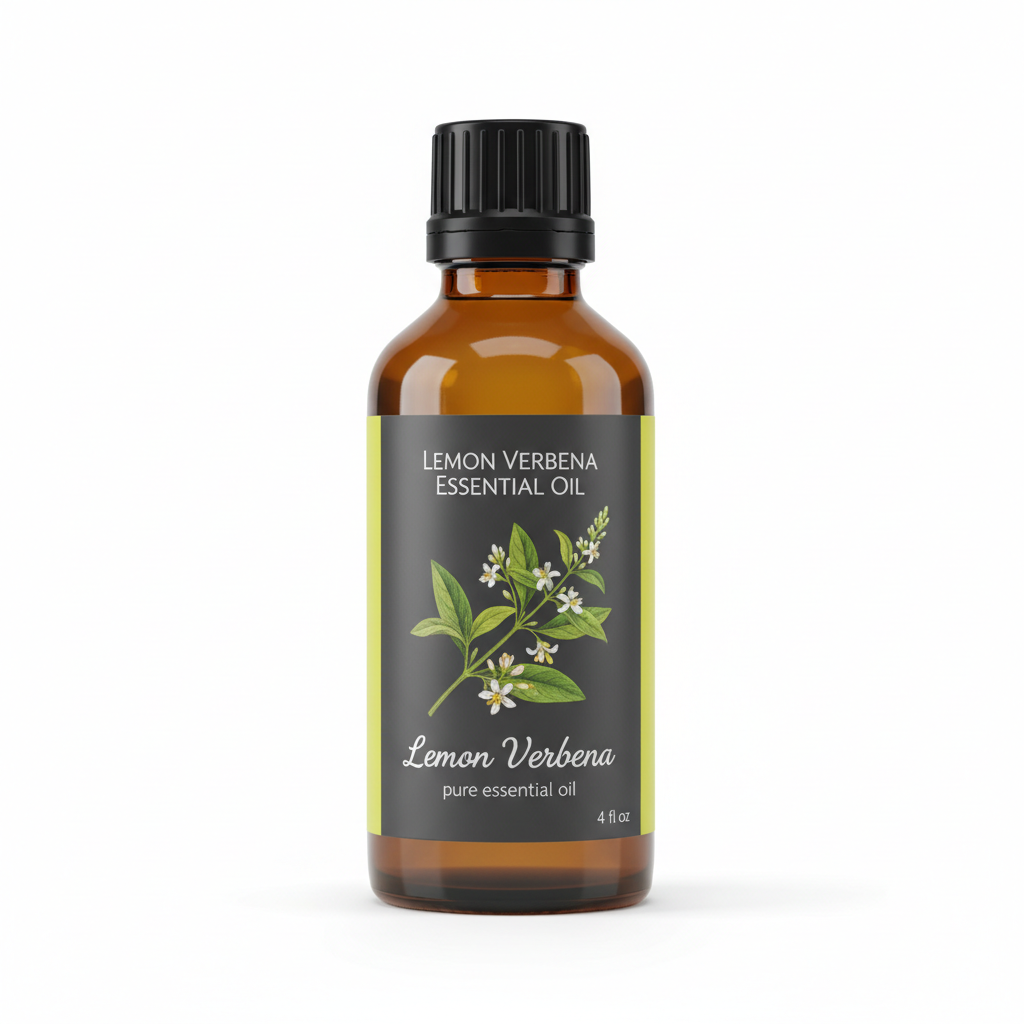
Lemon Verbena Essential Oil
Our own Lemon Verbena Essential Oil, in sizes from 0.5 oz to bulk.
From $12.99
Shop Now →Start with where the scent lands
The fragrance industry's safety body, IFRA, sorts products by how much skin contact they involve, and the category tells you a lot. Its guidance puts candles, plug-ins and incense in Category 12 (not meant for skin), reed diffusers, lamp-ring oils and pot-pourri in 10A, manual room sprays in 10B, and pillow sprays in 11B. Ultrasonic water diffusers are not named in the tables we read, so we do not assign them a category.
The categories matter because IFRA's citral standard sets very different ceilings for each. Citral, the geranial and neral that dominate many lemon verbena oils, is capped at 1.2% of the finished product in 10A, 4.2% in 10B and 0.051% in 11B, and not restricted in 12. A pillow mist sits about 82 times below a room spray on that scale. The same bottle can make a happy room scent and a poor pillow scent.
It also helps to know that IFRA's own verbena standard is cautious: it says verbena oil should not be used as a fragrance ingredient, citing its sensitising and phototoxic potential, and its category figures apply to the absolute. That standard governs fragrance suppliers, not a bottle in your home, and it is one reason we keep these pairings to room air. Our IFRA article reads it in full.
A seasonal way to think about it
We like to think of scent the way a cook thinks of the produce stall. In the first warm weeks, when everything outside is new and green, you want a blend that feels like cut stems and open windows. By midsummer the mood changes, and a brighter, sweeter lemon fits the long evenings better. The oil is the same one in both cases. What changes is the company it keeps, and how much room you give it.
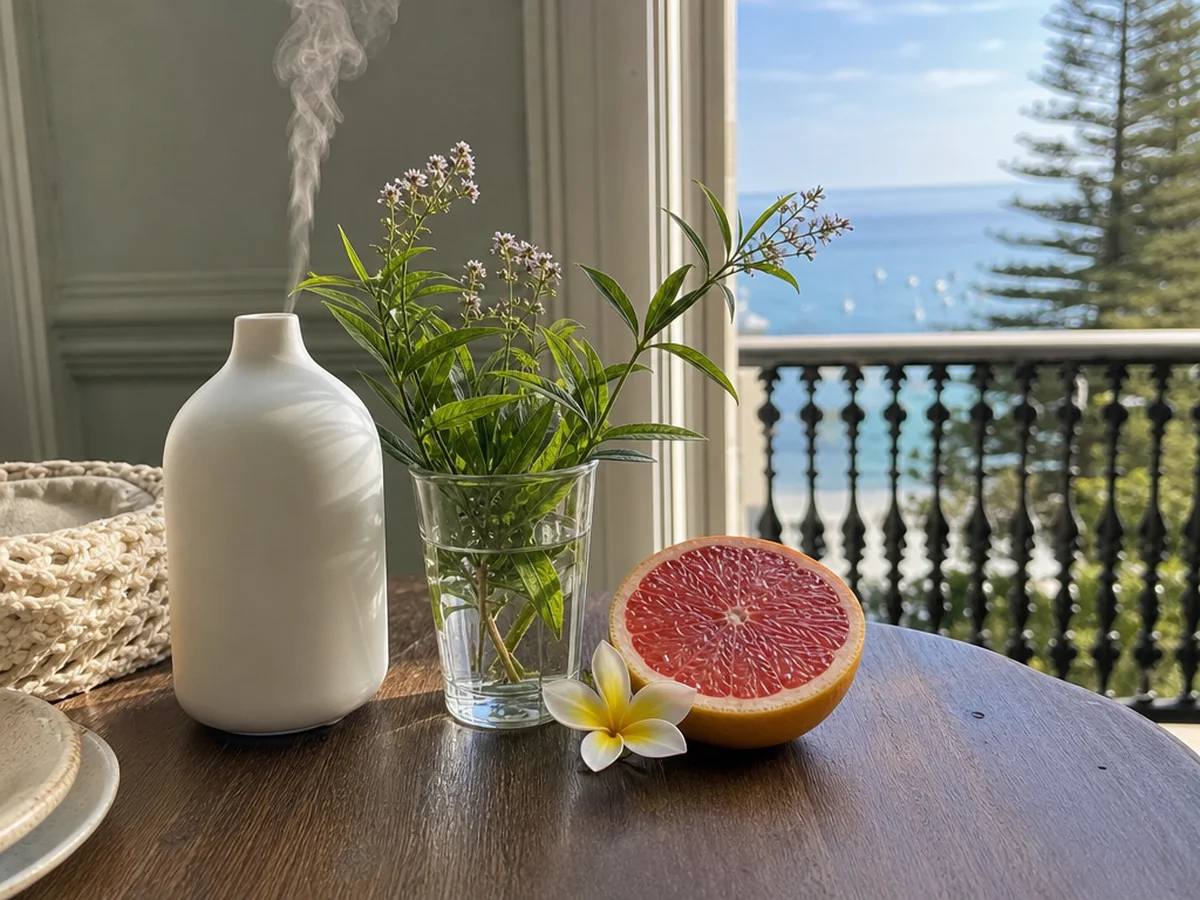
A good habit is to change the blend when the weather changes, not when the bottle runs out. Making a small stock bottle each season keeps the scent feeling like part of the year instead of a fixture, and it means you never face a half-used blend that no longer suits the room.
Two pairings for open-window months
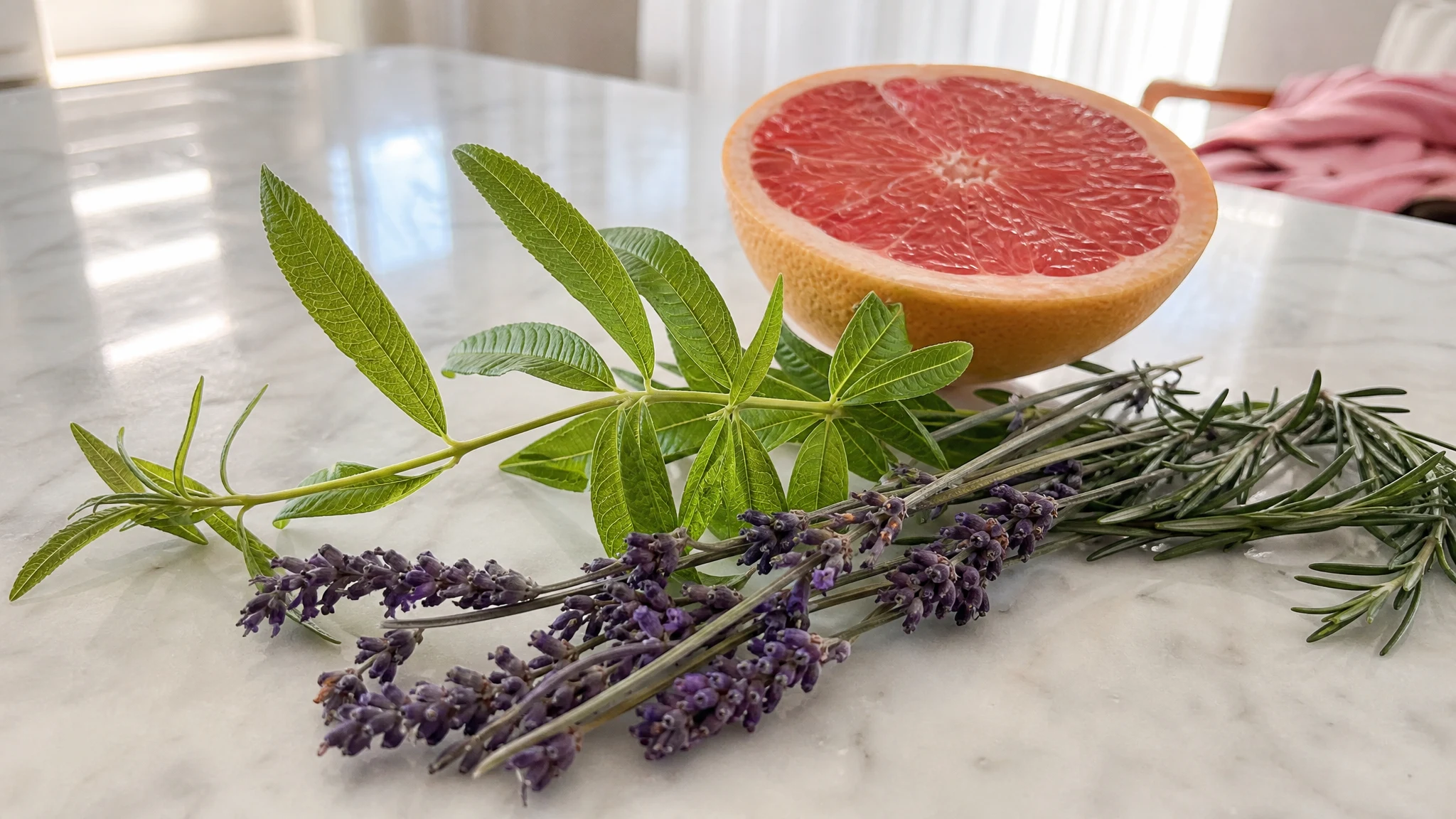
We list neroli, lavender, bergamot and petitgrain among the oils that blend well with ours. The two lines below use that list, and the reasoning is simple: citral on top, with oils led by linalool, linalyl acetate or limonene around it. In a Greek study of bitter orange, young-leaf oil (petitgrain) was led by linalool at 58.21% with linalyl acetate at 12.42%, while the flower oil (neroli) had linalool at 29.14% and limonene at 12.04%. Limonene also shows up in lemon verbena oils, which is a pleasing link between them.
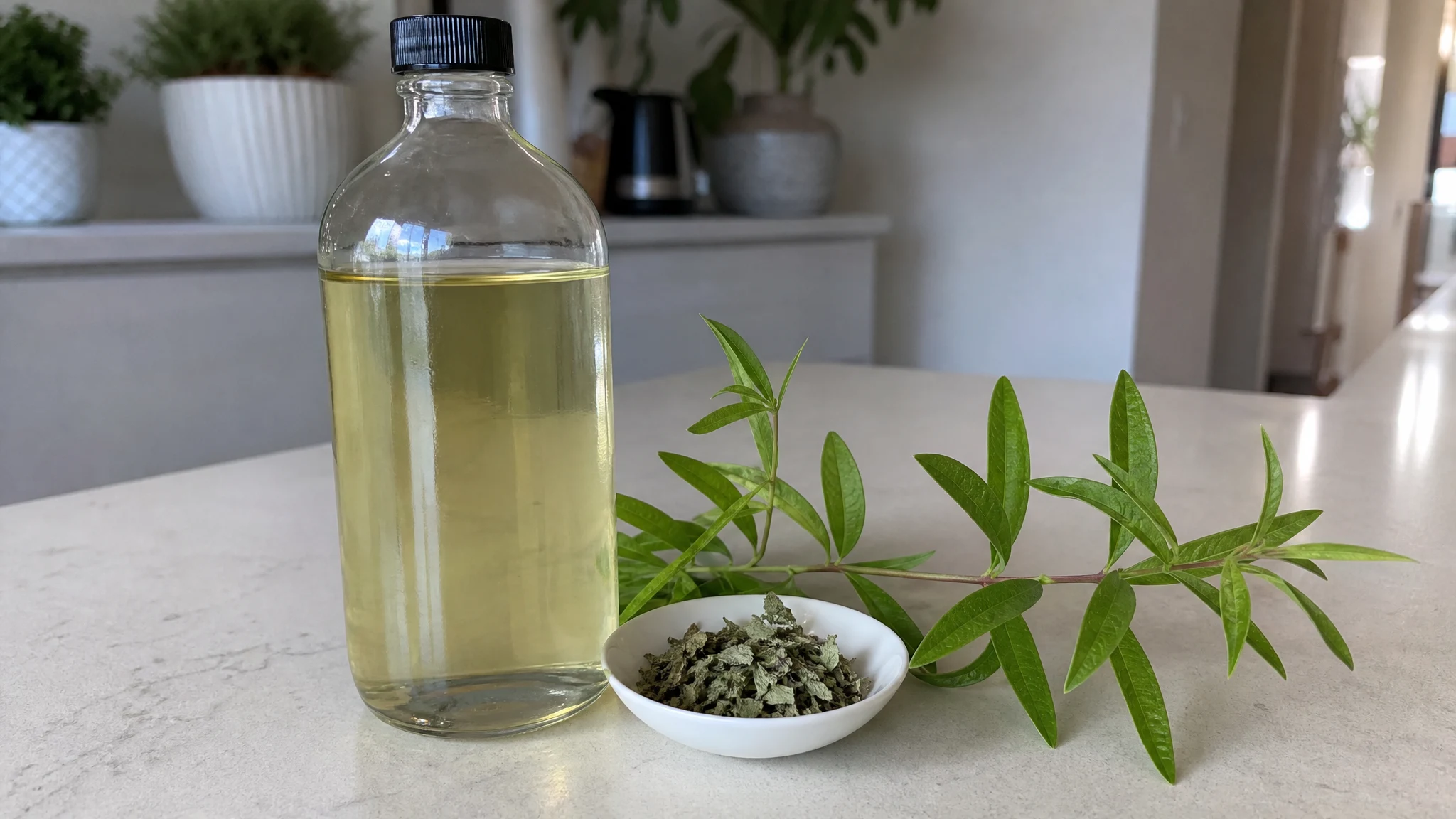
- Spring, greener and softer: lemon verbena 4 parts, petitgrain 4 parts, neroli 1 part, by drops in a small stock bottle.
- Summer, brighter and sweeter: lemon verbena 3 parts, bergamot 3 parts, lavender 1 part, by drops in a small stock bottle.
These are starting ratios, and your nose decides the rest. Whether a combination smells good is not something a composition table can say. Ask each supplier for the batch GC-MS report, since the figures above come from one paper and are not a promise about your bottle.
Keep the bottle cool
Oxygen, light and heat are what age an essential oil, which is worth remembering when the sunniest windowsill is also the prettiest place for a diffuser. We recommend keeping the oil tightly capped in a cool, dark place, and we put its shelf life at typically one to two years that way. Two habits follow from the arithmetic. An ounce of oil in a 16 oz bottle leaves about 94% of the space as air, so blend a small stock bottle and not a large one. And store it where the day's peak temperature is lowest, not next to the window.
When you are ready to use the stock, our diffusing guide turns a manual's ratio into drops and explains how long to run it.
Trying it in the room
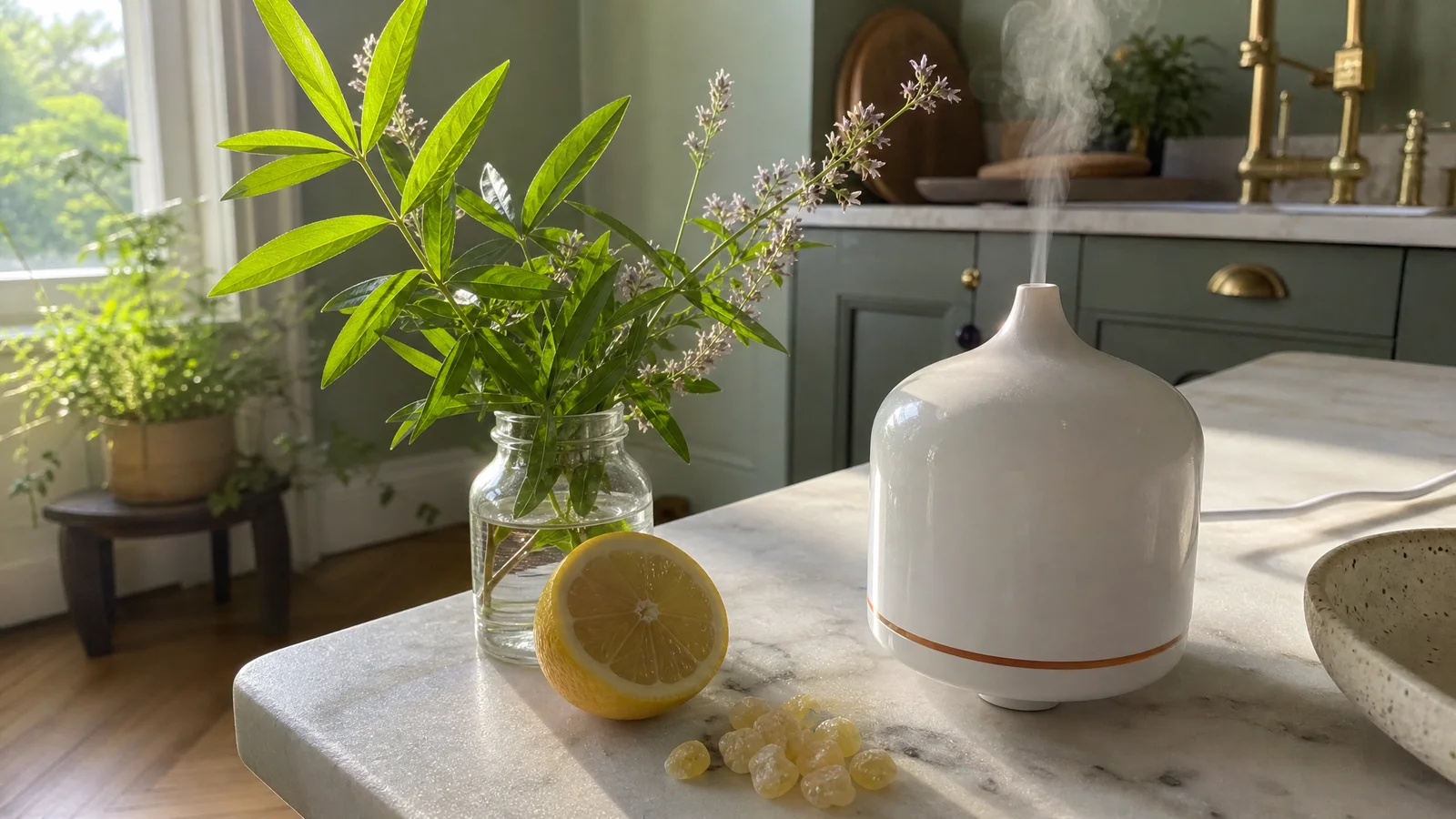
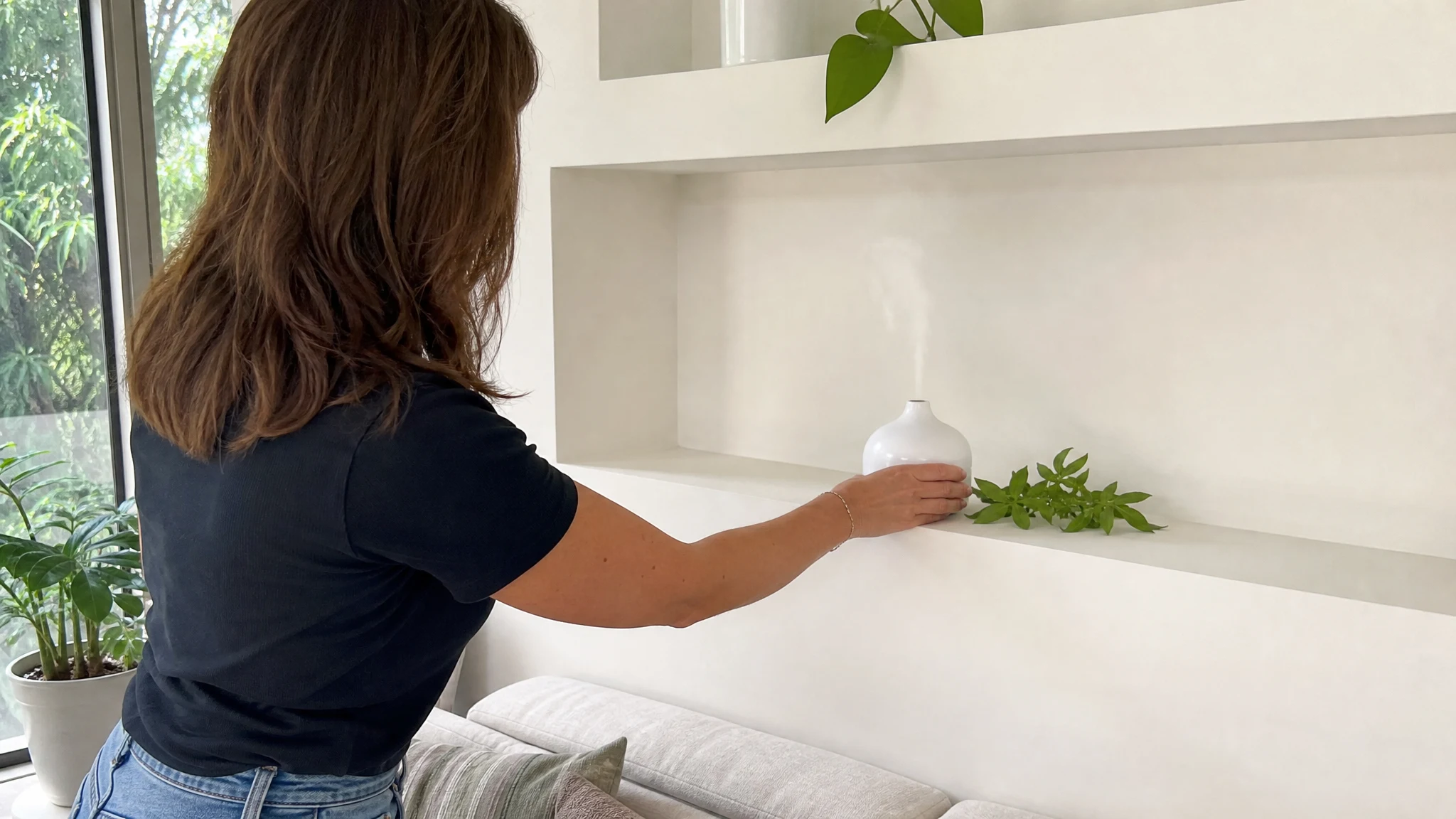
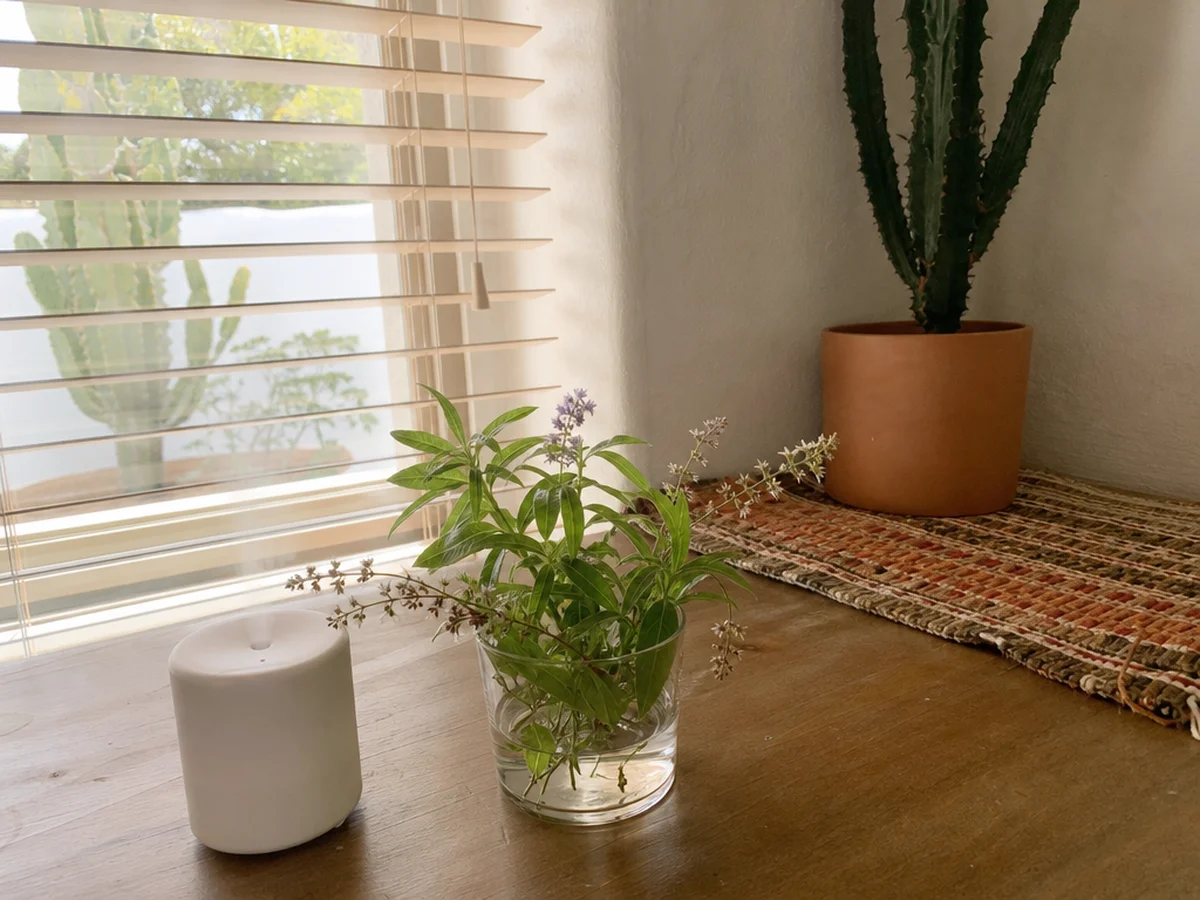
Once a blend is mixed, give it a short trial run before you settle on it. Put it in the diffuser or on the pad, leave the room for ten minutes, and walk back in. That first breath on re-entry is the honest one, because your nose has stopped noticing the scent while you were in the room. If it feels too loud, use fewer drops next time. If you can barely find it, add one more, and keep notes so the good version is easy to repeat.
A few times to skip the blend
Households with a bird, cat or dog should read our note on pets first, and anyone who reacts to fragranced products can check with a physician before diffusing. With small children in the room, see our children article. We have kept these pairings to the air, because skin in sunshine is a different question; if you wonder about it, our skin article sets out what the studies measured.
A few drops, a short run and a window left open: that is all a seasonal scent needs. The rest is choosing which partner oils you want to try.
Lemon Verbena Essential Oil
Lemon Verbena Essential Oil from our own shop, in sizes from 0.5 oz to bulk.
From $12.99
Shop Now →Sources & Further Reading
- IFRA. Guidance for the Use of IFRA Standards (51st Amendment), 30 June 2023. ifrafragrance.org
- IFRA Standard: Citral, Amendment 49, 2020. ifrafragrance.org
- IFRA Standard: Verbena oil and absolute (Lippia citriodora Kunth.), Amendment 49, 2020. ifrafragrance.org
- Sarrou E et al., 2013. Volatile constituents and antioxidant activity of peel, flowers and leaf oils of Citrus aurantium L. growing in Greece. Molecules 18(9):10639-10647. PMC6270488
- Tisserand Institute. Oxidation and the Shelf Life of Essential Oils. tisserandinstitute.org