Lemon Verbena Oil With Cats and Dogs: A Careful Guide
If you share your home with a cat or dog, you have probably wondered about every scent you bring into it. With lemon verbena oil, the sensible answer is to keep the oil well away from them. We do not call it safe for cats or dogs, and the veterinary sources we read do not either. Here is what they do say, so you can make good decisions for your own animals.
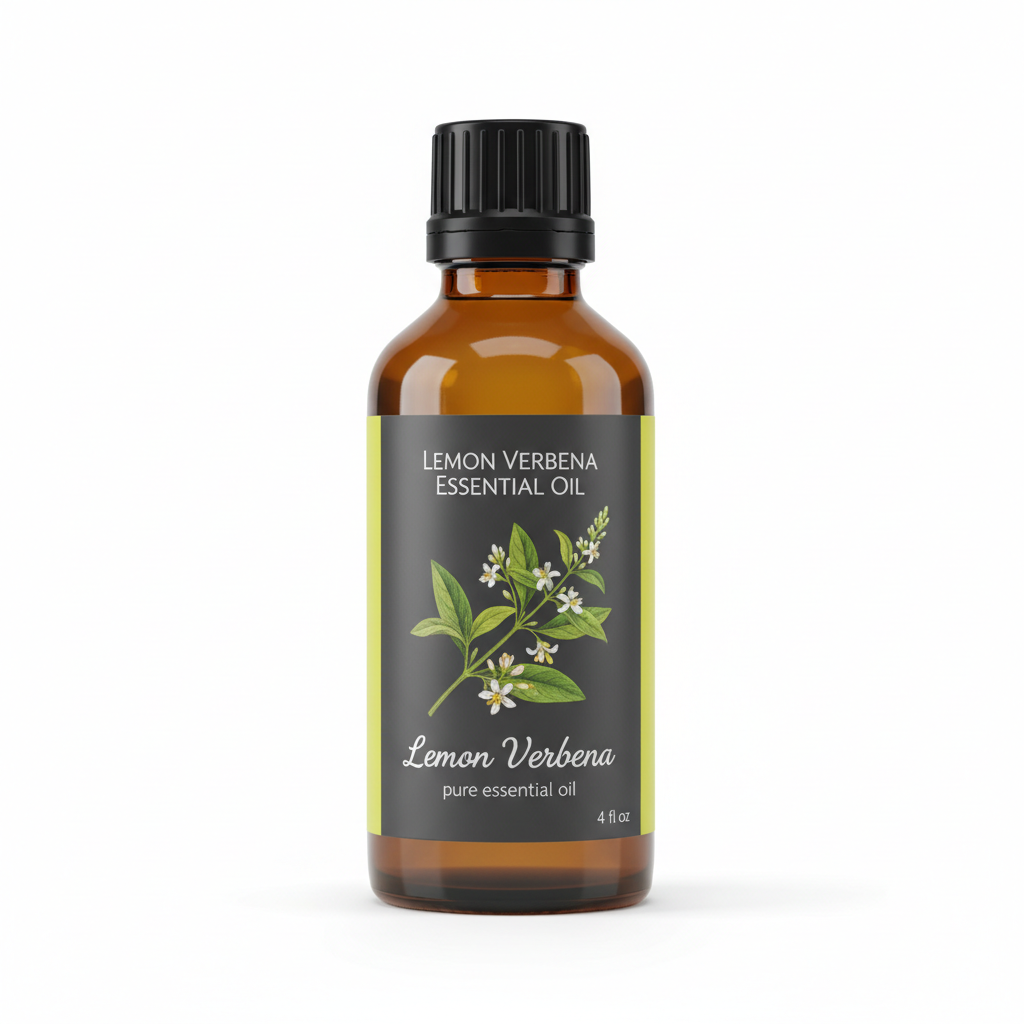
Lemon Verbena Essential Oil
Our own Lemon Verbena Essential Oil, in sizes from 0.5 oz to bulk.
From $12.99
Shop Now →The plant and the oil are different things
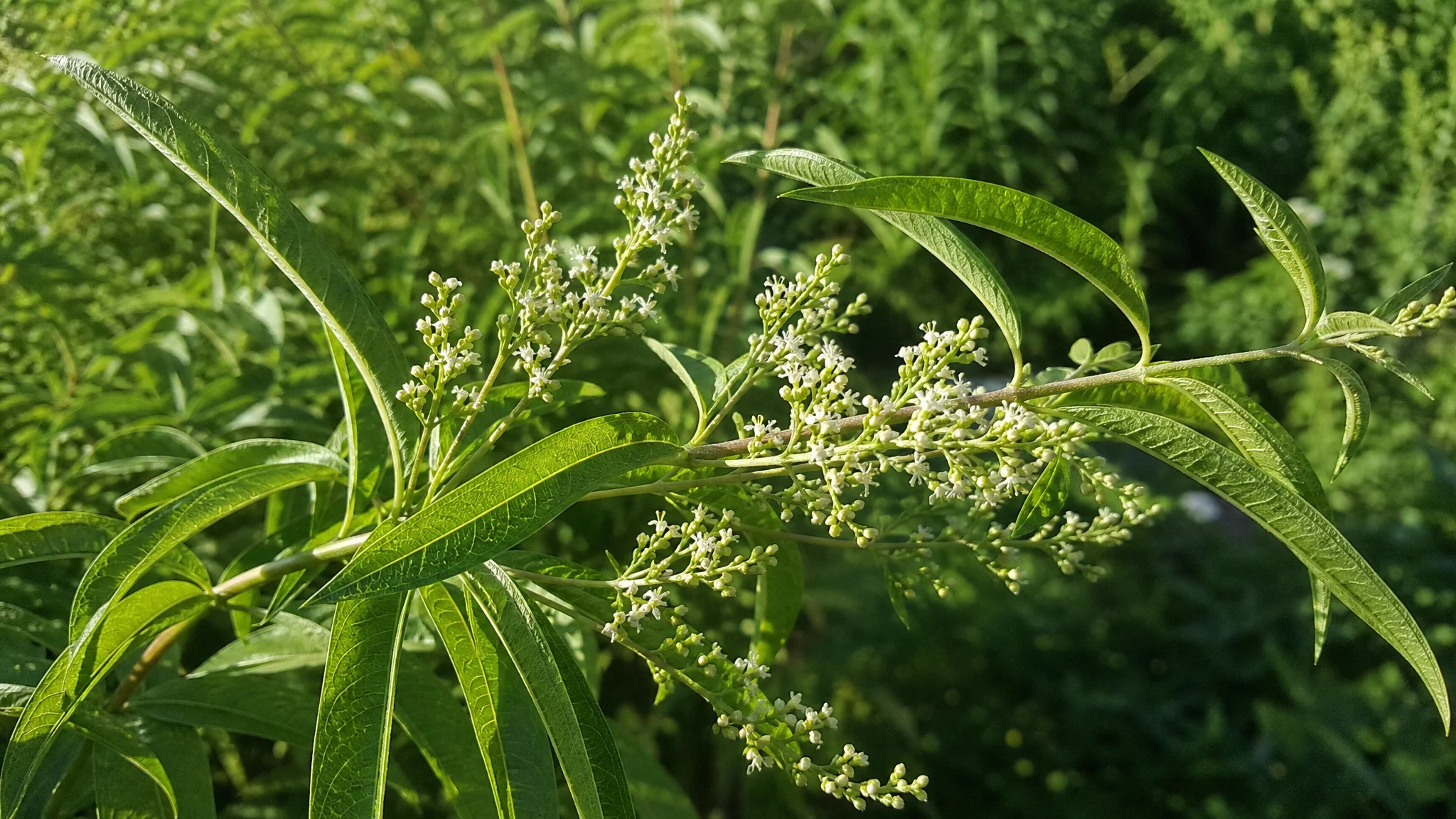
Lemon verbena is the shrub Aloysia citrodora. Our product is an oil steam-distilled from its leaves and sold neat. The two get blurred in pet-safety pages, so it helps to keep them apart. The ASPCA entry is about the plant a pet might chew. The Merck Veterinary Manual chapter is about concentrated oils applied, diffused or swallowed. Neither looked at our oil specifically.
What the ASPCA lists
The ASPCA's toxic plant entry for lemon verbena lists it as toxic to dogs, cats and horses, with essential oils as the toxic principle and stomach upset and colic as the clinical signs. It adds that there are no concerns if small amounts are used in cooking or as a flavouring. Reasoning from that, if the oils inside the plant are the issue, a bottle of the oil concentrates exactly that part, so a pet that licks or swallows it is in a different situation from one that nibbles a leaf. That is our inference, not the ASPCA's.
Why cats get extra attention
The Merck Veterinary Manual's chapter on essential oil toxicosis, reviewed in March 2025 by a veterinary toxicologist, says cats are more sensitive than dogs because they are deficient in an enzyme, glucuronyl transferase. It also notes that essential oils are readily and rapidly absorbed through the gut, skin, lungs and mucous membranes, and that signs can follow ingestion or skin contact, including vomiting, lethargy, drooling, unsteadiness and loss of appetite.
One honest limit: the chapter does not name citrus oils or citral, and it gives no safe threshold. The enzyme explanation is documented for phenolic compounds. So "cats cannot handle any essential oil" overstates the page. The accurate version is that cats are generally more sensitive, and for this specific oil nobody has published a pet threshold.
Seeing your home the way a pet does
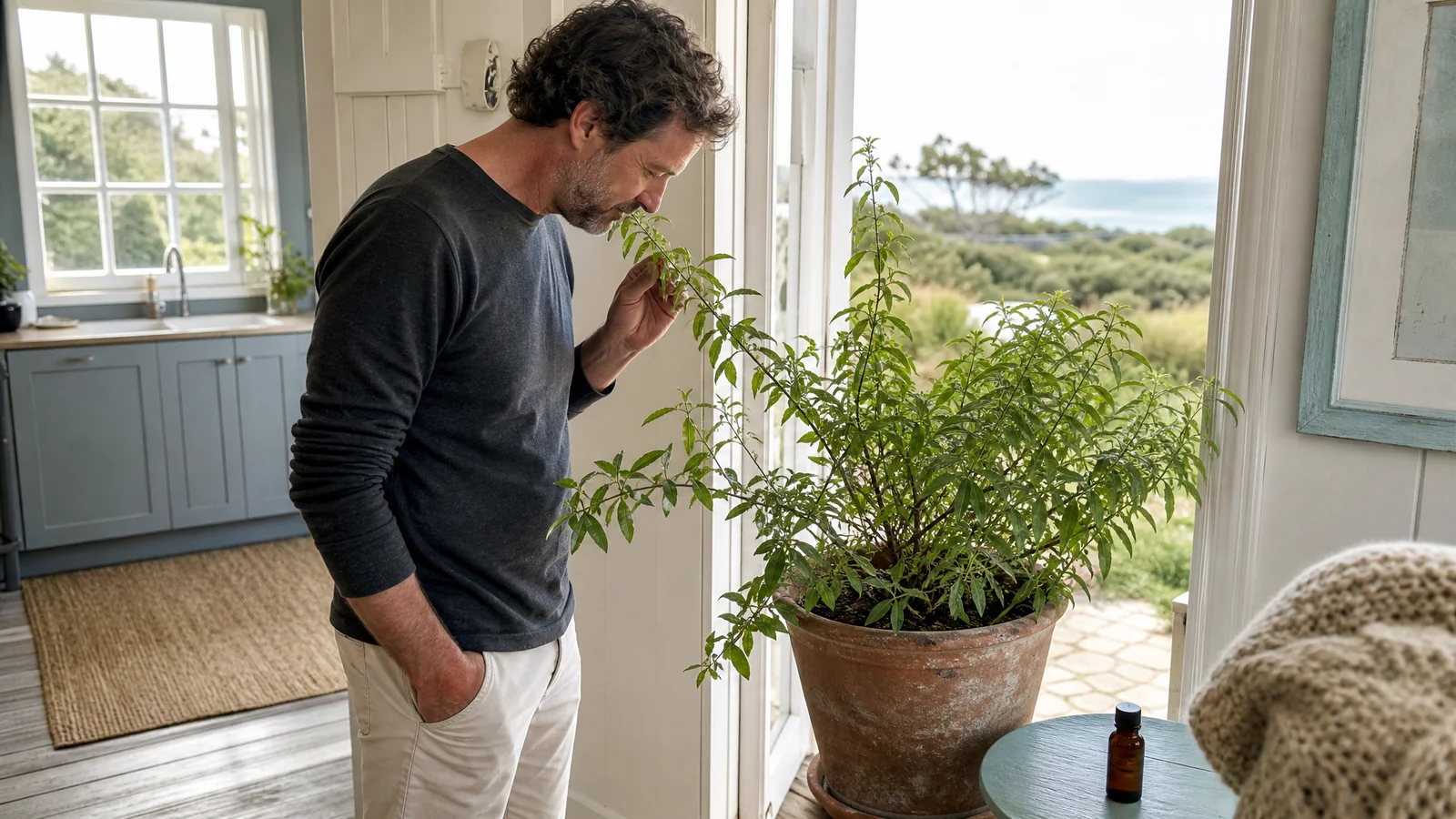
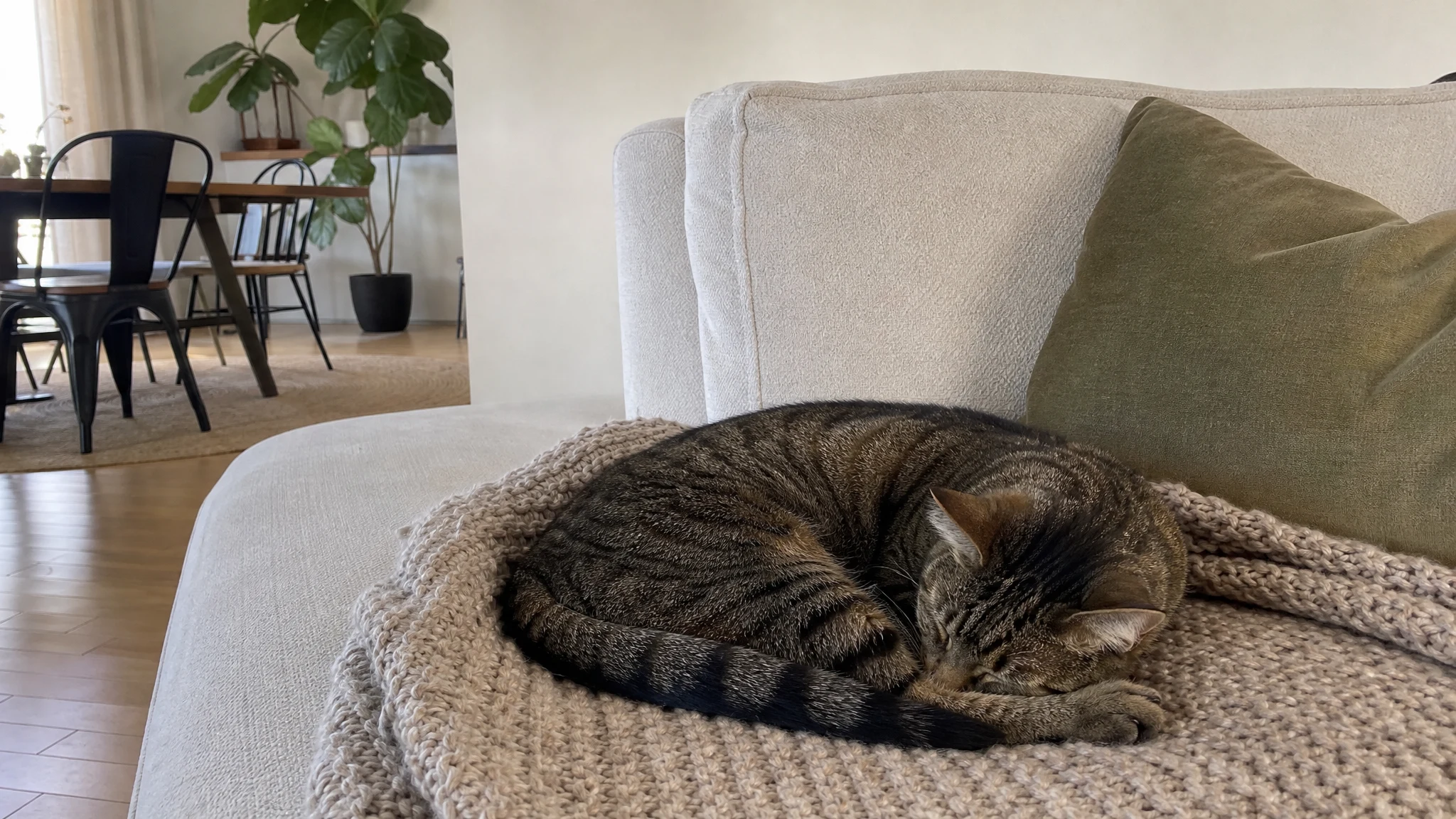
It helps to get down to their level for a moment. Cats walk along shelves and countertops, dogs sniff bags and bins, and both groom or lick whatever lands on their paws and coat. A drop on a table, a damp cloth left on the floor or a wiped-up spill can all end up where a pet will find it. Scent that seems gentle to us can be far more intense for a nose built for much finer detail. That is one more reason to keep scenting to a minimum in shared spaces and to give animals a way out of any room where you are working.
Practical house rules
These are our recommendations, built from the sources above.
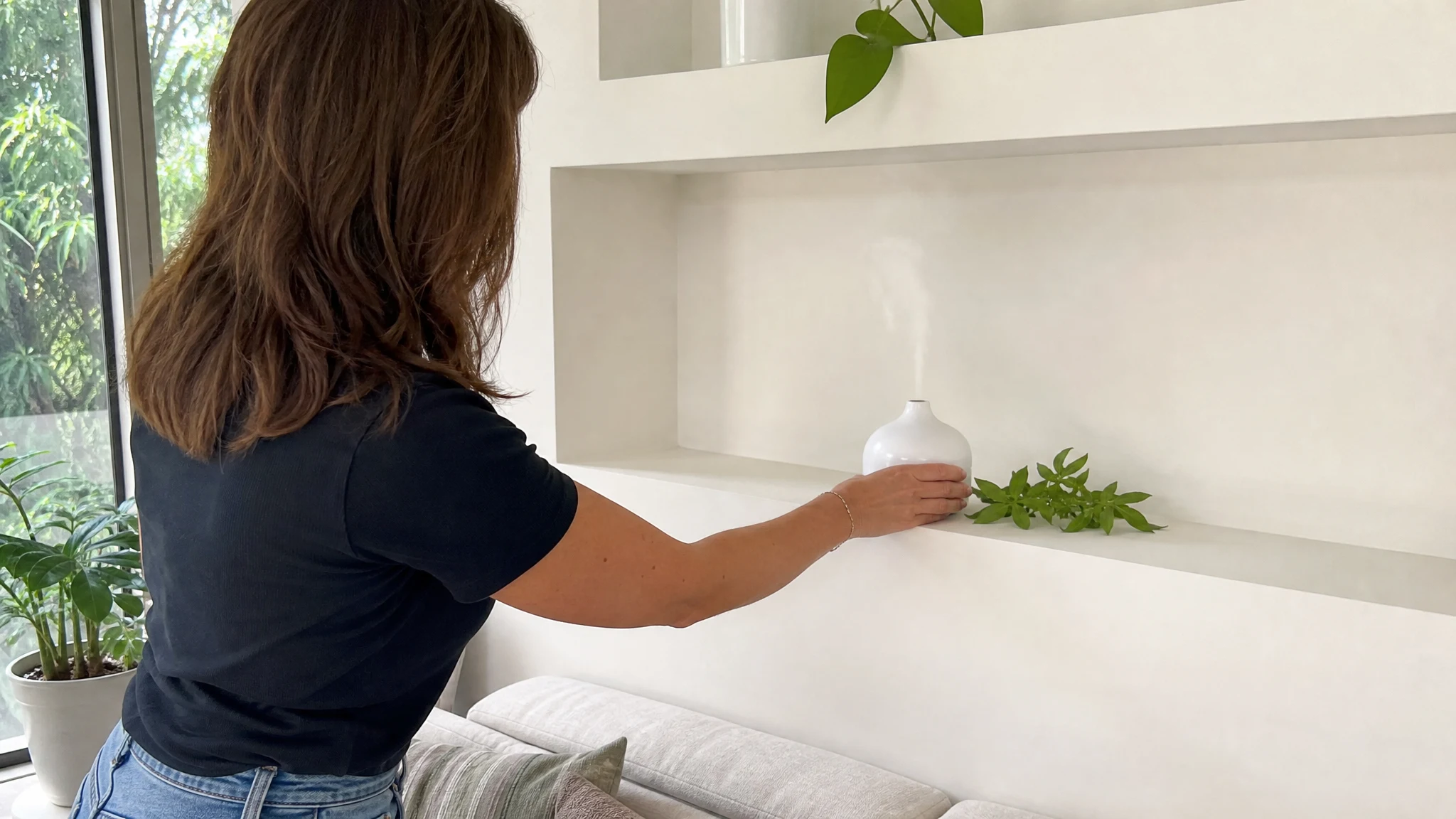
- Diffusing. The Merck chapter separates passive diffusers such as reeds and candles, which do not emit oil droplets, from active ones such as nebulizing or ultrasonic units, which emit microdroplets that can settle on fur or feathers. Its owner advice is to run diffusers for short periods, under 30 minutes, keep pets out of the room, and ventilate afterwards. Choose a room your animal can leave, with the door open, and never run a unit with a pet shut in. Our diffusing guide covers the routine.
- On a pet. The chapter says concentrated essential oils should never be applied directly to pets, and it gives no safe dilution. We would not use lemon verbena on a pet in any strength.
- On you. A pet that lies on a lap or blanket where diluted oil has been used can lick it off, so give treated skin time to dry first. Our skin dilution guidance of 0.5% to 2% is an adult skin range only; see the skin basics article.
- Storage. Keep the bottle capped, upright and out of reach, as for children. A dropper bottle knocked from a shelf is a spill a dog may lick.
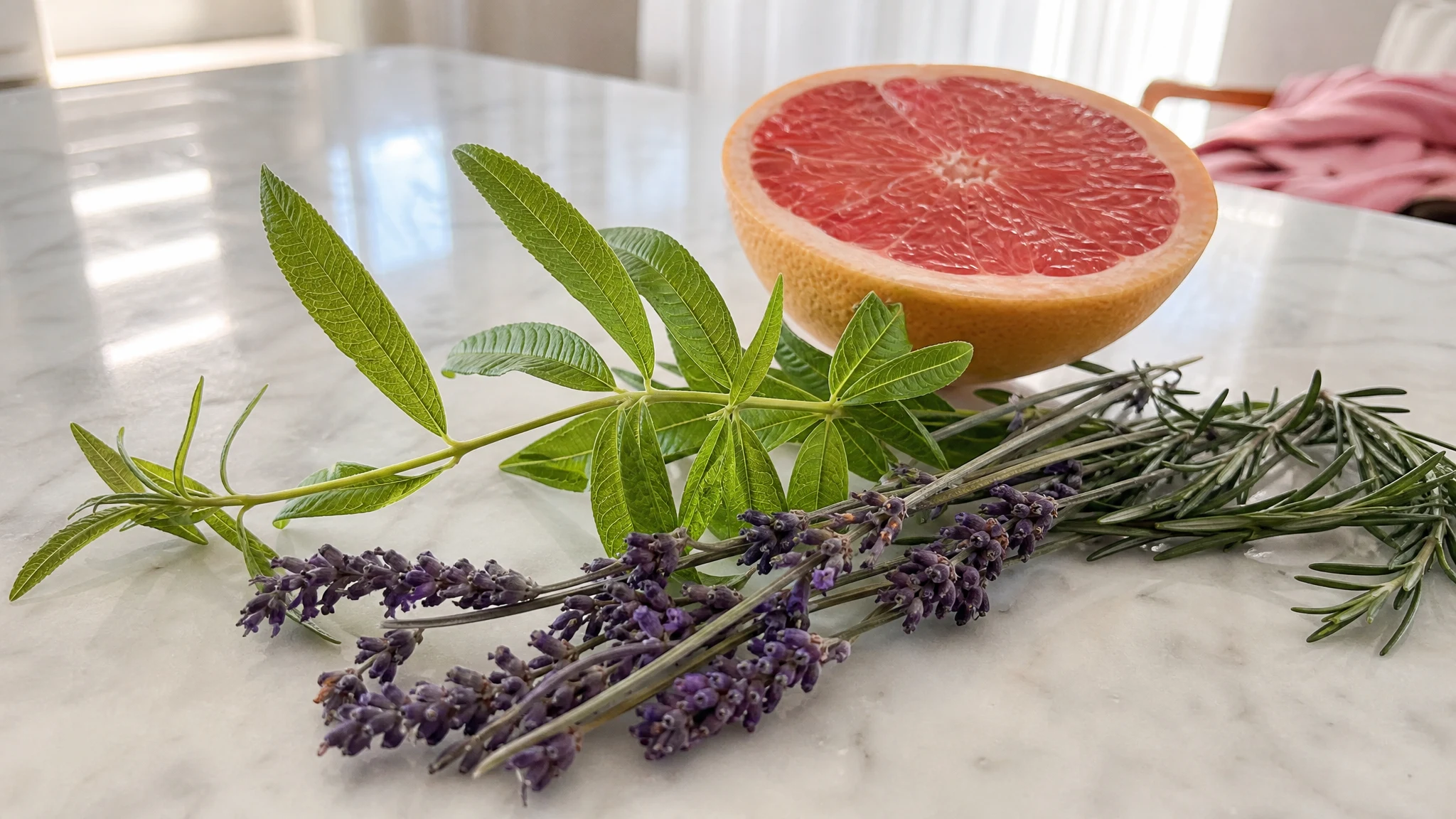
- The leaf is different. Lemon verbena leaf in your own tea is a separate material from the oil, but the ASPCA lists the plant as toxic, so do not offer it to a pet; see the tea versus oil article.
Working with the oil in a pet household
A few habits make life easier. Do your measuring and mixing at a table with the door shut, and put every bottle and cloth away before you let the animals back in. Wipe the work surface when you finish, and wash your hands before you stroke anyone. If you scent a cloth or a drawer, choose somewhere your pet cannot reach or lie down. None of this takes long, and it means the oil stays where you meant it to.
If your pet has been exposed
Call your veterinarian or a pet poison line immediately, with the bottle and the botanical name to hand. The Merck chapter says vomiting should not be induced because of the risk of aspiration, which is a good reason to take instruction from a professional rather than improvise.
We sell a scent and craft oil, not pet products, and for questions about your own animal a veterinarian is the right person. Our safety guide collects the rest of the caution points in one place.
Lemon Verbena Essential Oil
Lemon Verbena Essential Oil from our own shop, in sizes from 0.5 oz to bulk.
From $12.99
Shop Now →