Lemon Verbena Oil Around Children: Storage That Works
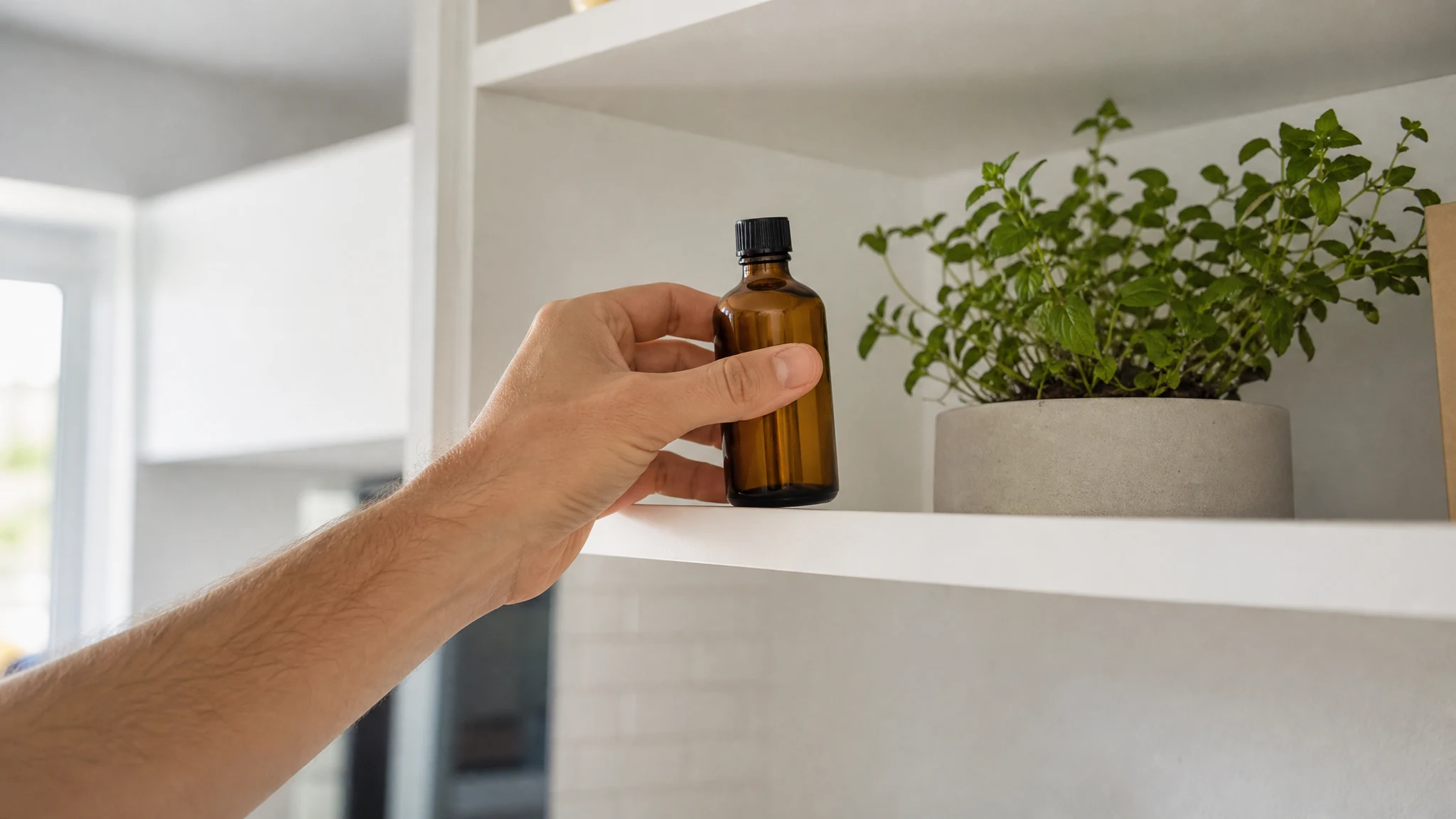
When people worry about essential oils and children, they often think of the smell. The better-documented hazard is the bottle: small children get hold of it. We do not say lemon verbena oil is safe for any child, and our guidance is to keep it away from children and pets. The useful part is how to do that well.
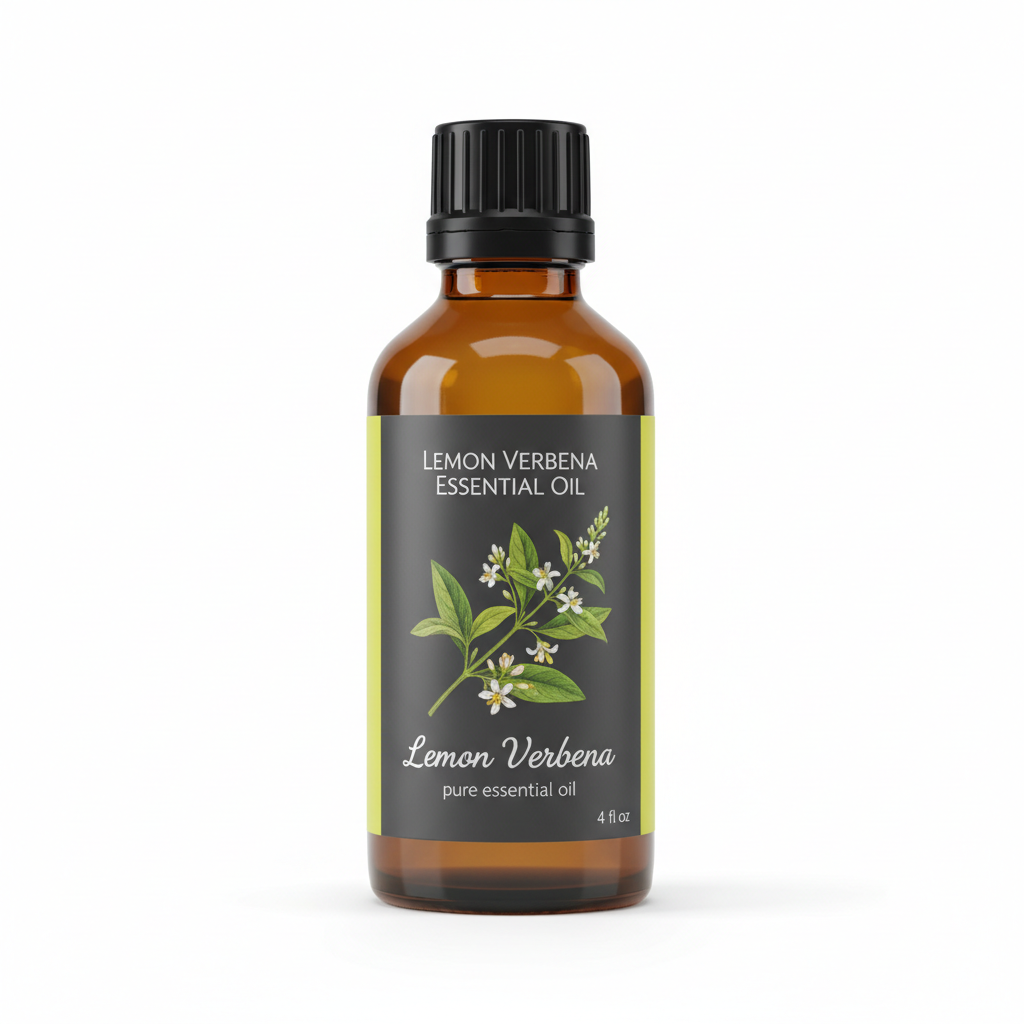
Lemon Verbena Essential Oil
Our own Lemon Verbena Essential Oil, in sizes from 0.5 oz to bulk.
From $12.99
Shop Now →What poison-centre data count
Australian researchers reviewed calls to the New South Wales Poisons Information Centre from July 2014 to June 2018, as reported in the Medical Journal of Australia. It covers essential oils as a class, not lemon verbena. They counted:
- 4,412 essential oil exposures;
- 2,790 (63%) involving a person under 15;
- 1,387 callers (31%) already showing symptoms of poisoning;
- 3,530 (80%) that were accidental.
The report also states that small quantities, as little as 5 mL, can cause life-threatening toxicity in children. US advice reads the same way. The Connecticut Poison Control Center's fact sheet says children under 6 are most at risk, especially ages 1 to 3, and that essential oil bottles often do not have child-resistant caps. It advises keeping them up and locked away and out of sight, labelling them with name, date and strength, and avoiding undiluted oil on skin.
Why the bottle is the real risk
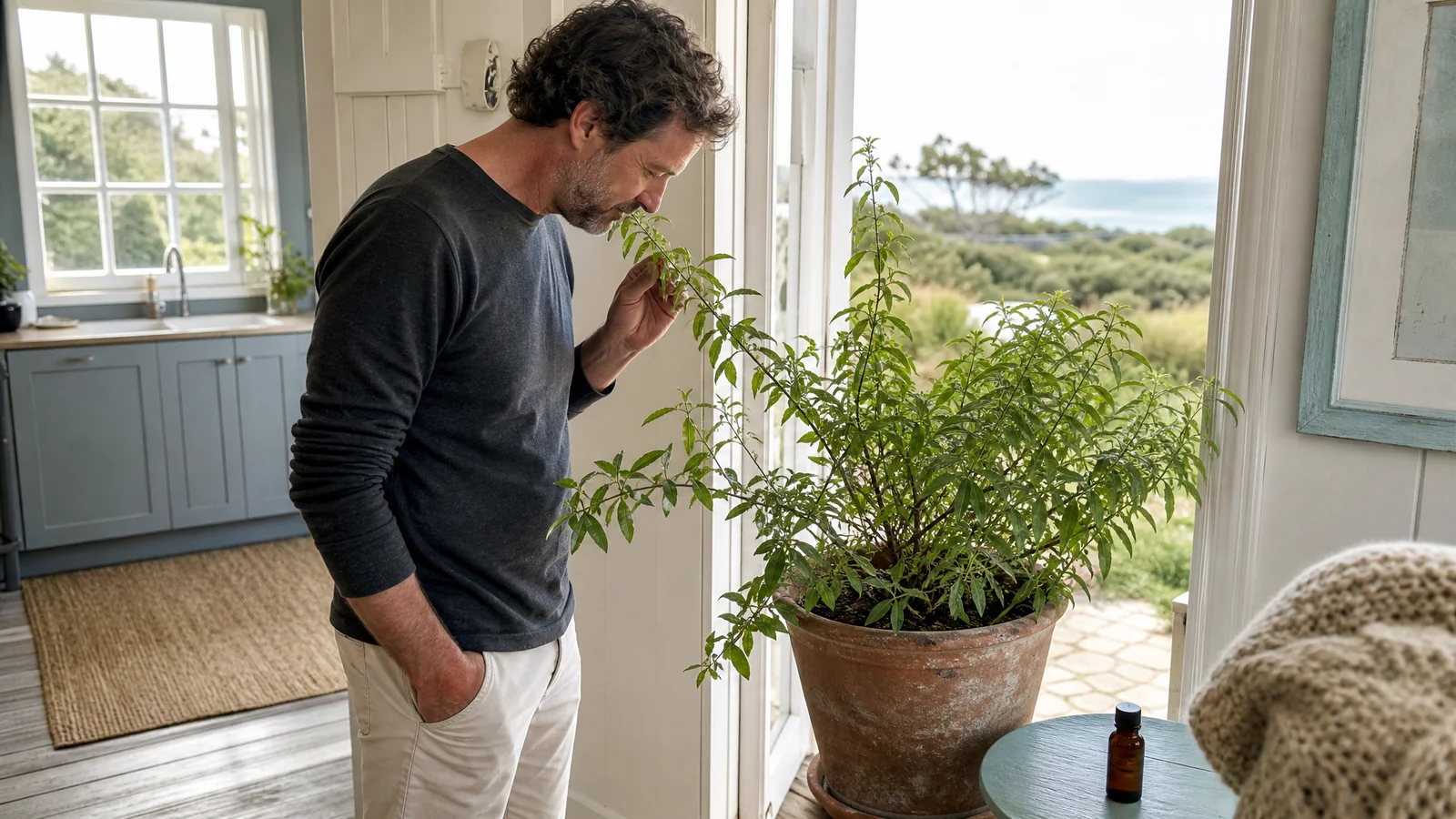
Anyone who has spent time around toddlers knows how they explore: everything goes to the mouth, and anything that rattles, squeezes or smells interesting is a prize. A small glass bottle with a lemony smell ticks every box. That is why we talk about storage first and scent second. The oil smells nice, but a young child cannot tell the difference between something nice to smell and something nice to taste.
What 5 mL looks like
This is arithmetic from the Certificate of Analysis we publish for one batch, not a toxicity statement. Relative density 0.869 means 1 ml weighs about 0.869 g, and at about 20 drops per ml one drop is roughly 43 mg.
| Bottle | Volume | Oil by weight | Times 5 mL |
|---|---|---|---|
| 0.5 oz | 14.79 ml | about 12.9 g | about 3 |
| 1 oz | 29.57 ml | about 25.7 g | about 6 |
| 5 ml | 5 ml | about 4.3 g (roughly 100 drops) | 1 |
Even the smallest size holds about three times that amount, so for a toddler the question is simply whether the bottle can be reached. The bulk pails and drums are a workshop matter: keep them where only trained adults go.
Storage habits, in order of payoff
- Locked or high. "Up and locked away" means more than a shelf a toddler can climb to. A box with a latch is better.
- Treat the cap as an ordinary one. Do not assume any essential oil bottle has a child-resistant closure unless the label says so.
- Label everything. If you decant, mark name, date and strength, and keep diluted blends apart from neat oil.
- Never beside medicines. The Australian data include mix-ups where an oil was mistaken for a liquid medicine, so keep oils out of the medicine cabinet.
- Cap it every time, even for a minute. That also suits the oil, which keeps best tightly capped, cool and dark; see the storage guide.
A storage setup that is easy to keep up
The best system is the one you will actually follow on a busy day. A small lidded box on a high shelf, used only for oils and craft supplies, does more than a clever hiding place you forget about. Put the bottles back in the box every single time, not just when company is coming. If you work with the oil in the evening, set a reminder to do the "cap it, box it, shelf it" routine before you start dinner.
Guests deserve a thought too. A visiting grandparent's bag or a friend's toddler can reach places your own children no longer can, so a quick check of the room before people arrive is a good habit.
Skin and air are separate questions
On skin, our guidance for adults is 0.5% to 2% in a carrier with a patch test first, and we have no child-specific dilution; no authority we read gives one for this oil. That is a question for a paediatrician or pharmacist, who can weigh the child's age and skin. Our skin basics article covers patch tests and sun.
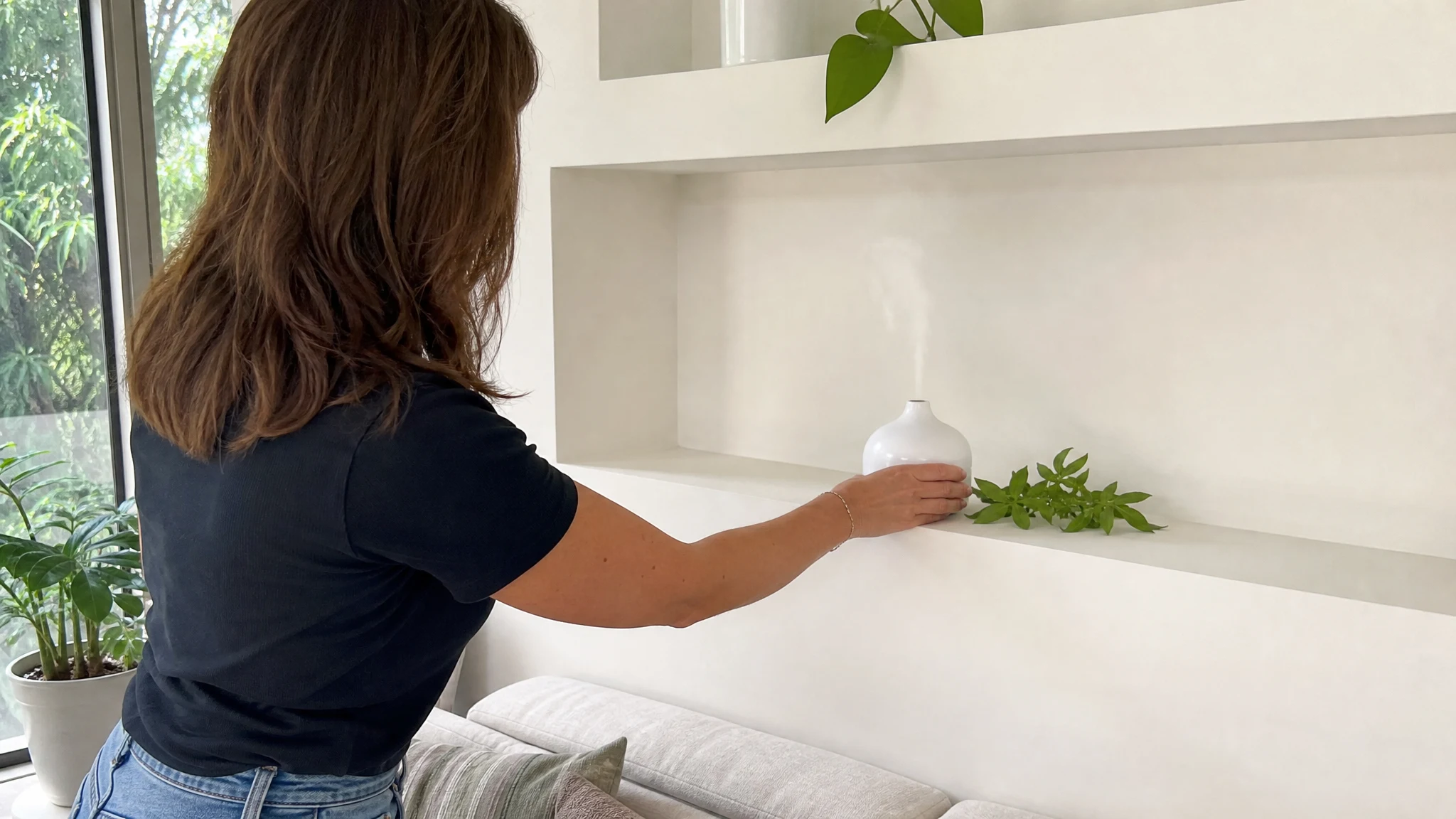
In the air, the European Medicines Agency's monograph on lemon verbena leaf tea says use in children has not been established for lack of adequate data. That is about the leaf in a cup, not the oil in a room, but it shows that even the better-studied form has no paediatric data behind it. If you diffuse, keep children out of the room while the unit runs and ventilate afterwards, as our diffusing guide describes. Pets have their own needs; see our pets article.
If a child gets into the bottle
Do not wait for symptoms. In the US, call poison control on 1-800-222-1222; elsewhere use your local emergency number or poison centre. Have the bottle and the botanical name, Aloysia citrodora, with you. Eye or skin contact warrants a call too. We cannot give first aid advice for a specific exposure.
For anything about a particular child, such as whether a scent suits a newborn's room, the right people are the child's paediatrician or a pharmacist. A high shelf and a snug cap do most of the work.
Lemon Verbena Essential Oil
Lemon Verbena Essential Oil from our own shop, in sizes from 0.5 oz to bulk.
From $12.99
Shop Now →Sources & Further Reading
- Essential oil poisoning calls increase; children most affected, The Medical Journal of Australia
- Essential Oils Fact Sheet, Connecticut Poison Control Center
- European Union herbal monograph on Aloysia citrodora Paláu (syn. Aloysia triphylla (L'Hér.) Kuntze; Verbena triphylla L'Hér.; Lippia citriodora Kunth), folium, EMA/HMPC/376770/2019, 13 January 2021