Lemon Verbena Oil, Absolute, Hydrosol: Which Is Which?
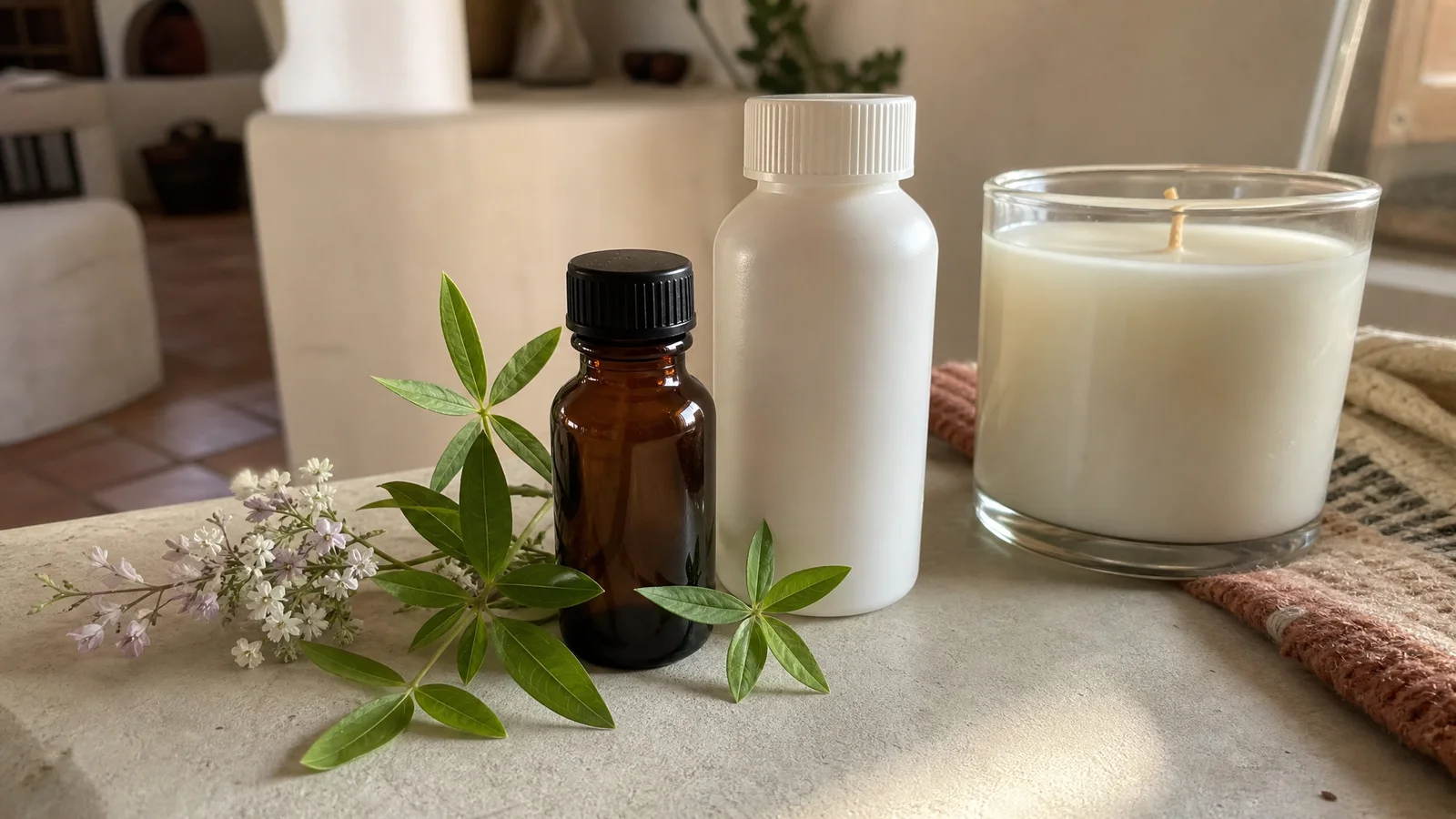
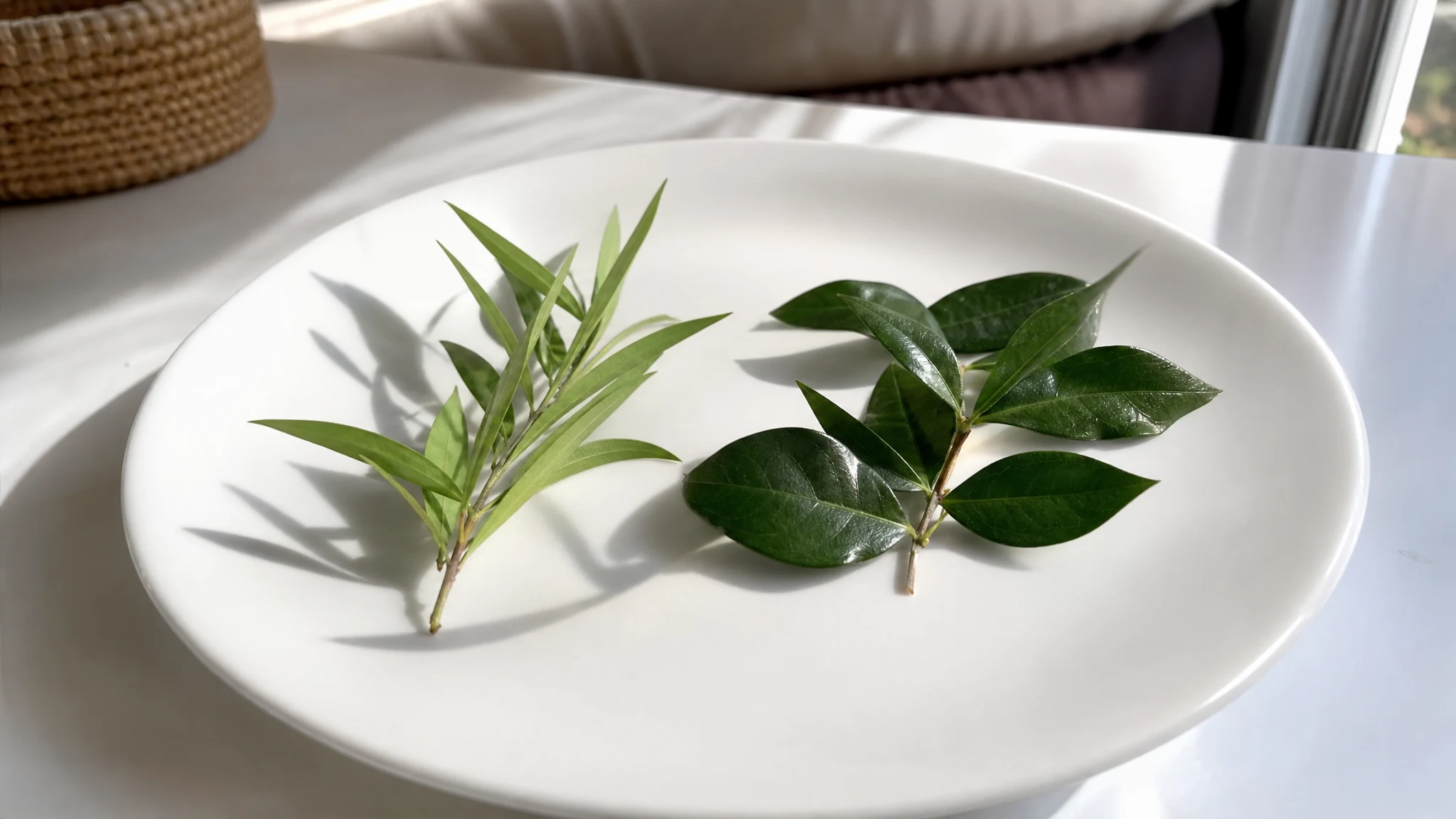
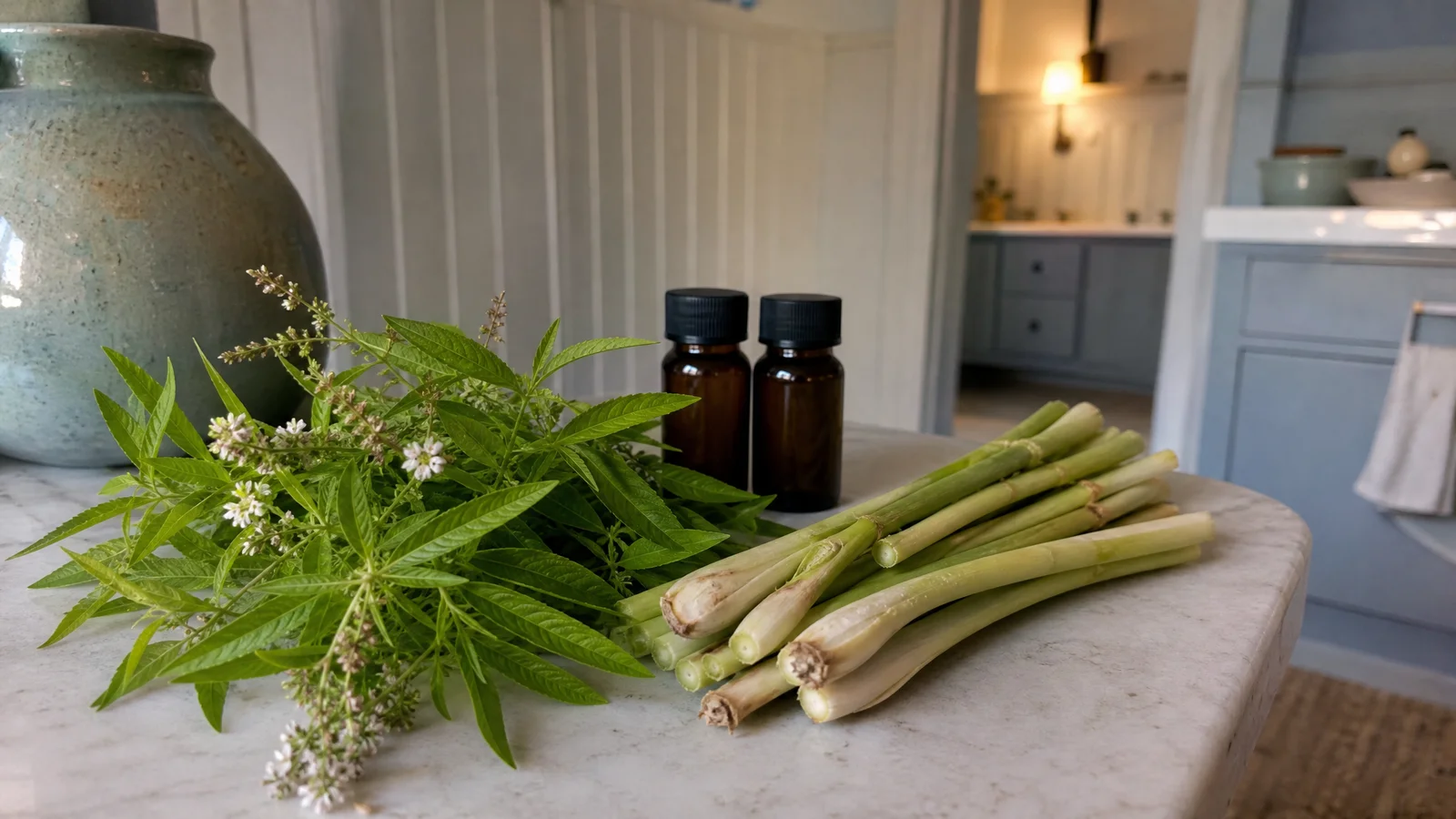
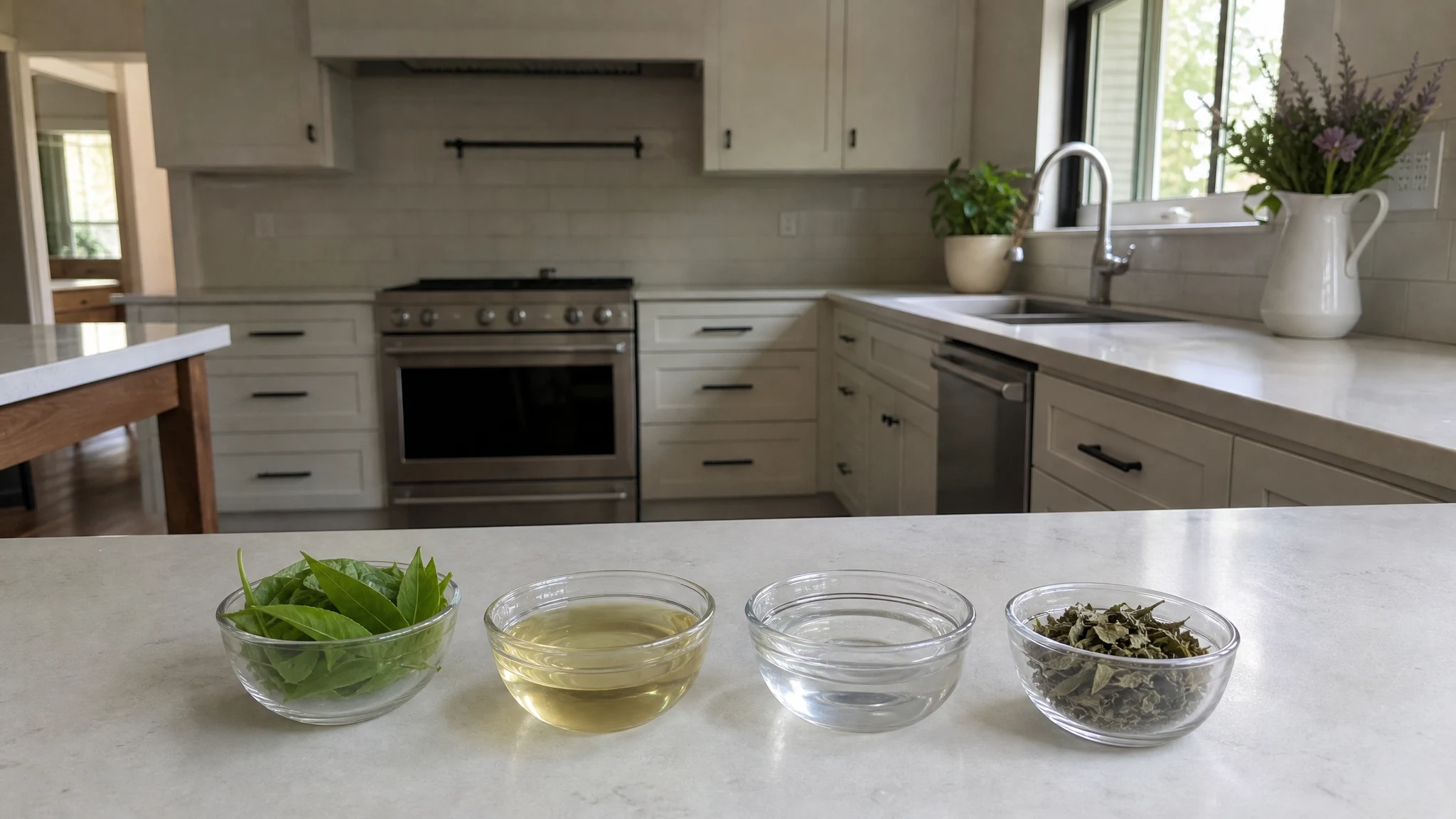
Look for lemon verbena in a craft supplier, a tea shop and a perfumery catalogue and you will find four different products under the one name. They all start with the same shrub, Aloysia citrodora, and then go their separate ways: a steam-distilled essential oil, a solvent-made absolute, the scented water that comes off the still, and leaves steeped in a carrier oil. We sell the first, so here is how we would sort the four by the job in front of you.
Lemon Verbena Essential Oil
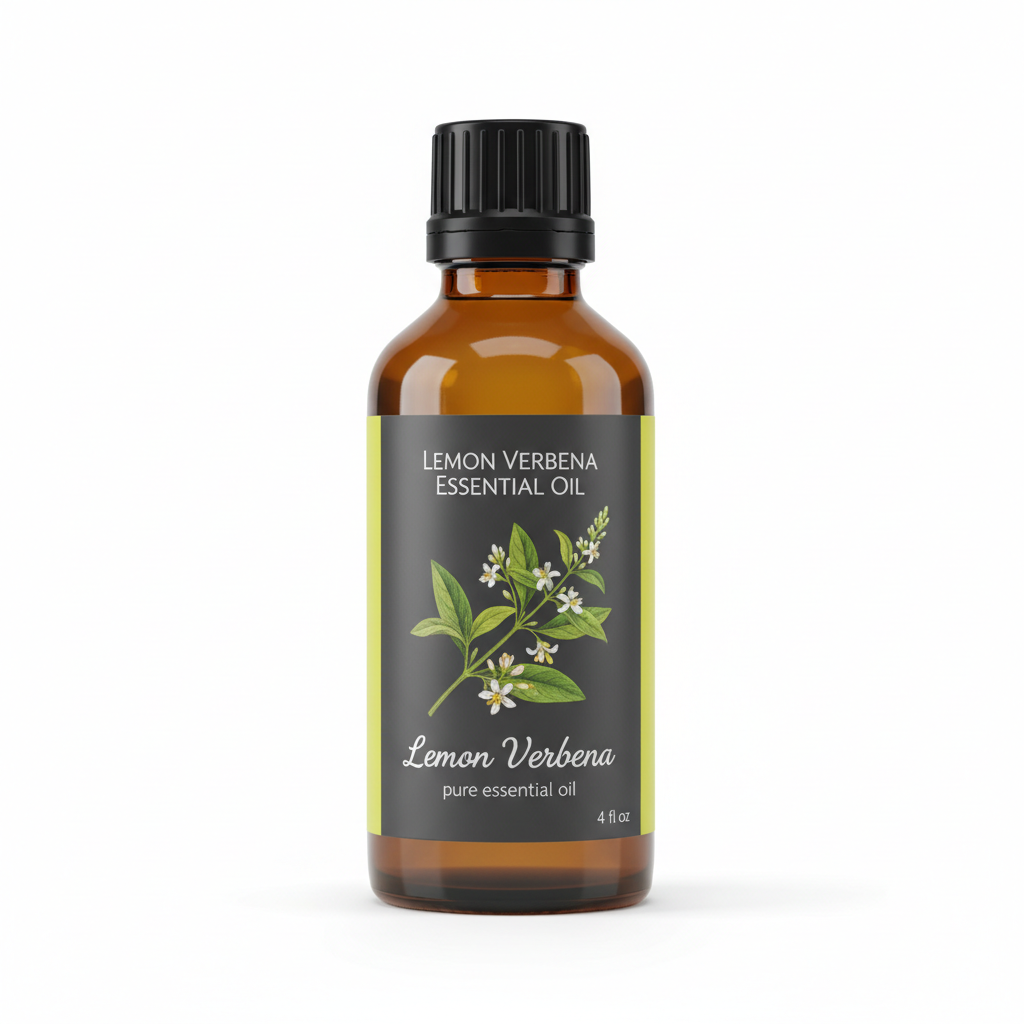
Our own Lemon Verbena Essential Oil, in sizes from 0.5 oz to bulk.
From $12.99
Shop Now →The essential oil: the leaf, concentrated
Steam carries the aromatic part of the leaf out of the plant, and the oil is what separates from the condensed water. It does not come easily. One laboratory got 1.05% and 1.29% of the dried leaf weight with two distillation methods (Sprea et al., 2023), while shade-dried Moroccan leaf gave 0.1% to 0.2% (Oukerrou et al., 2017). Either way it takes a lot of leaf for a little oil, which is part of why a bottle feels precious. Our post on how the oil is made goes into it.
Our oil is sold neat, so the dilution is yours to work out. For skin we suggest 0.5% to 2% in a carrier oil with a patch test first, and we lean toward the low end. On the usual rough convention of 20 drops to a millilitre, an ounce of carrier is about 591 drops of volume, which makes 0.5% about 3 drops and 2% about 12. Droppers vary, so weigh if the batch matters to you.
The reason we lean low is a rule that has nothing to do with scent. IFRA, the fragrance industry's standard-setting body, says in its Standard 083 that verbena oils from Lippia citriodora (the older name for the plant) should not be used as a fragrance ingredient, citing sensitizing and phototoxic potential (IFRA Standard 083). So we suggest a patch test, keeping treated skin out of strong sun, and, for anyone selling finished products, taking the question to a fragrance safety assessor first. Our IFRA explainer walks through the text.
The absolute: same plant, its own rulebook
An absolute is made in two steps. A solvent pulls the aromatic material from the plant, leaving a waxy concrete once the solvent is removed, and alcohol then dissolves the part of that concrete that matters, which is the absolute. One clary sage paper lays the two terms out clearly (Zanotti et al., 2023); it is about sage, but the definition carries over.
What makes the verbena absolute interesting is that IFRA treats it differently from the oil. The same Standard 083 gives category limits for the absolute in the finished product, from 0.69% in fine fragrance and 0.17% in body lotions up to 4.8% in reed diffusers, with no restriction in candles. It also says only absolutes may be used as a fragrance ingredient. Composition data on lemon verbena absolutes is thin, so if a supplier offers one, ask which solvent was used and for a GC-MS report. We do not make or sell an absolute.
The hydrosol: a gentle mist, mostly water
A hydrosol is the water left after the oil separates, and it carries only a trace of oil. A French team measured 22 hydrosols of orange blossom and two kinds of rose and found median oil concentrations of 677, 205 and 116 mg per litre (Labadie et al., 2015), which is well under a tenth of a percent. Those are not verbena waters, but they show the scale: a hydrosol is a light, water-based product, nothing like a dilution of oil in a carrier.
Because it is water, it can also grow things. The same study found microbes multiplying in every hydrosol kept in a non-sterile container, which is why we would buy one that names its preservative or arrives in sealed packaging. Our hydrosol post covers buying and storing. We do not sell one, and we would not drop our oil into water to make a mist, since oil floats and does not dissolve.
The infused oil: leaves in a carrier
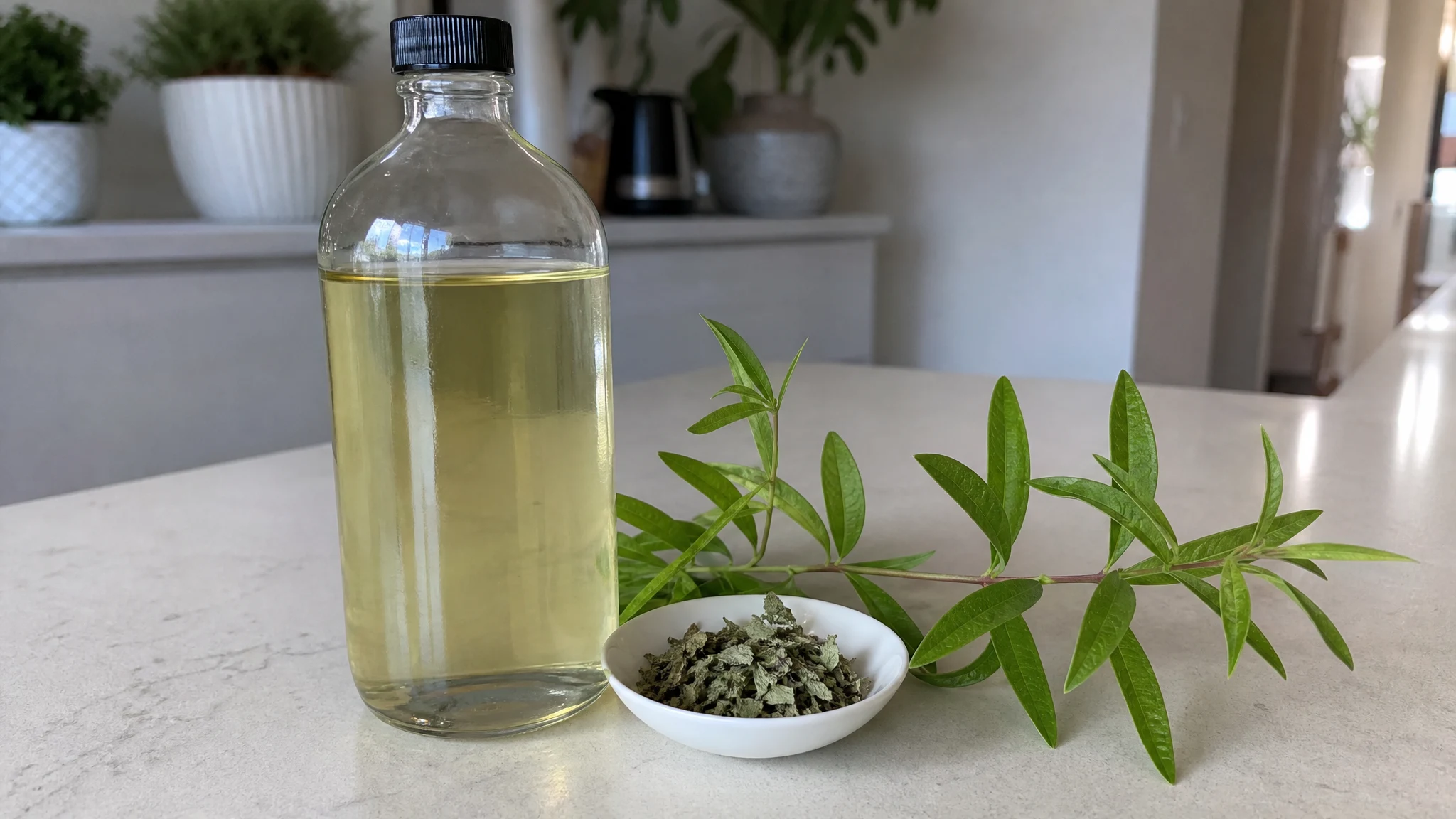
Steeping leaves in olive or sunflower oil gives a lightly scented kitchen or body oil, and it is a different thing again: it holds whatever dissolves in the carrier, not the volatile oil. The one thing to know is food safety. University of Maine Cooperative Extension explains that fresh herbs most likely carry Clostridium botulinum spores, which thrive without oxygen, and recommends dried herbs with oil heated to 180 °F and a three-month storage limit (Bulletin #4385). Penn State Extension says fresh-herb oils should be refrigerated and used within 2 to 4 days (How to Safely Make Infused Oils). Our infused oil post follows that guidance.
A quick way to tell them apart by nose
If you ever have a chance to smell all four side by side, the differences are easy to notice. The essential oil is the brightest and most concentrated, lemony and lively from the first sniff. An absolute tends to smell deeper and rounder. A hydrosol is faint and watery, more of a whisper than a shout. Infused oil smells mostly of its carrier, with a gentle green hint. Knowing that, you can usually tell what you have been sold even when a label is vague.
Which one for which job
If you are scenting a candle, soap or body product, the oil is the material to start with, diluted by your own arithmetic, with the IFRA question settled before you sell anything. If you want a mist for a face or a room, look for a preserved hydrosol. If you want something for the kitchen, that is the dried leaf, and our oil is not for internal use; see tea versus essential oil. And if you want a leafy body oil from the garden, treat it like any herb-in-oil recipe and follow the food-safety guidance above.
Four products, one shrub, and each does its own job well when it is matched to the right one.
Lemon Verbena Essential Oil
Lemon Verbena Essential Oil from our own shop, in sizes from 0.5 oz to bulk.
From $12.99
Shop Now →Sources & Further Reading
- IFRA. IFRA Standard: Verbena oil and absolute (Lippia citriodora Kunth.), 2020 (Amendment 49). IFRA_STD_083
- Sprea RM et al., 2023. Volatile Compounds and Biological Activity of the Essential Oil of Aloysia citrodora Paláu: Comparison of Hydrodistillation and Microwave-Assisted Hydrodistillation. Molecules 28:4528. PMC10254266
- Oukerrou MA et al., 2017. Chemical Composition and Cytotoxic and Antibacterial Activities of the Essential Oil of Aloysia citriodora Palau Grown in Morocco. Adv Pharmacol Sci 2017:7801924. PMC5485486
- Zanotti A et al., 2023. Supercritical Fluid Extraction of Essential Oil and Sclareol from a Clary Sage Concrete. Molecules 28:3903. PMC10179952
- Labadie C et al., 2015. Hydrosols of orange blossom (Citrus aurantium), and rose flower (Rosa damascena and Rosa centifolia) support the growth of a heterogeneous spoilage microbiota. Food Res Int 76:576-586. doi.org/10.1016/j.foodres.2015.07.014
- University of Maine Cooperative Extension. Bulletin #4385, Safe Homemade Flavored and Infused Oils. extension.umaine.edu
- Penn State Extension. How to Safely Make Infused Oils. extension.psu.edu