Lemon Verbena Essential Oil vs Fragrance Oil: Which?
Sometimes a verbena fragrance oil is simply the better buy, and sometimes only the plant oil will do. We sell one product, a lemon verbena essential oil steam-distilled from the leaves, and no fragrance oil, so we have a stake in this answer. The most useful thing we can do is lay out how to choose by the job, including the jobs where you should shop elsewhere.
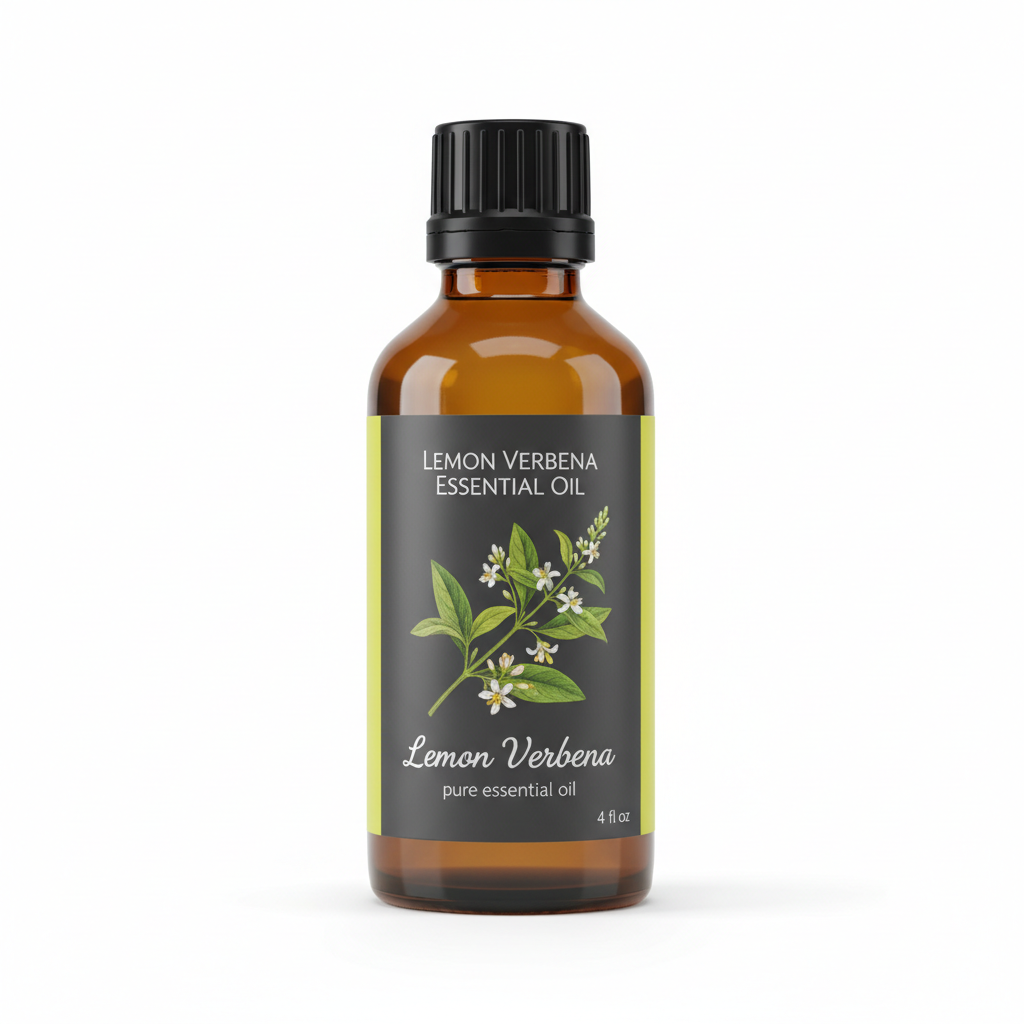
Lemon Verbena Essential Oil
Our own Lemon Verbena Essential Oil, in sizes from 0.5 oz to bulk.
From $12.99
Shop Now →If you will sell what you make, start with the paperwork
IFRA's 2020 verbena standard says verbena oils from Lippia citriodora should not be used as a fragrance ingredient, based on sensitizing and phototoxic potential (IFRA, 2020). The standard sets numeric limits for the absolute by product category, while the oil itself is covered by that prohibition wording. Reasoning from that text, a fragrance supplier following IFRA is unlikely to build a verbena scent from the plant oil. A verbena-style fragrance oil sold to soap, lotion and candle makers is more likely assembled from other materials, with the supplier's own safety documents. We have not read any product's formula, so this is an inference, and the sensible move is to ask the supplier.
The documents to ask for are the supplier's IFRA certificate and safety data sheet for the exact product. We do not issue an IFRA certificate for our oil, so if your product needs one, a fragrance oil that comes with it may be your only practical route. A regulatory consultant, not a product page, should confirm what applies to you.
What the labels mean in law
Less than most people expect. The FDA says there is no regulatory definition of "essential oils" and that the law treats ingredients from plants the same as those from any other source (FDA, Fragrances in Cosmetics). Fragrance and flavor ingredients can be listed on a cosmetic simply as "Fragrance" or "Flavor". A label that says "fragrance" tells you nothing about whether a plant oil is inside, and a label that says "essential oil" is a seller's description, not a regulated grade. The FDA also notes that natural or organic sources are no guarantee of safety (FDA small-business fact sheet). In both cases, the document you can request says more than the front of the bottle.
What makes a plant oil what it is
An essential oil is what distillation takes from the plant, and what comes out depends on the plant and the still. Published leaf oils show how wide that can be. An Ecuadorian oil had geranial 26.8%, neral 21.0% and limonene 7.2%, and a trained panel described lemon, candied lemon, lemongrass, orange blossom and sweet pastry notes (Parichanon et al., 2025). Five Moroccan oils had no detectable geranial and were led by caryophyllene oxide and spathulenol (Oukerrou et al., 2017).
For us, the aroma is the draw: sparkling, sweet and lemony over a soft herbal-floral heart, less acidic and more polished than lemon peel oil. The plant is the point, and that same character is why a batch of plant oil can shift a little from lot to lot. The Certificate of Analysis we publish covers one batch and lists appearance, smell, a relative density of 0.869 and a refractive index of 1.472, with no GC-MS and no compound percentages. A fragrance oil built to match a target scent can be held steady from lot to lot by its maker's formula, and that is a real argument for one when repeatability matters more to you than the plant itself.
A choice by job
| Your job | Better fit | Why |
|---|---|---|
| A product you will sell that needs IFRA documents | A fragrance oil with the supplier's IFRA certificate and SDS | The paperwork comes with it |
| A scent that must match batch after batch | A fragrance oil | A formula can be held constant |
| A diffuser or room scent for yourself, from a plant | Lemon verbena essential oil | You get a leaf oil with its natural character |
| A sample to evaluate in your own formulation | The plant oil, with a sample bottle first | You judge it in your own product |
The plant-oil rows come with their own homework. Our oil is sold neat, so dilution is yours to work out, our guidance for skin is 0.5% to 2% in a carrier oil with a patch test, and the skin basics article compares that with what IFRA says. For scenting a room, the diffusing guide has the practical steps.
What you will notice when you smell them
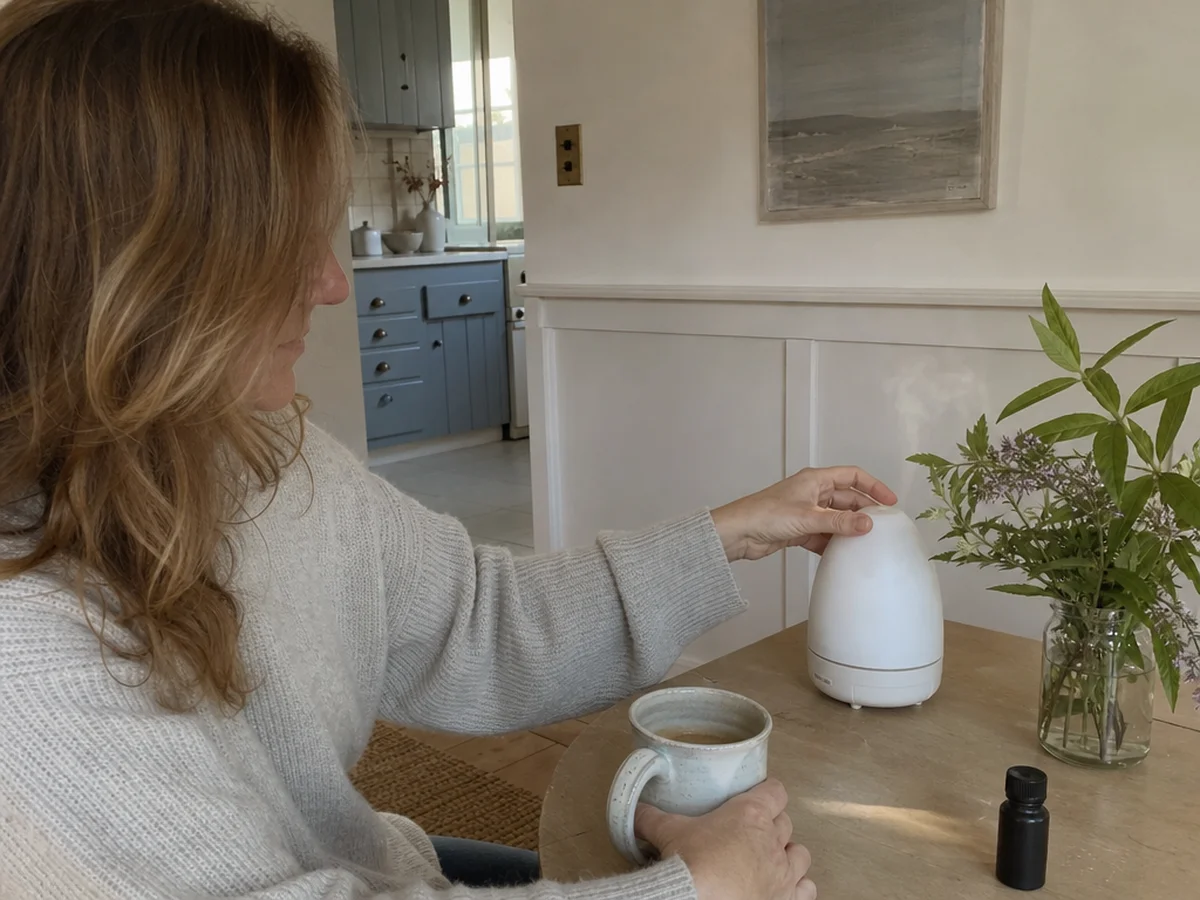
Put a plant oil and a fragrance oil on neighboring strips and your nose will often tell you something before any document does. A plant oil tends to unfold: the brightness comes first, and then the softer notes arrive in their own time, and they keep changing for a while. A fragrance oil is often built to hit its mark straight away and stay there. Neither is wrong. They are simply built for different pleasures, and it is useful to know which one you are after before you start.
Give each strip a proper chance. Smell, wait, and come back. If you only judge by the first breath, the answer may be different from the one you reach an hour later.
Where we land
If you want the plant, the aroma of an actual leaf oil and the pleasure of a natural material, we think lemon verbena essential oil is worth exploring, and you can read about its smell in our scent profile. If your priorities are documents and consistency for a product you sell, a fragrance oil from a supplier who can supply them is a perfectly good answer. Wholesale buyers who want to compare can request a sample through the wholesale page and judge it in their own formulation.
Whichever you pick, take your time with the strips. A scent you still like after an hour is usually the one you will still like in the finished project.
Lemon Verbena Essential Oil
Lemon Verbena Essential Oil from our own shop, in sizes from 0.5 oz to bulk.
From $12.99
Shop Now →Sources & Further Reading
- IFRA, 2020. IFRA Standard: Verbena oil and absolute (Lippia citriodora Kunth.), Amendment 49. d3t14p1xronwr0.cloudfront.net
- U.S. Food and Drug Administration. Fragrances in Cosmetics. www.fda.gov
- U.S. Food and Drug Administration. Small Businesses & Homemade Cosmetics: Fact Sheet. www.fda.gov
- Parichanon et al., 2025. Chemical Profiling, Sensory Qualities, and Bioactivities of Essential Oils Obtained from Aloysia citrodora and Bursera graveolens Ecuadorian Plants Against the Mosquito Aedes albopictus (Skuse) (Diptera: Culicidae). Insects 16(2):202. pmc.ncbi.nlm.nih.gov
- Oukerrou et al., 2017. Chemical Composition and Cytotoxic and Antibacterial Activities of the Essential Oil of Aloysia citriodora Palau Grown in Morocco. Advances in Pharmacological Sciences. pmc.ncbi.nlm.nih.gov