What Can Replace Lemon Verbena Oil? Match the Job
"Smells of lemon" covers at least three different chemistries, which is why the best stand-in for lemon verbena oil depends on what the verbena was doing in your project. We sell only the one lemon verbena oil, so every substitute below comes from a craft, soap-supply or aromatherapy shop.
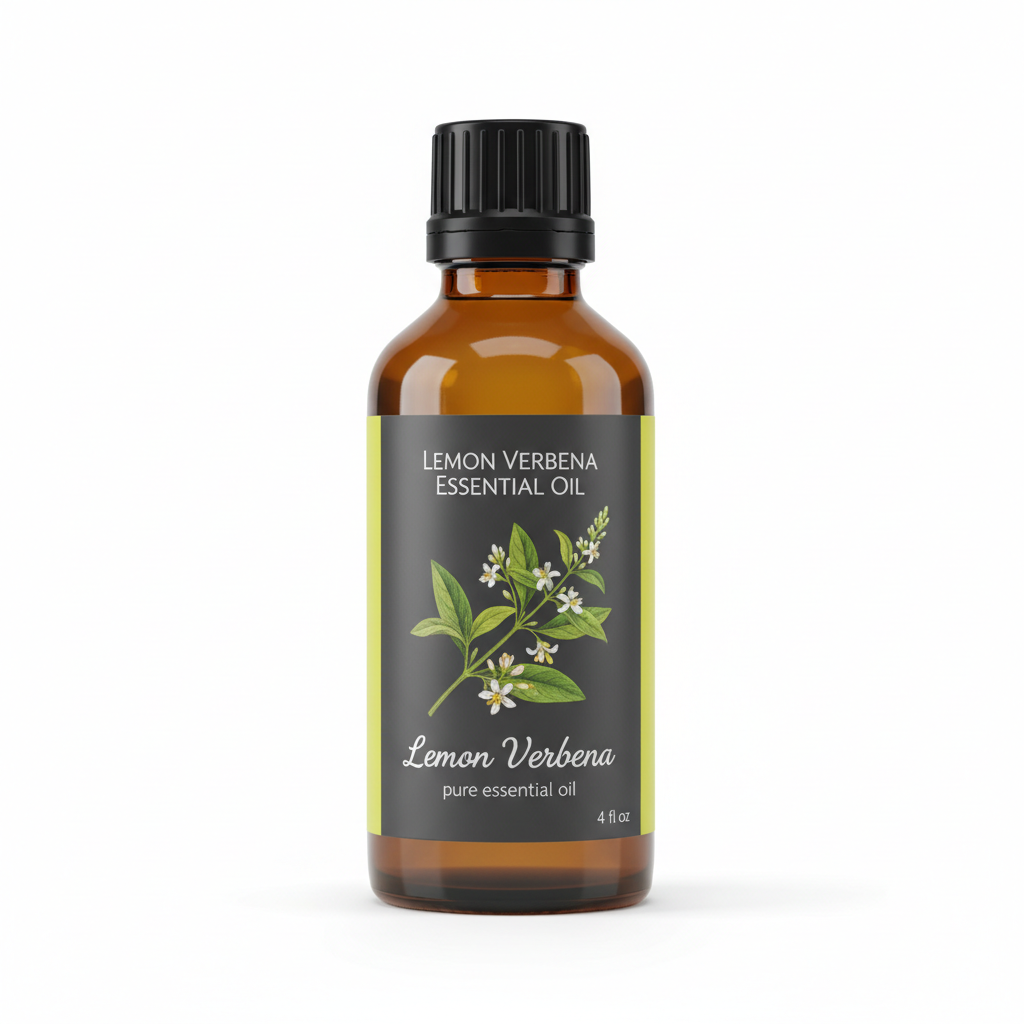
Lemon Verbena Essential Oil
Our own Lemon Verbena Essential Oil, in sizes from 0.5 oz to bulk.
From $12.99
Shop Now →First, what job is it doing?
Ask whether you want the sparkle, the softness or the story. If it is sparkle, you are really after citral, the pair of compounds (geranial and neral) behind the lemon note. If it is a rounded, soft top note, citral is the wrong target. And if it is the herbal-floral heart that makes verbena feel different from lemon peel, there is no tidy copy, only neighbours.
It also helps to know the fragrance industry's position. IFRA's verbena standard says verbena oil should not be used as a fragrance ingredient, citing its sensitising and phototoxic potential. If your product needs a fully IFRA-compliant formula, that is a good reason to look at the substitutes seriously.
Smell them side by side
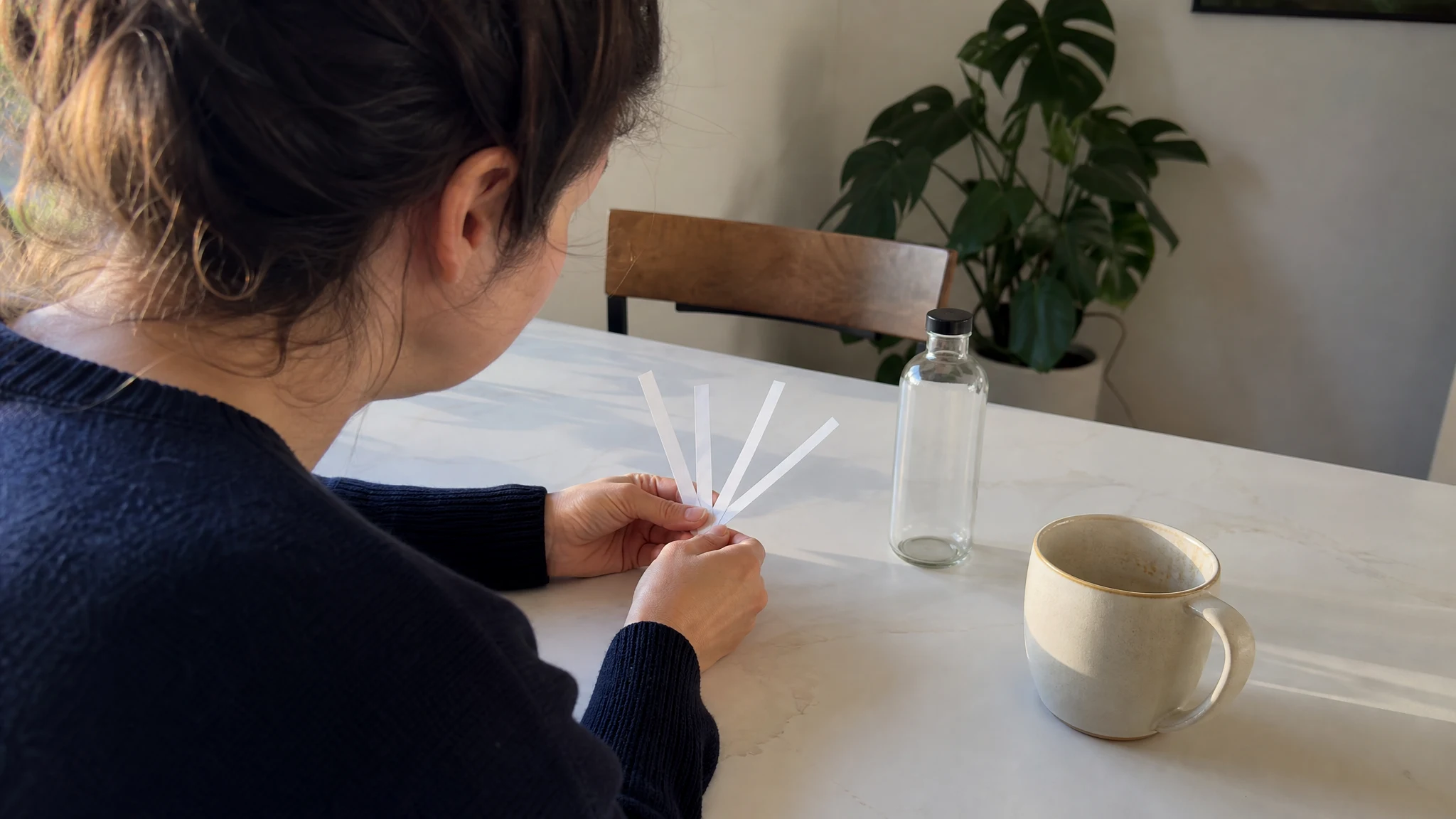
The best way to choose is the simplest. Put a drop of each candidate on its own paper strip, label the strips, and line them up. Smell them one at a time, then again after a few minutes and after an hour. Some lemony oils shout at first and fade, while others open slowly. You will quickly see which one is closest to what you wanted, and which one is a very different animal that happens to share the word lemon.
If you can, test them in your actual project too, even in a tiny amount. A scent that smells right on paper can feel quite different in melted wax or soap, and a small trial is cheaper than a full batch.
For citral sparkle at a small dose
Lemon myrtle (Backhousia citriodora) is widely regarded as a superior source of citral, and a 2021 review describes it as an unrivalled one. Ask the supplier for a composition report so you know the citral level you are getting.
Lemongrass is the familiar classic. One hydrodistilled leaf oil from eastern Nepal had geranial at 53.1% and neral at 36.1%, about 89% citral, though that is a single sample. Our verbena and lemongrass comparison covers the practical differences.
Litsea cubeba comes from a fruit and not a leaf, and eight Chinese regions gave neral plus geranial of 78.7% to 87.4% with very little limonene. It overlaps with lemongrass and lemon myrtle so closely that it is a frequent topic in adulteration talk, so buy it under its own name and not as verbena. Our litsea article explains.
All three share one limit: citral. IFRA's citral standard allows 0.15% citral in Categories 5A to 5C (body products left on skin) and 0.60% in Category 4 (fine fragrance). Divided by about 89% citral, that works out to a maximum of roughly 0.17% and 0.67% oil. That is arithmetic on a single sample, so check the figures for your own oil.
For a round, soft top note
Petitgrain (bitter orange leaf) is a different animal. In the Greek study we draw on, young-leaf oil was led by linalool at 58.21% with linalyl acetate at 12.42% and almost no limonene. Citral is not a main component, so it will not supply the sparkle, but it gives a gentle, green-floral roundness that sits well with verbena. Ask which species a "petitgrain" is from and how it was made.
For an herbal-floral lemon
Melissa (lemon balm) is the other costly lemon oil, and just as variable. Compiled ranges run from 6.22% to 51.21% geranial and 4.28% to 35.02% neral, so two bottles can be quite different. Our verbena and melissa comparison digs in.
Being honest about what you are missing
No substitute gives you everything. A stand-in that matches the loudness may lose the soft perfumed edge, and one that matches the roundness may need help to reach the same sparkle. Decide which part matters most for your project and accept that the others will change. That is not a failure, it is how scent work goes, and a small change often turns out better than the original plan.
Keep your first trial small and write down exactly what you swapped. If the result is close but not quite right, change one thing at a time, such as the amount or a partner oil, so you can tell which tweak made the difference. Patience here is cheap, and a good stand-in is usually found on the second or third try, not the first.
Where verbena stays the answer
Verbena is the oil to choose when the soft herbal-floral heart is exactly what you want. We describe ours as sparkling and sweet over that heart, less acidic and more polished than lemon peel oil, and the partners we list are neroli, lavender, geranium, cedarwood, sandalwood, bergamot and petitgrain. For a candle or soap, a small test batch with your own base, weighed in grams, will tell you more than any list.
If you stay with verbena, we start at the low end of our 0.5% to 2% skin range and patch test first. If you need composition data for a project, please ask us in writing through the contact page before you order.
Compare lemon myrtle and lemon oil side by side if you want the numbers in one place. Whichever oil you pick, choose it for the job.
Lemon Verbena Essential Oil
Lemon Verbena Essential Oil from our own shop, in sizes from 0.5 oz to bulk.
From $12.99
Shop Now →Sources & Further Reading
- IFRA Standard: Verbena oil and absolute (Lippia citriodora Kunth.), Amendment 49, 2020. ifrafragrance.org
- IFRA Standard: Citral, Amendment 49, 2020. ifrafragrance.org
- Southwell I, 2021. Backhousia citriodora F. Muell. (Lemon Myrtle), an Unrivalled Source of Citral. Foods 10(7):1596. PMC8305781
- Dangol S et al., 2023. Essential Oil Composition Analysis of Cymbopogon Species from Eastern Nepal by GC-MS and Chiral GC-MS, and Antimicrobial Activity of Some Major Compounds. Molecules 28(2):543. PMC9863348
- Si L et al., 2012. Chemical composition of essential oils of Litsea cubeba harvested from its distribution areas in China. Molecules 17(6):7057-7066. PMC6268156
- Sarrou E et al., 2013. Volatile constituents and antioxidant activity of peel, flowers and leaf oils of Citrus aurantium L. growing in Greece. Molecules 18(9):10639-10647. PMC6270488
- Petrisor G et al., 2022. Melissa officinalis: Composition, Pharmacological Effects and Derived Release Systems-A Review. Int J Mol Sci 23(7):3591. PMC8998931