Lemon Verbena vs Vervain: Untangling the Names
Say "verbena" in a shop and you might be talking about a South American shrub, a European wildflower, or a perfume note that contains neither. Add lemongrass and lemon balm, which also smell of lemon, and the names tangle quickly. We sell one oil, from Aloysia citrodora, so we are happy to untangle them.
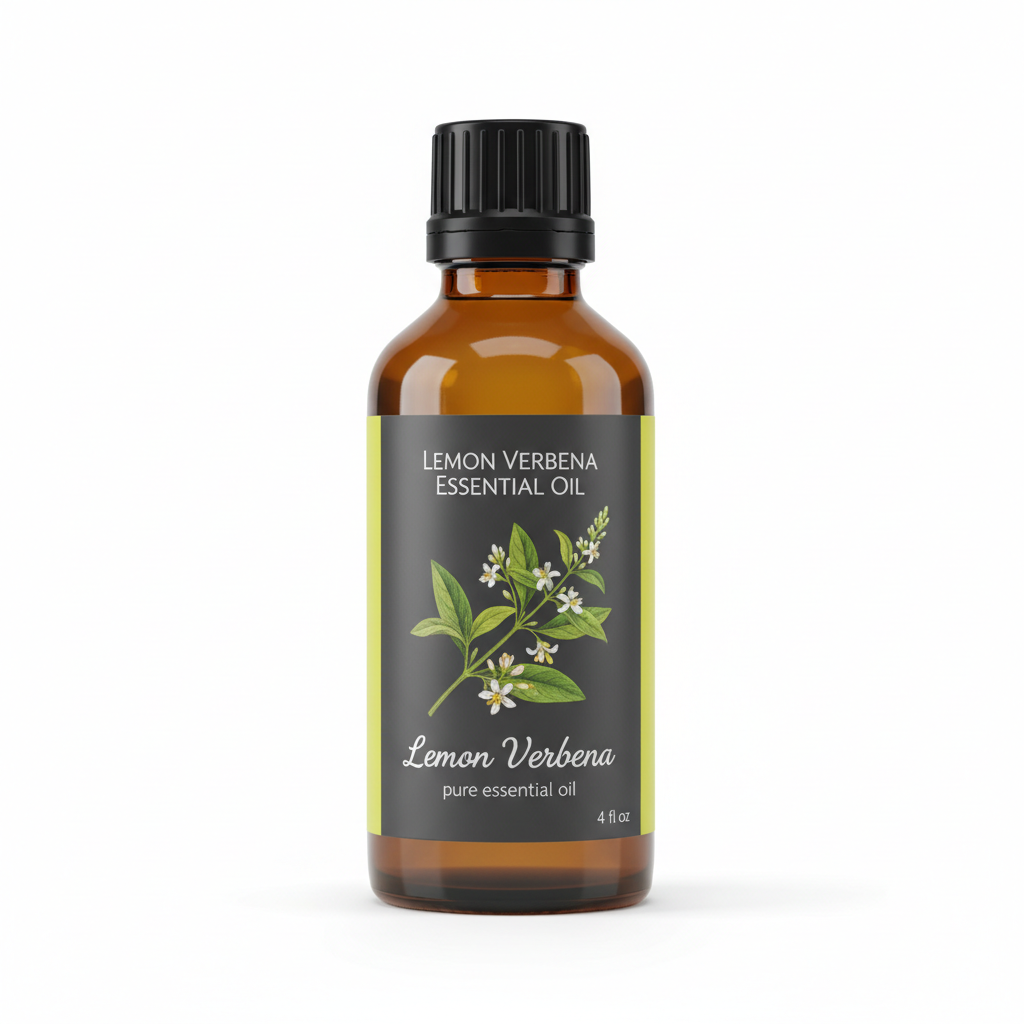
Lemon Verbena Essential Oil
Our own Lemon Verbena Essential Oil, in sizes from 0.5 oz to bulk.
From $12.99
Shop Now →Lemon verbena is its own plant
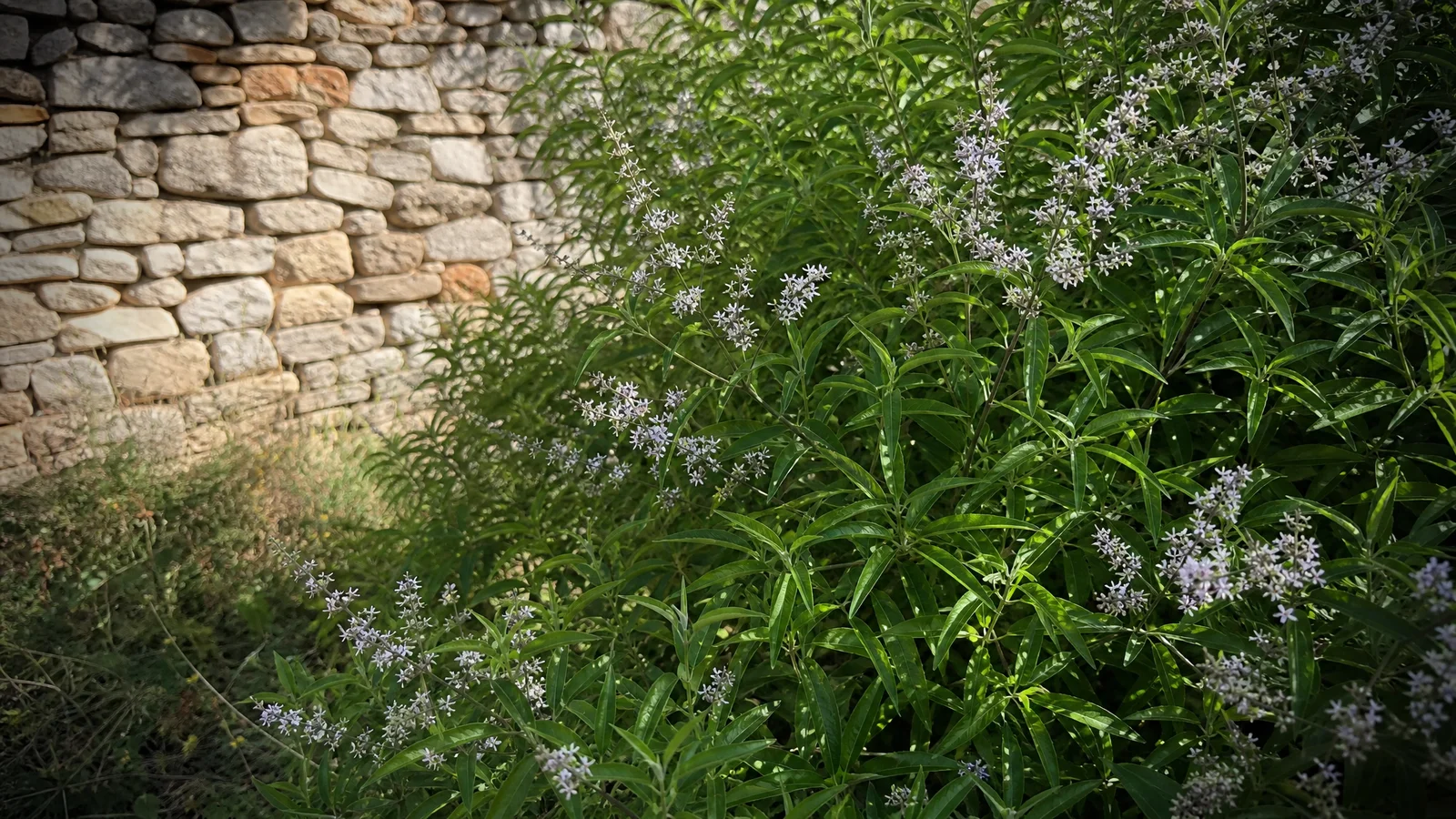
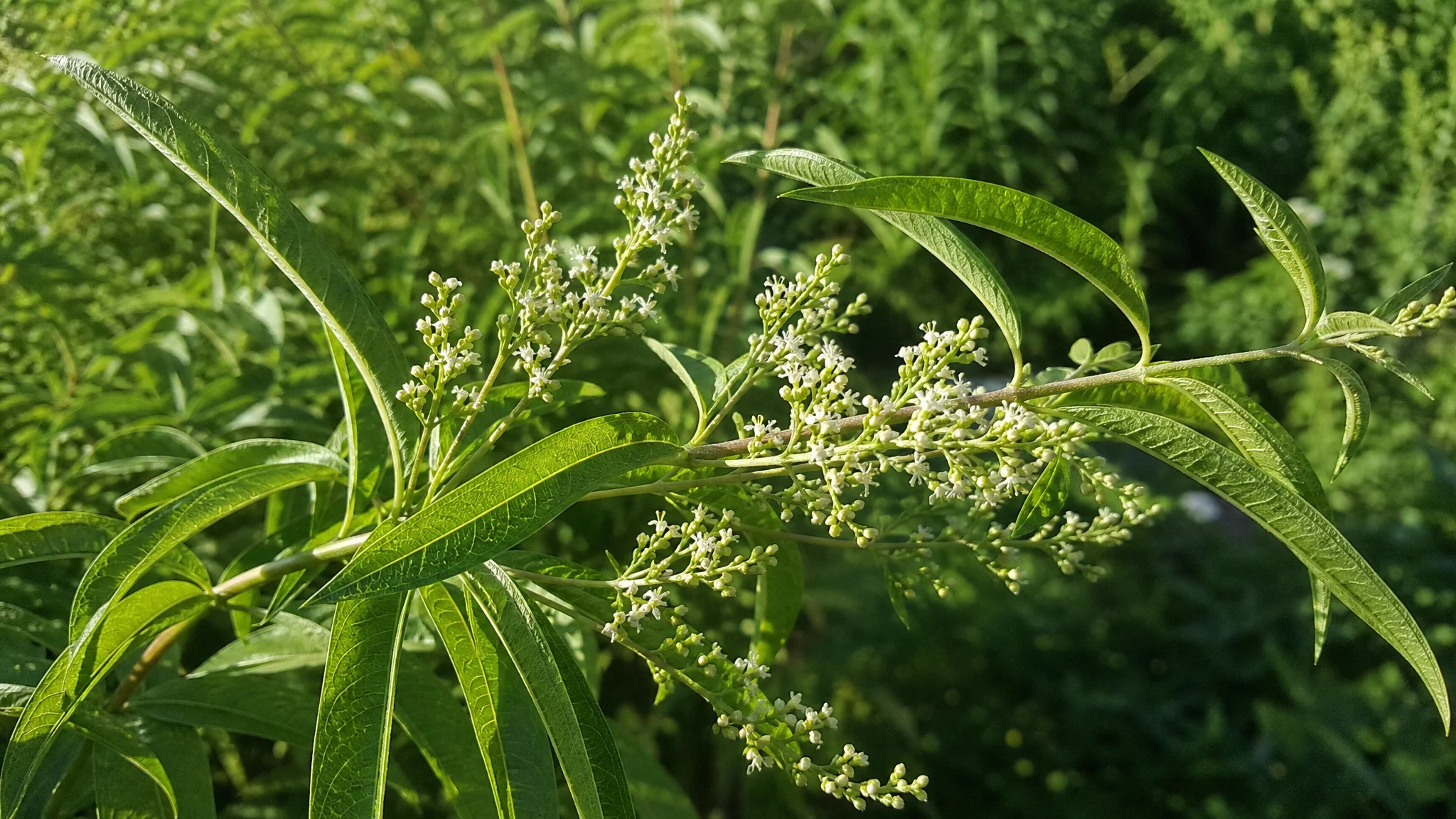
The shrub behind our oil is Aloysia citrodora Paláu, in the Verbenaceae family. Older books and regulatory texts use other names for it: the European Medicines Agency's monograph lists Aloysia triphylla, Verbena triphylla and Lippia citriodora as synonyms. That last name is the one you will meet in fragrance standards, where "verbena oil" means the oil of this shrub. It is why a bottle labelled only "verbena oil" leaves a question open, and why we always want the Latin name beside it.
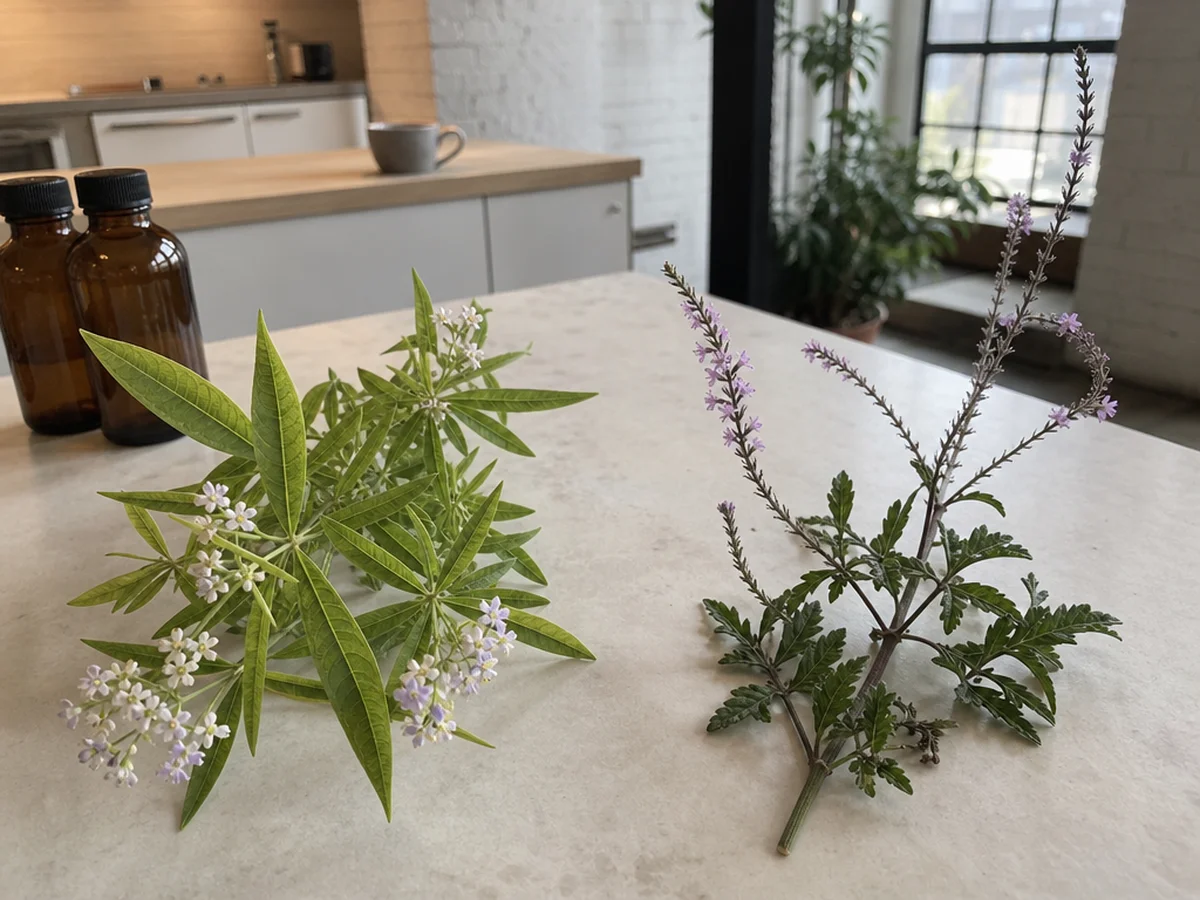
Vervain is a different species with a different oil
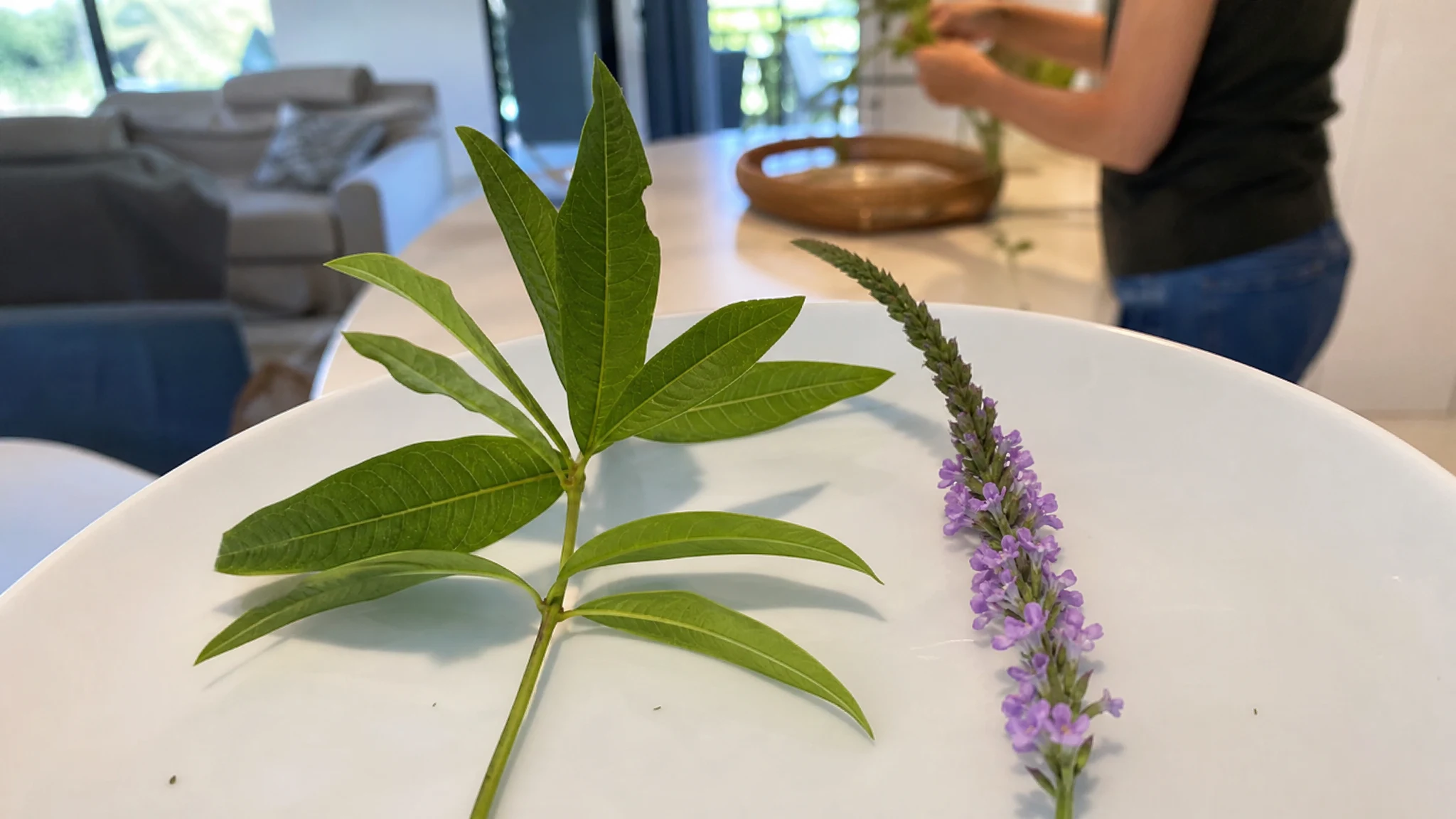
Common vervain, Verbena officinalis, is the wildflower of European roadsides and folklore. It shares the family name but not the scent. One Iranian analysis of its aerial parts found 1-octen-3-ol at 32.76% and verbenone at 20.49% as the main components, with geranial at only 7.22%. Compare that with an Ecuadorian lemon verbena oil in which geranial was 26.8%, neral 21.0% and limonene 7.2%. A few compounds overlap and most do not, so one cannot stand in for the other, and anything written about vervain tells you little about ours.
Same family does not mean same plant
You may read that lemon verbena has been moved into the mint family. The sources we read do not say so: it sits in Verbenaceae, and the EMA monograph and the NC State Plant Toolbox both use that family. This is more than trivia. The EMA lists hypersensitivity to the plant, or to other plants of the Verbenaceae family, as a reason not to use the leaf, so a person who reacts to one relative has a reason to ask an allergist before trying another.
How the mix-up happens
Names travel in strange ways. A shrub carried across oceans picks up local nicknames, a garden catalogue shortens a Latin name to something friendly, and a perfume house borrows a word because it sounds fresh. After a few generations of that, "verbena" can mean three or four different things depending on who is speaking. None of that is anyone's fault. It just means the Latin name, written out in full, is the most useful thing you can have in your hand.
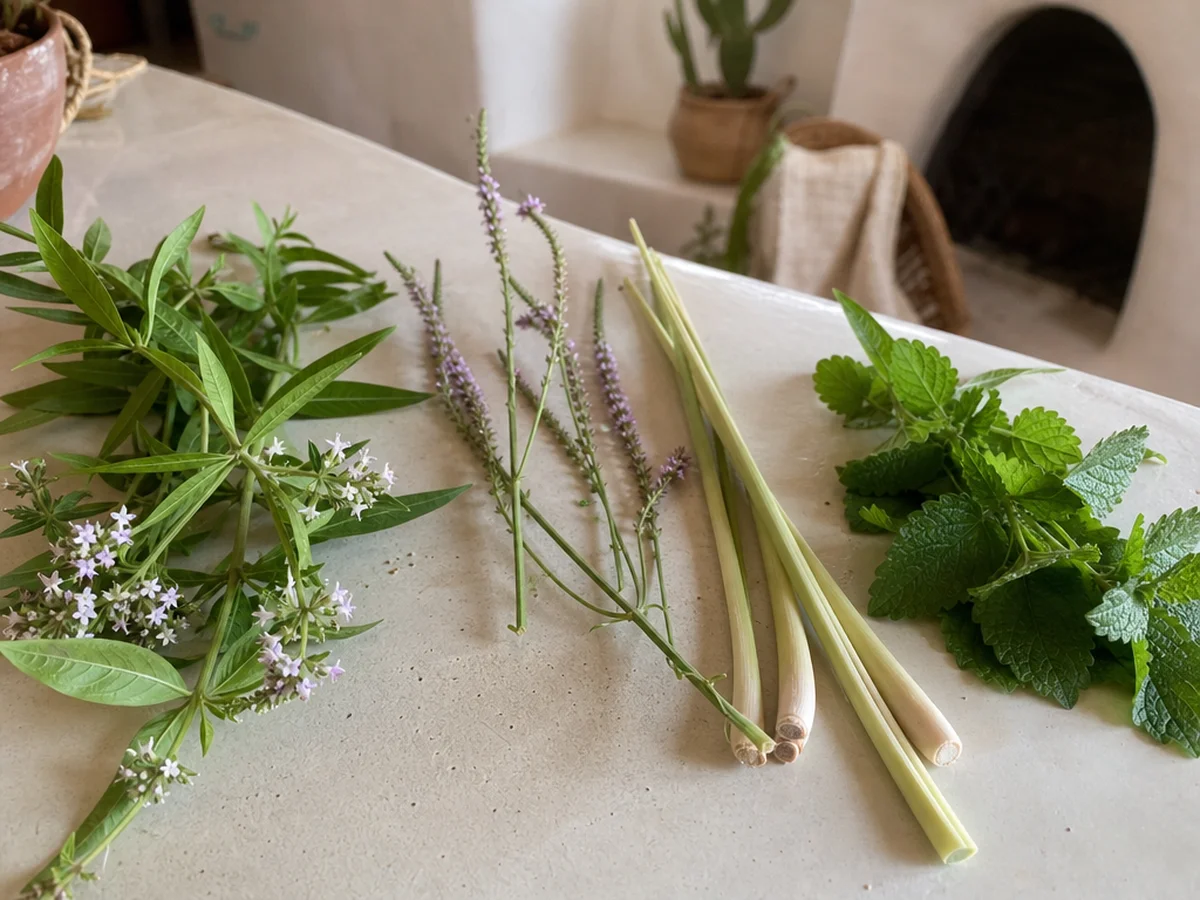
Three lemony plants, three different genera
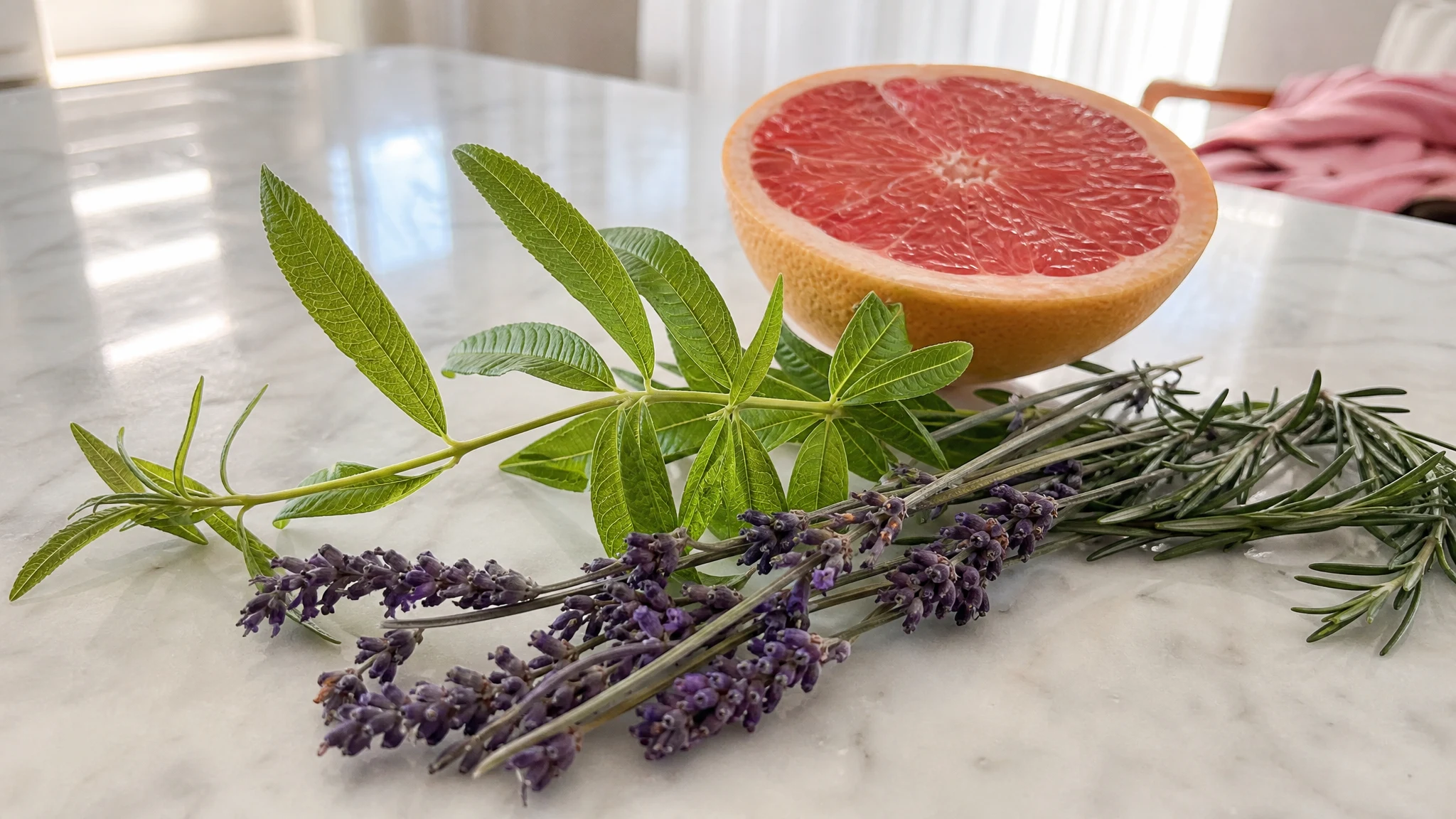
Lemon verbena, lemongrass and lemon balm are often treated as one scent with three labels. They are three genera: Aloysia, Cymbopogon and Melissa. The US food-regulation list of essential oils (21 CFR 182.20) names "Balm (lemon balm)" and "Lemon grass" as separate entries and has none for lemon verbena. Lemony notes can come from citral in all three, which is the whole reason they get confused. Our lemongrass comparison and lemon-scented oils guide tell them apart by aroma and use.
What a "verbena" perfume actually contains
A candle, soap or perfume that says verbena on the label is describing a scent, and you cannot tell from the label what makes it. The FDA's page on cosmetic allergens explains that in the US ingredients can be listed generally as "fragrance" or "perfume." Add that IFRA's Standard says verbena oil should not be used as a fragrance ingredient, and the likelier reading of a mainstream "verbena" scent is a composed accord. That is our reasoning, since we have not seen any particular formula. If you want to compare the real thing with a composed scent, see our fragrance oil comparison.
One oil, many compositions
Even within true lemon verbena, there is no single fixed formula. Citral was 47.8% in the Ecuadorian oil and 34.0% to 37.3% in oil from Portuguese leaf by two methods. So any claim that "real lemon verbena oil is exactly X% citral" is describing one sample. The Certificate of Analysis we publish for one batch lists appearance, smell, density and refractive index; if you need composition data, ask us in writing through the contact page before ordering.
A garden-centre habit
If you are ever in a garden shop looking for the plant itself, the same rule applies. Read the tag and look for the full Latin name before you take it home. A pot labelled only "verbena" could be any of several quite different plants, and only one of them will give you the sweet lemon scent when you brush the leaves with your fingers. That quick brush is a lovely test of its own, and it is a good habit with any herb.
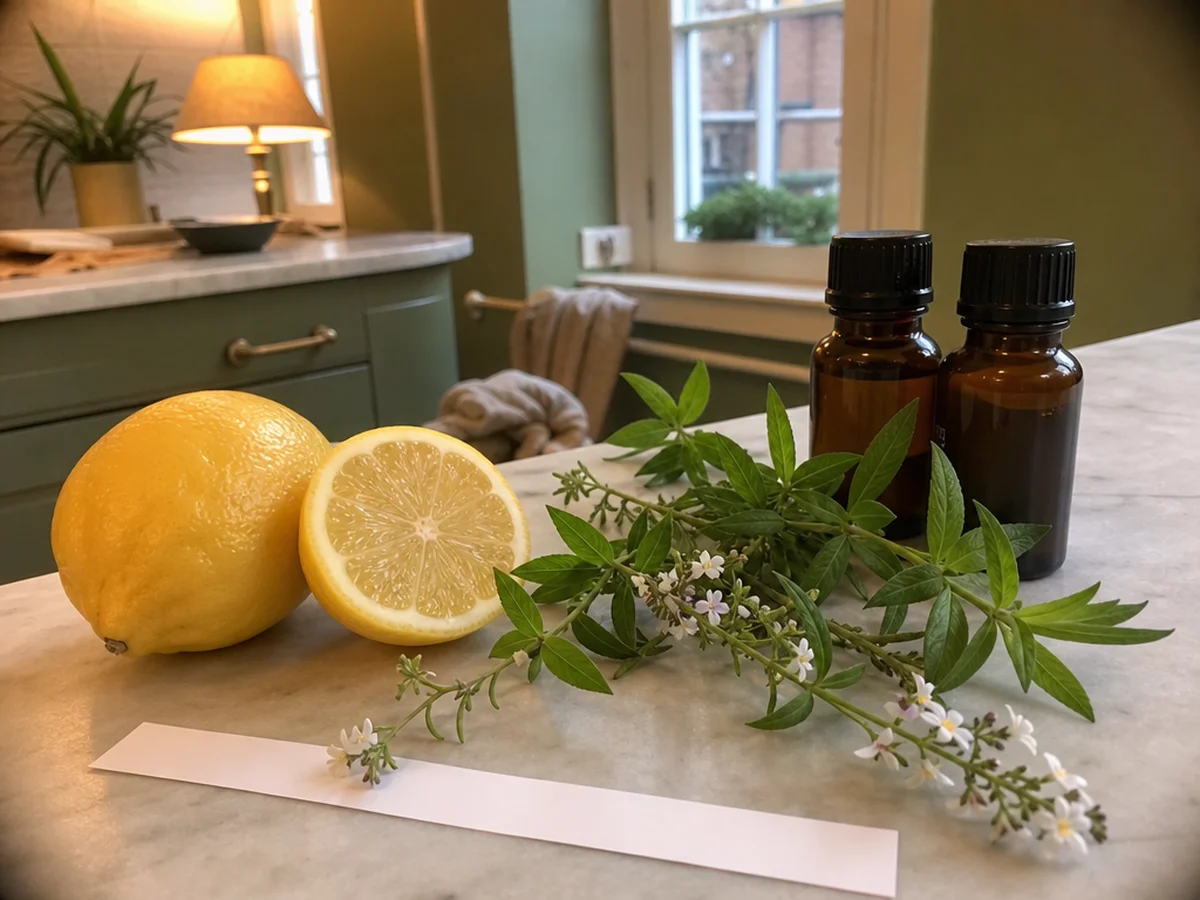
The same goes for any bottle you find at a market stall or in a gift shop. Turn it over, find the Latin name, and if there is none, ask. It is a friendly question, and the answer saves a lot of confusion later.
A short label check
- Look for Aloysia citrodora or Lippia citriodora. If it only says "verbena," ask which plant.
- Look for the plant part and method. Ours is listed as leaves, steam-distilled.
- Do not treat a lemon smell as proof; citral-rich oils from other plants smell alike.
- Natural does not mean mild: see our safety guide for what each authority says.
Get the name right and every other question about quality gets easier.
Lemon Verbena Essential Oil
Lemon Verbena Essential Oil from our own shop, in sizes from 0.5 oz to bulk.
From $12.99
Shop Now →Sources & Further Reading
- European Union herbal monograph on Aloysia citrodora Paláu (syn. Aloysia triphylla (L'Hér.) Kuntze; Verbena triphylla L'Hér.; Lippia citriodora Kunth), folium, EMA/HMPC/376770/2019, 13 January 2021
- Volatile Constituents from the Aerial Part of Verbena officinalis L. (Vervain), Iranian Journal of Pharmaceutical Research
- Chemical Profiling, Sensory Qualities, and Bioactivities of Essential Oils Obtained from Aloysia citrodora and Bursera graveolens Ecuadorian Plants Against the Mosquito Aedes albopictus (Skuse) (Diptera: Culicidae), Insects, 2025
- Volatile Compounds and Biological Activity of the Essential Oil of Aloysia citrodora Paláu: Comparison of Hydrodistillation and Microwave-Assisted Hydrodistillation, Molecules, 2023
- IFRA Standard: Verbena oil and absolute (Lippia citriodora Kunth.), 2020 (Amendment 49)
- Aloysia citriodora (Lemon Beebrush, Lemon Verbena) | North Carolina Extension Gardener Plant Toolbox
- 21 CFR 182.20 Essential oils, oleoresins (solvent-free), and natural extractives (including distillates), eCFR
- Allergens in Cosmetics | FDA