Lemon Verbena Tea or Oil? Why a Drop Is Not a Cup
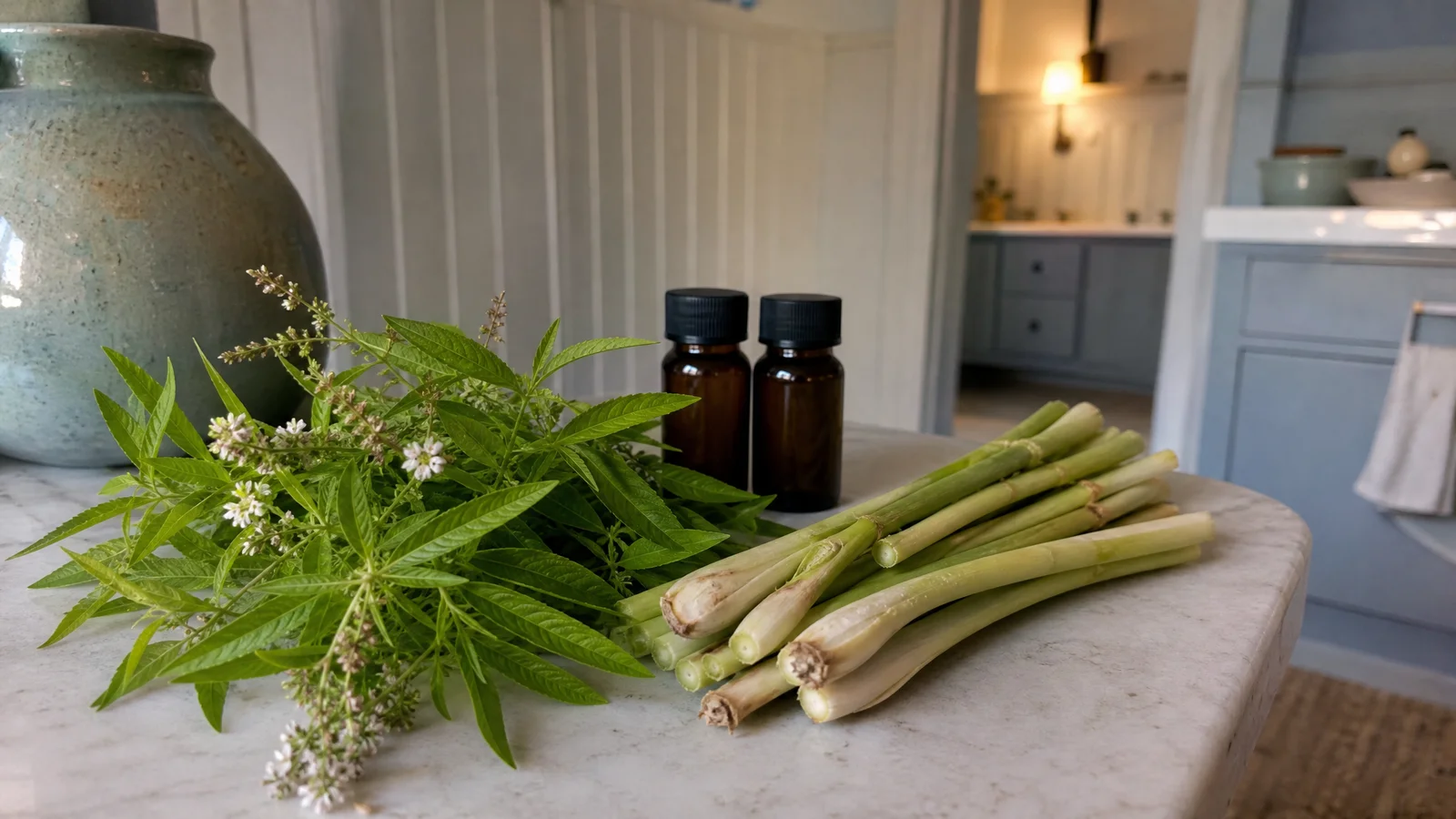
If you have ever steeped a few lemon verbena leaves and breathed in that bright, sweet-lemon steam, it is natural to wonder whether a drop of the essential oil could do the same job faster. It cannot, and the reason is a nice piece of arithmetic. The tea is a gentle infusion of dried leaf. The oil is the volatile part of that leaf, gathered from a great deal of it and packed into a drop.
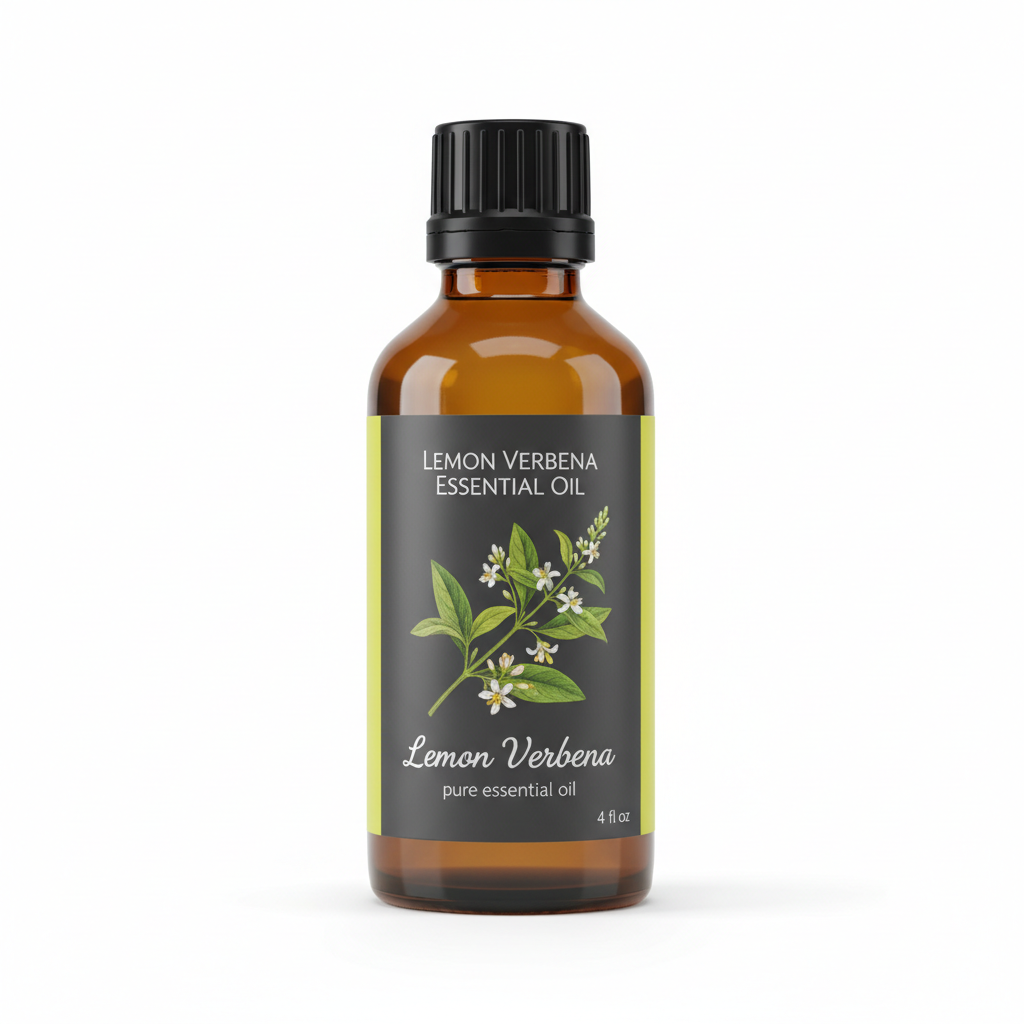
Lemon Verbena Essential Oil
Our own Lemon Verbena Essential Oil, in sizes from 0.5 oz to bulk.
From $12.99
Shop Now →How much leaf is in a drop?
Our oil has a relative density of 0.869 on the Certificate of Analysis for one of our batches, so a millilitre weighs about 0.869 g. On the usual rough convention of 20 drops to the millilitre, one drop is about 43 mg. Droppers vary, so treat that as a ballpark.
Now the leaf. A study of Moroccan lemon verbena reported that shade-dried leaves gave 0.1% to 0.2% oil when distilled (Oukerrou et al., 2017). Yields change with origin and method, so this is one published figure and an illustration, not a measurement of any tea you can buy. Run it backwards, though, and a single 43 mg drop holds the volatile oil of roughly 22 g to 43 g of dry leaf. A cup of tea uses a gram or two. A cup brewed from 2 g of leaf holds, at most, a few milligrams of the volatile fraction, and an infusion will not release all of that.
So a drop of oil is not a stronger cup of tea. It is many cups' worth of the leaf's volatile scent in one place, which is why we sell it for scent, soap, candles and body care and not for the kitchen.
The tea moment
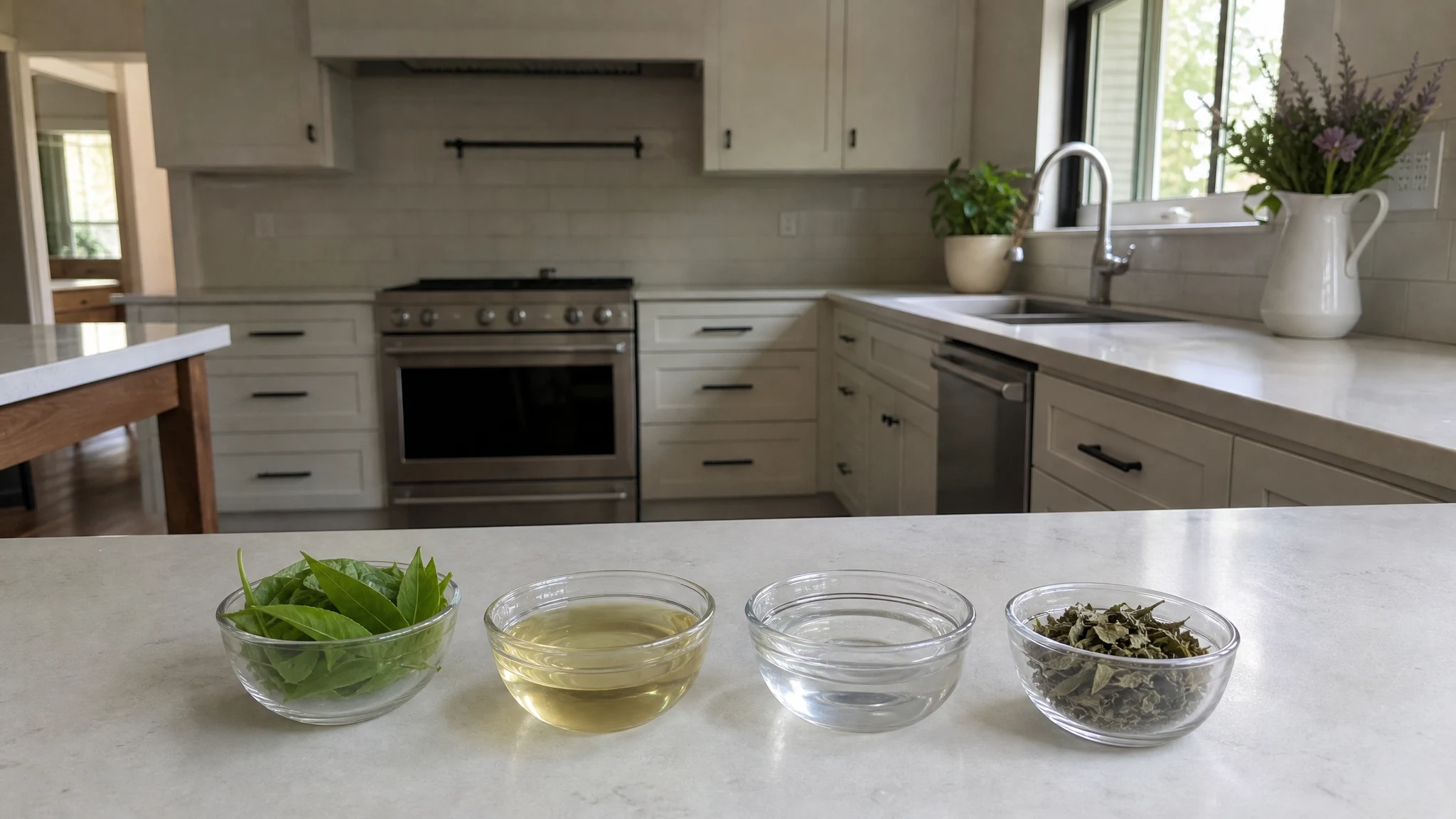
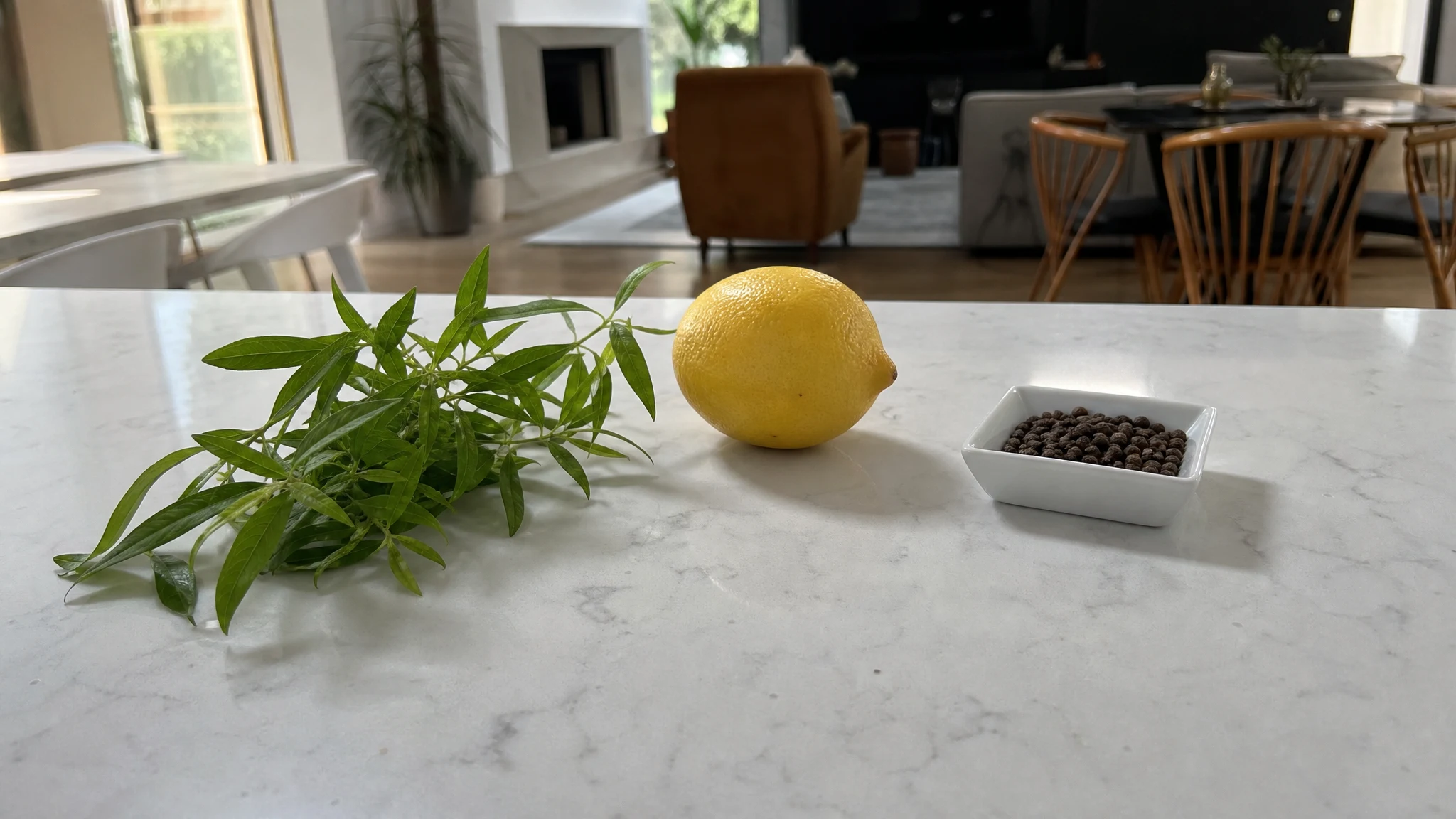
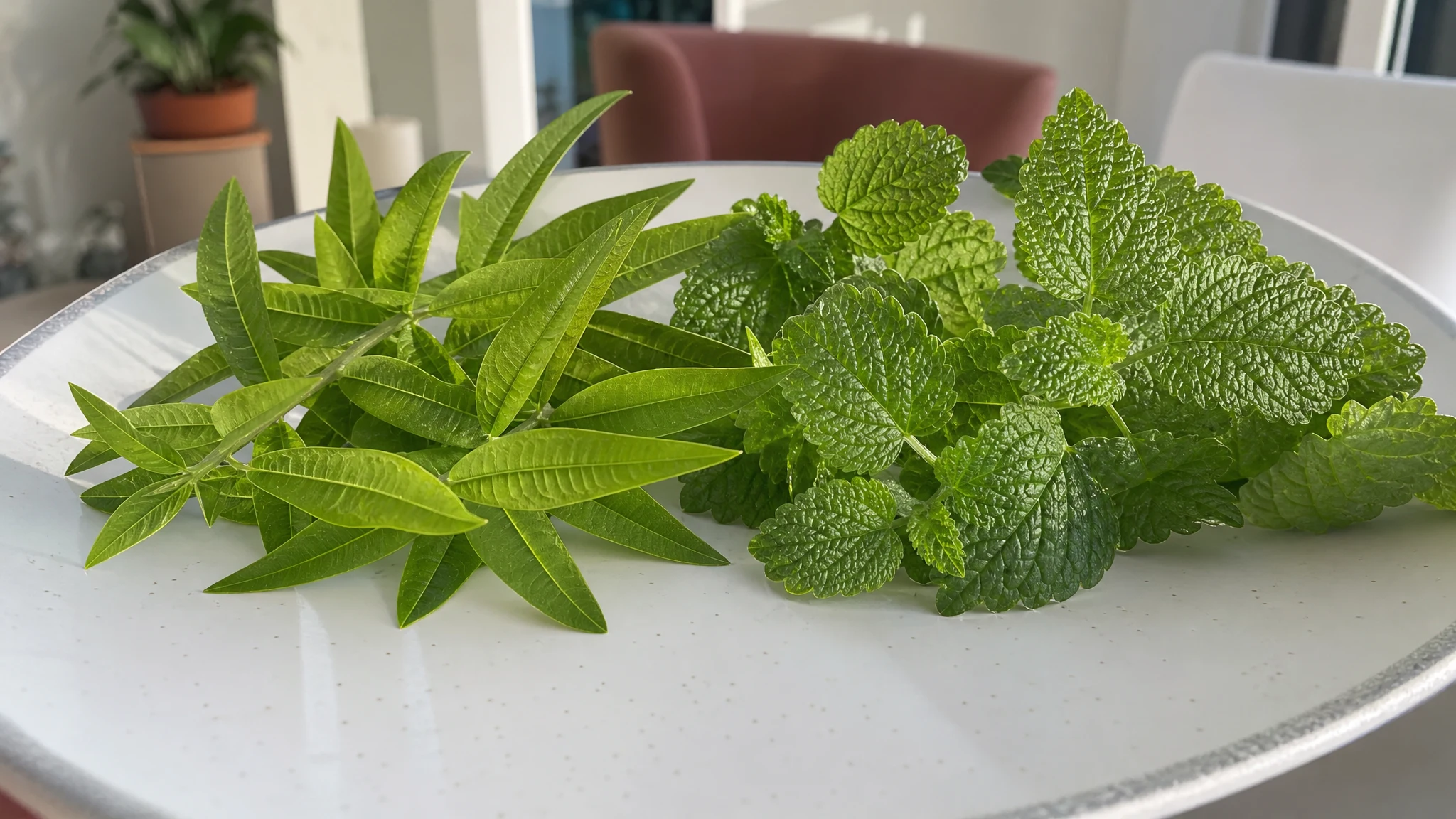
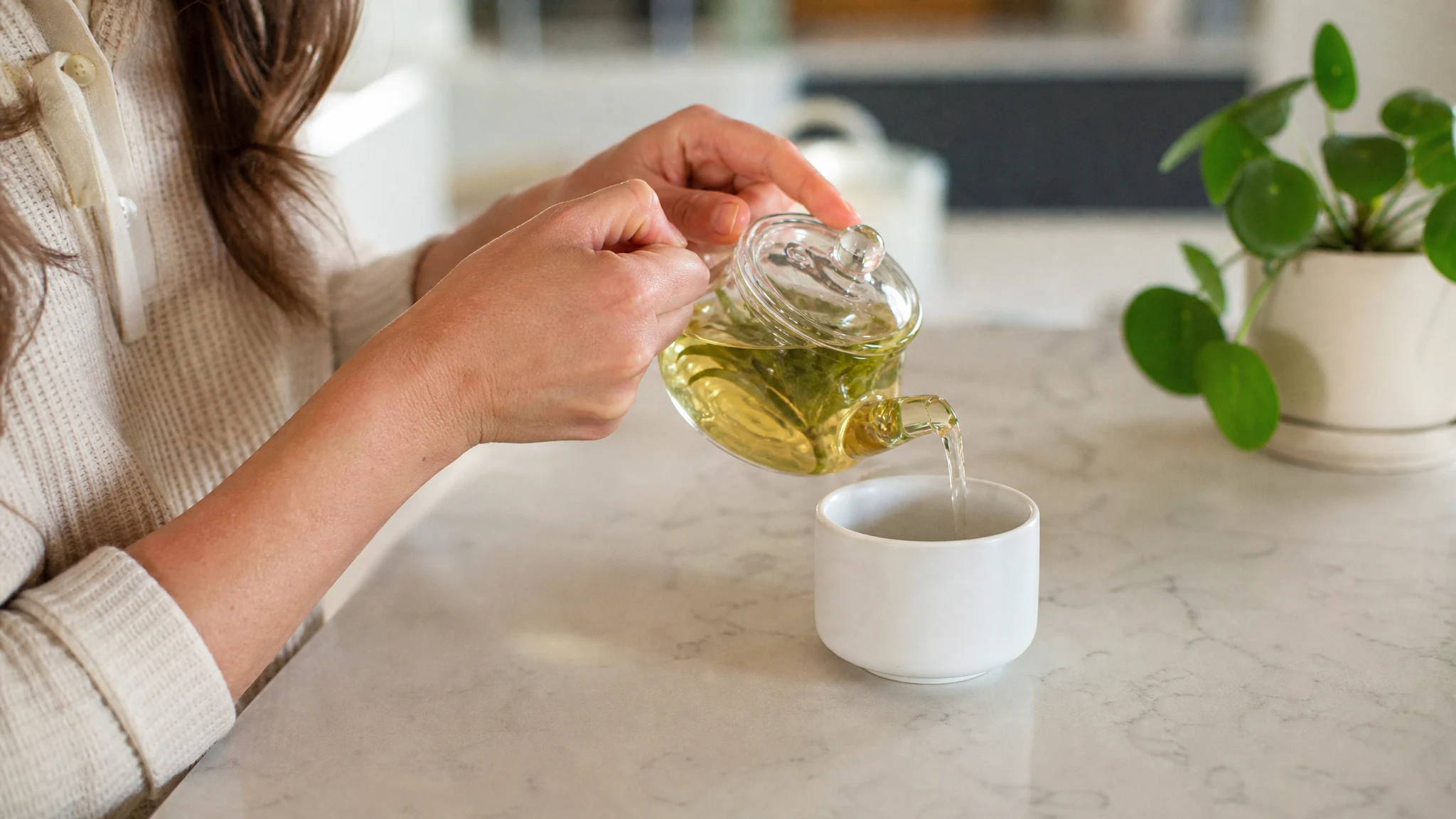
There is a lot to love about a cup of the leaf. Crush a leaf between your fingers first and you will smell the plant at its freshest, bright and sweetly lemony, green at the edges. Pour hot water over a few leaves, cover the cup for a few minutes, and the steam carries that same smell to your face. It is a slow, easy ritual, and it asks nothing of you but a little patience.
Two different sets of ingredients
The oil and the tea do not just differ in strength; they differ in what they contain. A review of the plant reports that neral and geranial, the two halves of citral, are the main ingredients of the essential oil, while verbascoside is the most significant component of the leaf extract (Bahramsoltani et al., 2018). Hot water pulls out the water-soluble material of the leaf, and steam distillation pulls out the volatile material. They overlap in the aroma you smell over a hot cup and very little else.
That is worth remembering whenever you read about lemon verbena in the news. Most of what gets studied is a leaf extract, and what is said about an extract tells you nothing about the oil, or about the tea in your mug. Our research roundup sorts out which preparation each study used.
What the European regulator says about the tea
The European Medicines Agency lists the dried leaf as an herbal tea under a traditional-use monograph, which means it rests on long use and not on modern trials (EMA, Verbenae citriodorae folium). The servings it describes start at 1 to 2 g of leaf in 200 ml of hot water. The monograph advises against use in pregnancy and breastfeeding for lack of data, says use in children has not been established, and lists hypersensitivity to the plant family as a contraindication. If you take medicines, are pregnant, or are making tea for a child, a pharmacist or doctor is the right person to ask.
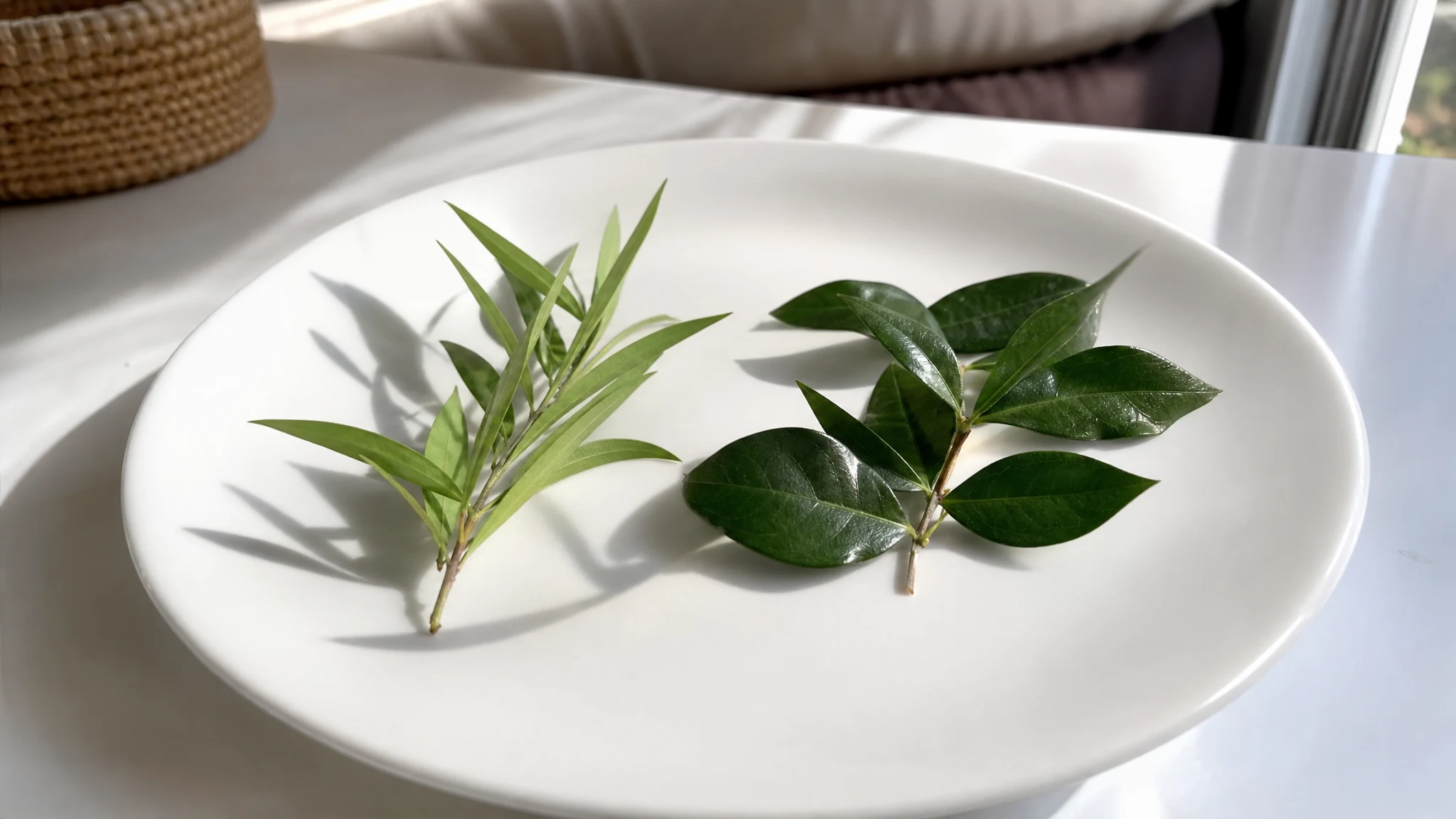
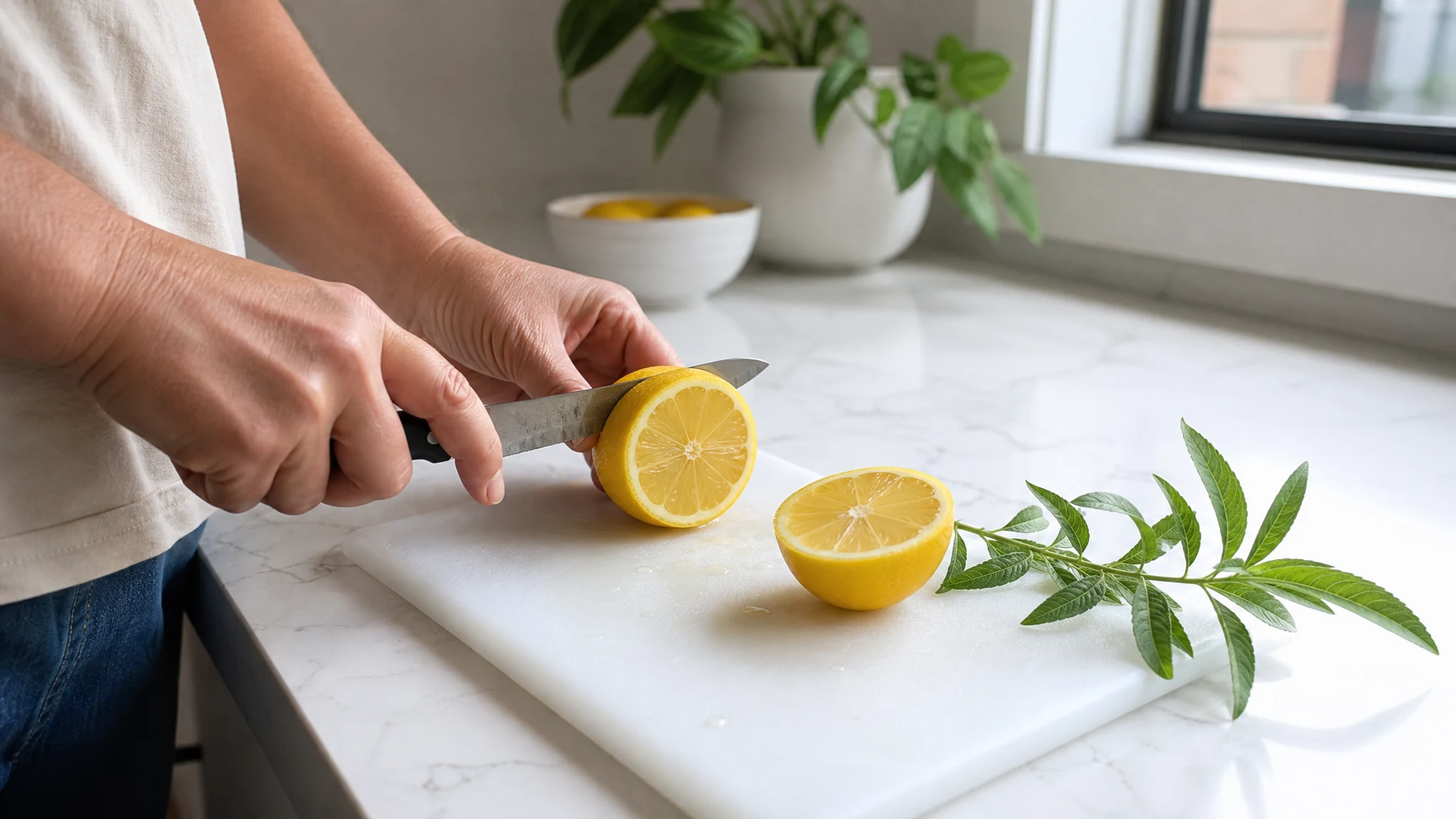
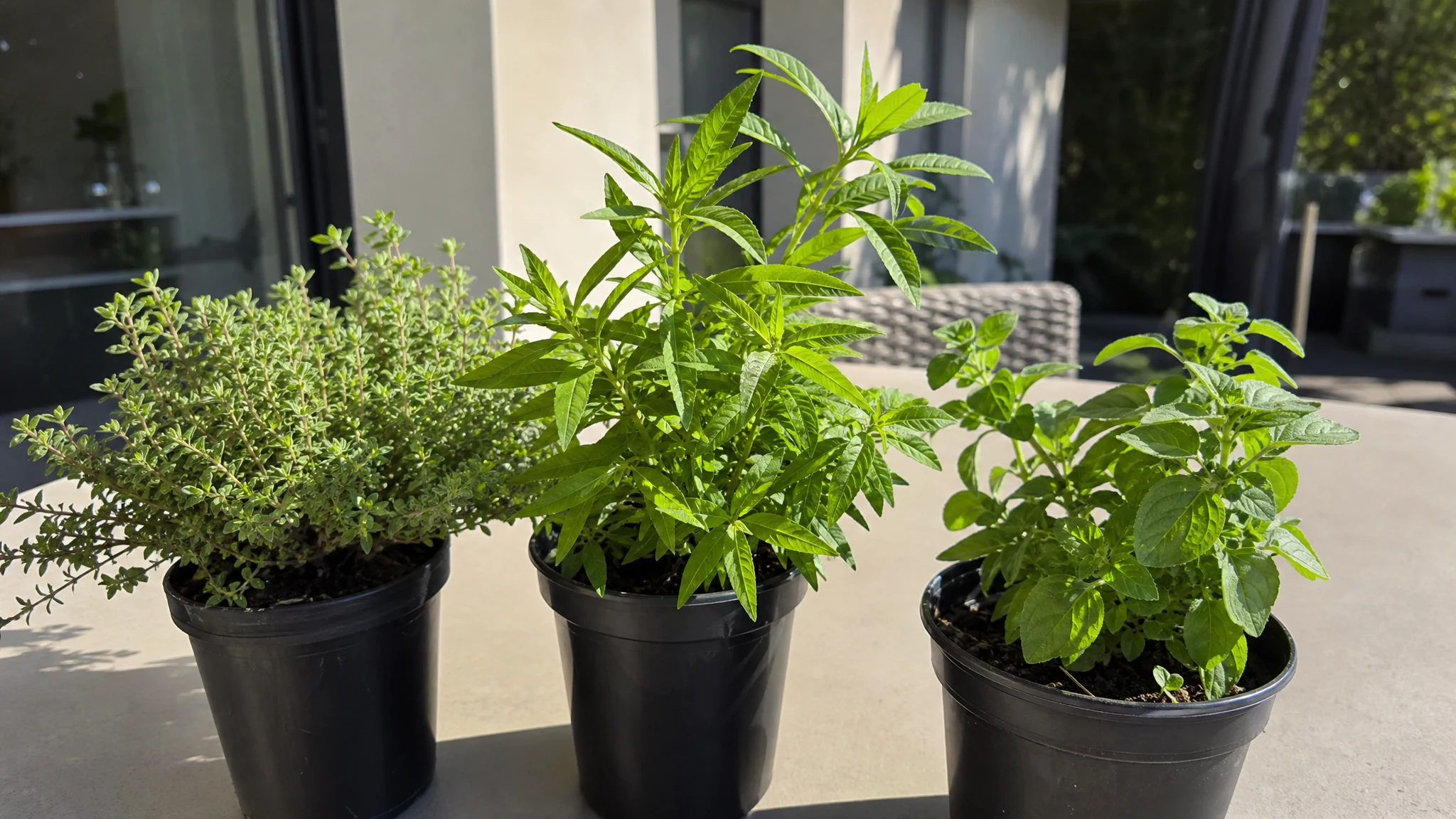
The leaf is a food-shop item and we do not sell it. A grocery or herb shop will have dried leaf, and the botanical name on the pack should read Aloysia citrodora or its older synonym Lippia citriodora, since "verbena" is a common name that other plants share. Our post on cooking with the leaf has kitchen ideas, and the myths post untangles the names.
Where each one belongs
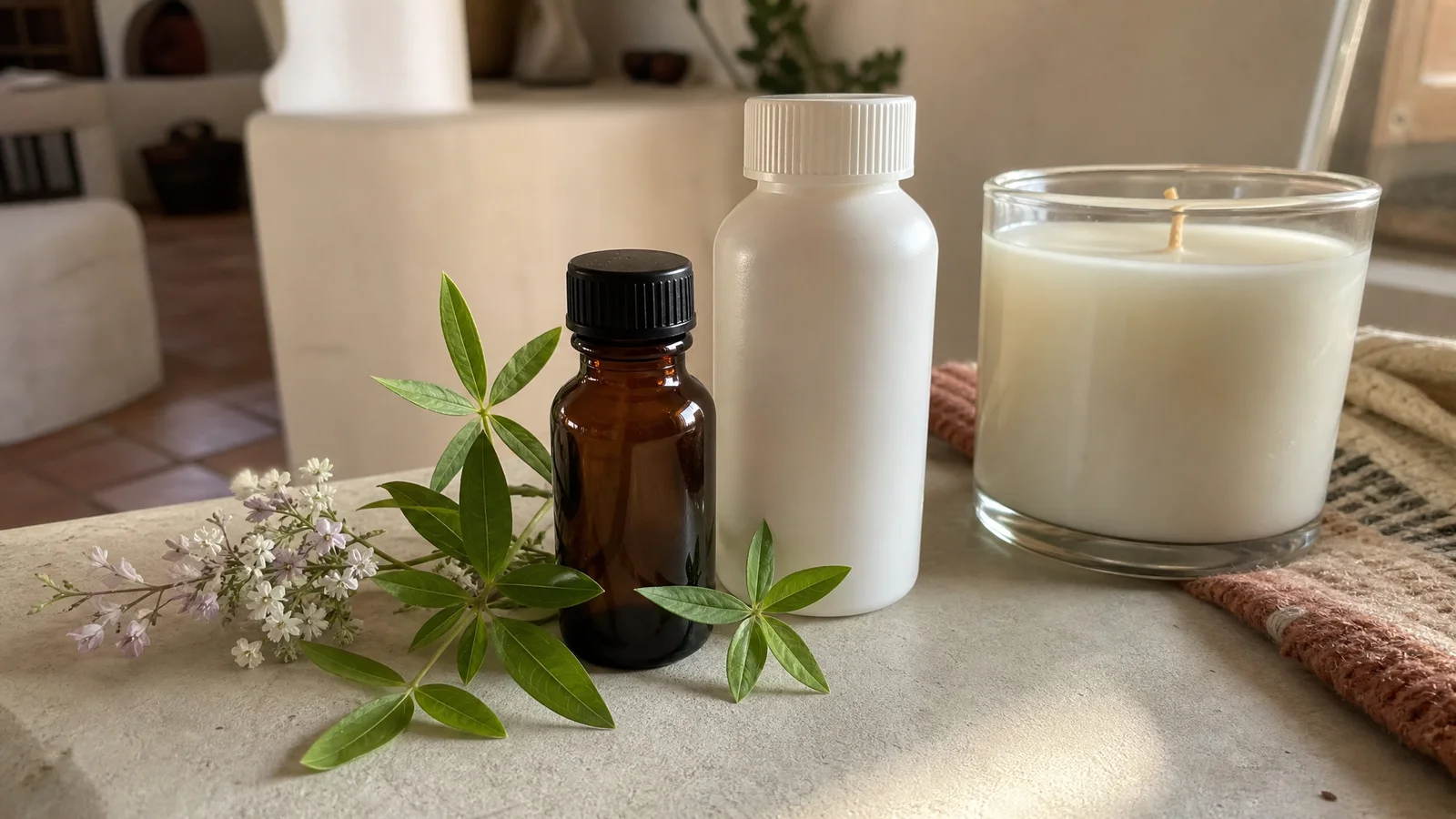
It helps to give each form its own place. The leaf belongs in the kitchen, in a teapot, a pitcher of cold water, or a bowl of fruit. The oil belongs in the workshop and the diffuser, in candles, soaps and room sprays, and in carefully measured body products. Keeping the two apart in your head, and on your shelves, means you never have to wonder which one you are reaching for.
Store the bottle away from the tea tin, too. They look nothing alike, but a cupboard shared by both is a cupboard where someone might one day grab the wrong one.
Why the oil stays out of the cup
Our oil is for external, cosmetic and scent use only. Poison Control notes that some essential oils can be poisonous if absorbed through the skin or swallowed, and that anyone who swallows one should call their poison center on 1-800-222-1222 in the United States (Poison Control). That page is general and does not single out lemon verbena, but the arithmetic above makes the point for us: a drop would put far more of the volatile fraction into a cup than the leaf ever does. Our post on ingesting the oil goes into more detail.
What we do enjoy is the scent. A drop on a diffuser pad or in a candle or soap you are making gives you that lemon-verbena brightness at a fraction of the effort, and the tea stays in the cup where it belongs.
Lemon Verbena Essential Oil
Lemon Verbena Essential Oil from our own shop, in sizes from 0.5 oz to bulk.
From $12.99
Shop Now →Sources & Further Reading
- Oukerrou MA et al., 2017. Chemical Composition and Cytotoxic and Antibacterial Activities of the Essential Oil of Aloysia citriodora Palau Grown in Morocco. Adv Pharmacol Sci 2017:7801924. PMC5485486
- Bahramsoltani R et al., 2018. Aloysia citrodora Paláu (Lemon verbena): A review of phytochemistry and pharmacology. J Ethnopharmacol 222:34-51. Europe PMC, PMID 29698776
- European Medicines Agency. Verbenae citriodorae folium - herbal medicinal product. ema.europa.eu
- Poison Control. Essential oils: Poisonous when misused. poison.org/articles/essential-oils