How to Tell if Lemon Verbena Oil Is Real
Nobody can tell you lemon verbena oil is the real thing by sniffing it, shaking it or looking at a price tag, and the research explains why. Leaf oils that share one Latin name can differ enormously in what they contain. What you can do is ask for the right paper, read what it actually measured, and know which questions it leaves open.
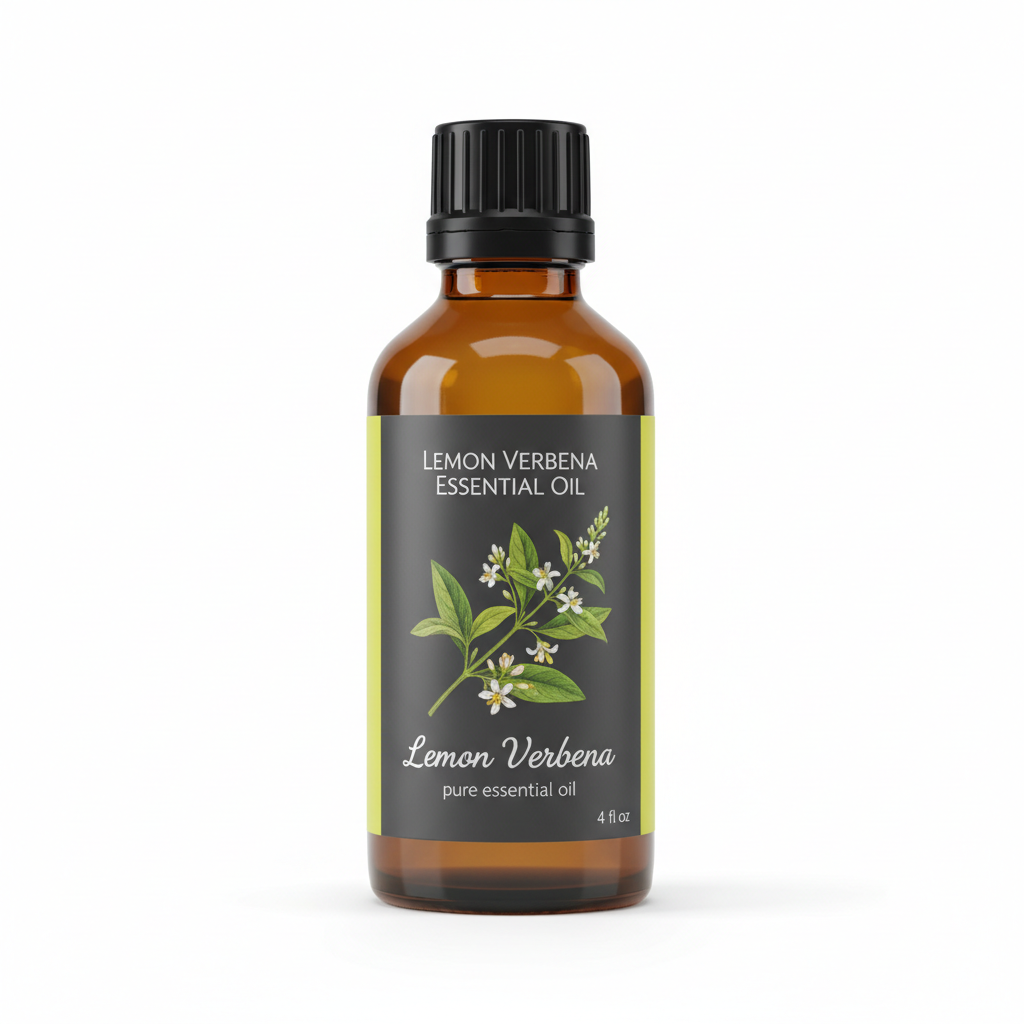
Lemon Verbena Essential Oil
Our own Lemon Verbena Essential Oil, in sizes from 0.5 oz to bulk.
From $12.99
Shop Now →The myth of one correct citral number
A common line says authentic verbena oil is high in citral, the geranial and neral pair, and that a low reading signals a fake. The published analyses do not back a single expected figure. A leaf oil from Ecuadorian plants grown at 900 to 1,200 m had geranial 26.8% and neral 21.0%, about 48% together (Parichanon et al., 2025). Commercial dried leaf from Portugal gave geranial 18.7% to 21.1% and neral 15.3% to 16.2% depending on the still (Sprea et al., 2023). Five Moroccan sites produced oils with no detectable geranial, neral at 6.37% to 10.02%, and caryophyllene oxide and spathulenol in the lead (Oukerrou et al., 2017).
Those are different sample sets and methods, not a ranking of countries. They make one point: "genuine" and "high citral" are not the same thing. So we would be wary of any listing that offers a single citral figure as proof of authenticity, and equally of one that offers nothing checkable at all.
Why the shortcuts do not work
Price. No source we read ties price to composition, so a bargain proves nothing and neither does a premium. We leave ours to the shop page.
Smell. The sensory panel that evaluated the Ecuadorian oil described lemon, candied lemon, lemongrass, orange blossom and sweet pastry notes (Parichanon et al.). Lemongrass is right there in the vocabulary. Litsea cubeba fruit oils from eight Chinese regions had neral plus geranial of 78.7% to 87.4% (Si et al., 2012), and a lemongrass leaf oil from Nepal had geranial 53.1% and neral 36.1%, about 89% together (Dangol et al., 2023). Reasoning from those figures, a citral-led oil sold as verbena would smell lemony too. A nose trained on one bottle is a pleasure, not a screening tool.
Colour. The standard on our certificate reads "colorless/yellow liquid", which covers a lot of ground. Appearance tells you a bottle is not obviously off, not what is in it.
Reading a certificate with the right expectations
We publish a Certificate of Analysis for one batch, LMVAIULCCLC005A. It lists the botanical name (Aloysia citrodora), leaf as the part used, steam distillation, a best-by date, appearance, smell, a relative density of 0.869 at 20 C against a standard range of 0.862 to 0.905, and a refractive index of 1.472 against 1.465 to 1.485. Documents like this one do a specific job.
- Botanical name and plant part tell you what the seller says the material is. They are statements, not measurements.
- Density and refractive index show that a batch sits inside a stated range. Reasoning from the papers, different citral-rich oils could plausibly fall into overlapping ranges, so these two numbers are a sanity check, not an identity test.
- A GC-MS table lists which volatile compounds are present and in what proportion. It cannot see non-volatile additions: GC detects only volatile and semi-volatile compounds, so something like a vegetable oil can pass through unseen (Vargas Jentzsch et al., 2019, a short overview).
The certificate we publish carries no GC-MS and no compound percentages, and we do not say every batch matches it. If composition data matters for your use, ask us in writing through the contact page before you order, and keep what we send. Our label and GC-MS guide shows how to read a full report when you have one.
What your own nose can still do
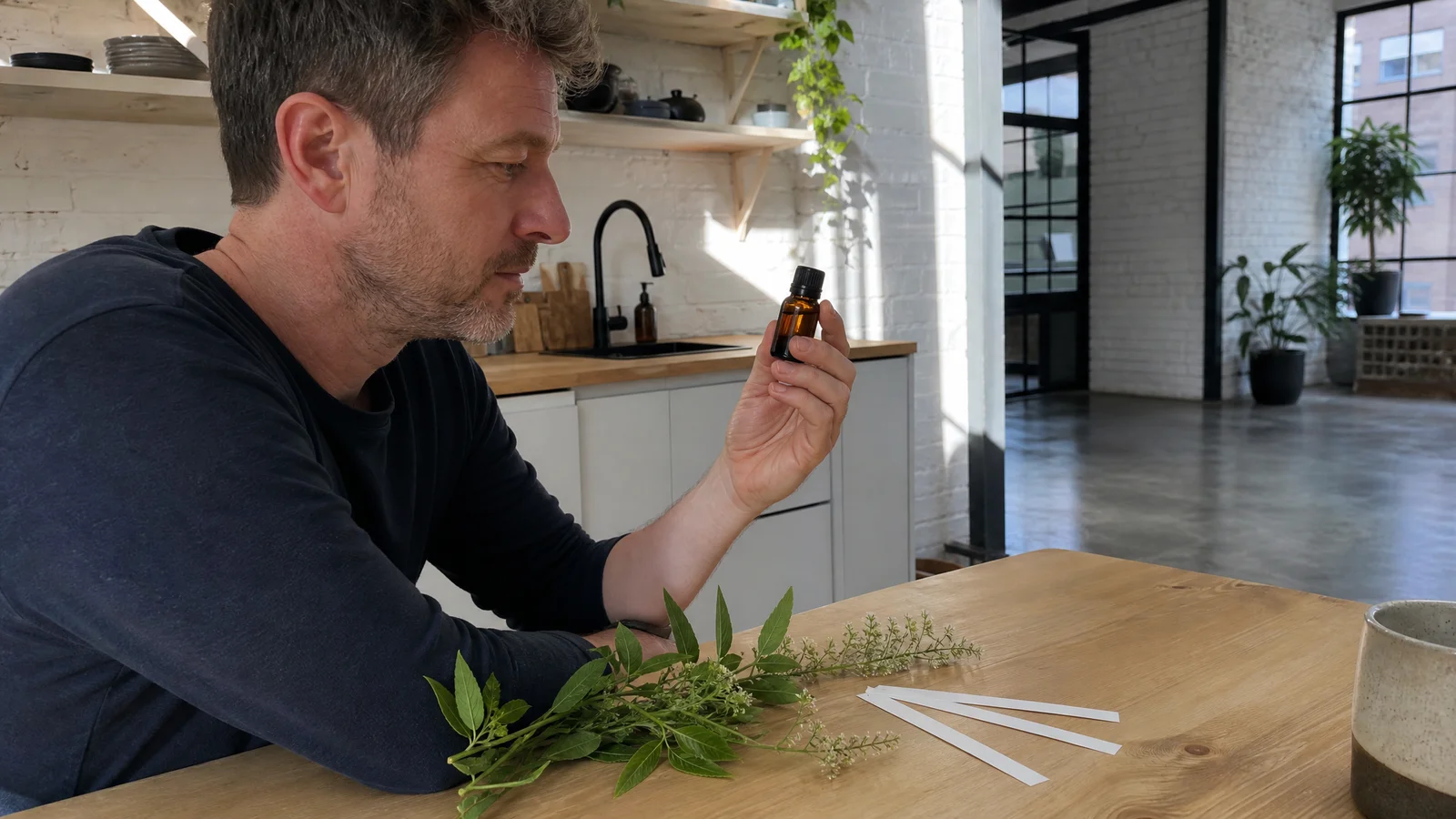
None of this means your nose is useless. It is a lovely instrument for deciding whether you like an oil, and for noticing when something seems off compared with what you smelled before. When a new bottle arrives, open it in a quiet room, breathe in once, and write down a few words about it. Next time, smell the new one beside your notes. If the character is clearly different, that is a good moment to write to the seller, with the batch number, and ask a question.
What a sensible buyer does
Ask for the plant part, the method and a batch-matched document, and match the batch code on the bottle to the paper when it arrives. Check what the document measured and what it did not. FDA notes that "essential oils" has no regulatory definition and that "natural" is not defined for cosmetics (FDA small-business fact sheet), so front-label words earn less trust than answers in writing. Our buying checklist puts the questions in order, and the litsea comparison goes deeper on the lookalike people worry about most.
Keep a simple record
A small habit pays off over time. Keep the batch number, the date you opened the bottle, and any documents that came with it in one place. If a question ever comes up, you will have the facts at your fingertips instead of trying to remember. It takes a minute to set up, and it is what turns an enjoyable hobby into a dependable one.
Verbena is a lovely oil precisely because it is a plant product with a character of its own, and the best way to enjoy it is to buy with open eyes and a clear question.
A little patience, a name and a document go a long way, and the oil rewards the care.
Lemon Verbena Essential Oil
Lemon Verbena Essential Oil from our own shop, in sizes from 0.5 oz to bulk.
From $12.99
Shop Now →Sources & Further Reading
- Parichanon et al., 2025. Chemical Profiling, Sensory Qualities, and Bioactivities of Essential Oils Obtained from Aloysia citrodora and Bursera graveolens Ecuadorian Plants Against the Mosquito Aedes albopictus (Skuse) (Diptera: Culicidae). Insects 16(2):202. pmc.ncbi.nlm.nih.gov
- Sprea et al., 2023. Volatile Compounds and Biological Activity of the Essential Oil of Aloysia citrodora Paláu: Comparison of Hydrodistillation and Microwave-Assisted Hydrodistillation. Molecules 28(11):4528. pmc.ncbi.nlm.nih.gov
- Oukerrou et al., 2017. Chemical Composition and Cytotoxic and Antibacterial Activities of the Essential Oil of Aloysia citriodora Palau Grown in Morocco. Advances in Pharmacological Sciences. pmc.ncbi.nlm.nih.gov
- Si et al., 2012. Chemical composition of essential oils of Litsea cubeba harvested from its distribution areas in China. Molecules 17(6):7057-7066. pmc.ncbi.nlm.nih.gov
- Dangol et al., 2023. Essential Oil Composition Analysis of Cymbopogon Species from Eastern Nepal by GC-MS and Chiral GC-MS, and Antimicrobial Activity of Some Major Compounds. Molecules 28(2):543. pmc.ncbi.nlm.nih.gov
- Vargas Jentzsch, Ramos Guerrero and Ciobota, 2019. Detection of Essential Oils Adulteration: A Quick Overview and Current Challenges. American Journal of Biomedical Science and Research 4(1). biomedgrid.com
- U.S. Food and Drug Administration. Small Businesses & Homemade Cosmetics: Fact Sheet. www.fda.gov