Why Two Lemon Verbena Oils Can Smell So Different
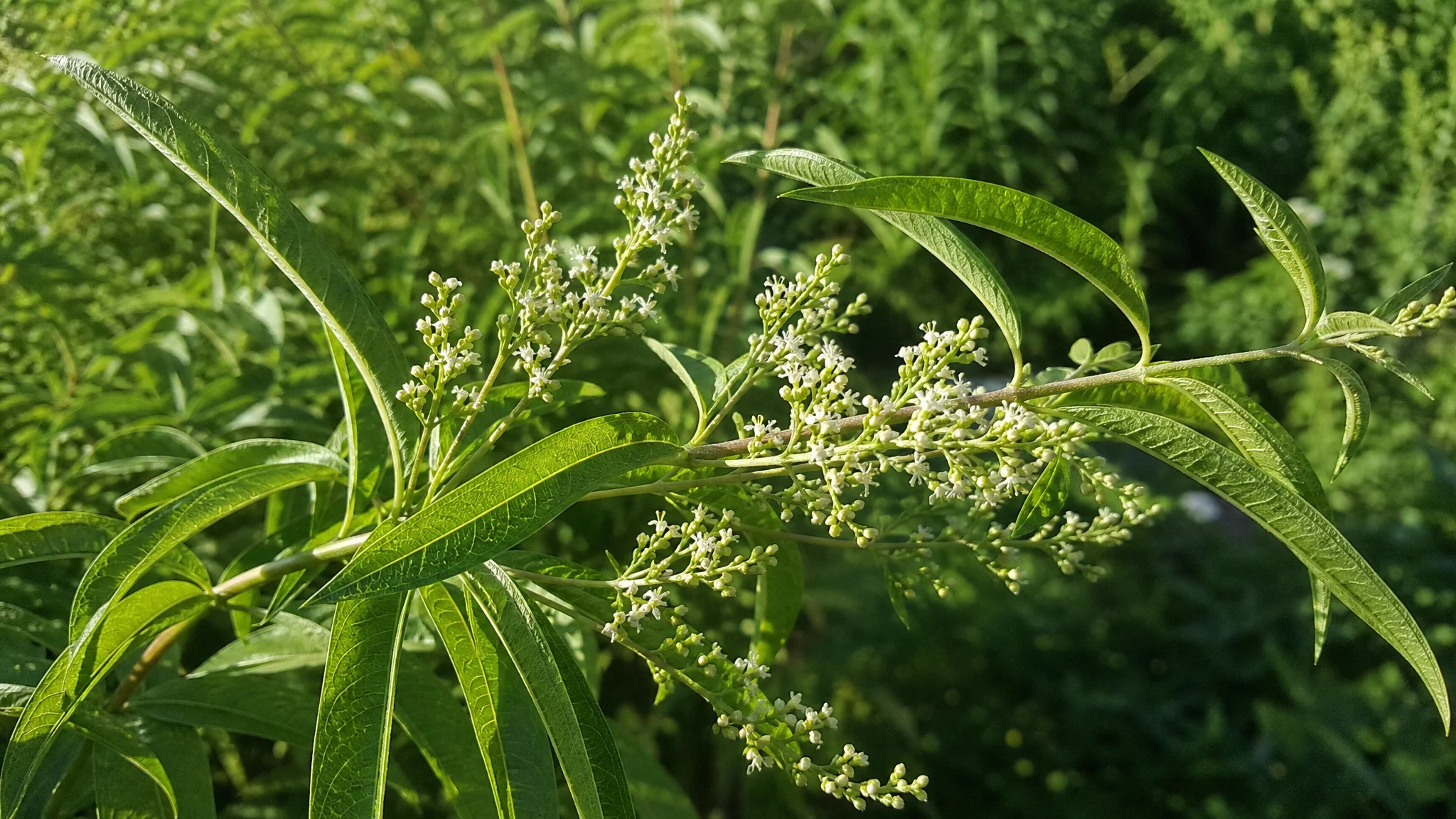
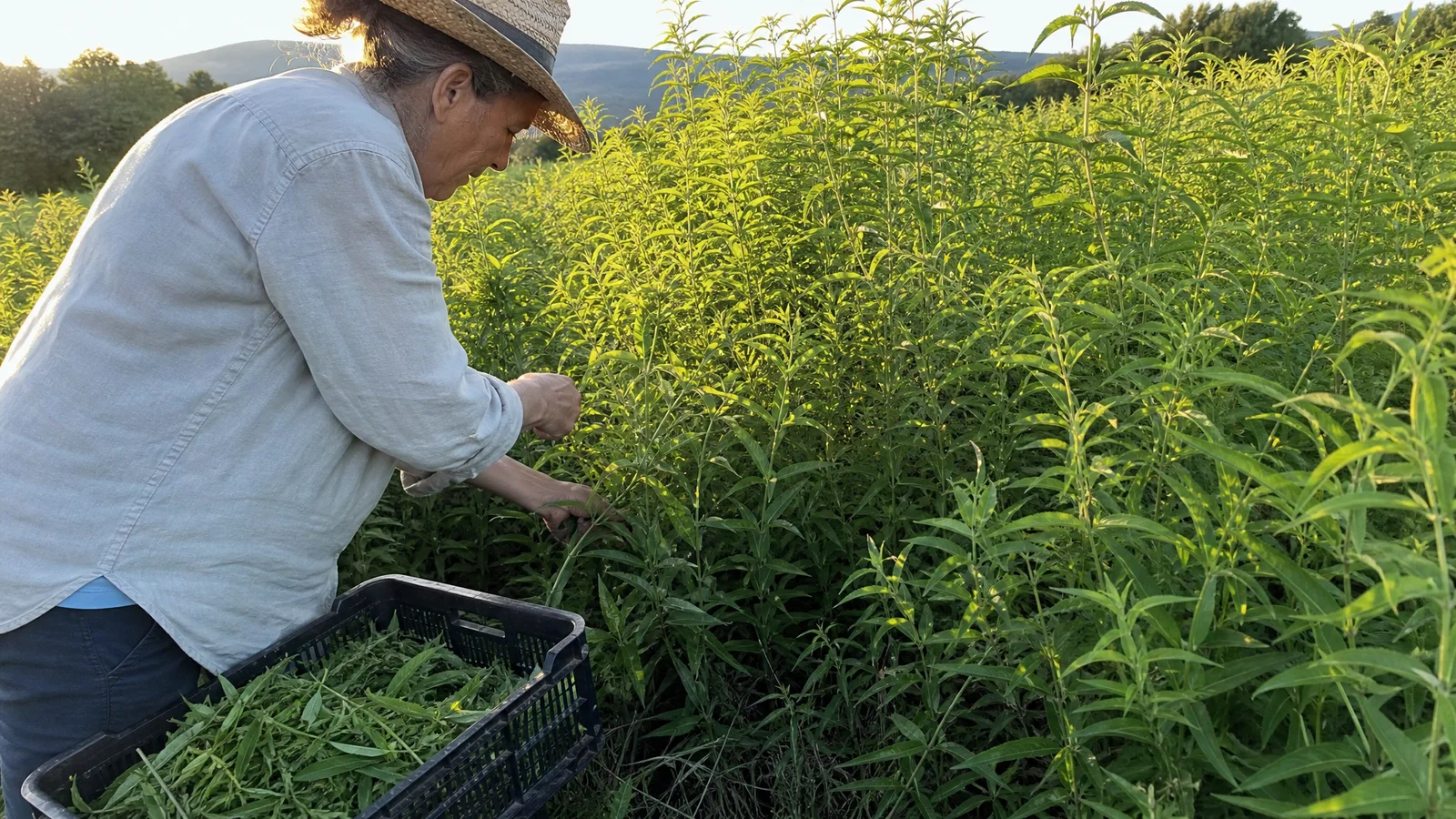
Two bottles can both say Aloysia citrodora, steam-distilled from the leaves and still smell and read quite differently. The label names the plant and the method. It cannot tell you where the shrub grew, when it was cut, how the leaf was handled or how long it sat in the still, and the published lab studies show that each of those choices can leave a mark on the finished oil.
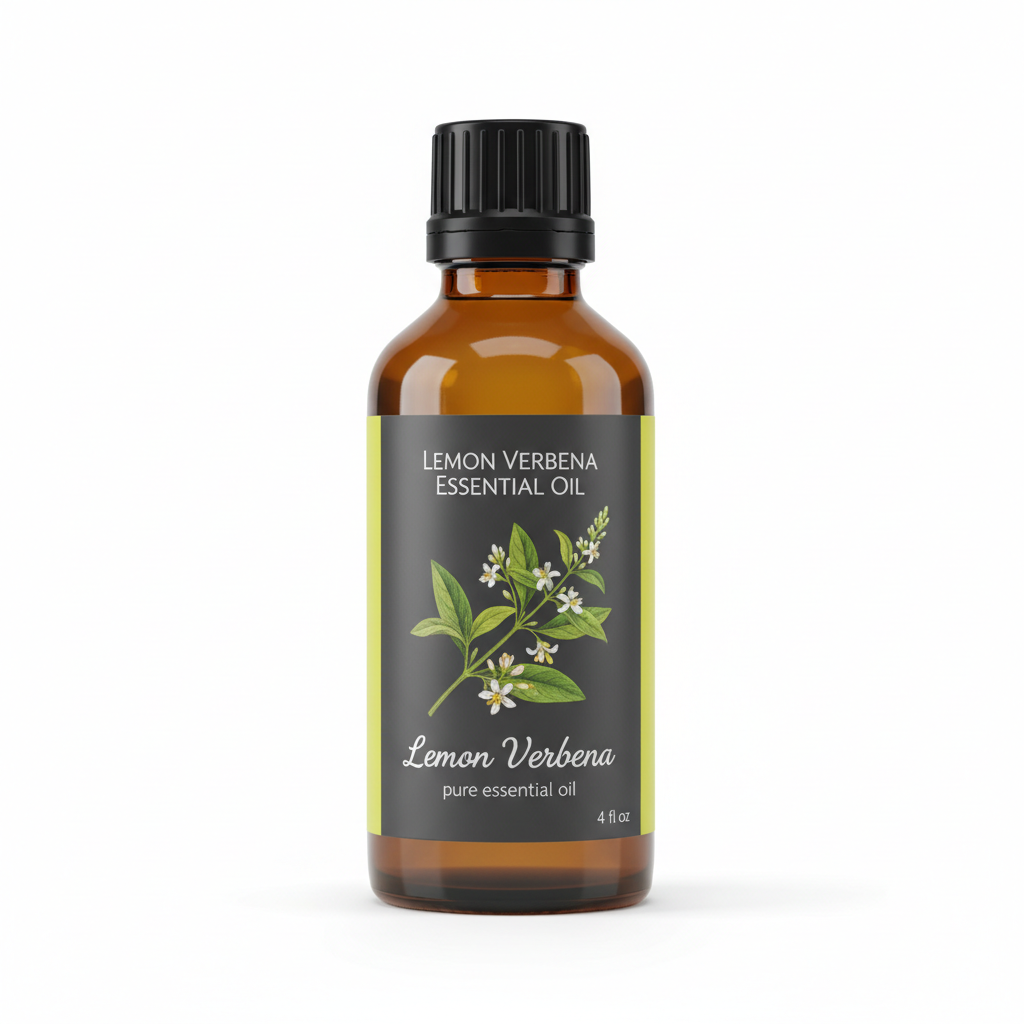
Lemon Verbena Essential Oil
Our own Lemon Verbena Essential Oil, in sizes from 0.5 oz to bulk.
From $12.99
Shop Now →The same plant, very different oils
Researchers in several countries have distilled lemon verbena leaf and listed what came out. The headline compounds are geranial and neral, the two halves of citral, which carry the bright lemon character. In Ecuador, leaf grown at 900 to 1,200 metres gave an oil with roughly a quarter of its weight as geranial and a fifth as neral (Parichanon et al., 2025). Leaf from five sites in Morocco gave oils in which geranial was not detected at all, and the leading components were heavier compounds (sesquiterpenoids) such as spathulenol and caryophyllene oxide (Oukerrou et al., 2017).
The most striking comparison comes from the plant's home ground. A survey of 36 collections from northwestern Argentina found five distinct chemical types of the oil, and citral was the main component in only two of the 36 (Elechosa et al., 2017). Same species, same region, and the leading compound changed from collection to collection. None of these papers varied one thing at a time, so they cannot say whether soil, climate, plant genetics or timing did the work. What they do show is that a name on a bottle describes the plant, while the aroma depends on everything that happened afterwards.
How little oil a leaf gives
If you have ever rubbed a lemon verbena leaf and wondered how something so fragrant can be so scarce as an oil, the yield figures answer it. The Ecuadorian leaf, air-dried and ground, gave 0.18% oil by weight. Dried commercial leaf in Portugal gave 1.05% by conventional laboratory distillation and 1.29% by a microwave version of the same process (Sprea et al., 2023).
Here is that spread in terms of a bottle you could hold. This is our arithmetic, using the relative density of 0.869 on the Certificate of Analysis we publish for one batch: a 1 oz bottle holds about 25.7 g of oil. At 0.18% yield that takes about 14 kg of dry leaf. At 1.29% it takes about 2 kg. Real production runs will differ from either, since these were small laboratory distillations, but the scale makes it easy to see why we describe the leaves as giving up very little oil.
The still and the leaf
The Portuguese comparison is a nice illustration of the stage after the harvest. Laboratory hydrodistillation ran for 180 minutes, the microwave method for 15, and the microwave oil came out with a little more geranial and neral and a higher yield. The authors reported that the two methods did not change the qualitative profile, only the proportions of many compounds. So the still is one more dial on the final aroma, alongside whether the leaf was fresh or dried first. The Moroccan leaf, for instance, was shade-dried for two weeks first, and a yield quoted per fresh weight is not comparable with one quoted per dry weight.
None of this describes any particular commercial still, including the one behind our oil. It does explain why we point people to documents rather than adjectives when they are comparing suppliers.
Trust your nose, then check the paper
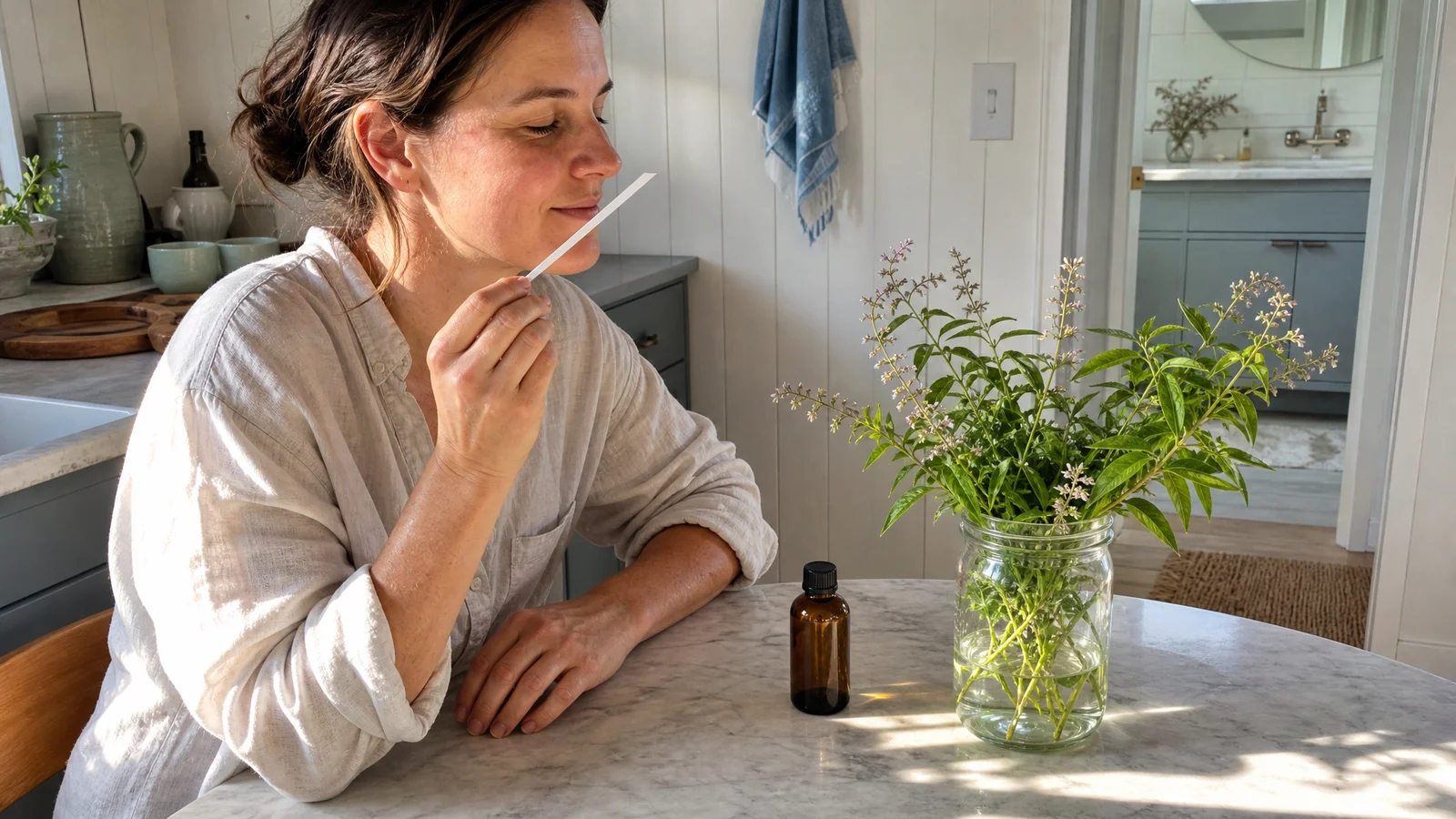
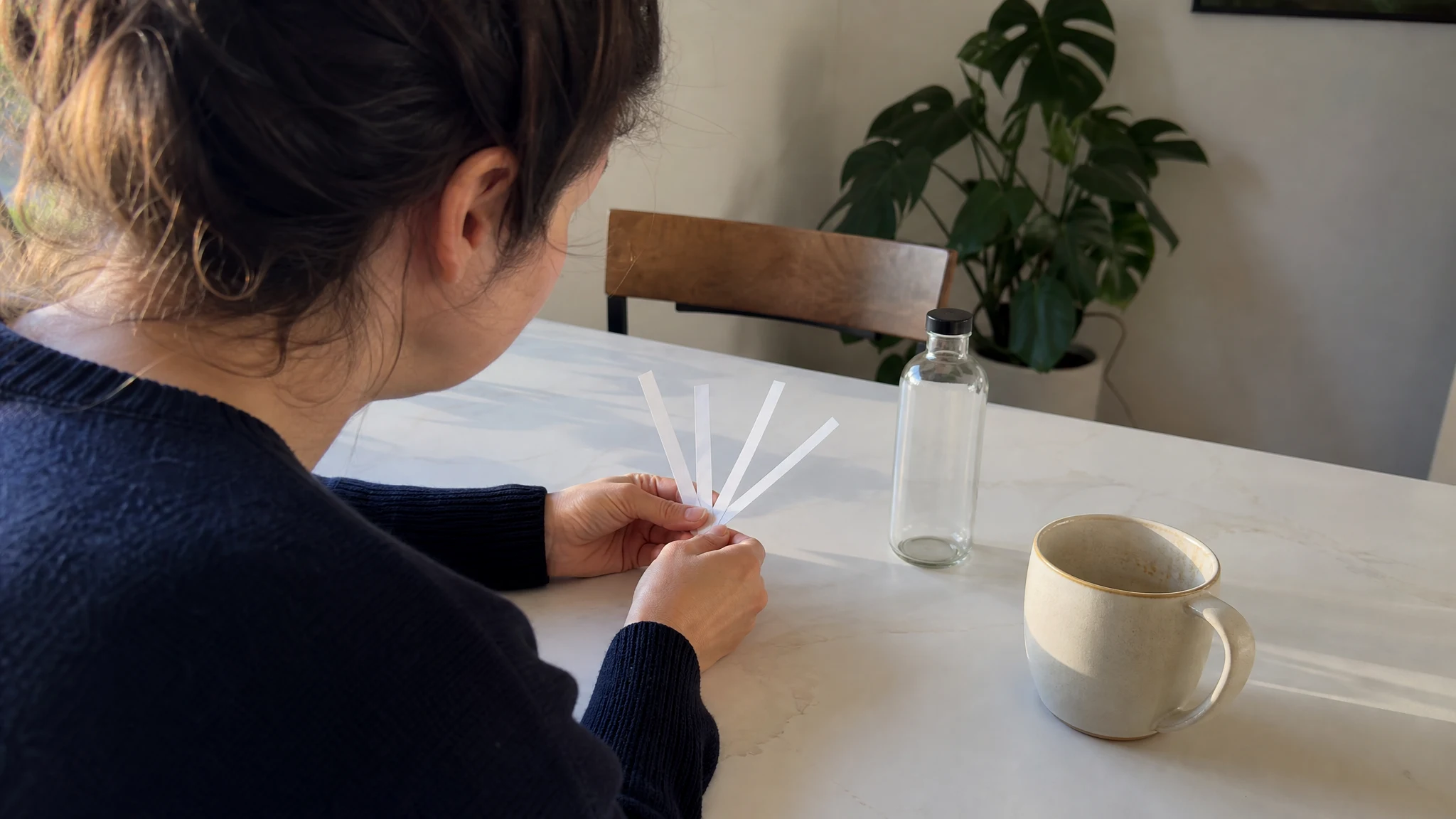
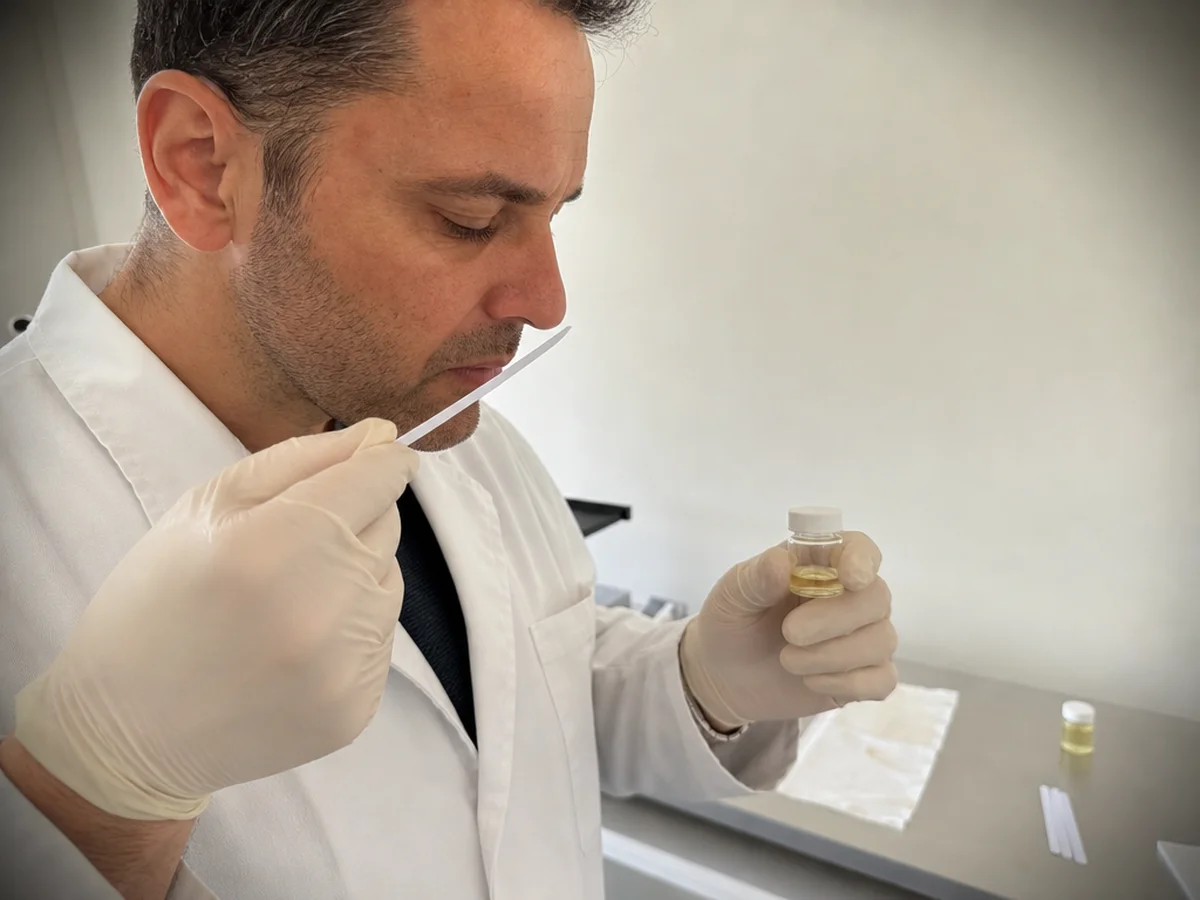
Part of the joy of a plant oil is that it is not a factory product. Two bottles of lemon verbena may both smell lovely and yet one feels sunnier, another greener, another a little more herbal. You do not need a laboratory to notice that. Put a drop on separate paper strips, label them, and smell each at the start, after ten minutes and after an hour. You will pick up which one opens with a bright lemon and which one holds its green, leafy heart for longer.
That kind of side-by-side sniffing is a lovely habit, and it makes the paperwork questions below far easier to ask, because you know what you are comparing.
Keep notes as you go. A line such as "bottle A, bright lemon, green after ten minutes" is all it takes, and a few weeks later it will tell you more than memory can.
Four things worth asking any supplier
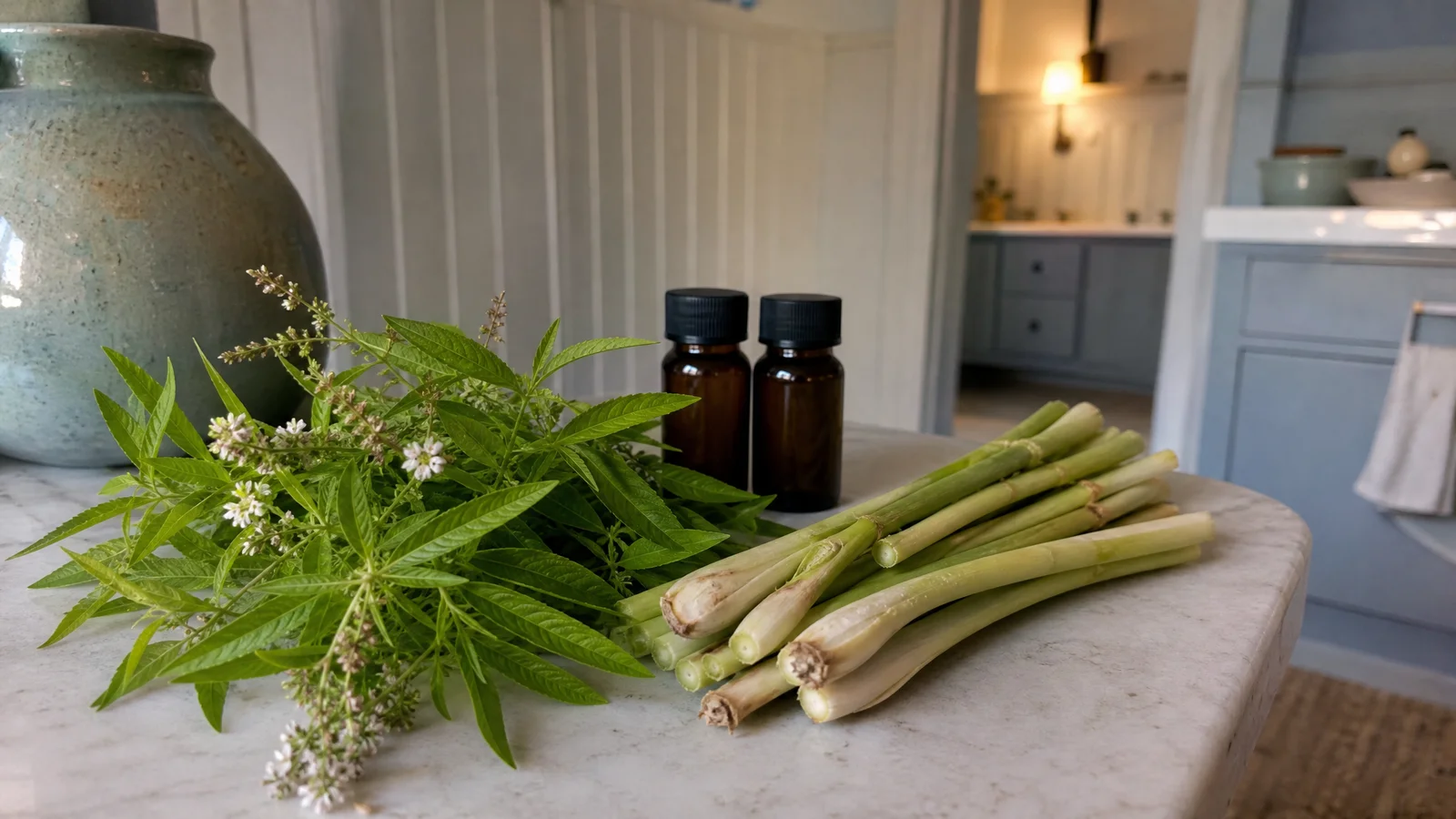
- Which part of the plant? Our oil is listed as steam-distilled from the leaves, and the Certificate of Analysis says leaf.
- Fresh or dried at the still, and what the quoted yield was measured against.
- Which batch the paperwork describes. The certificate we publish covers one batch and gives density and refractive index.
- Whether there is a GC-MS report naming geranial, neral, limonene and the heavier compounds, which is the document that actually shows composition.
If composition matters for what you are making, ask us in writing through our contact page before you order and keep the answer on file. For the plant side of the story, our growing guide and our look at how the oil is made fill in the rest, and reading a label and GC-MS report shows what to look for once you have one.
Lemon Verbena Essential Oil
Lemon Verbena Essential Oil from our own shop, in sizes from 0.5 oz to bulk.
From $12.99
Shop Now →Sources & Further Reading
- Parichanon P et al., 2025. Chemical Profiling, Sensory Qualities, and Bioactivities of Essential Oils Obtained from Aloysia citrodora and Bursera graveolens Ecuadorian Plants Against the Mosquito Aedes albopictus (Skuse) (Diptera: Culicidae). Insects. PMC11857052
- Oukerrou MA et al., 2017. Chemical Composition and Cytotoxic and Antibacterial Activities of the Essential Oil of Aloysia citriodora Palau Grown in Morocco. Advances in Pharmacological Sciences. PMC5485486
- Elechosa MA et al., 2017. Essential oil chemotypes of Aloysia citrodora (Verbenaceae) in Northwestern Argentina. INTA Repository. repositorio.inta.gob.ar
- Sprea R et al., 2023. Volatile Compounds and Biological Activity of the Essential Oil of Aloysia citrodora Paláu: Comparison of Hydrodistillation and Microwave-Assisted Hydrodistillation. Molecules. PMC10254266