Lemon Verbena Oil on Skin: Dilution and Patch Tests
Lemon verbena oil arrives neat, which means the first decision is yours: how much to put in your carrier. Our dilution guidance is 0.5% to 2% in a carrier oil, with a patch test first. Other respected sources land in different places, and a good plan starts by looking at them side by side.
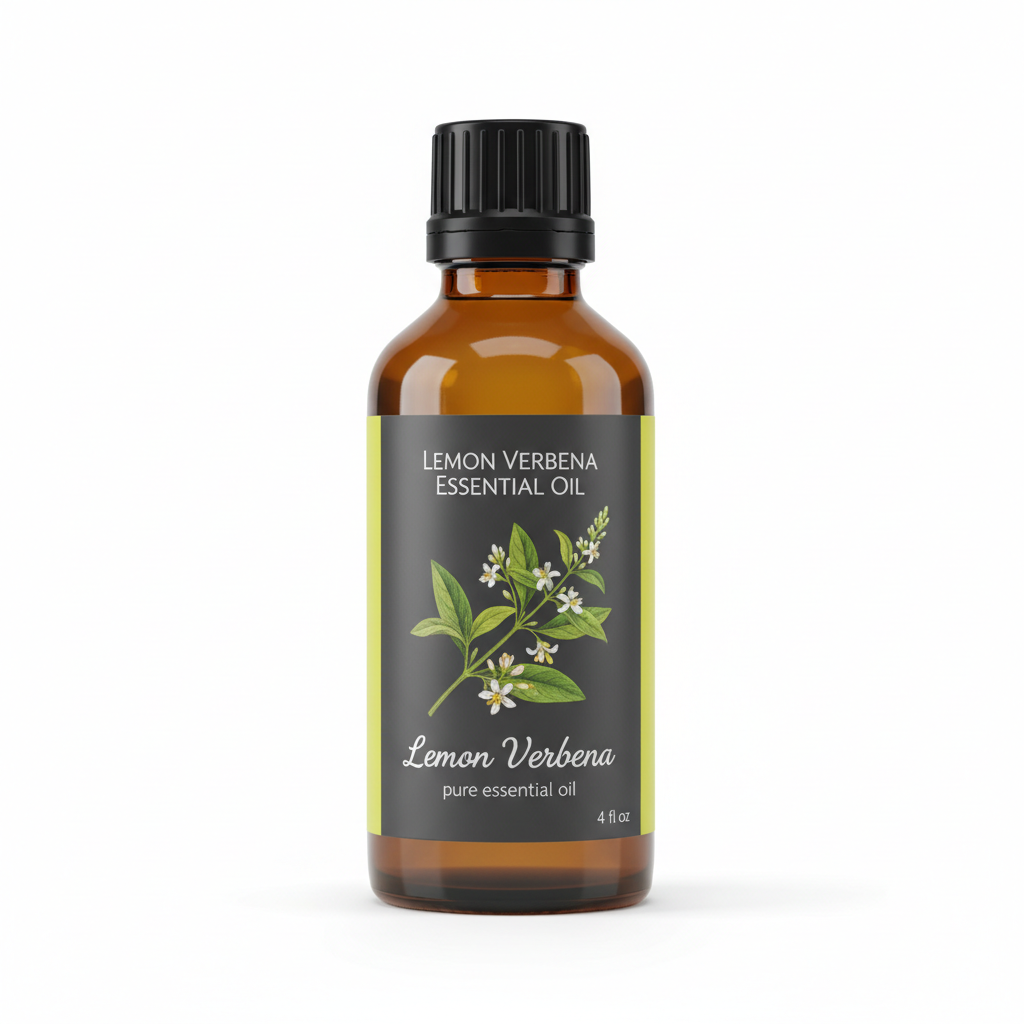
Lemon Verbena Essential Oil
Our own Lemon Verbena Essential Oil, in sizes from 0.5 oz to bulk.
From $12.99
Shop Now →Does the scent need to be on skin at all?
The international fragrance standard (IFRA, Amendment 49, 2020) says verbena oil should not be used as a fragrance ingredient, citing its sensitizing and phototoxic potential, and its table of category limits applies to the absolute rather than the oil. We found no tested percentage that makes the oil allowed on skin. That is why we like to ask first whether the same pleasure could come from a room, where the sensitization concern fades, using our diffusing guide. If you choose skin, read on. People with eczema, fragrance allergy or reactive skin should check with a dermatologist first, and anyone pregnant should read our pregnancy article and talk to their midwife.
When the numbers disagree
Here are the reference points, with approximate drops per ounce (29.57 ml) of carrier at the usual 20-drops-per-ml rule of thumb.
| Source | Figure | Drops per oz |
|---|---|---|
| IFRA verbena Standard | Oil not to be used as a fragrance ingredient | none given |
| Tisserand and Young, as quoted by a retailer | Maximum dermal use level 0.9% to avoid sensitization | about 5 |
| Our guidance | 0.5% to 2%, patch test first | about 3 to 12 |
| Tisserand Institute, general ranges | 0.2% to 1% sensitive skin; 0.5% to 1.2% face; 1% to 3% body | about 1 to 18 |
The Tisserand Institute adds that its figures are safe maximums, not recommended amounts, and that a recommendation might be lower. Our approach is to begin at 0.5%, below every positive figure above, and to treat 2% as a number we quote rather than one we vouch for. For a body oil there is one more check. The IFRA citral Standard caps citral at 0.15% in body oils and lotions. The Portuguese and Ecuadorian samples in published papers ran from roughly 34% to 48% citral, which would put the oil share at about 0.3% to 0.4%. The certificate we publish does not list a citral figure, so ask us in writing if that number matters to your formulation.
Getting ready
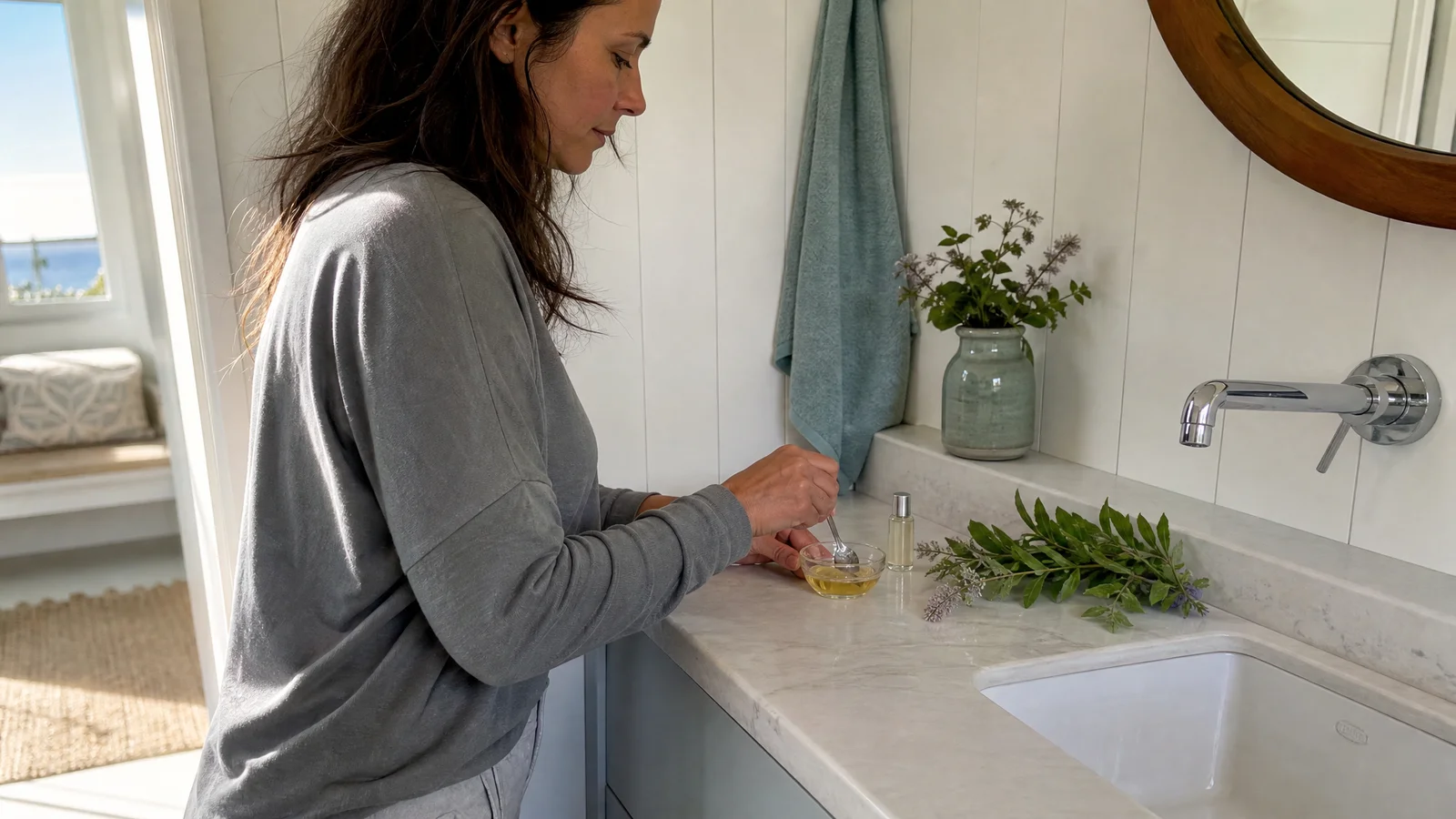
A little preparation makes the whole process calmer. Choose a day when you are not rushing, set out a clean glass bottle, your carrier oil, a pen and a label, and wash your hands first. Open the lemon verbena bottle last, and cap it again as soon as you have what you need. Working slowly is part of the pleasure with an oil this bright, and it keeps the cap and neck of the bottle clean, which helps it last.
Measure, do not eyeball
Drops vary by dropper, so a scale is kinder to your formula. At the density on our certificate (0.869), 0.5% of 30 g of blend is 0.15 g of oil. For a tiny trial, 10 ml of carrier takes about one drop for 0.5%. Mix in a clean glass bottle, label it with the date and percentage, and avoid topping it up with extra oil later. Carrier oils, bottles and droppers come from a craft or cosmetic supply shop, because we sell only the lemon verbena oil.
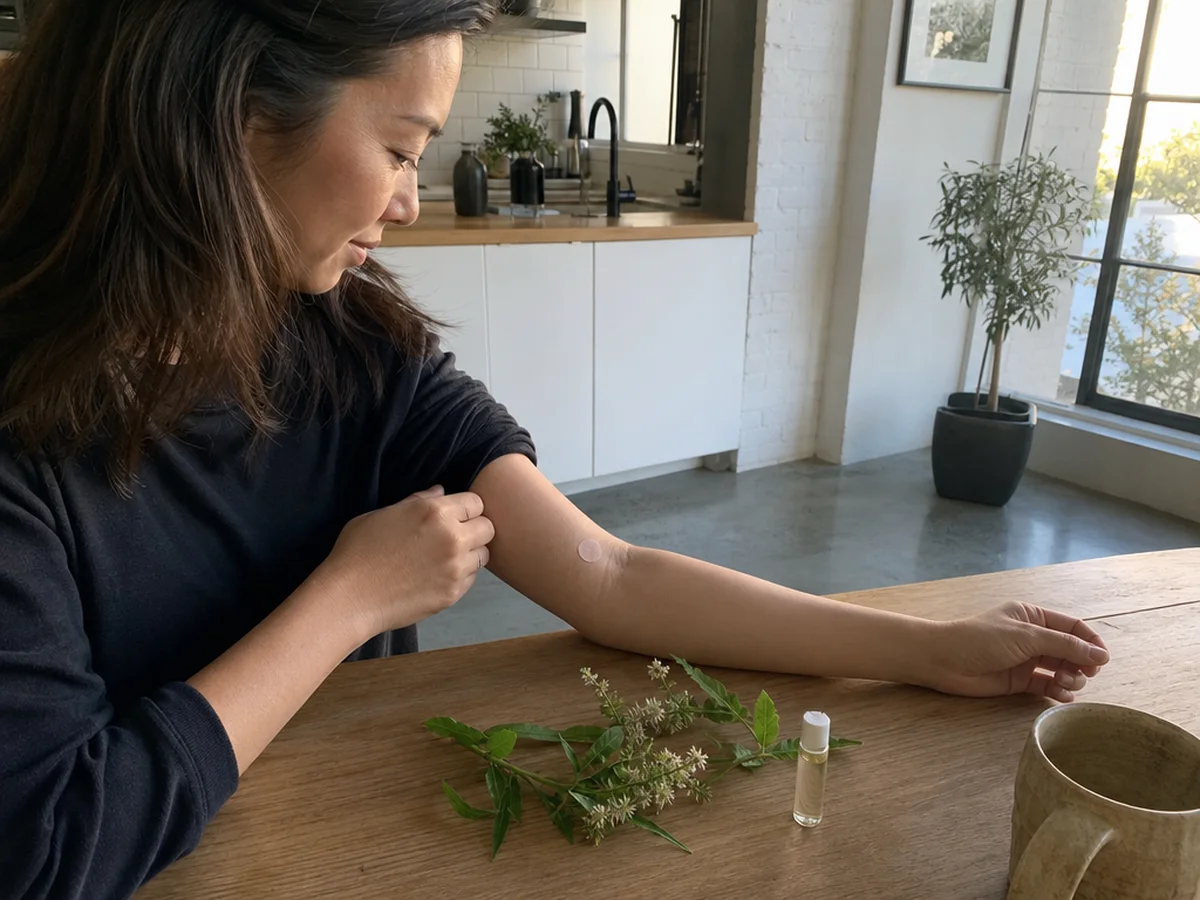
Patch testing, honestly
A home patch test is a modest screen. The Tisserand Institute notes that patch testing is not 100% reliable and can give both false positives and false negatives, and that clinical testing is a dermatologist's job. The sensible home version is a small amount of your finished blend, not neat oil, on the inner forearm. Then watch the timing. Irritation tends to settle within a few hours of washing off, while allergic reactions can persist for days or even weeks and may not show on first use. So a clear hour is not a verdict, and a reaction a day later counts. Stop at any redness, itching, burning or swelling, rinse, and see a dermatologist or pharmacist if it lingers.
Sun
We note that verbena can be mildly photosensitising, and the IFRA Standard lists phototoxicity among its reasons. Sources differ on how serious that is, and we found no verbena-specific time window. The Tisserand Institute describes how phototoxic reactions generally work: UVA exposure any time within the next 12 hours, possibly longer, can trigger one, there is usually no pain at first, and the burn worsens over one to three days. That page does not mention verbena, so treat it as a model of the mechanism, not a rule for this oil. Our practical suggestion is to cover or shade treated skin for a day and never to patch test and head for the beach. An indoor patch test cannot reveal phototoxicity at all.
Write it down
When your blend is made, put the percentage and the date on the label straight away, and keep a note of what you used as a carrier. If you ever want to make the same blend again, or need to tell a dermatologist or pharmacist what was on your skin, that small label saves a lot of guessing. We suggest you stay at one blend at a time while you are learning how your skin feels about it, so any change is easy to trace.
We make no claims about what lemon verbena oil does for skin, and our skin article reports what studies measured. For worked formulations, see the body oil and rollerball articles. Start at 0.5% or lower, measure, test patiently and keep the area shaded, and the oil's lovely scent can be enjoyed with confidence.
Lemon Verbena Essential Oil
Lemon Verbena Essential Oil from our own shop, in sizes from 0.5 oz to bulk.
From $12.99
Shop Now →Sources & Further Reading
- IFRA, 2020. IFRA Standard: Verbena oil and absolute (Lippia citriodora Kunth.), Amendment 49. IFRA_STD_083
- IFRA, 2020. IFRA Standard: Citral, Amendment 49. IFRA_STD_021
- Verbena, Lemon - Organic EO. Eden Botanicals (retailer page quoting Tisserand and Young; secondary source). edenbotanicals.com
- Dilution for essential oils. Tisserand Institute. tisserandinstitute.org
- Irritation and allergic reactions. Tisserand Institute. tisserandinstitute.org
- Phototoxicity: essential oils, sun and safety. Tisserand Institute. tisserandinstitute.org