Lemon Verbena and Mood: What the Studies Really Show
Lemon verbena has a cheerful reputation, so it is no surprise that readers ask whether the oil has anything to do with stress or mood. The short version is that the research is small, most of it concerns a leaf extract taken as a capsule rather than the aroma of the oil, and none of it is about our oil. We sell lemon verbena oil as an external cosmetic and scent material and make no claim about stress, mood or anxiety. Still, the studies are worth understanding, because they show how to read this kind of claim anywhere.
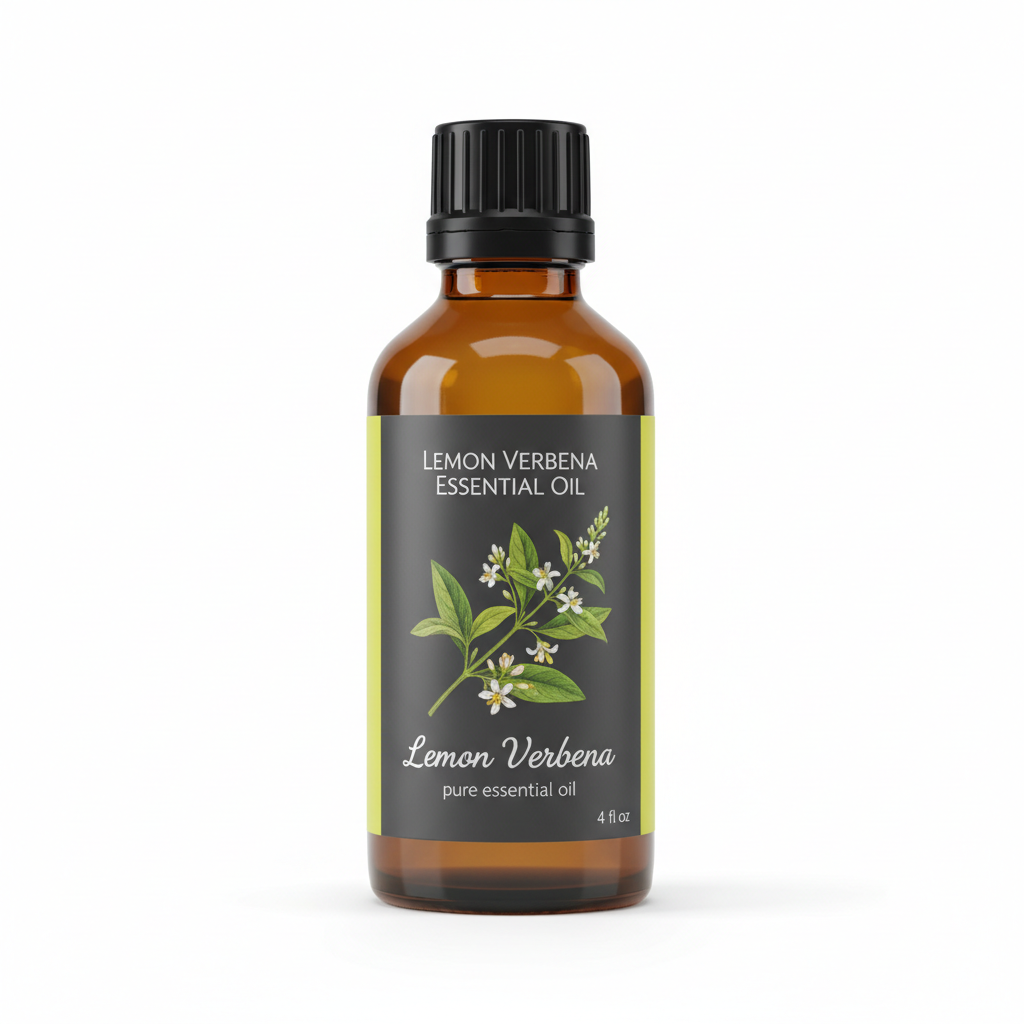
Lemon Verbena Essential Oil
Our own Lemon Verbena Essential Oil, in sizes from 0.5 oz to bulk.
From $12.99
Shop Now →Why scent studies are hard to read
Imagine a trial in which one group smells lemon verbena and another smells nothing. Everyone knows which group they are in, and a questionnaire about how anxious you feel is easily nudged by expectation. That is a limit of the design, not a verdict on the oil, and it is why researchers treat aroma studies with caution.
The one trial we know of that used inhaled lemon verbena oil, from Peru, compared it with another Lippia oil and a waiting-list group, so nobody was blinded. A network meta-analysis of 44 randomised trials of ten essential oils, covering 3,419 people, included that trial as the only lemon verbena arm. For that oil on state anxiety scores, the estimate was a drop of 4.9 points, but the credible interval ran from about minus 15 to plus 5. An interval that crosses zero means the data cannot rule out no effect, and it cannot rule out a sizable one either. The honest summary is "too uncertain to say," and the reviewers call for better trials.
The capsule trials are about a different material
Most of what you will find online comes from trials of a standardised lemon verbena leaf extract, purified for compounds called phenylpropanoids and swallowed in a capsule. A 2022 Spanish trial gave adults with moderate stress and poor sleep a daily capsule for eight weeks, followed by a four-week break, and the authors reported lower perceived stress and cortisol in the extract group. A later, 90-day trial in healthy people with sleep complaints was designed around sleep, with stress and cortisol as secondary measures.
These are interesting studies, and a few things are worth keeping in mind when you read them. The groups were small, and the extract in both trials came from a company whose staff were among the authors; the second paper states that the company funded the work. Cortisol was measured at only a few time points, and it moves with sleep and the time of day. And a capsule of extract is a different thing from a few drops of oil in a diffuser or perfume. Reasoning from that, a result for one does not carry over to the other. If sleep is your question, our sleep article covers the same trials, and the overview of the research maps the rest.
How to read a headline about a plant
When a headline pairs a plant with a feeling, it helps to ask a few plain questions before you let it shape your shopping list. What exactly was studied: the leaf, an extract, or the oil? How was it taken: swallowed, inhaled or put on skin? How many people were in the trial, and did they know what they were getting? Who paid for it? None of these questions needs a science degree, and together they sort most of the hype from the genuinely interesting.
It is also worth noticing how often the words in a headline are bigger than the numbers underneath. A line like "lemon verbena eases stress" can sit on top of a small trial with a modest difference between groups. We would rather tell you that than leave you with a bottle and a promise.
The leaf tea is another story
The European Medicines Agency lists lemon verbena leaf as a traditional herbal tea ingredient. That entry is for the leaf taken by mouth, based on long-standing use, and it says nothing about the essential oil. Our piece on tea versus essential oil explains why the two should never be swapped.
A simple way to get to know the scent
If you have the oil already, the nicest experiment costs nothing. Open the bottle, hold it a hand's width below your nose and take one gentle breath. You will probably meet the bright lemon first, and then, a moment later, something greener and softer behind it, a bit like crushed leaves and a bit like a flower you cannot quite name. Try it again after a minute. Scents that seem loud the first time often settle into something much more interesting on the second.
A strip of plain paper, or a cotton pad kept well away from your face, works the same way if you would like to compare the smell hour by hour. Keep the bottle capped between sniffs, since the top notes are the first thing to drift away.
What we can say about enjoying it
People reach for citrus and herbal scents because they smell lovely, and that is a perfectly good reason. We describe the aroma as sparkling, sweet and lemony over a soft herbal-floral heart, and that is as far as our claims go. If you diffuse it, our diffusing guide covers drops, time and ventilation. For skin, we suggest 0.5% to 2% in a carrier oil with a patch test first, and we keep the oil away from eyes, children and pets.
If worry, low mood or constant tension is affecting your days, please talk with a physician or other qualified clinician. A scented oil is a pleasure and not a substitute for that conversation.
The research story, for now, is a good reminder that a promising title is not the same as a settled answer. We will leave the findings with the scientists and keep enjoying the scent.
Lemon Verbena Essential Oil
Lemon Verbena Essential Oil from our own shop, in sizes from 0.5 oz to bulk.
From $12.99
Shop Now →Sources & Further Reading
- Tan L et al., 2023. Essential oils for treating anxiety: a systematic review of randomized controlled trials and network meta-analysis. Front Public Health 11:1144404. PMC10267315
- Martínez-Rodríguez A et al., 2022. Anxiolytic Effect and Improved Sleep Quality in Individuals Taking Lippia citriodora Extract. Nutrients 14(1):218. PMC8747367
- Pérez-Piñero S et al., 2024. Dietary Supplementation with an Extract of Aloysia citrodora (Lemon verbena) Improves Sleep Quality in Healthy Subjects: A Randomized Double-Blind Controlled Study. Nutrients 16(10):1523. PMC11123999
- European Medicines Agency. Verbenae citriodorae folium - herbal medicinal product. ema.europa.eu