Lemon Verbena Antioxidant Studies: Extract vs Oil
Search for lemon verbena and antioxidants and you will meet some impressive numbers. Almost all of them belong to a leaf extract, a water or methanol preparation, and not to a steam-distilled essential oil. The two share a plant and a name, and not much else, so it is worth knowing which one a study actually put in the test tube before a number travels onto a bottle label.
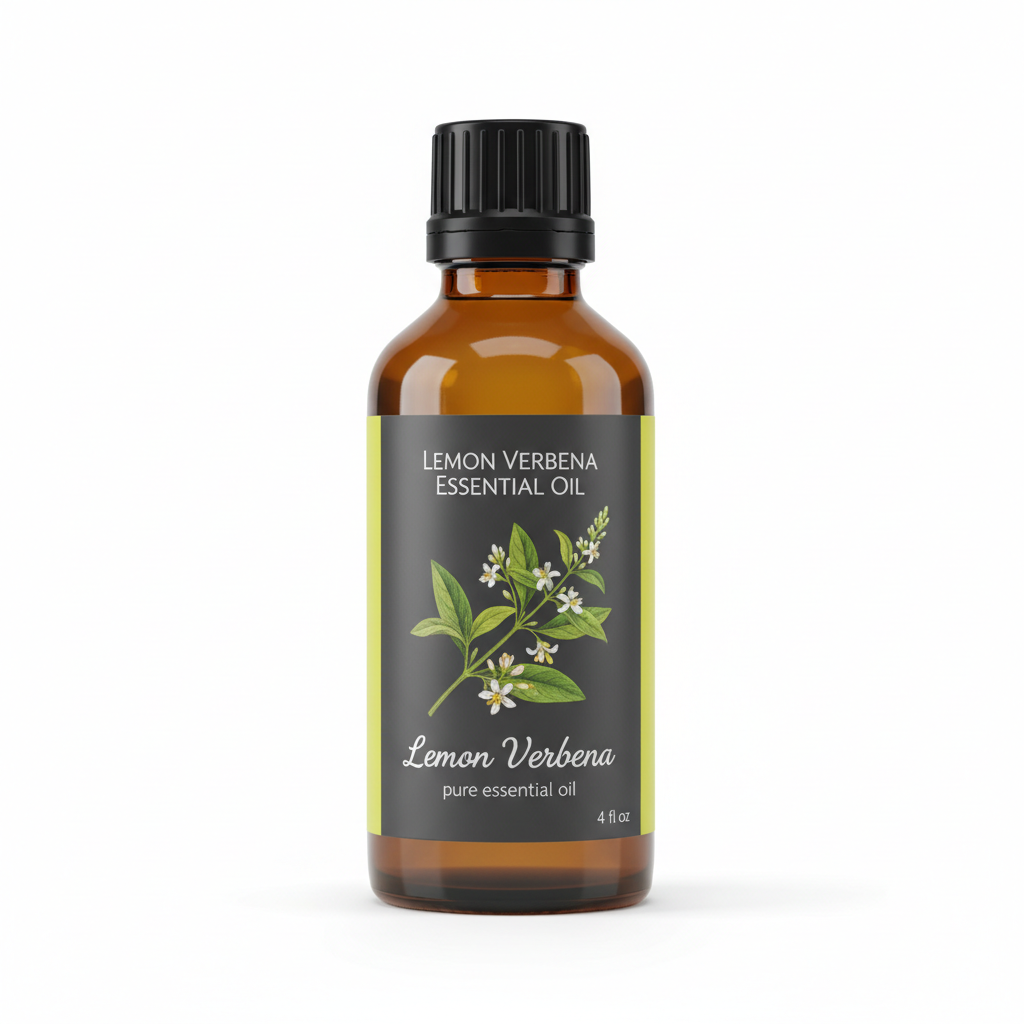
Lemon Verbena Essential Oil
Our own Lemon Verbena Essential Oil, in sizes from 0.5 oz to bulk.
From $12.99
Shop Now →Two materials, two sets of chemistry
A 2018 review of the plant's chemistry and pharmacology puts it plainly: neral and geranial are the main components of the essential oil, while verbascoside is the most significant component of the extract (Bahramsoltani et al., 2018). The same review notes that the antioxidant and other effects it collects were seen in cell and animal studies, and that evidence in people is not well established.
Verbascoside is a fairly large plant compound that carries sugar units. PubChem lists it at a molecular weight of 624.6 with a negative XLogP of -0.5, which is a way of saying it prefers water to oil. Citral, the geranial and neral pair that leads many lemon verbena oils, weighs 152.2 with an XLogP of 3, a small, light, oil-friendly molecule. Distillation carries over compounds that evaporate with steam, and a big sugar-bearing molecule does not do that. That is our reasoning from the structures, and it points the same way as the published oil analyses, which list volatile terpenes and not verbascoside. The practical consequence is straightforward. A figure for verbascoside or polyphenols describes the leaf extract, and it does not carry over to the oil in our bottle, whose Certificate of Analysis lists appearance, smell, density and refractive index.
What a DPPH number really measures
Most of the headline results come from a test called DPPH. DPPH is a stable free radical that looks deep violet in solution. When an antioxidant donates a hydrogen atom to it, the colour fades, and the result is usually reported as an IC50, the concentration needed to remove half of the radical. Lower means more effective in that tube (Kedare and Singh, 2011).
It is a handy, cheap screening test. It is also a test done in an organic solvent in a lab, and the authors of the standard review list its limits: coloured samples can interfere, light changes the reading, and it says little about how an antioxidant behaves in an emulsion or in the body. So a DPPH result is best read as a statement about chemistry in a tube, and not as a statement about skin or health. Nothing on this page describes what lemon verbena does for a person.
Putting two real results side by side
Here are two peer-reviewed examples, one for each material, each measured against its own reference compound.
- The extract. A methanolic leaf extract from four Tunisian sites reached a DPPH IC50 of 12.71 µg/ml at its best site, compared with 17.00 for the reference antioxidant BHT run alongside it, and verbascoside was the dominant compound in the extract (Tammar et al., 2021).
- The oil. Two Palestinian leaf oils, each with citral near 45% of the oil, gave IC50 values of 11.74 and 35.48 µg/ml, against 2.45 for the reference compound Trolox (Jaradat et al., 2021).
Those two numbers look similar, and they are not comparable. The extract beat its standard; the oils needed roughly five and fourteen times the concentration of theirs. Different labs also use different references, so the fair reading is each result against its own yardstick. Weights muddy things further: a microgram of a 624-weight molecule contains far fewer molecules than a microgram of a 152-weight one. And an extract is a mixture whose score belongs to the whole mixture, not to one compound.
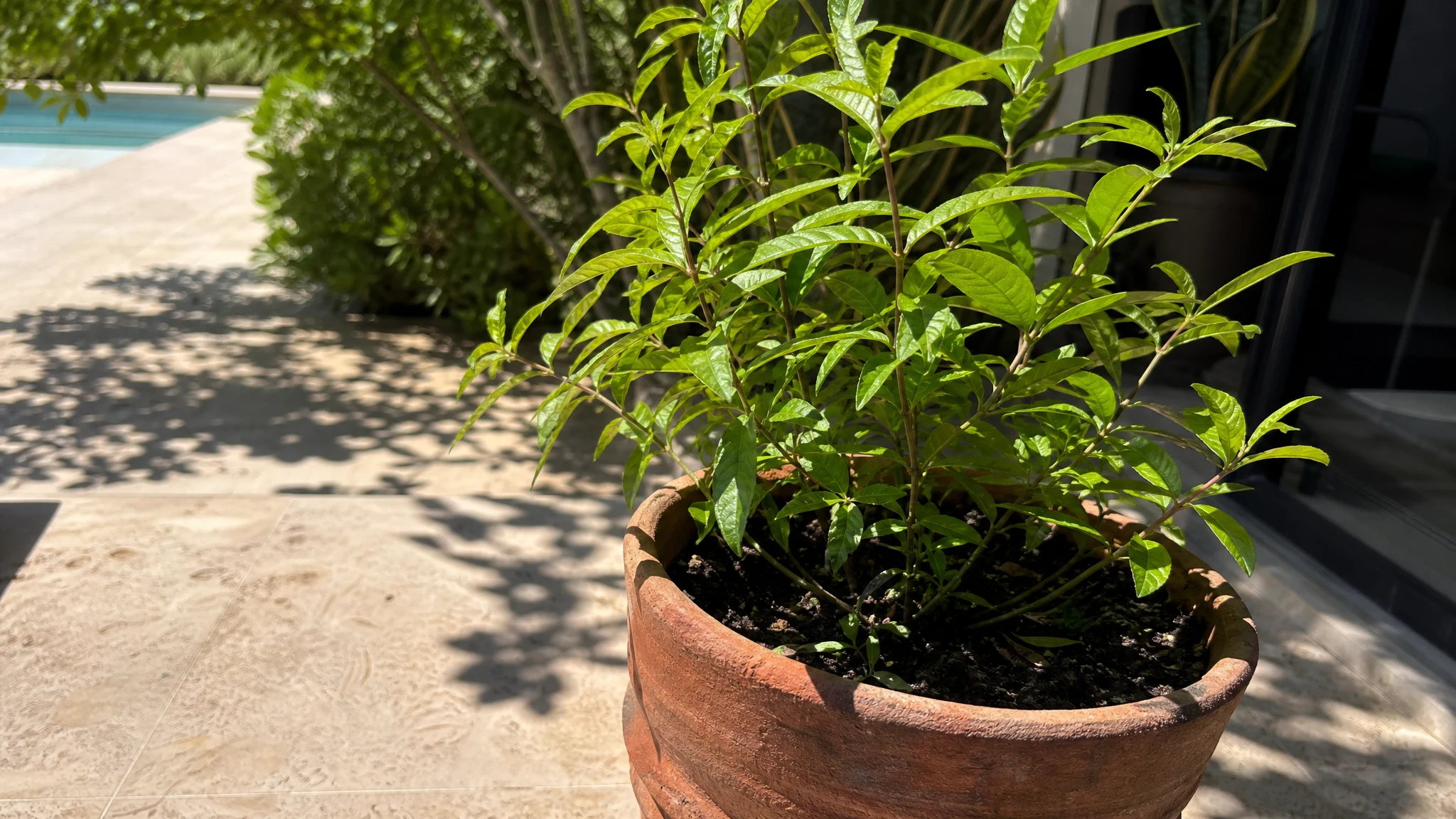
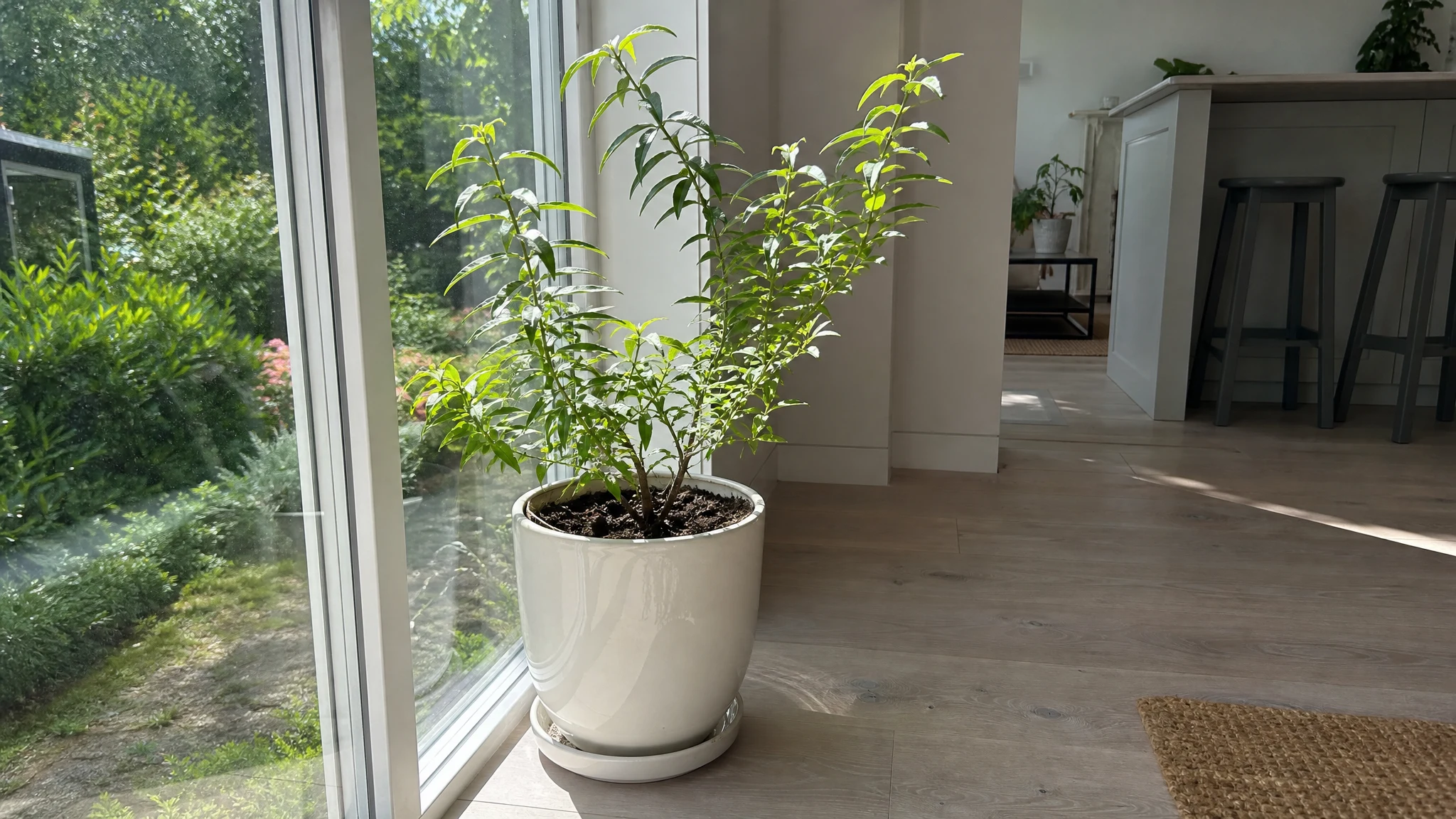
The two oils in the second study differed from each other by a factor of three on the same test, even though both came from the same part of the world and the same species. That fits what we see across the published analyses: a lemon verbena oil is not one fixed material. Our profile of the shrub and its names goes into that variety.
How we read a headline number
We have a simple habit when a number turns up next to a plant we love: we ask what was in the tube, what the number is compared with, and whether anyone has said it applies to a bottle like ours. Most of the time, the honest answer to the third question is no, and that is fine. A lab number is a piece of chemistry, and it is interesting on its own terms. It just does not need to follow the plant onto a label.
If you enjoy the research side, keep a list of the questions above and apply them to anything you read. It makes reading about any oil more fun, because you start to notice which claims have their feet on the ground.
What this means when you shop
If a page quotes polyphenol or verbascoside figures next to an essential oil, it is borrowing numbers from the leaf extract, and you can enjoy the oil for what it is: a bright, sweet, lemony aroma. We sell the steam-distilled oil and make no antioxidant or health claim for it. If the water-soluble leaf chemistry is what interests you, the plant material for that is dried leaf or tea from a grocery or herb shop, and our tea versus oil comparison shows how different the two are in practice. For the rest of the research picture, see our review of what the studies tested and the companion piece on lab-dish antimicrobial work.
Next time a number turns up on a lemon verbena page, the first question to ask is simple: extract or oil?
Lemon Verbena Essential Oil
Lemon Verbena Essential Oil from our own shop, in sizes from 0.5 oz to bulk.
From $12.99
Shop Now →Sources & Further Reading
- Bahramsoltani R et al., 2018. Aloysia citrodora Paláu (Lemon verbena): A review of phytochemistry and pharmacology. Journal of Ethnopharmacology. PMID 29698776
- Kedare SB, Singh RP, 2011. Genesis and development of DPPH method of antioxidant assay. Journal of Food Science and Technology. PMC3551182
- Tammar S et al., 2021. Chemometric Profiling and Bioactivity of Verbena (Aloysia citrodora) Methanolic Extract from Four Localities in Tunisia. Foods. PMC8700817
- Jaradat N et al., 2021. Spectral characterization, antioxidant, antimicrobial, cytotoxic, and cyclooxygenase inhibitory activities of Aloysia citriodora essential oils collected from two Palestinian regions. BMC Complementary Medicine and Therapies. PMC8130314
- PubChem compound records for verbascoside (CID 5281800) and citral (CID 638011). National Center for Biotechnology Information. pubchem.ncbi.nlm.nih.gov