Lemon Verbena Oil During Pregnancy: What Guidance Says
Few questions come to us with more care behind them than this one: can I use lemon verbena oil while I am pregnant? We love this oil's bright, lemony, herbal-floral aroma, and we also know that pregnancy is a time to slow down and check. So here is a plain reading of the guidance that exists, so you can bring a well-formed question to the person who knows your pregnancy.
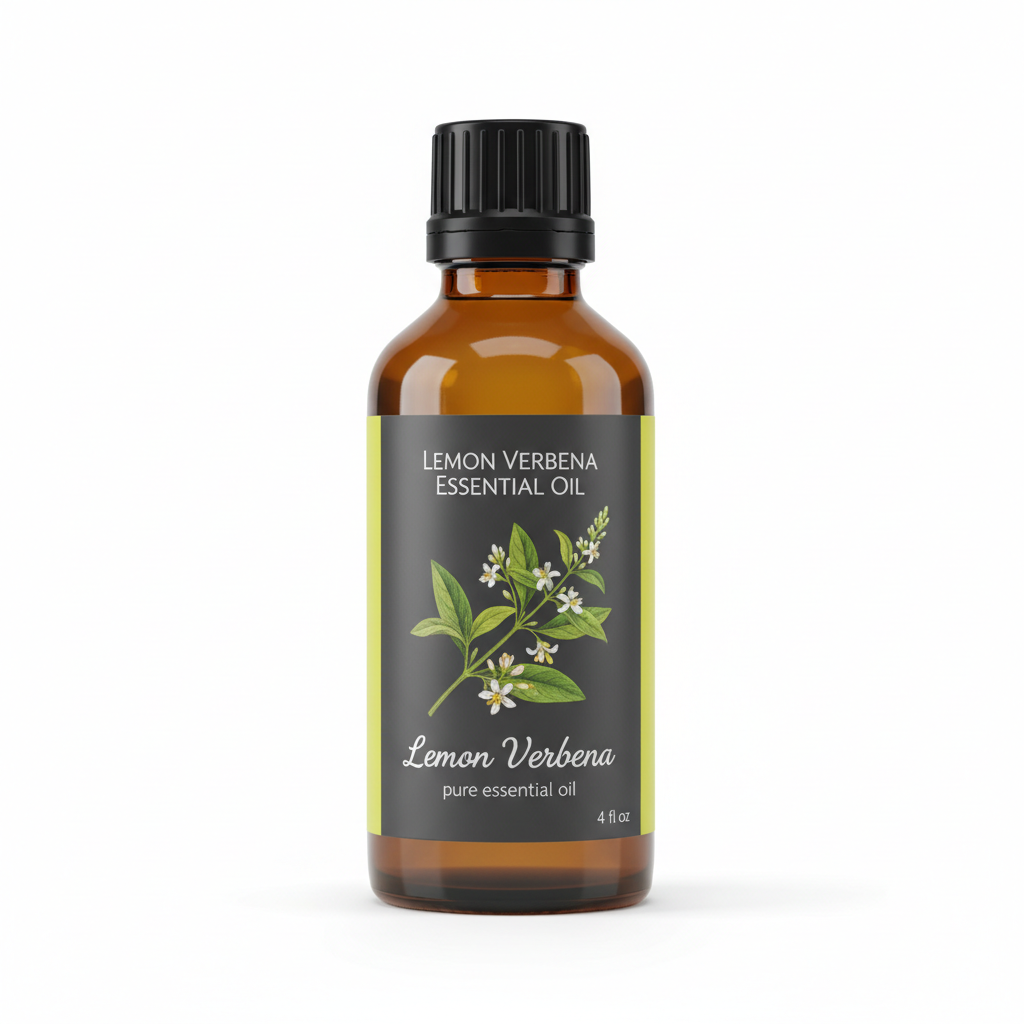
Lemon Verbena Essential Oil
Our own Lemon Verbena Essential Oil, in sizes from 0.5 oz to bulk.
From $12.99
Shop Now →What the general guidance says about essential oils
The UK Teratology Information Service, which advises on medicines and chemicals in pregnancy, takes a calm view of everyday exposure. The small amount of essential oil in ordinary toiletries and some foods is not expected to harm an unborn baby, and many women have aromatherapy massage in pregnancy without trouble. The same page notes that a handful of specific oils are best avoided for massage at any stage because of a hypothetical effect on the baby, and it points out that no scientific studies have been carried out on whether essential oils used for massage in pregnancy are safe. Lemon verbena is not singled out there, one way or the other.
One line is very clear and applies to every oil we know of: undiluted essential oil should never be swallowed, in pregnancy or at any other time. Our oil is sold neat and is not for internal use. If swallowing is what brought you here, our piece on ingesting lemon verbena oil goes into it.
What is known about the plant itself
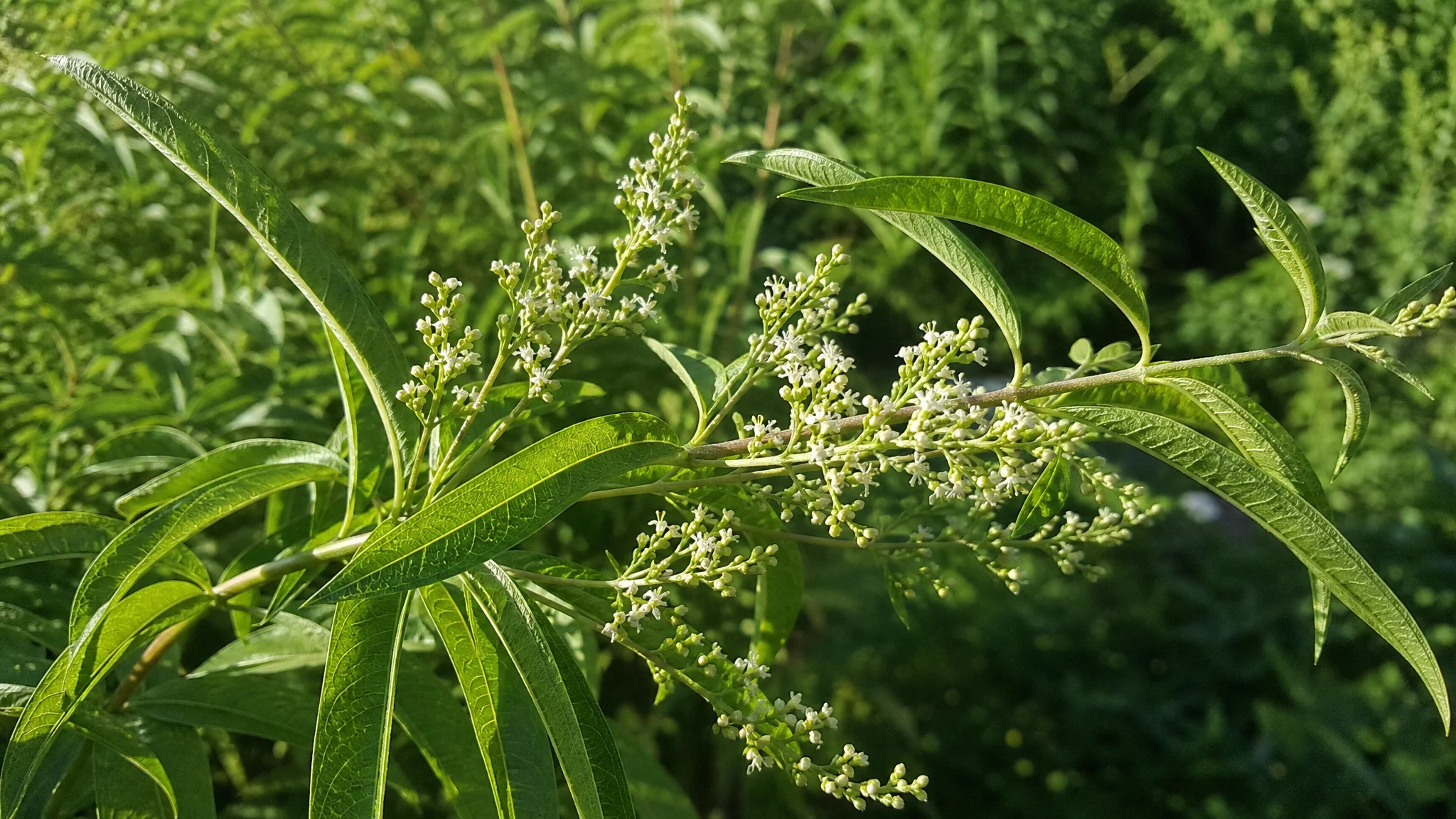
The closest thing to an official statement on the plant is the European Medicines Agency's herbal monograph on lemon verbena leaf, written for the dried leaf taken as a tea. It says safety during pregnancy and breastfeeding has not been established and, because data are lacking, use then is not recommended. It also notes that reproductive toxicity, genotoxicity and carcinogenicity tests have not been performed, and it lists allergy to plants of the verbena family as a reason not to use the leaf.
It is worth reading that precisely. The monograph does not say the leaf is harmful. It says the evidence has not been gathered, so the committee leans toward caution. It does not cover the essential oil at all. Reasoning from it, a concentrated distillate of the same leaf has no more evidence behind it than the tea does, which is one good reason to treat the question as one for a professional rather than a search result.
Skin, air and the baby at your chest
On skin, the guidance we can point to is general: oils are diluted for massage, and a larger treated area means more exposure. Our dilution guidance is 0.5% to 2% in a carrier oil with a patch test first, and that is advice for adults in general rather than a pregnancy limit. The international fragrance industry standard for verbena oil goes further and says it should not be used as a fragrance ingredient because of its sensitizing and phototoxic potential, so we start at the low end and encourage you to do the same. Our skin basics guide walks through the arithmetic.
In the air, no study of lemon verbena vapour in pregnant women turned up in our reading. Scent sensitivity is its own matter: in a 2016 US survey of 1,136 adults, about one in five reported health problems from air fresheners and deodorizers, most often breathing difficulties. If scent already bothers you, or your sense of smell has changed, a closed room is not the place to try something new. Our diffusing guide covers short runs and open windows.
Breastfeeding has even less written about it, and the EMA groups it with pregnancy. Whatever sits on your skin can reach a baby's hands and mouth, so ask your midwife or health visitor how that applies to your product and dilution.
Scent and the pregnant nose
Many people find their sense of smell changes during pregnancy, and a scent they have always loved can suddenly feel too strong. If that is you, there is no obligation to like anything. Let your nose lead, and close the bottle if it is not welcome. A scent that was a favourite last year may need to sit on a shelf for a while, and that is perfectly fine.
The same goes for the people around you. A bright citrus note can feel cheerful to one person and overwhelming to another, so keep any scenting light, ventilated and easy to stop. The gentlest choice is often simply to wait and enjoy the scent later.
A sensible order of operations
- Ask your midwife, obstetrician or pharmacist, naming the oil by its botanical name, Aloysia citrodora (also written Aloysia triphylla or Lippia citriodora), and mention your own history.
- Keep it out of your mouth, in any carrier.
- If a professional is comfortable with skin use, our suggestion is the lowest end of our range, 0.5%, which works out to roughly 3 drops per ounce of carrier by the common 20-drops-per-ml rule of thumb, with a patch test first. That is our arithmetic, not a pregnancy limit.
- Keep the cap tight and the bottle where children cannot reach it.
If it is the scent of lemon verbena you are missing, ask the same professional about the leaf tea too, since it carries its own statement above. We sell only the oil, a cosmetic and craft material with no medical claims, and the people best placed to say whether it fits your pregnancy are the ones who are following it with you.
Lemon Verbena Essential Oil
Lemon Verbena Essential Oil from our own shop, in sizes from 0.5 oz to bulk.
From $12.99
Shop Now →Sources & Further Reading
- UK Teratology Information Service, Medicines in Pregnancy. Camphor oil (page covering essential oils in pregnancy). medicinesinpregnancy.org
- European Medicines Agency, HMPC, 2021. European Union herbal monograph on Aloysia citrodora Paláu (syn. Aloysia triphylla (L'Hér.) Kuntze; Verbena triphylla L'Hér.; Lippia citriodora Kunth), folium (EMA/HMPC/376770/2019). ema.europa.eu
- Steinemann A., 2016. Fragranced consumer products: exposures and effects from emissions. Air Quality, Atmosphere & Health. PMC5093181
- IFRA, 2020. IFRA Standard: Verbena oil and absolute (Lippia citriodora Kunth.), Amendment 49. IFRA_STD_083