How Is Lemon Verbena Oil Made? Leaf to Bottle
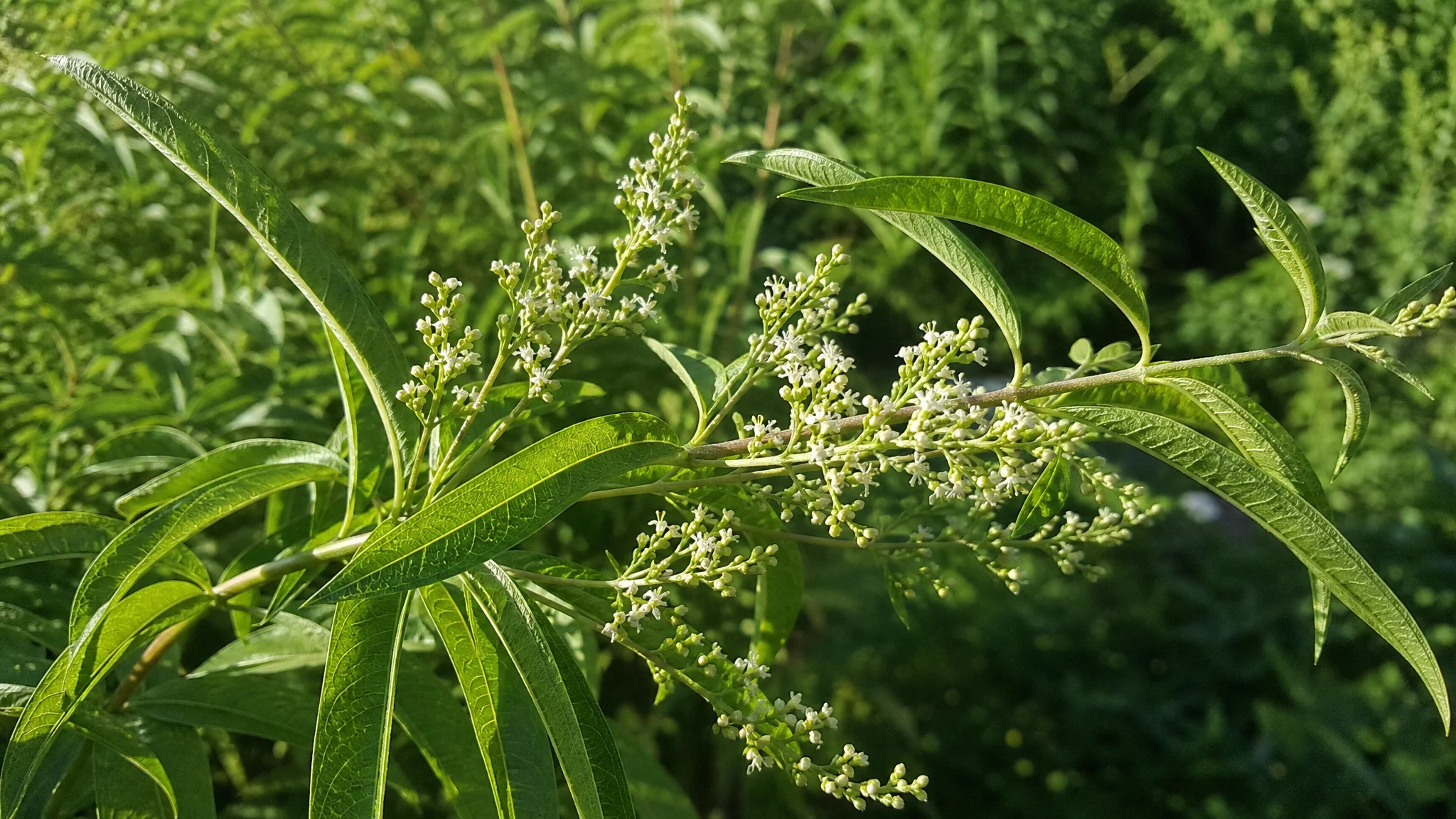
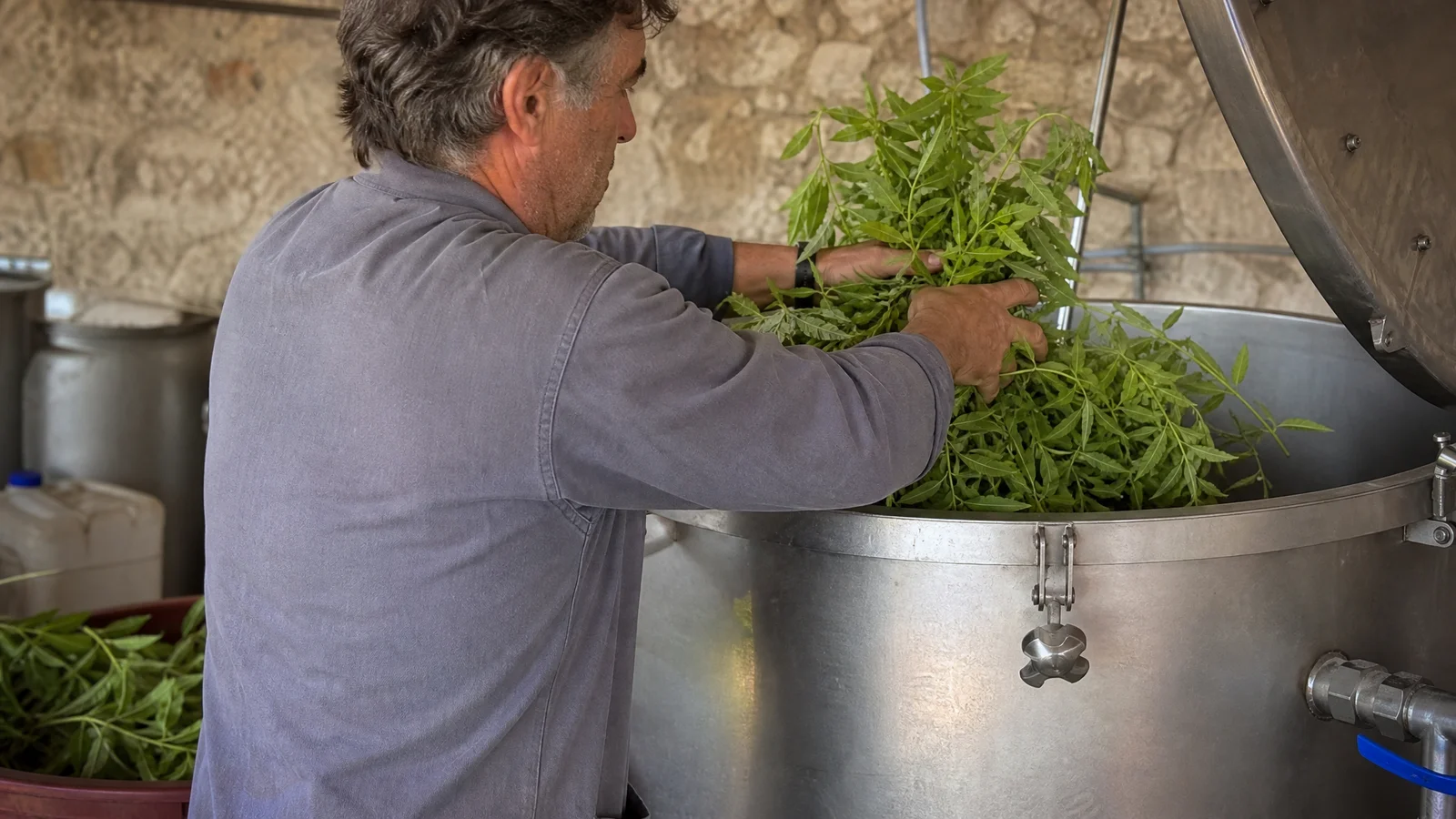
Lemon verbena leaves smell so strongly of lemon that it seems they must be full of oil. They are not. The leaves give up very little, and getting that little out is the whole story of how our oil is made: ours is steam-distilled from the leaves, which is the method named on both our shop page and the certificate we publish for one batch.
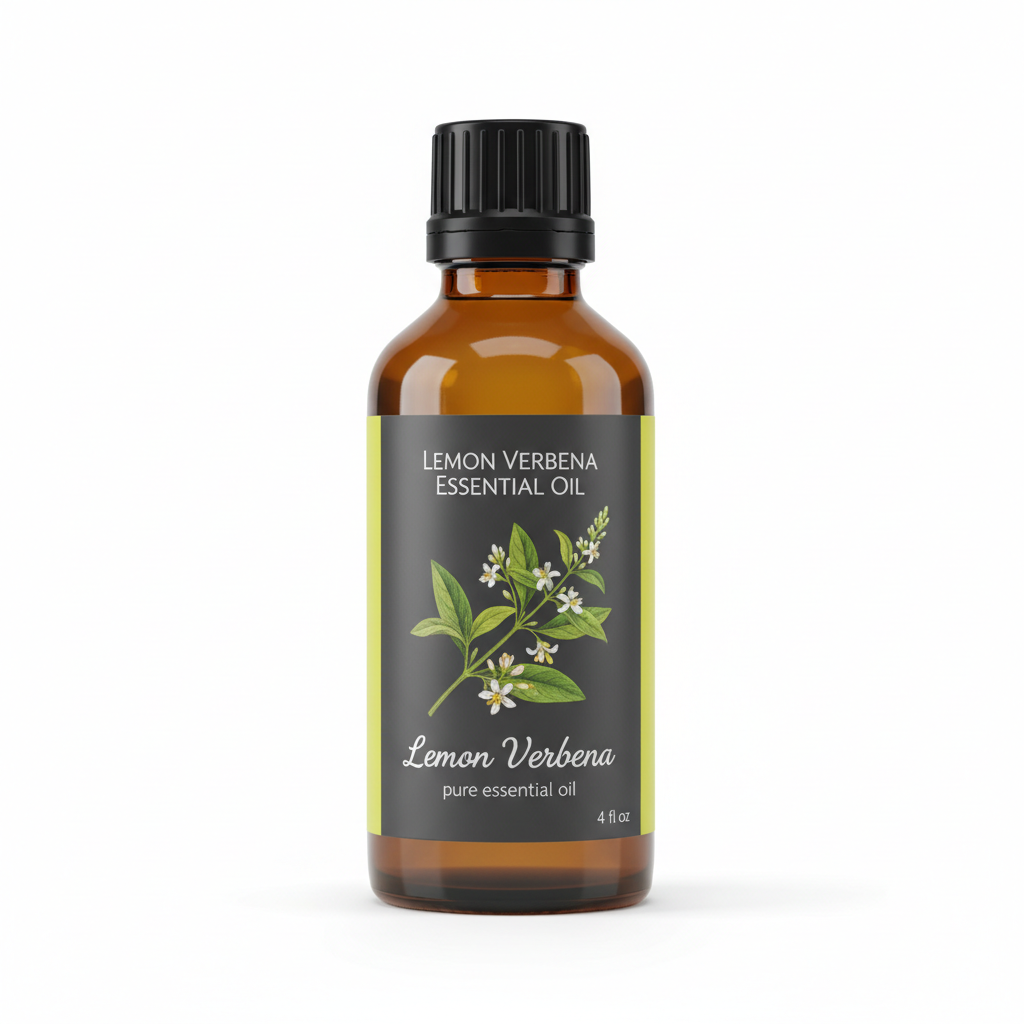
Lemon Verbena Essential Oil
Our own Lemon Verbena Essential Oil, in sizes from 0.5 oz to bulk.
From $12.99
Shop Now →What distillation does
Distillation is gentle in principle. Hot steam or boiling water carries the leaf's volatile aroma compounds upward, a condenser cools them back to liquid, and because oil and water do not mix, the two separate into layers. The oil floats on top and is drawn off. The water underneath, which holds a trace of the same aroma, is the hydrosol, a separate material we cover in our hydrosol article.
For lemon verbena, published research gives a good picture of the scale involved. Three laboratory studies distilled the leaf, all from dried leaf, and their yields ranged from about 0.1% to 1.29% of the leaf's weight. A Portuguese group took 100 g of leaf in 2,000 mL of water and distilled for three hours to get 1.05%, then got 1.29% from 25 g in a microwave-assisted run lasting only 15 minutes. An Ecuadorian team distilled 100 g of air-dried leaf for two hours and recovered 0.18%. Five Moroccan sites gave 0.1% to 0.2%.
To make that tangible: at the Ecuadorian yield, 100 g of leaf gives about 0.18 g of oil, roughly four drops by the usual 20-drops-per-ml rule of thumb with a density of 0.869 g/ml, the figure on our certificate. That is why this is a small-volume oil, and our yield article goes deeper into the arithmetic.
"Steam distilled" covers a lot of ground
You will see the phrase steam distillation used generously. In the Ecuadorian paper the abstract says steam distillation while the methods describe a Clevenger-type apparatus, where the leaf sits in boiling water, which is hydrodistillation. Both put leaf, heat and water to work, and both yield an oil. The distinction matters to engineers more than to most buyers, and it is a reminder that a method name alone is a short description, not a specification.
The plant matters more than the still
The Portuguese study is the most revealing, because it changed only the method on a single lot of leaf. Both oils had the same major compounds. The methods nudged the numbers: geranial came in at 18.7% by conventional distillation and 21.1% by microwave, and neral at 15.3% and 16.2%. Together those two make up citral, the compound pair behind much of the lemon character.
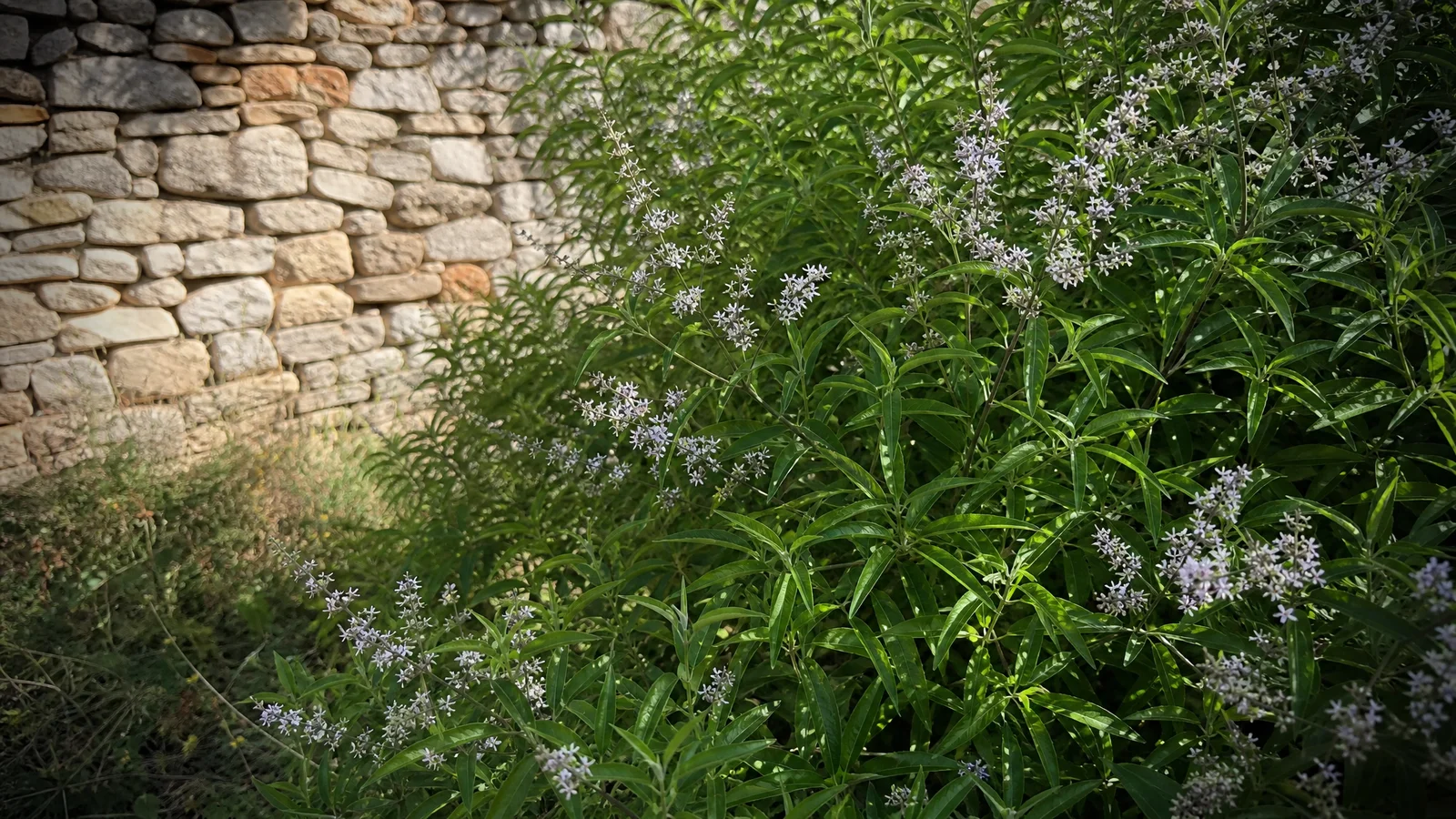
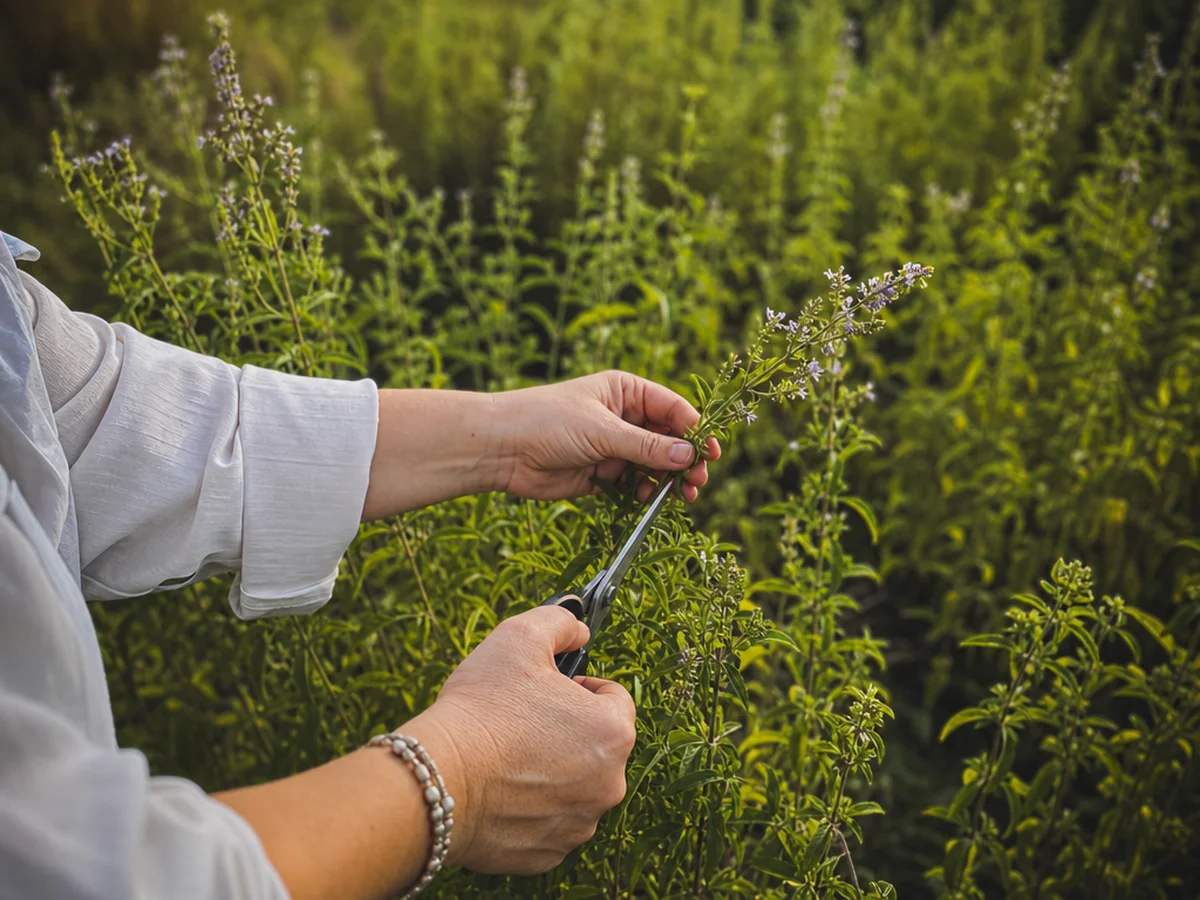
Now set that beside the other origins. The Ecuadorian oil had geranial at 26.8% and neral at 21.0%, while the Moroccan oils had no detectable geranial at all, with neral at roughly 6% to 10% and more of the heavier sesquiterpenes such as spathulenol and caryophyllene oxide. The Portuguese authors point to soil and climate, genetics and the time of cutting as drivers of variation. Reading across the studies, it looks as though where the plant grew and when it was cut shifted the profile far more than the choice between two distillation methods did.
It is a lovely illustration of why every lot of a plant oil can smell a little different, and why we point curious buyers to a composition report rather than a method line. Our guide to reading a label and GC-MS report shows how.
Picture the still
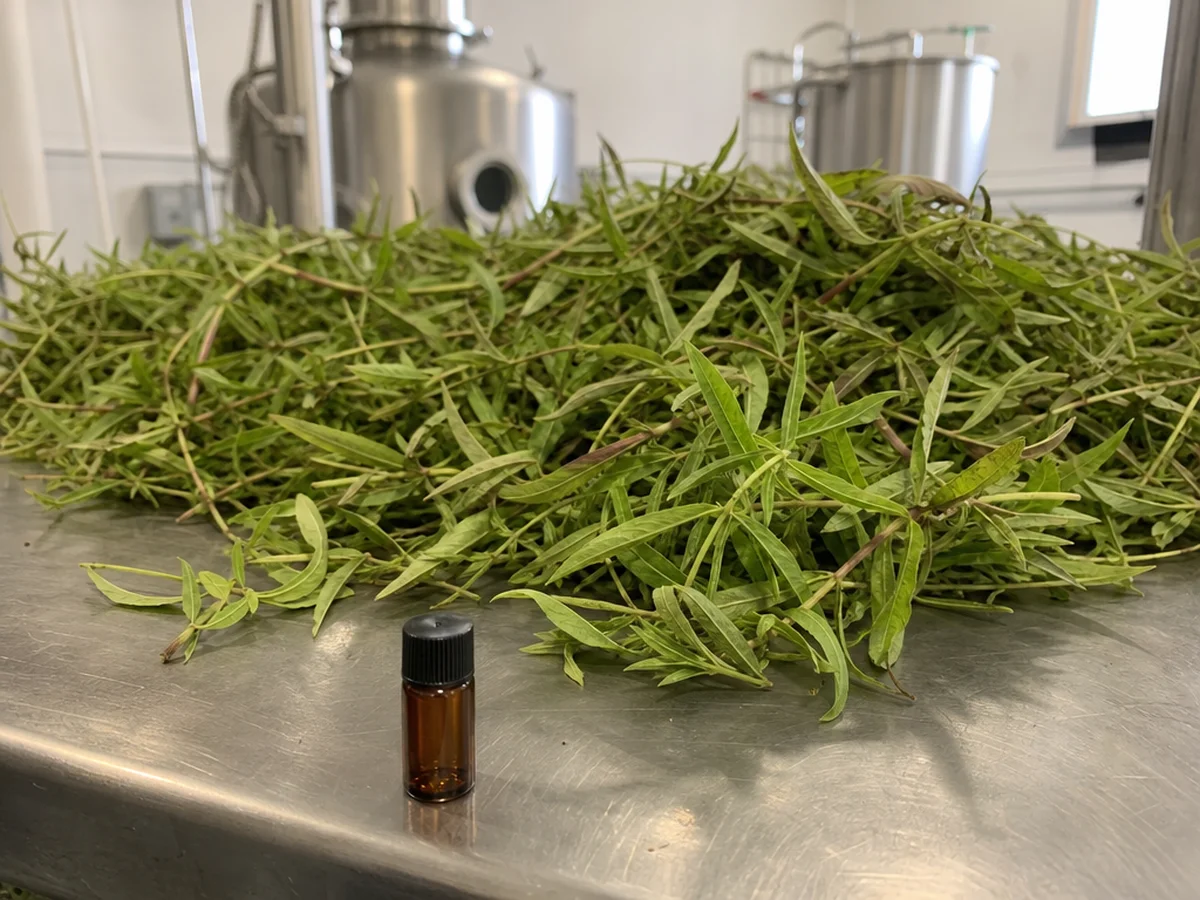
If it helps to picture the process, imagine a big pot with a lid and a long cool tube leading away from it. Leaves go in, heat goes on, and the room slowly fills with the scent as the aromatic vapour travels along the tube. At the other end, a trickle of liquid collects, and within it a thin layer of oil floats above the water. The first time most people see a photograph of this, they are surprised by how small the oil layer is compared with the amount of plant that went in.
What our paperwork covers
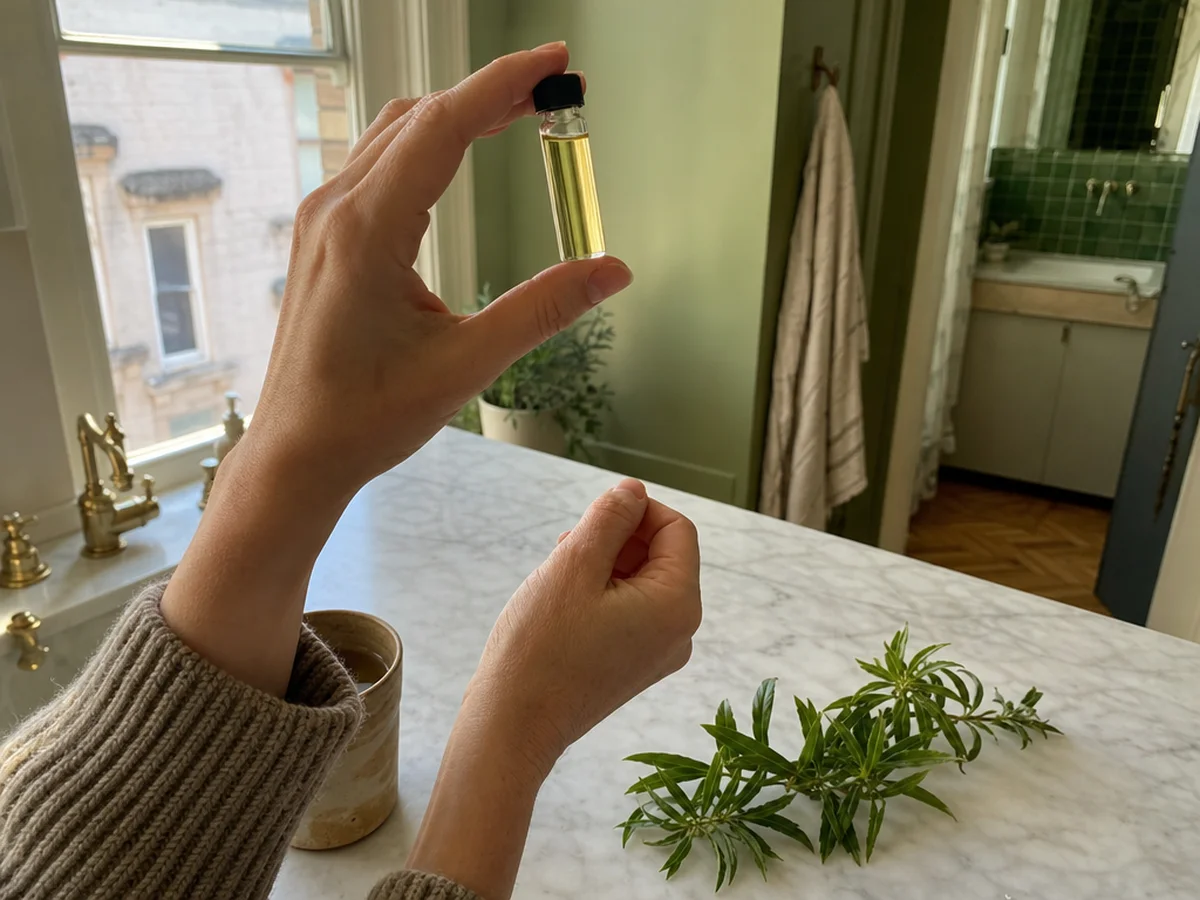
The certificate we publish for one batch states the botanical name, Aloysia citrodora, the plant part, leaf, and the extraction method, steam distilled, alongside its density and refractive index. If you want more, such as crop year or a composition report for a particular batch, ask us in writing through our contact page before ordering and keep the reply.
Why small amounts make sense
We think this is the right way to relate to the oil. A bottle represents a lot of leaf, so it deserves slow, careful use: a drop on a strip, a few in a diffuser, a measured amount in a blend. When you know what went into it, you tend to treat it the way you would treat a good spice or a vanilla pod, with attention rather than haste.
A note for would-be distillers
The laboratory runs above used glassware and measured their leaf by the gram, and the oil they collected would fill a few droplets. If your real goal is the scent or the flavour of the leaf, growing the plant and making tea will give you more satisfaction for the effort.
One more good reason to enjoy the aroma thoughtfully: the international fragrance standard for verbena oil says it should not be used as a fragrance ingredient because of its sensitizing and phototoxic potential, which is why we recommend starting at the low end of our 0.5% to 2% skin guidance. Our IFRA article sets the two side by side.
Lemon Verbena Essential Oil
Lemon Verbena Essential Oil from our own shop, in sizes from 0.5 oz to bulk.
From $12.99
Shop Now →Sources & Further Reading
- Volatile Compounds and Biological Activity of the Essential Oil of Aloysia citrodora Paláu: Comparison of Hydrodistillation and Microwave-Assisted Hydrodistillation. Molecules, 2023. PMC10254266
- Chemical Profiling, Sensory Qualities, and Bioactivities of Essential Oils Obtained from Aloysia citrodora and Bursera graveolens Ecuadorian Plants Against the Mosquito Aedes albopictus (Skuse) (Diptera: Culicidae). Insects, 2025. PMC11857052
- Chemical Composition and Cytotoxic and Antibacterial Activities of the Essential Oil of Aloysia citriodora Palau Grown in Morocco. Advances in Pharmacological Sciences, 2017. PMC5485486
- IFRA, 2020. IFRA Standard: Verbena oil and absolute (Lippia citriodora Kunth.), Amendment 49. IFRA_STD_083