How to Make Lemon Verbena Infused Oil From Dry Leaves
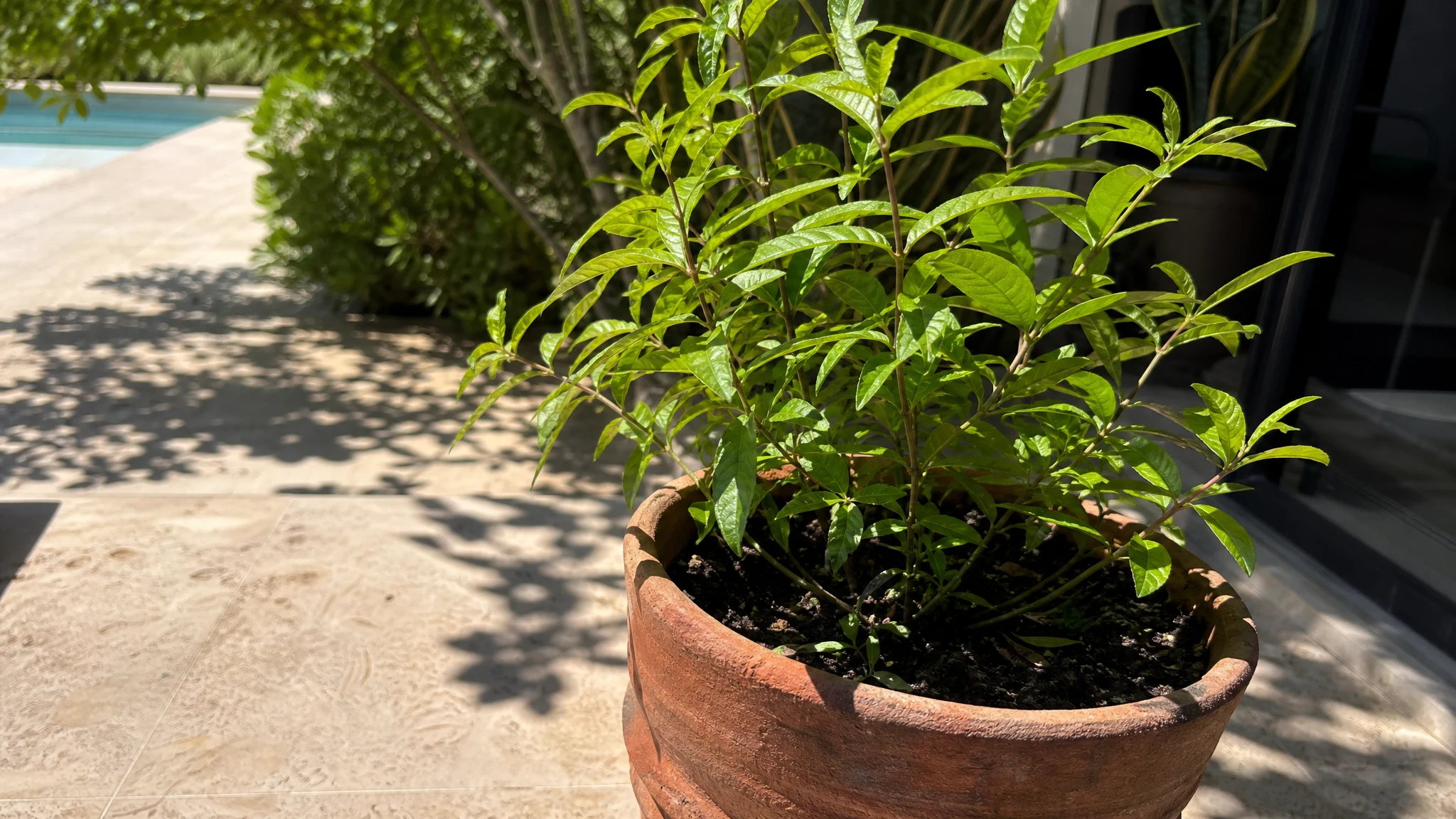
If you grow lemon verbena, you know the moment: you brush past the shrub and the whole patio smells like lemon drops. It is natural to want to capture that in a jar of oil. You can, with one decision made early: use dry leaves, not fresh ones. Here is why, what to expect from the result, and a method that follows.
Lemon Verbena Essential Oil
Our own Lemon Verbena Essential Oil, in sizes from 0.5 oz to bulk.
From $12.99
Shop Now →An infusion is not a small bottle of essential oil
An essential oil is the volatile fraction of the leaf collected by distillation. An infused oil is simply what a carrier oil dissolves out of leaves over days or weeks, and it comes out much milder. The numbers show how much milder. Commercial dried leaf gave 1.05% oil by classic distillation and 1.29% by a microwave method in a Portuguese study, while dried Ecuadorian leaf gave just 0.18%. So the most that 20 g of dried leaf could ever hold is about 0.21 g of oil at the generous end, and only 0.036 g at the low end. Spread that through 250 ml of carrier (roughly 230 g, on an ordinary density assumption) and you are under 0.1% even if every bit transferred, which it will not.
That is not a disappointment, it is useful to know. An infusion gives a soft, green, faintly lemony note, a whisper next to the sparkle of the distilled oil. The Ecuadorian study's trained panel described the distilled oil as lemon, candied lemon, lemongrass and orange blossom; expect the infusion to be a quieter relative of that. If you want the bright, full aroma, that is what our oil is for, and the comparison of oil, absolute, hydrosol and infused oil lines the forms up. If you would rather start from the distilled oil in larger amounts, see our bulk page and our guide to buying lemon verbena oil in bulk.
Why dry beats fresh
Fresh leaves carry water, and water sealed in oil is the condition food-safety scientists worry about. A review in Food Protection Trends records botulism cases linked to home-prepared garlic and herb oils, and to vegetables and mushrooms stored in oil, and notes that extension advice for fresh herbs in oil is refrigeration and short keeping times, from a few days to about three weeks. That review is about food, and a body oil is not a food, but the conditions (moist plant tissue, oil, little air) are the same, and moisture also invites mould. Reasoning from that, we would dry the leaves first, strain thoroughly, and keep the result cool.
Drying leaves well
Take your time with the drying step, because it decides everything that follows. Pick leaves on a dry morning, shake off any dust, and lay them out so they do not touch. Turn them now and then. They are ready when they snap or crumble between your fingers, and they will smell sweeter and a little hay-like. If any leaf feels even slightly soft, give it another day.
A method that follows from that
This is a formulation worked out from the sources above, and the 20 g to 250 ml ratio is an arithmetic starting point, not a standard.
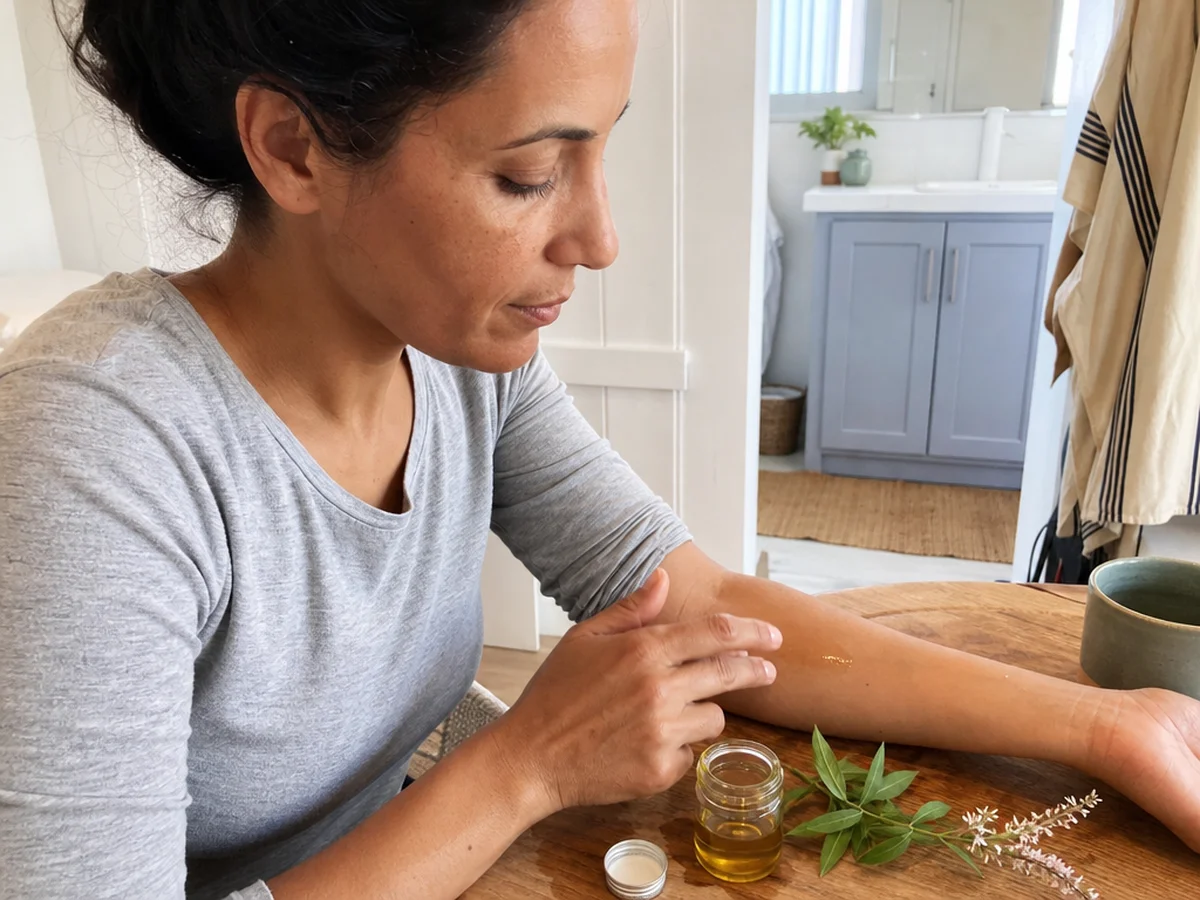
- Dry the leaves completely. Spread them in a single layer somewhere warm, dry and shaded until they crumble instead of bending. Our growing guide covers harvesting the shrub.
- Use clean, completely dry glass. A drop of water counts as much as a wet leaf.
- Weigh. About 20 g of crumbled leaf to 250 ml of carrier. Jojoba, sunflower or fractionated coconut are sold by craft and cosmetic supply shops, since we sell only lemon verbena oil.
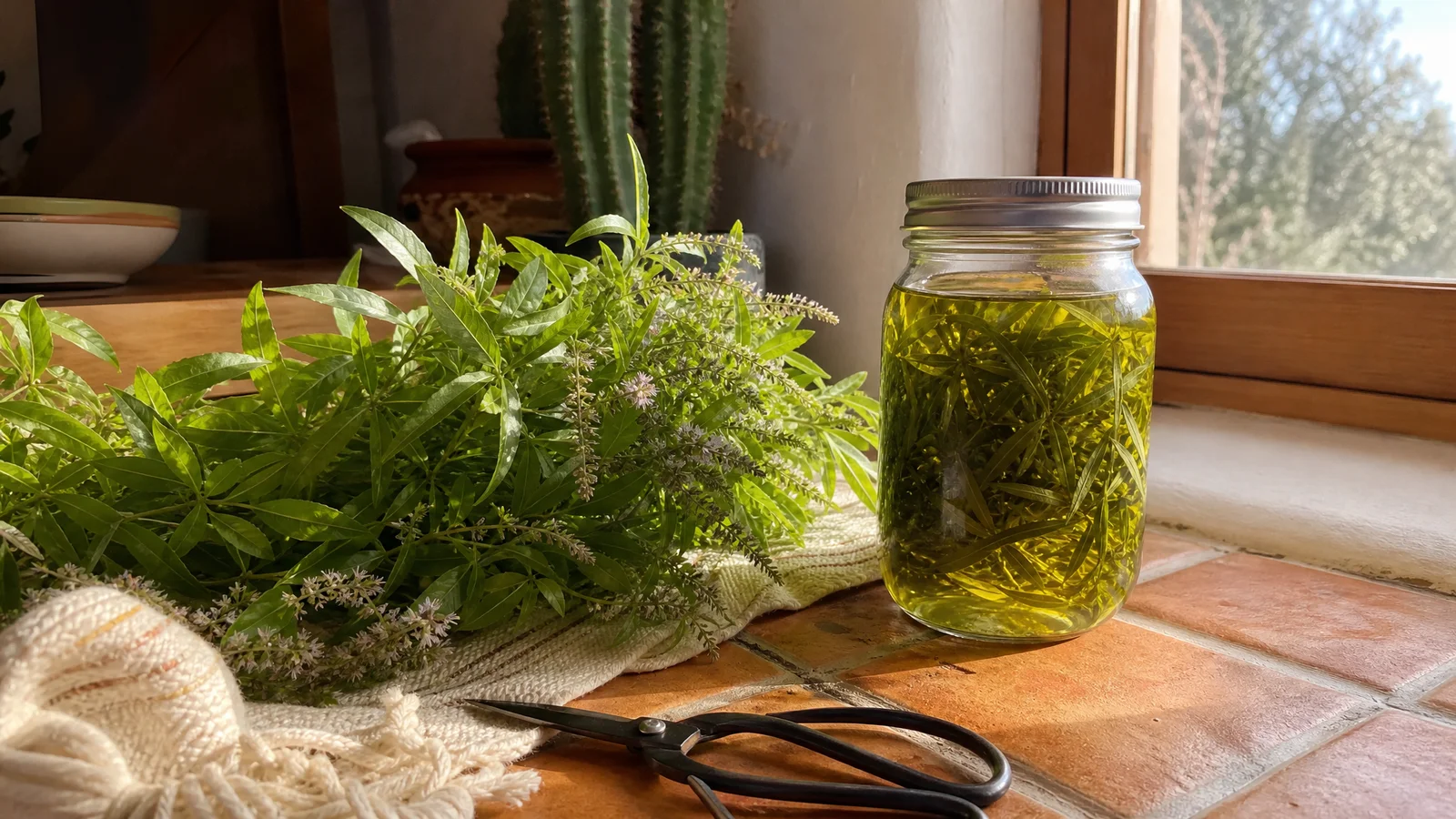
- Steep sealed, cool and out of sunlight, shaking every day or two. Gentle warmth would speed extraction but also drive off the aroma, so patience is the better ingredient.
- Strain twice. Fine mesh first, then a paper coffee filter, so no leaf fragments remain. Press gently rather than squeezing.
- Bottle in dark glass, label the date, and keep it in the refrigerator. If it turns cloudy, smells sour or shows water droplets, discard it.
What to expect from the jar
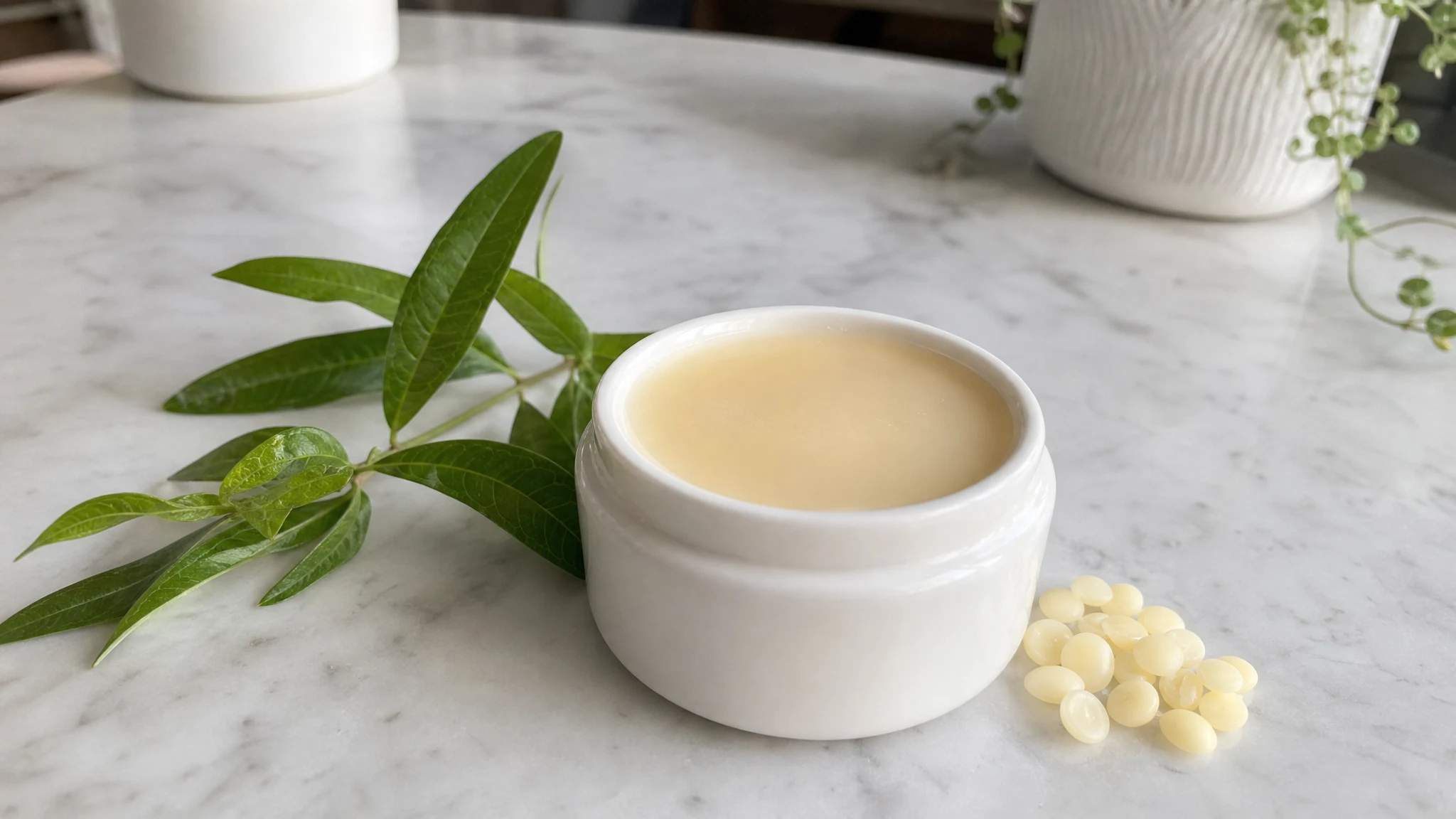
Do not be disappointed if the finished oil smells subtle. After a few weeks of steeping, you will notice a pale, slightly green tint in the carrier and a soft, grassy lemon when you open the jar. It is not the bright burst of the essential oil, but it has a quiet, homemade charm. Smell it each time you shake the jar, and you will learn how the aroma deepens and then plateaus, which is your cue that more steeping will not help.
Using it, and the one thing to skip
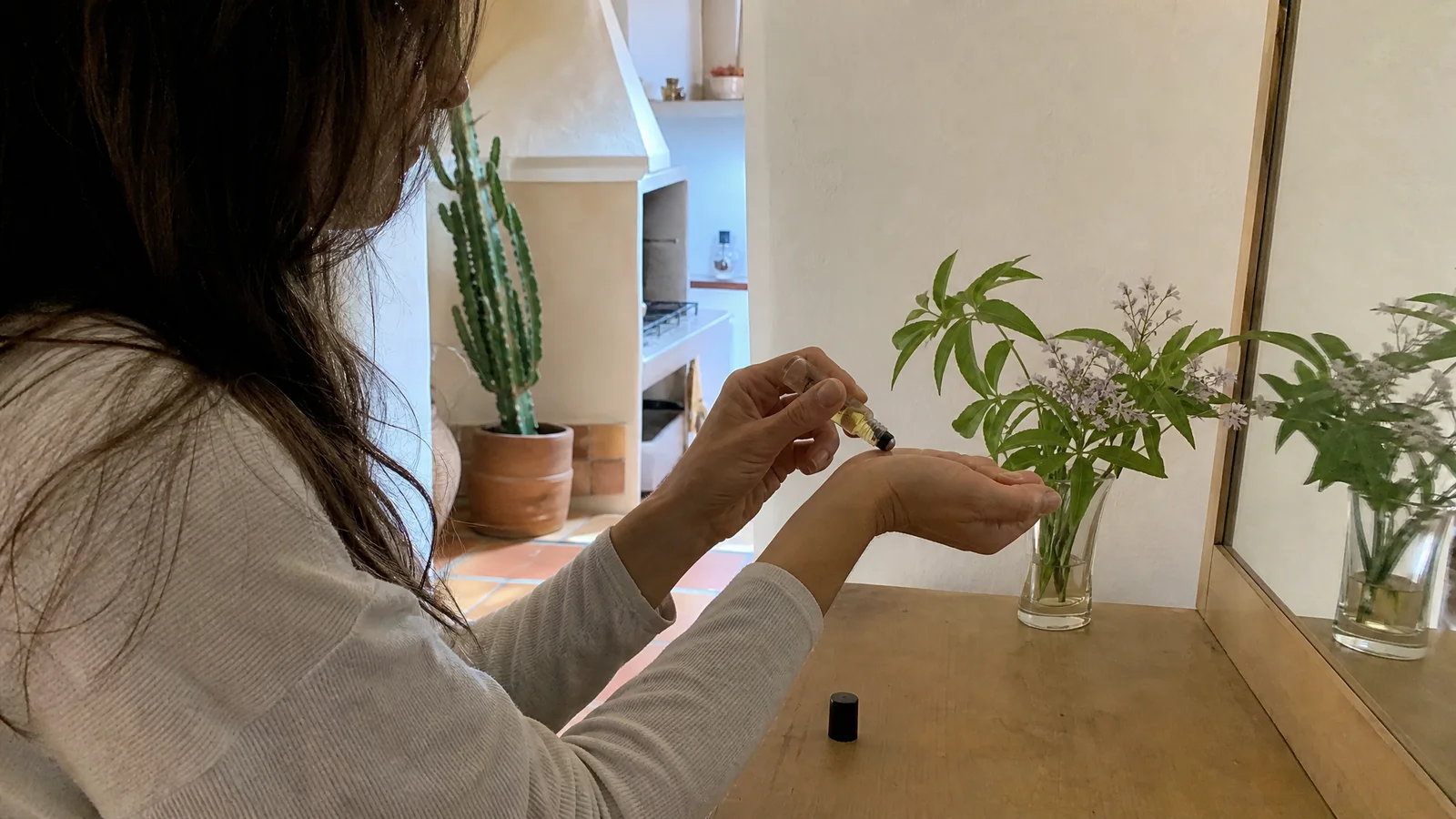
Use the finished oil for skin and gentle scenting, with a patch test on the inner forearm first. The plant is in the Verbenaceae family, and the European Medicines Agency's monograph on the leaf as a tea lists hypersensitivity to plants of that family as a contraindication, so anyone who reacts to related plants should ask a dermatologist before using it. Keep it out of the kitchen: this is a skin and scent oil, not a food.
It is tempting to boost an infusion with a few drops of essential oil. That moves you into dosing territory, and our body oil article does that arithmetic carefully. Left as it is, a dried-leaf infusion is a quiet, pleasant way to enjoy the garden plant long after the shrub has gone dormant for winter.
Lemon Verbena Essential Oil
Lemon Verbena Essential Oil from our own shop, in sizes from 0.5 oz to bulk.
From $12.99
Shop Now →Sources & Further Reading
- Chemical Profiling, Sensory Qualities, and Bioactivities of Essential Oils Obtained from Aloysia citrodora and Bursera graveolens Ecuadorian Plants Against the Mosquito Aedes albopictus (Skuse) (Diptera: Culicidae), Insects, 2025
- Volatile Compounds and Biological Activity of the Essential Oil of Aloysia citrodora Paláu: Comparison of Hydrodistillation and Microwave-Assisted Hydrodistillation, Molecules, 2023
- Current Food Safety Issues of Home-prepared Vegetables and Herbs Stored in Oil, Food Protection Trends 31(6), 2011
- European Union herbal monograph on Aloysia citrodora Paláu (syn. Aloysia triphylla (L'Hér.) Kuntze; Verbena triphylla L'Hér.; Lippia citriodora Kunth), folium, EMA/HMPC/376770/2019, 13 January 2021