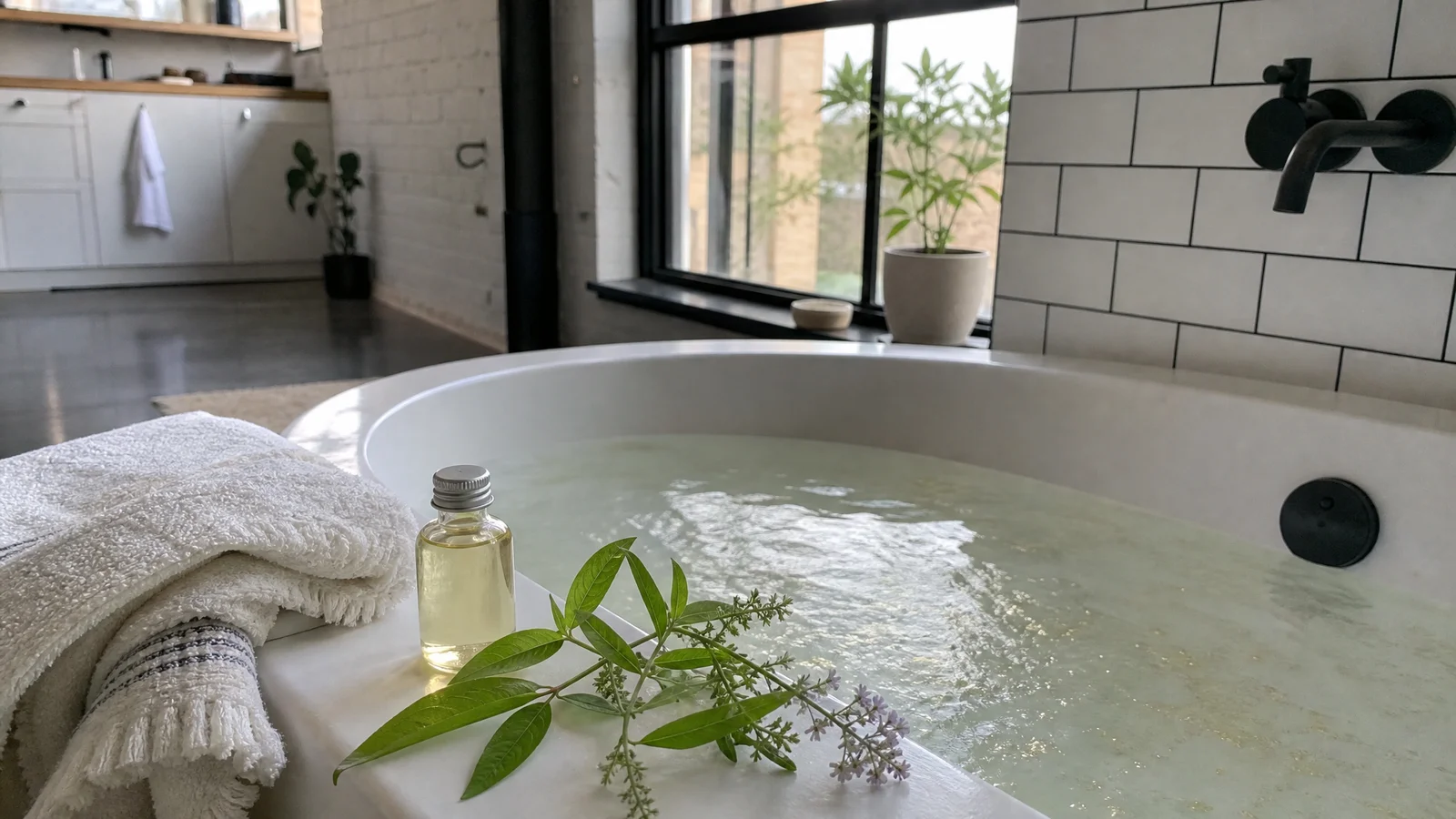
Lemon Verbena Bath Oil Recipe: Disperse It First
Picture a tub of warm water, a faint lemony cloud rising from it, and nothing floating on the surface that shouldn't be. That is the goal of a lemon verbena bath oil, and the trick to getting there is in how the oil is diluted before it ever reaches the water. A recipe that simply counts drops into the tub is the version to skip.
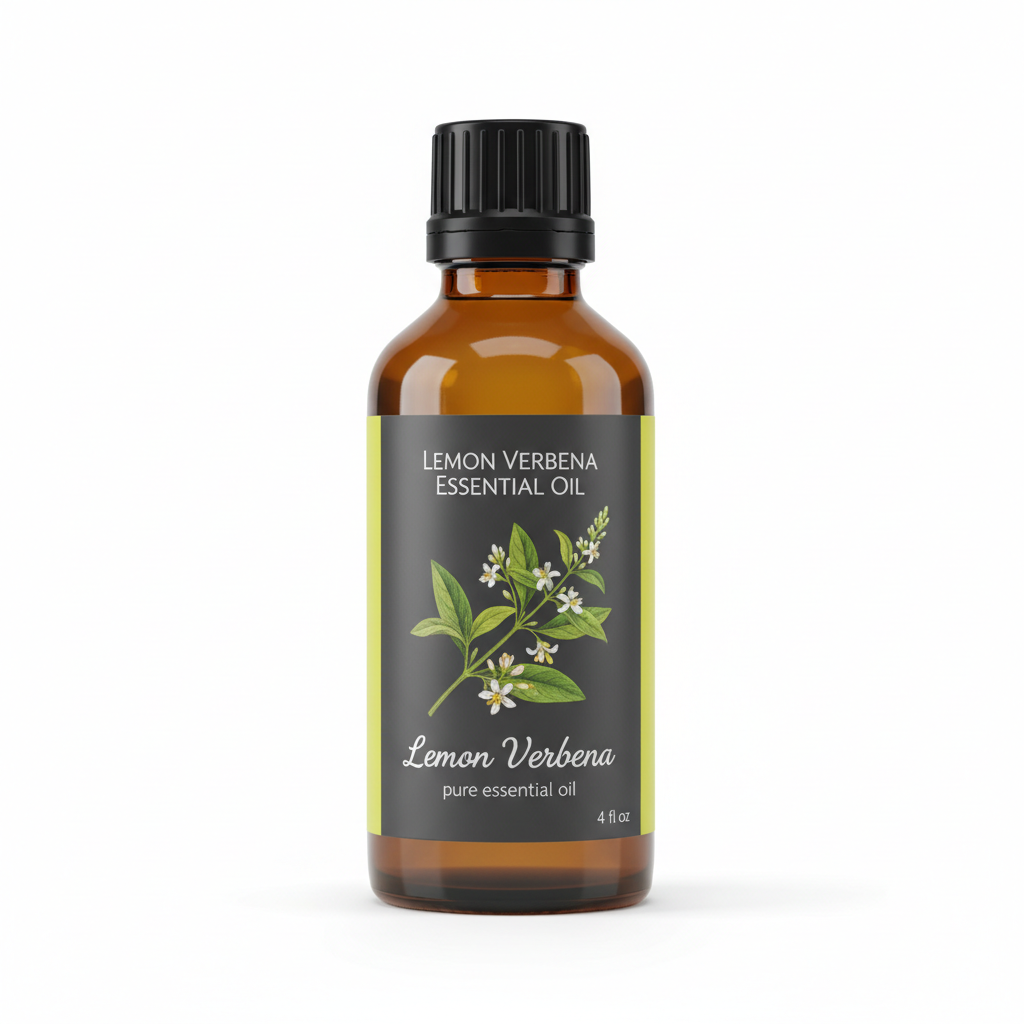
Lemon Verbena Essential Oil
Our own Lemon Verbena Essential Oil, in sizes from 0.5 oz to bulk.
From $12.99
Shop Now →Why we disperse the oil first
The Tisserand Institute's bath guidance is direct: do not put drops of essential oil straight into a bath and then step in, because undiluted oil floats on the surface and can irritate skin when you sit down. Its options are to mix the essential oil into a vegetable oil, or to emulsify it into water with an agent such as Solubol, and it adds that irritation seems to be especially likely with citrus oils. Lemon verbena is citrusy enough to count, so this recipe takes the first route: the verbena is already dissolved into a carrier oil before it meets the water.
Choosing the dose
For this formulation we use 0.5%, the bottom of our own skin range of 0.5% to 2%. We keep it there because other sources point lower for verbena. A retailer's product page quotes a 0.9% maximum dermal use level "to avoid skin sensitization", and general bath charts that run higher are not specific to this oil. Bath oil also sits on the skin as you step in, so the strength in the bottle is the strength on your skin. As a sense of proportion, IFRA's citral standard allows 1.2% citral in wash-off products like bath and shower gels (Category 9). An example Ecuadorian oil was about 47.8% citral, so 0.5% oil would carry roughly 0.24% citral by that arithmetic, comfortably inside. Our own oil's citral share is not on the Certificate of Analysis we publish, so this is a guide to proportion, not a measurement.
The formulation, by weight
| Ingredient | Weight | Share |
|---|---|---|
| Liquid carrier oil, one stable oil of your choice | 99.5 g | 99.5% |
| Lemon verbena essential oil | 0.5 g | 0.5% |
| Total | 100 g | 100% |
Carrier oils come from a craft or soap-supply seller, since we sell only the lemon verbena oil. Weigh the carrier into a clean, dry glass bottle, then add the verbena oil. With the 0.869 density on our published Certificate of Analysis, 0.5 g is about 0.58 ml, or 11 to 12 drops at the rough 20 drops per millilitre convention. Droppers vary, so a scale is the reliable measure. Cap it, swirl for a minute, and label it with the date and percentage. There is no water in this blend, so keep water out of the bottle.
Scaling up is where mistakes happen, so scale by weight, not by eye: 12 drops in a 4 oz bottle is about 0.5%, but the same 12 drops in a one-ounce bottle is about 2%, four times the dose.
In the tub
Use a small amount of the finished blend. Ten millilitres contains only about 0.05 g of verbena oil, roughly one drop. The carrier will float and coat skin and tub rather than dissolve, so rinse off in the shower if your skin feels warm or stings. The NHS warns that emollients in a bath or shower can make surfaces slippery, advises a non-slip mat, and says to wash the bath afterwards; the same sense applies to any oil. We sell no solubilisers, so if you use one, follow its maker's usage rate.
Setting the scene
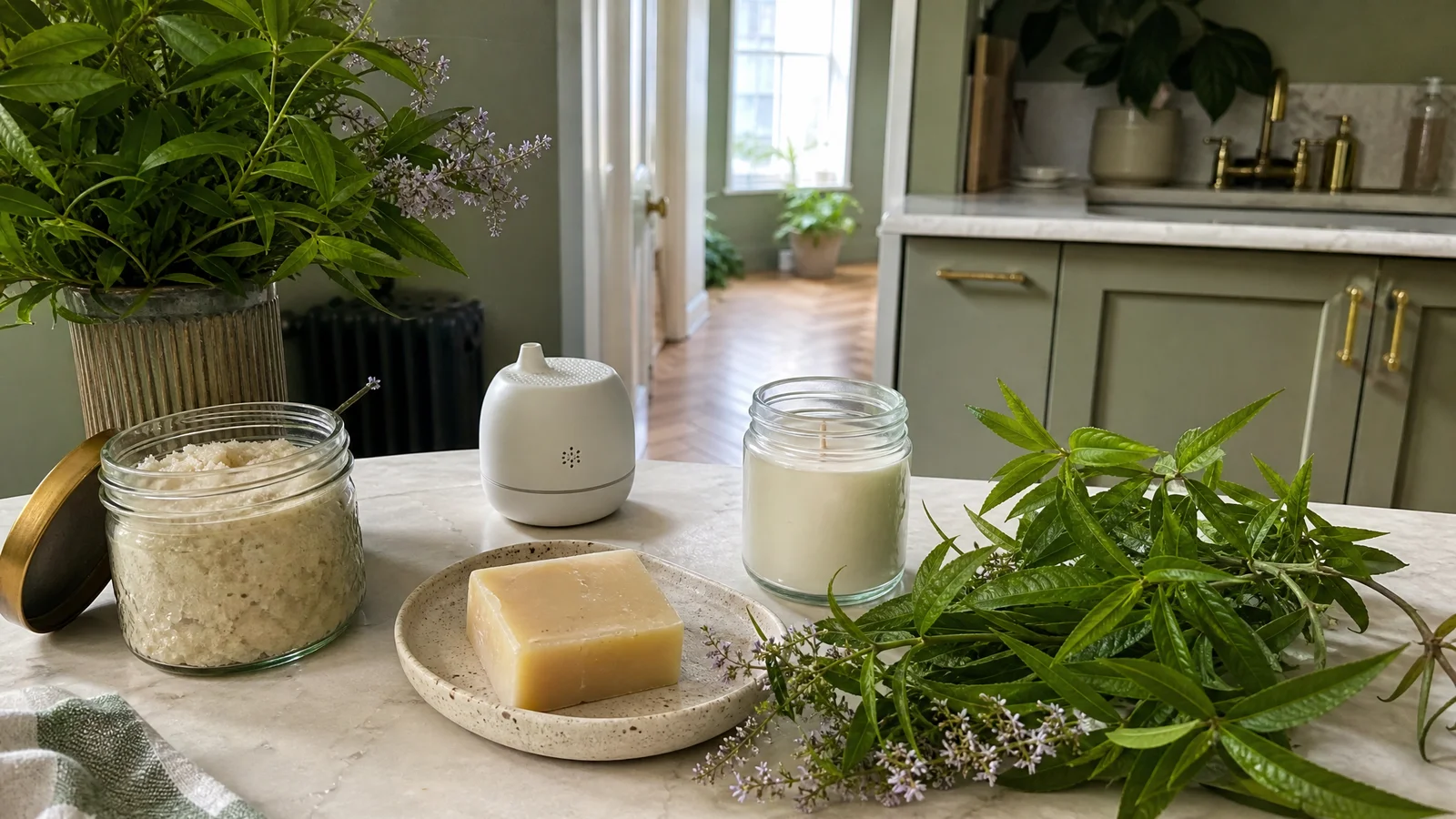
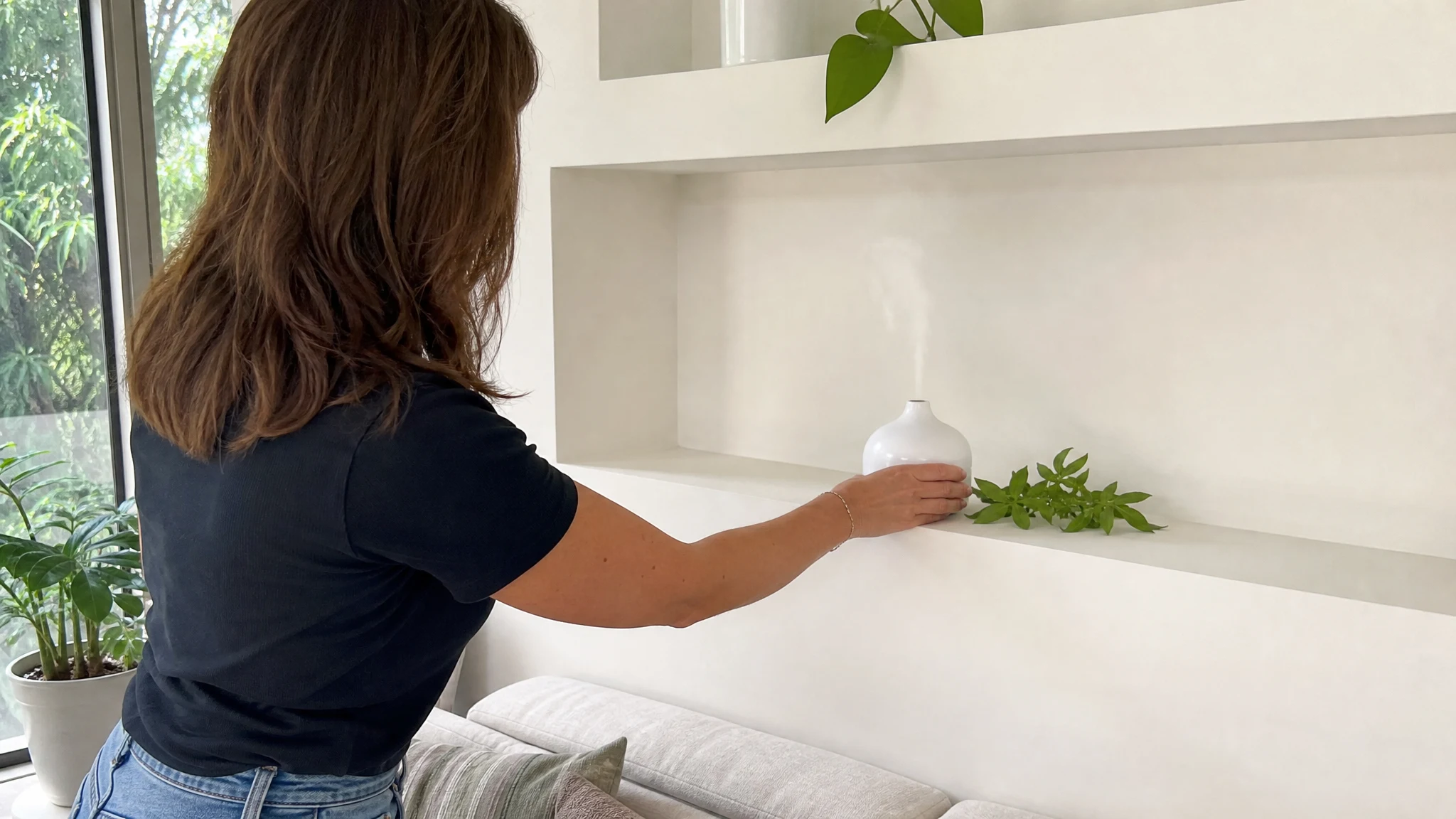
A bath is as much about the room as the water, so give the scent a little help. Run the water first, keep the room warm, and add the small measure of finished blend only once the tub is full. You will notice a very faint lemon rising with the steam, never loud, and that restraint is the point. If you cannot smell it from across the room, you have probably got it about right for a bath this size.
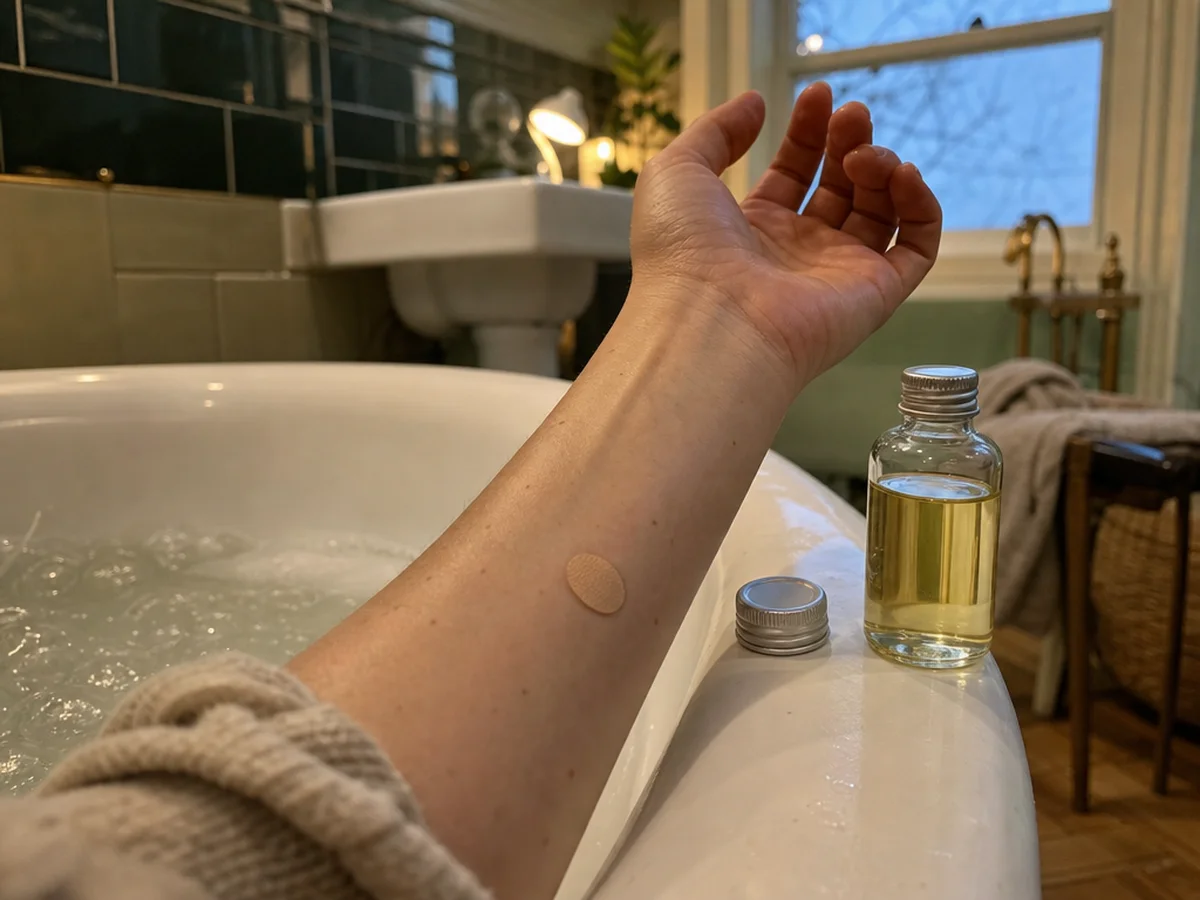
Keep a towel and a mat within reach before you step in, because oils make surfaces slippery, and give yourself a minute afterwards before standing up.
Who should skip it
- Anyone with eczema, broken or reactive skin: ask a dermatologist or pharmacist first.
- Children, and anyone pregnant or breastfeeding: keep the oil away from children and pets, and check with a pediatrician or OB/GYN or midwife; our articles on children and pregnancy give background.
- Anyone heading into strong sun right after: verbena can be mildly photosensitising, so save the bath for the evening.
IFRA's verbena standard says verbena oils should not be used as a fragrance ingredient, so treat this as a personal recipe and not something to sell. The safety guide explains why.
Make it a small ritual
We suggest keeping the bottle with your bath things and labelling it clearly with the date, the percentage and the word "bath". A small, tidy routine makes it easy to remember how you made it. It also keeps the oil from becoming one of those mystery bottles that nobody can identify six months later.
Storage and patch test
Store the bottle cool and dark, away from children and pets, and discard it at any rancid or off smell. Before bathing, put a little of the finished blend on your inner forearm for a day and stop at any redness or itching. A patch test only checks that one kind of reaction, so keep skin out of strong light afterwards. For more on dilution see our skin basics, and for a leave-on version try the body oil.
A bath oil like this is meant to be small, gentle and personal: weigh it, keep it at 0.5%, and enjoy the quiet lemon scent.
Lemon Verbena Essential Oil
Lemon Verbena Essential Oil from our own shop, in sizes from 0.5 oz to bulk.
From $12.99
Shop Now →Sources & Further Reading
- Bath safety - Tisserand Institute.
- Emollients - NHS.
- Verbena, Lemon - Organic EO | Eden Botanicals.
- Verbena oil and absolute (Lippia citriodora Kunth.), IFRA Standard, 2020 (Amendment 49).
- Citral, IFRA Standard, 2020 (Amendment 49).
- Chemical Profiling, Sensory Qualities, and Bioactivities of Essential Oils Obtained from Aloysia citrodora and Bursera graveolens Ecuadorian Plants Against the Mosquito Aedes albopictus (Skuse) (Diptera: Culicidae), Parichanon et al., Insects, 2025.