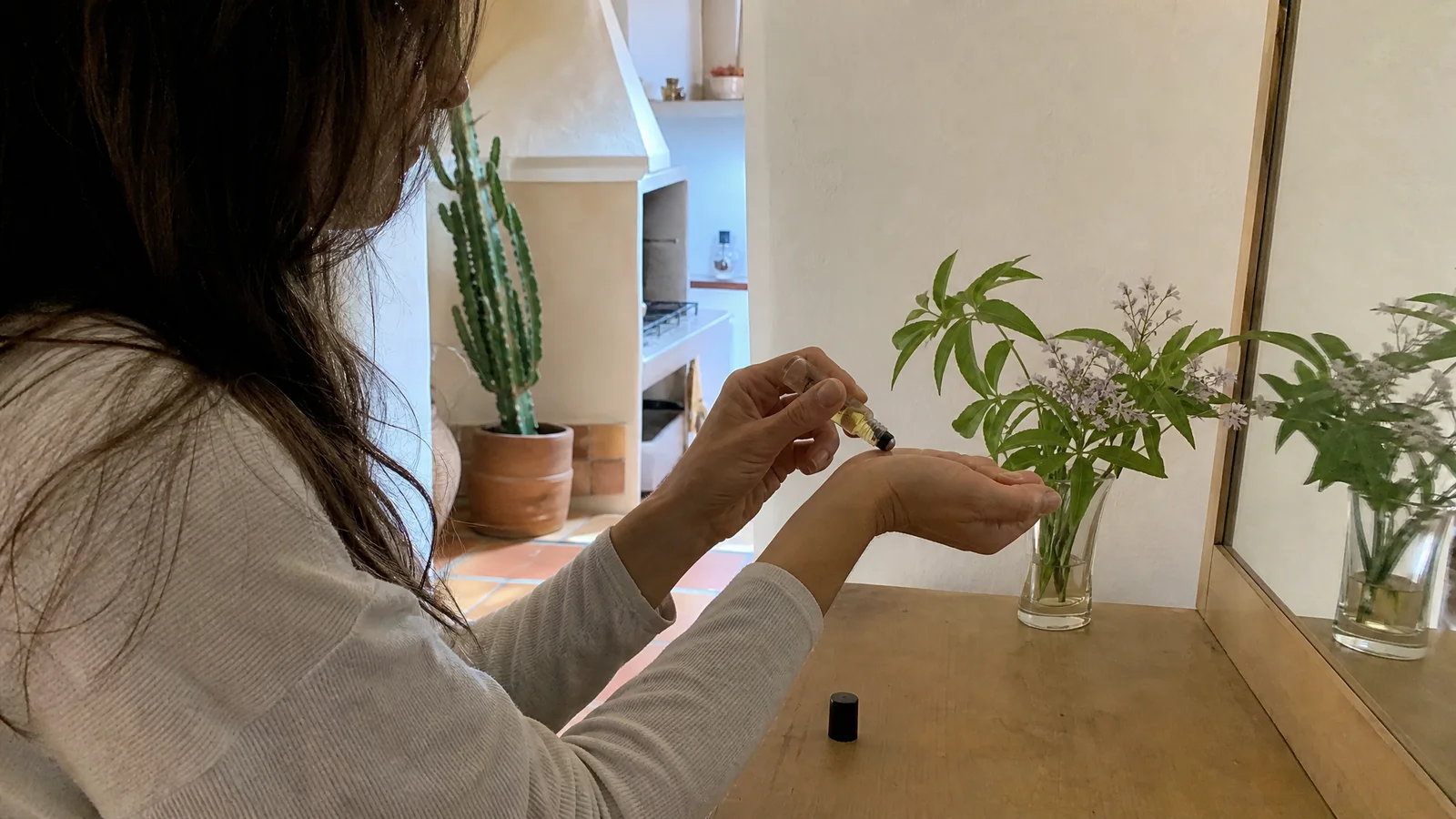
Lemon Verbena Rollerball: What IFRA Means for Your Recipe
Few scents say "fresh summer morning" the way lemon verbena does: bright, sweet, lemony, with a soft herbal heart. It is no surprise that a rollerball is one of the first projects people picture. It is also one of the few projects where the rulebook speaks up before the recipe does, so we would rather walk through it with you first.
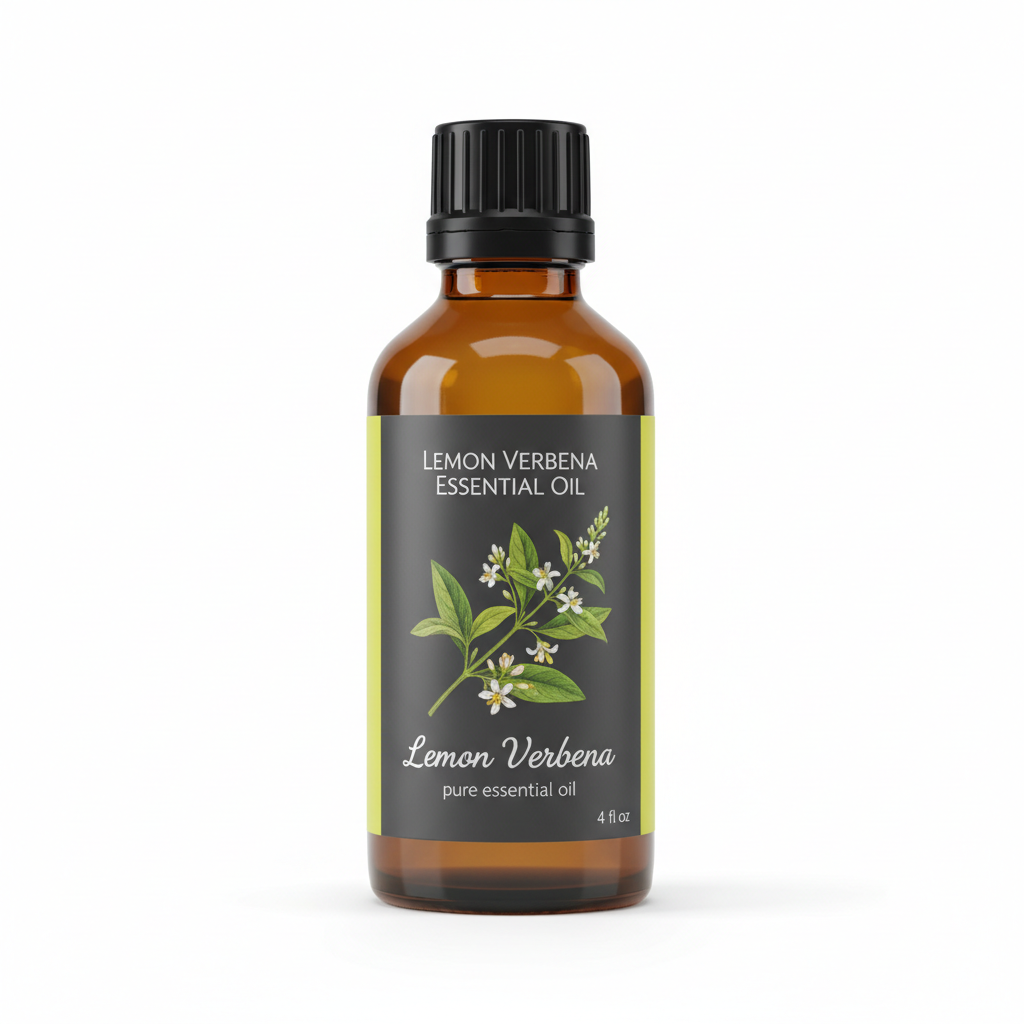
Lemon Verbena Essential Oil
Our own Lemon Verbena Essential Oil, in sizes from 0.5 oz to bulk.
From $12.99
Shop Now →What the rulebook says about the oil
IFRA, the fragrance industry's standards body, has a Standard on verbena oil that says oils from Lippia citriodora (the older name for our plant) "should not be used as a fragrance ingredient, based on its sensitizing and phototoxic potential." Its expert panel goes further and recommends not using verbena oil in any finished product. The category limits in that document apply to the absolute, a different material, and not to the steam-distilled oil we sell. The EU reached the same place in 2009, keeping verbena essential oils other than the absolute off the list of permitted fragrance ingredients in cosmetics.
So the honest answer to "how much can I put in a perfume?" is that no authority gives a green-light figure for this oil on skin. Our own dilution guidance for skin is 0.5% to 2% in a carrier oil with a patch test first, and for a leave-on perfume we would stay at the bottom of that range or below, for the reasons that follow. We would not call 2% safe.
The citral ceiling, worked out
There is one number we can calculate. Lemon verbena's lemon character comes largely from citral, the pair of molecules geranial and neral. IFRA has a separate Standard that caps citral in finished products, and its guidance places solid perfume and all types of fine fragrance in Category 4, with a limit of 0.60% citral.
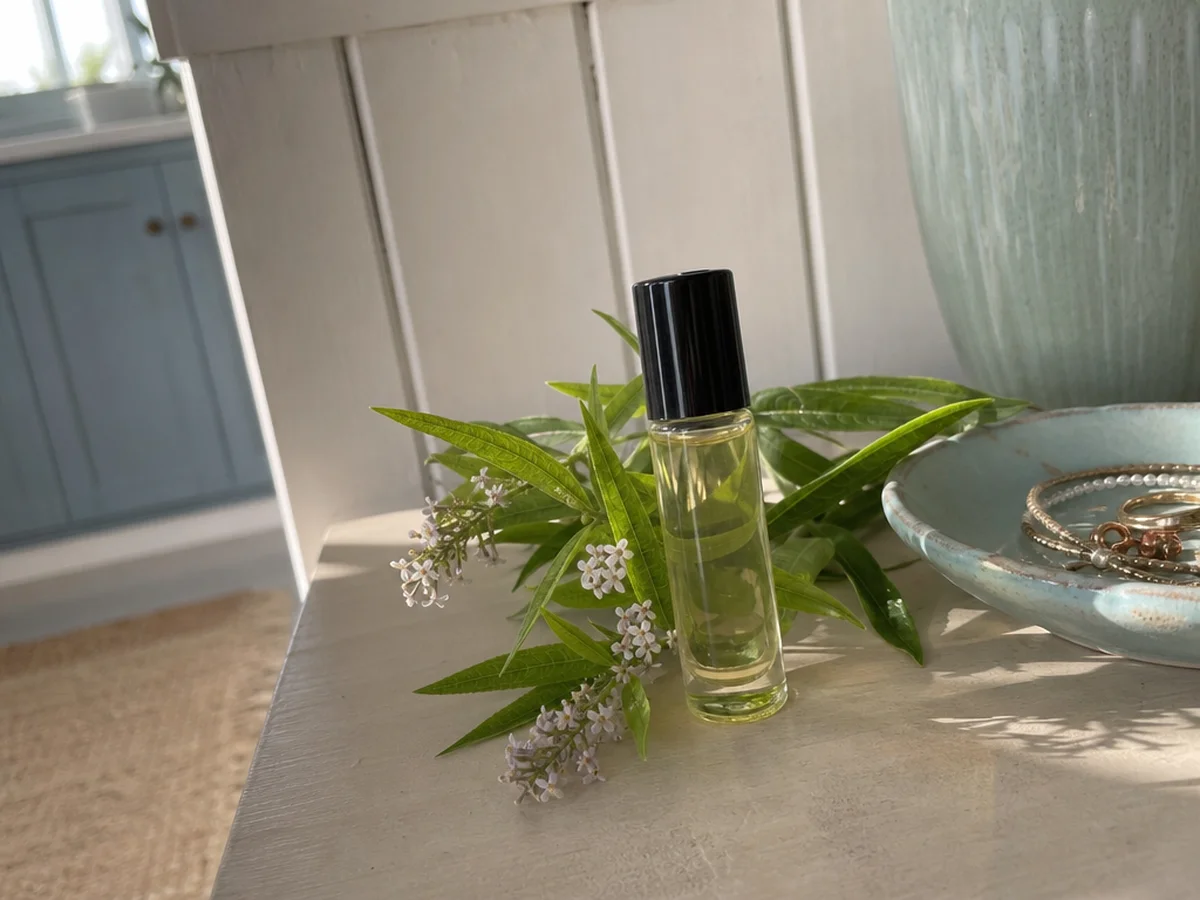
How much oil that allows depends on how much citral the oil carries, and published oils vary. An Ecuadorian oil in one study was 47.8% geranial and neral together, while dried Portuguese leaf gave 34.0% by classic hydrodistillation and 37.3% by a microwave method. The Certificate of Analysis we publish for one batch lists density and refractive index, so the citral share of our oil is something to ask us about in writing before you rely on it. Using the density on that certificate (0.869 g/ml) and the rough convention of 20 drops per ml, here is the arithmetic for a 10 g roller:
| Citral share of the oil | Most oil at 0.60% citral | In a 10 g roller | Roughly |
|---|---|---|---|
| 47.8% | 1.26% | 0.126 g | 3 drops |
| 37.3% | 1.61% | 0.161 g | 4 drops |
| 34.0% | 1.76% | 0.176 g | 4 drops |
These are example oils, not ours, and droppers vary, so a scale that reads to 0.01 g beats counting. The useful lesson is how quickly drops add up: eight drops in a 10 g roller is about 3.5% oil, roughly double the ceiling on citral alone.
Why the ceiling is only part of the picture
The citral cap covers one component. The verbena Standard rests on sensitization and phototoxicity, and a roller lands on neck and wrists, the skin that meets daylight. We say plainly that our oil should be kept out of strong sun after skin use, and our skin article covers the detail. Anyone with reactive skin, eczema or a history of fragrance reactions should ask a dermatologist before wearing a verbena roller, and anyone who is pregnant should ask an OB/GYN or midwife; our pregnancy article explains what the sources say.
What a rollerball is really for
The appeal of a roller is how personal it feels. You carry it in a bag, touch it to a wrist and get a small private cloud of scent. With a bright top note like lemon verbena, the cloud arrives quickly and lifts away within a short while, which is part of its charm. That also means a little goes a very long way, and more oil does not make it last longer, only louder.
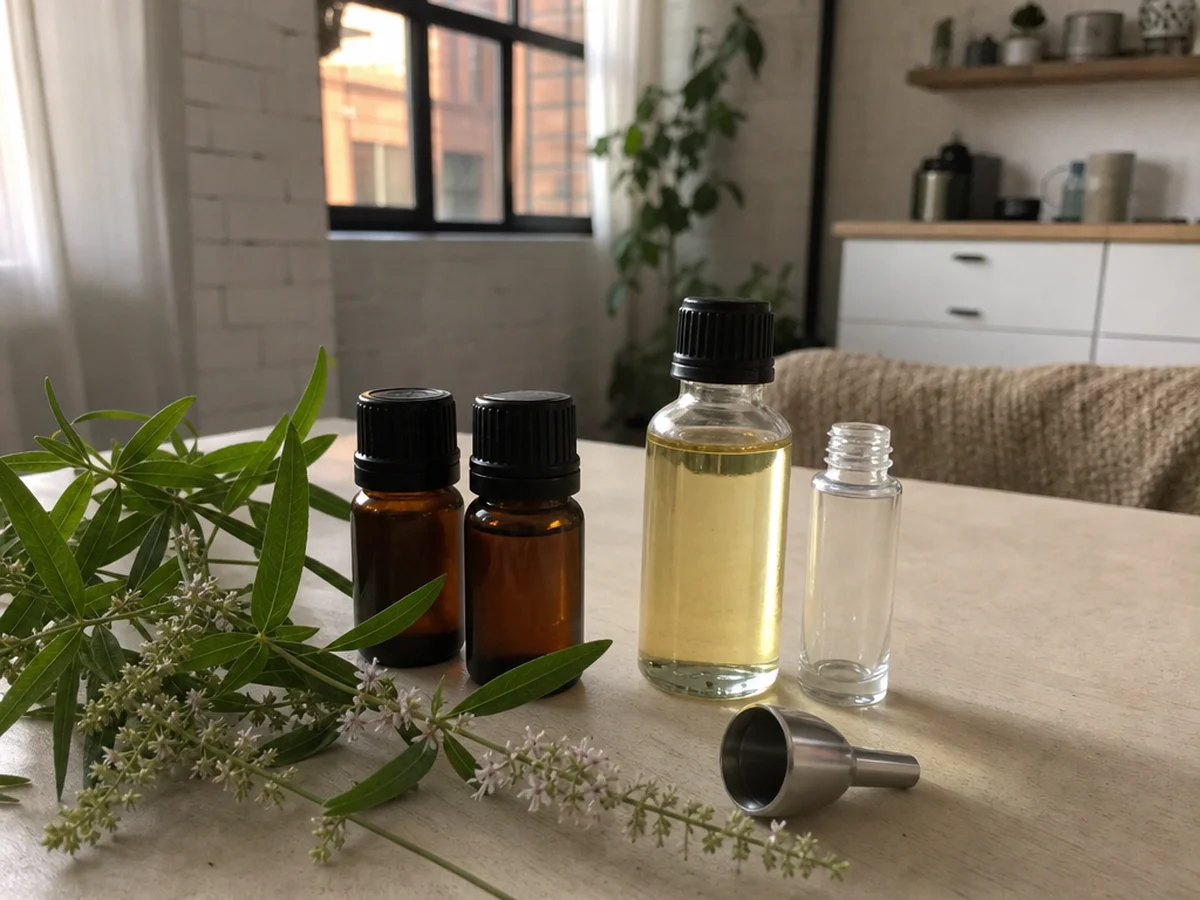
It is worth choosing the roller bottle with some care, too. Clean glass with a smooth ball and a snug cap keeps things tidy in a bag, and a small size encourages you to make a little at a time. Label it with the date and the dilution before you do anything else, because a plain clear roller looks the same as every other one in the drawer.
If you decide to go ahead
This is a formulation built from the sources above, not a standard. Choose an oil-only base such as jojoba or fractionated coconut from a craft or cosmetic supply shop, since we sell only lemon verbena oil. Work by weight, patch test on the inner forearm and wait a day, and keep the oil share at or below the lowest row of the table. Staying near our 0.5% (about 0.05 g in 10 g) is the gentlest starting point and still gives a lemony veil, because the scent is bright and carries well.
A pleasant alternative is to scent something that does not touch your skin. A drop on a cotton pad tucked into a scarf drawer, or on a small wooden bead in a bag, gives you the same lift with none of the questions.
If you simply love the aroma, there are other ways to enjoy it. Our diffusing guide shows how to scent a room, and the IFRA article reads the standards in full. If you want a lemon-verbena-style perfume for skin, a finished perfume from a perfumery is made to those rules, and a roller can wait until you have read them.
Lemon Verbena Essential Oil
Lemon Verbena Essential Oil from our own shop, in sizes from 0.5 oz to bulk.
From $12.99
Shop Now →Sources & Further Reading
- IFRA Standard: Verbena oil and absolute (Lippia citriodora Kunth.), 2020 (Amendment 49)
- IFRA Standard: Citral, 2020 (Amendment 49)
- Guidance for the Use of IFRA Standards, 30 June 2023
- Commission Directive 2009/164/EU of 22 December 2009 amending, for the purpose of adaptation to technical progress, Annexes II and III to Council Directive 76/768/EEC concerning cosmetic products
- Chemical Profiling, Sensory Qualities, and Bioactivities of Essential Oils Obtained from Aloysia citrodora and Bursera graveolens Ecuadorian Plants Against the Mosquito Aedes albopictus (Skuse) (Diptera: Culicidae), Insects, 2025
- Volatile Compounds and Biological Activity of the Essential Oil of Aloysia citrodora Paláu: Comparison of Hydrodistillation and Microwave-Assisted Hydrodistillation, Molecules, 2023