Lemon Verbena Oil in Homemade Cleaner: How Much?
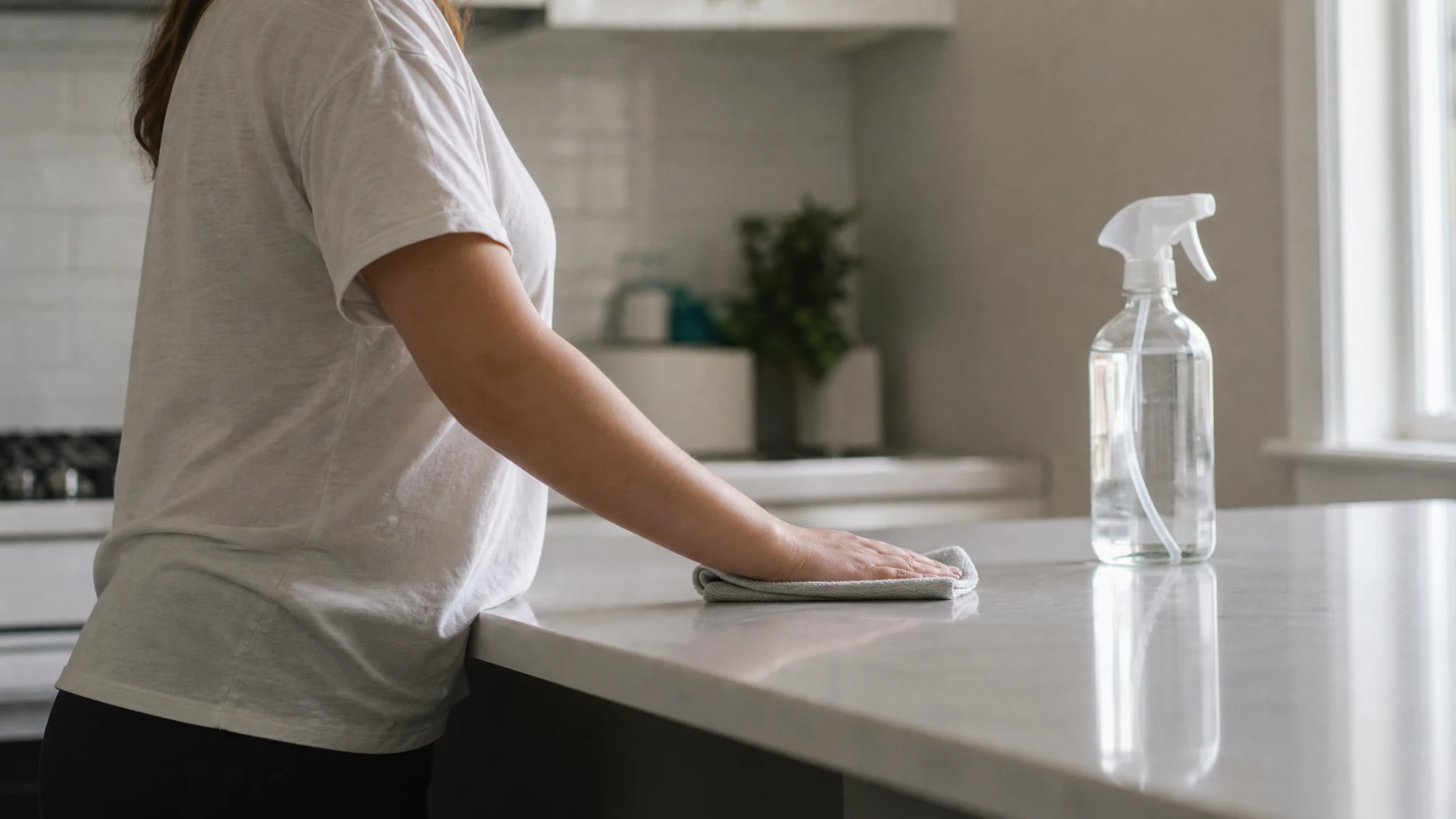
Lemon verbena oil is not the workhorse of the cleaning cupboard, and it does not need to be. What it does beautifully is make a cleaner you were going to mix anyway smell like a sunny kitchen. Treat it as the finishing touch, not the cleaning agent, and a little goes a long way.
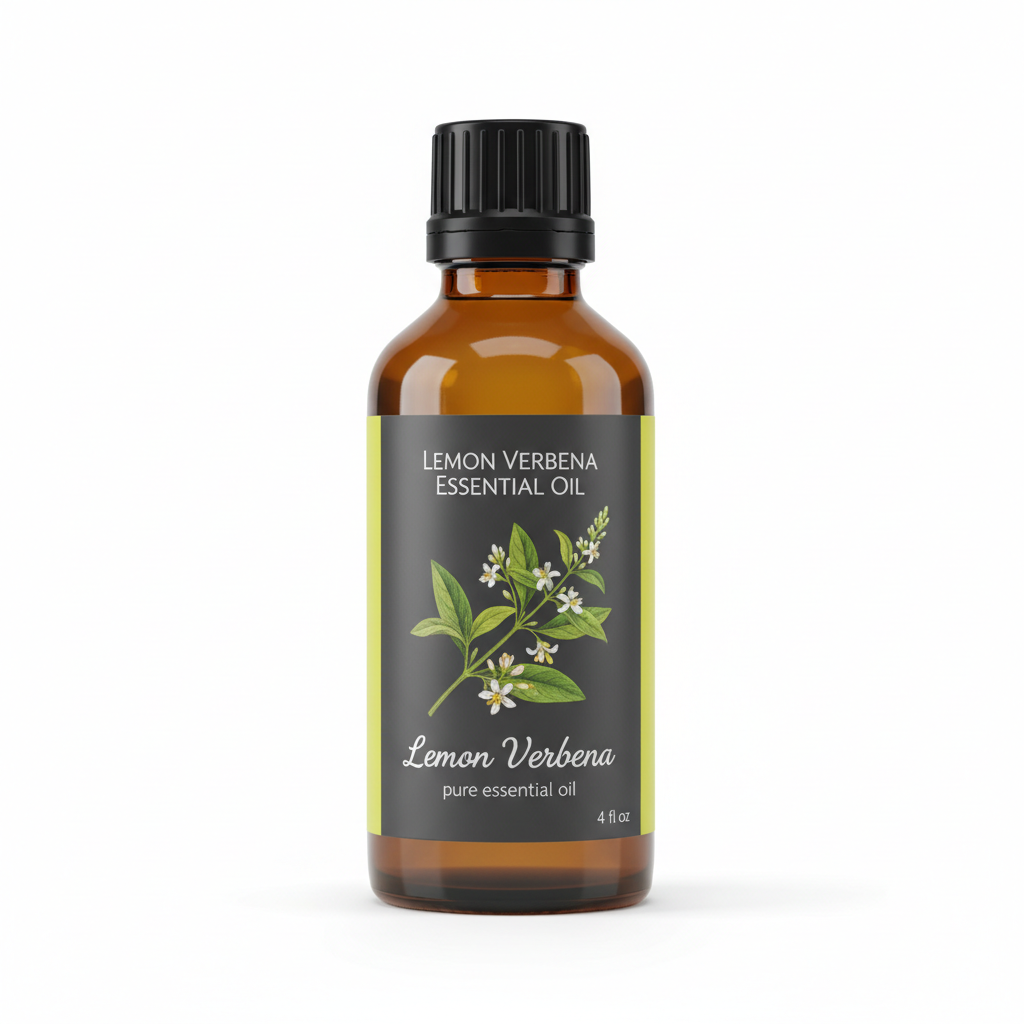
Lemon Verbena Essential Oil
Our own Lemon Verbena Essential Oil, in sizes from 0.5 oz to bulk.
From $12.99
Shop Now →How little you need
A 500 ml spray bottle holds about 500 g of liquid. Scent level is a matter of taste, since no authority sets one for a household cleaner. Using the density on the Certificate of Analysis we publish for one batch (0.869) and the rough convention of 20 drops per ml, here is the arithmetic:
| Oil in the bottle | Grams | Drops, about | Bottles per 1 oz |
|---|---|---|---|
| 0.1% | 0.5 | 12 | about 51 |
| 0.2% | 1.0 | 23 | about 26 |
| 0.5% | 2.5 | 58 | about 10 |
An ounce stretches a long way at scent-only levels. If you want a big, loud lemon scent through a whole house, another lemon-scented oil from a craft or soap supply shop may suit the job; we sell only lemon verbena, and the uses guide shows the smaller jobs where its refinement shines.
Getting oil to stay in water
Essential oil floats on water, and shaking only scatters it into droplets that find each other again. A solubilizer such as polysorbate 20 holds the oil in suspension. We do not sell it, and we have found no authority that sets a ratio, so ask the supplier what they recommend. As an illustration only, a 1:1 ratio by weight for 0.5 g of oil would be 0.5 g of polysorbate, and a 4:1 ratio would be 2 g. Mix oil and solubilizer first, stir until uniform, then add water slowly. A cloudy bottle tells you the oil is not held and the ratio needs to rise. Start with a small test bottle, and weigh on a scale that reads to 0.1 g.
Labelling and storing the bottle
A homemade spray should never be anonymous. Write the contents, the date and the words "not for drinking" on a strip of tape and stick it on the bottle. Keep it away from food, children and pets, in a cupboard rather than on a windowsill, because heat and light are hard on both the scent and the mixture.
Choosing a base
Warm water and mild dish detergent is the easy, stone-friendly option. The Natural Stone Institute recommends cleaning stone with "a neutral cleaner, stone soap, or a mild liquid dishwashing detergent and warm water." A teaspoon of detergent in about 495 ml of warm water, with the premixed oil, is a sensible starting point (our choice, since no source gives a ratio; use less if it foams or streaks). Try a hidden corner first and look at it dry.
Vinegar and water is popular, with two rules. First, the same Natural Stone Institute page says products containing lemon, vinegar or other acids may dull or etch calcareous stones, so keep it off stone unless you know yours is not one. Second, never mix vinegar with bleach: knowledge gaps about safely preparing cleaning solutions were among the findings of a 2020 CDC survey of 502 US adults, a good reason to keep one product per bottle and label it. As a matter of chemistry rather than a sourced test, soap is alkaline and vinegar acidic, so combining a soap-based cleaner with vinegar works against both. Pick one base per bottle.
Scent as the reward
There is something cheerful about wiping a counter and having the air fill with a soft lemon. The scent does not make the surface cleaner, but it does make the job feel finished, and we think that is a perfectly good reason to add it. Spray onto the cloth, not the air, and notice how the lemon seems to bloom for a moment as the surface dries and then settles into the background.
If you want the scent to stay a little longer in one room, try wiping a small area, such as a window sill, and leave the rest alone. A little concentrated scent in one place often goes further than a lot spread over everything.
What a scented spray is, and is not
The oil gives scent and the base does the cleaning. The EPA registers disinfectants and approves their label language, and it states that a product may not claim efficacy against particular pathogens without the agency having reviewed data. So when a surface really needs disinfecting, reach for a product with an EPA registration number and follow its directions; our lab-dish evidence article explains why laboratory numbers about an oil do not translate into a cleaning claim.
A few practical habits keep it pleasant. Water-based mixtures can grow microbes, so we would make one bottle at a time and discard it if it turns cloudy or smells off. Keep sprayed rooms ventilated until they dry. The oil is concentrated, so keep it from eyes, children and pets, and keep skin treated with it out of strong sun for a while, as our guidance says. Our pets article and safety guide cover the rest.
Used this way, a few drops make wiping the counter feel a little more like an occasion.
Lemon Verbena Essential Oil
Lemon Verbena Essential Oil from our own shop, in sizes from 0.5 oz to bulk.
From $12.99
Shop Now →