Lemon Verbena Oil in the Lab: Why the Numbers Disagree
Here is a puzzle that tells you most of what you need to know about lemon verbena oil in the lab. One research team found that the oil stopped Staphylococcus aureus from growing in a dish at 2.5 micrograms per millilitre. Another team, working with the same species, needed somewhere between 3.5 and 6.4 milligrams per millilitre for the same bacterium. That is more than a thousand times apart, and both papers are in peer-reviewed journals.
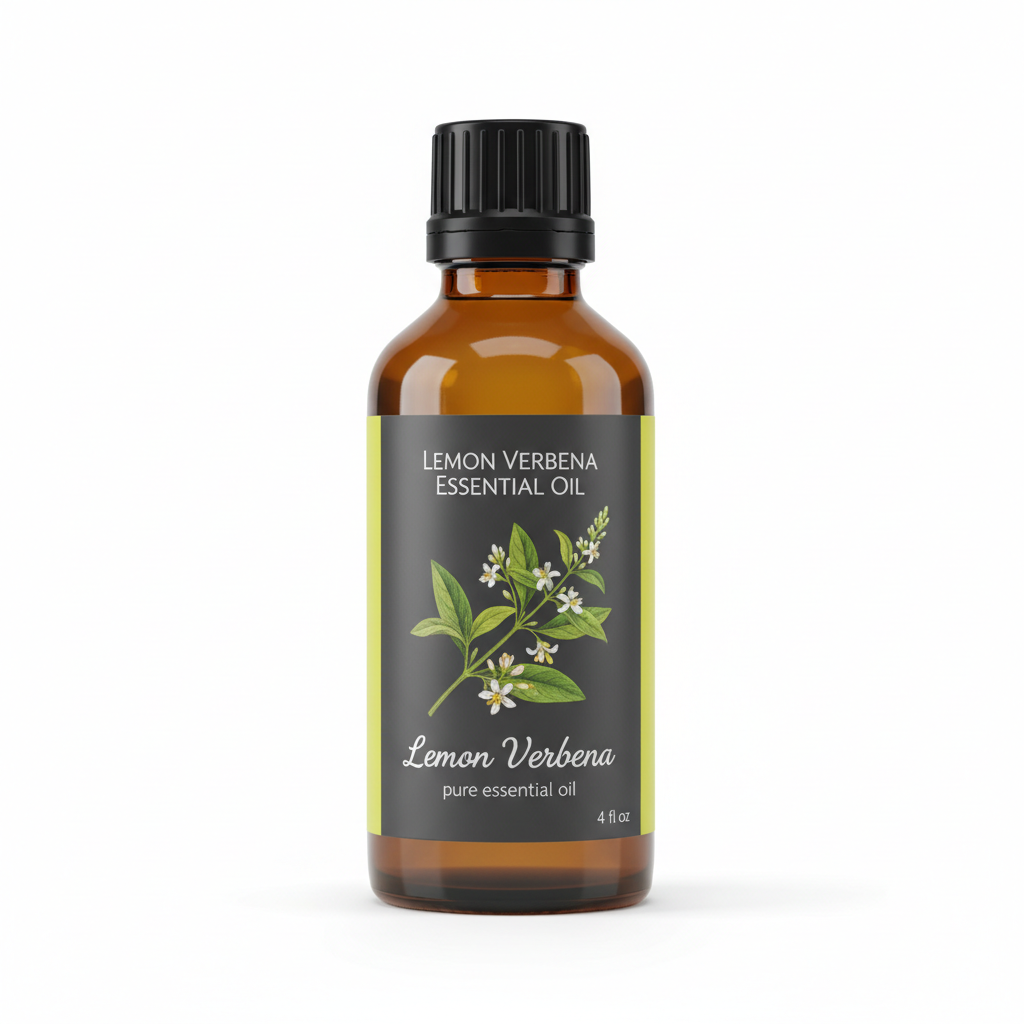
Lemon Verbena Essential Oil
Our own Lemon Verbena Essential Oil, in sizes from 0.5 oz to bulk.
From $12.99
Shop Now →What a MIC is
The number behind these results is the minimum inhibitory concentration, or MIC: the lowest concentration in a series of dilutions at which no growth is visible. Both teams used the same general approach, a 96-well plate with two-fold dilutions of oil in broth, incubated overnight and read by eye. Papers mix units, so one handy conversion helps: 1 milligram per millilitre of a water-based broth is about 0.1%.
Why a bottle is not a dish
Anyone who has put a few drops of oil into a glass of water has already seen the first problem: oil does not simply dissolve. It beads up, floats and drifts to the edge. In a lab, researchers use a solvent to coax it into the broth, and that step alone changes how the oil behaves. Keep that picture in mind when you read a dramatic number. A dish is a tidy, sealed little world, and a kitchen counter, a bathroom shelf or a diffuser is nothing like it.
Two papers, two very different oils
In Morocco, researchers distilled leaf from five sites and tested three standard bacterial strains. The oils produced modest clear zones around discs and MICs of roughly 2.8 to 8.4 mg/ml for E. coli and 3.5 to 6.4 mg/ml for S. aureus, while Pseudomonas aeruginosa was not affected at all (Oukerrou et al., 2017). These oils had no geranial detected, and were led by heavier compounds such as caryophyllene oxide and spathulenol.
In the Palestinian study, two leaf oils with geranial near 45% reported an MIC of 2.5 µg/ml against a drug-resistant S. aureus strain and plain S. aureus, and low values against Candida albicans, while E. coli and P. aeruginosa were not inhibited (Jaradat et al., 2021). The oils were dissolved in DMSO, a solvent, before dilution.
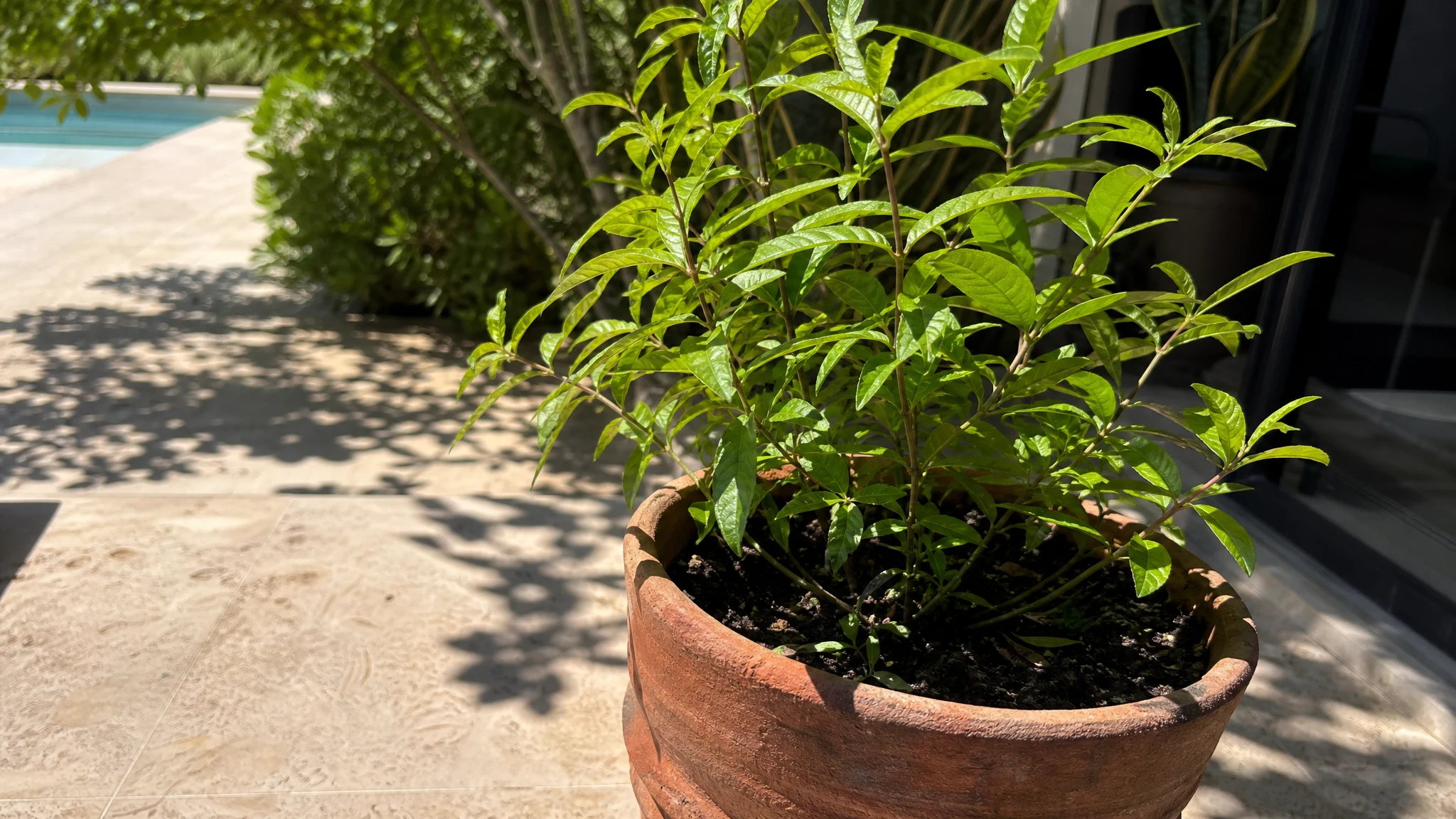
Nothing in either paper isolates why the results differ. The oils themselves differ (a citral-rich oil in one, a sesquiterpene-rich one in the other), and so do the strains, the solvent, the endpoint and the lab. Our reading is modest: in these assays, activity depended on the oil, the organism and the laboratory, and a thousand-fold range is the real finding. It is a useful reminder, too, that "lemon verbena oil" is not one fixed material, as our look at the plant and its names shows.
From a dish to a bottle
Converting these numbers is easy, which is exactly why it misleads. A MIC of 5 mg/ml is 0.5%, and 0.5% is the bottom of the 0.5% to 2% carrier-oil range we suggest for skin. It is tempting to conclude that a product at that strength must do something similar. It does not follow. A MIC describes a closed well of broth, in which the oil is dispersed with a solvent, cannot evaporate, meets a standardised load of bacteria and is read after a night. Oil sitting in a carrier on your skin or on a countertop meets none of those conditions. Reasoning from the design, the sensible use of a MIC is to compare oils inside one laboratory, not to set a dose.
It also helps to remember what the oil in our bottle is. The Certificate of Analysis we publish for one batch records appearance, smell, a relative density of 0.869 and a refractive index of 1.472. It carries no constituent profile, so there is no basis for saying which of these two oils ours resembles, and we make no antimicrobial claim for it. We sell it for its aroma and for craft work.
What we take from it as people who love the oil
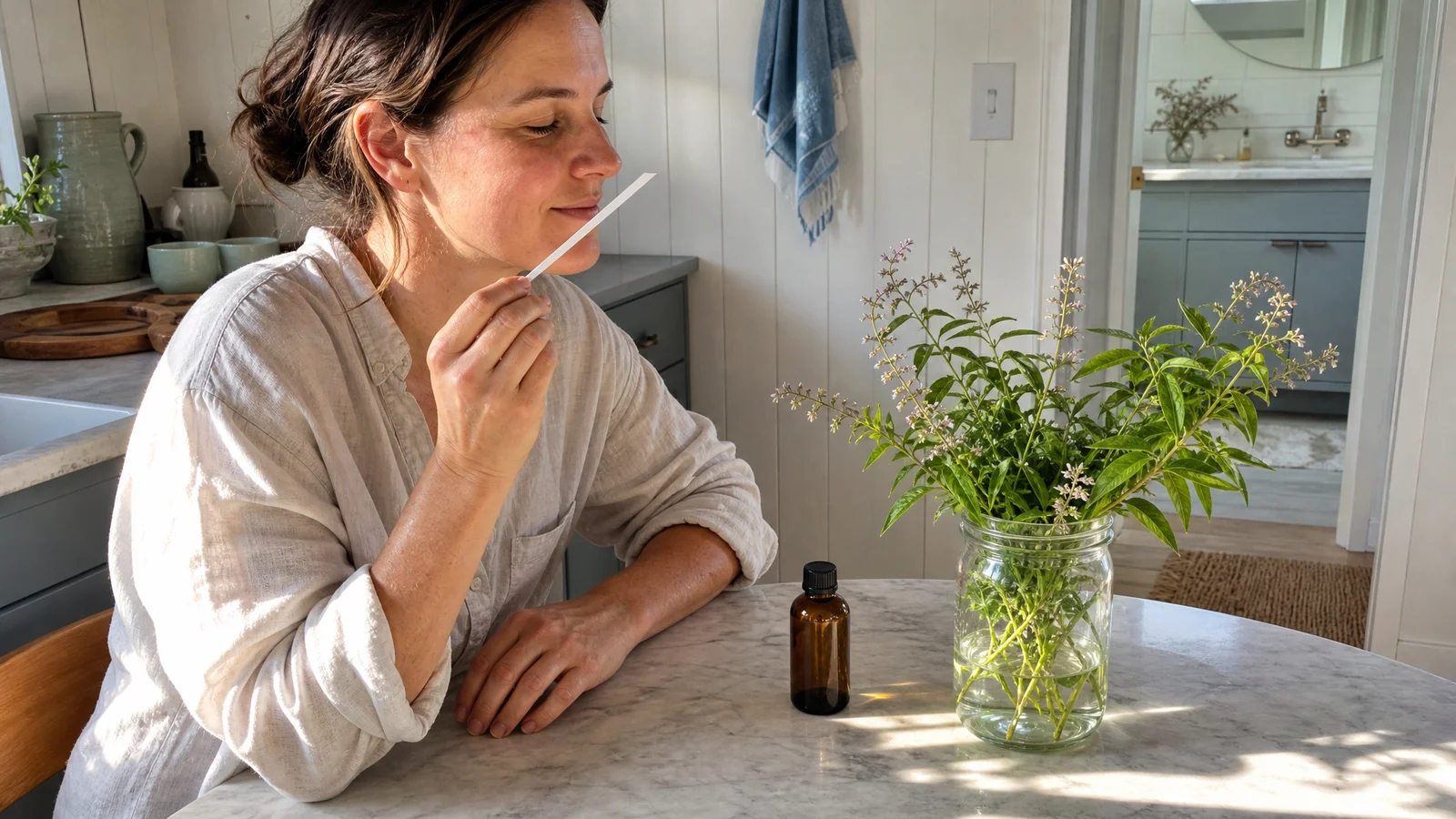
Honestly, the lesson we take is a happy one. A plant that can give such different oils is a plant with a lot of character, and the scent is where that character shows. When you open your own bottle, you are smelling a particular oil from a particular place, and that is part of the pleasure. Spend a little time with it: note the lemon, note the green leafy edge, and see how it changes over a few minutes. That kind of attention tells you more about what is in your hand than any single number could.
Where regulators draw the line
For surfaces, the EPA registers disinfectants and approves their label wording, and a product cannot claim to work against specific germs unless EPA has reviewed supporting data (EPA). For the body, FDA decides whether something is a cosmetic or a drug by its intended use, which includes labels, advertising and online claims (FDA). That is why a fragrance oil is sold as a fragrance oil. If a surface really needs disinfecting, reach for an EPA-registered product and follow its label, and for a wound or a rash that is spreading, a physician or pharmacist is the person to ask.
For more on this plant's research, our summary of what the studies tested and the piece on extract versus oil cover the neighbouring ground, and our cleaning formulations are scent-only. Two good papers pointing in different directions is a perfectly ordinary state of affairs in natural-product science, and a fair summary of where the lab work stands.
Lemon Verbena Essential Oil
Lemon Verbena Essential Oil from our own shop, in sizes from 0.5 oz to bulk.
From $12.99
Shop Now →Sources & Further Reading
- Oukerrou MA et al., 2017. Chemical Composition and Cytotoxic and Antibacterial Activities of the Essential Oil of Aloysia citriodora Palau Grown in Morocco. Advances in Pharmacological Sciences. PMC5485486
- Jaradat N et al., 2021. Spectral characterization, antioxidant, antimicrobial, cytotoxic, and cyclooxygenase inhibitory activities of Aloysia citriodora essential oils collected from two Palestinian regions. BMC Complementary Medicine and Therapies. PMC8130314
- US EPA. Selected EPA-Registered Disinfectants. epa.gov
- US FDA. Is It a Cosmetic, a Drug, or Both? (Or Is It Soap?). fda.gov