
Buying Lemon Verbena Essential Oil: The Complete Quality Guide
Why Quality Matters More With Lemon Verbena Than Almost Any Other Oil
Lemon verbena (Lippia citriodora, also listed as Aloysia citrodora or Aloysia triphylla) is one of the most coveted aromatic botanicals in the world. The oil distilled from its leaves has a scent profile that perfumers have chased for centuries: a true, complex, green-lemony brightness that synthetic citrus materials struggle to replicate convincingly. That complexity is also what makes it expensive to produce, difficult to standardize, and easy to adulterate.
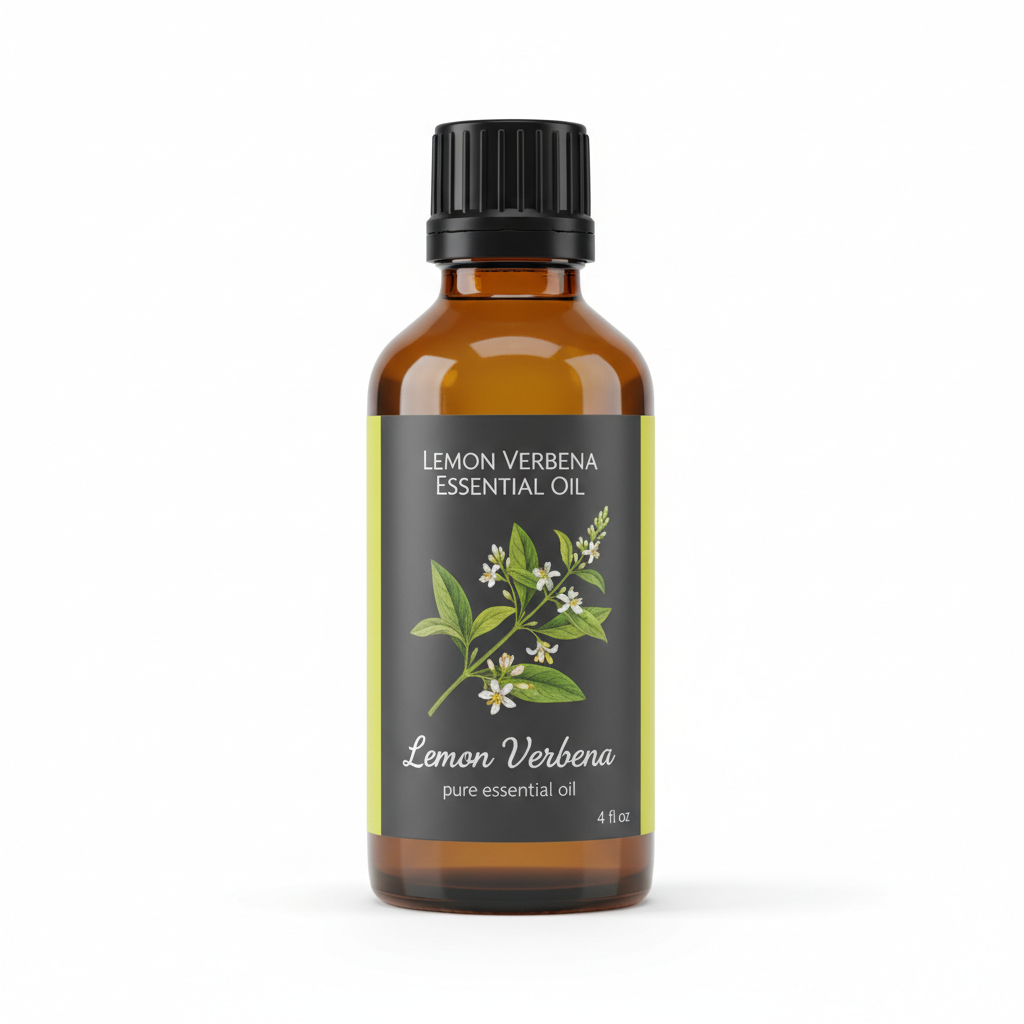
Lemon Verbena Essential Oil
Our own Lemon Verbena Essential Oil, in sizes from 0.5 oz to bulk.
From $12.99
Shop Now →For anyone looking to buy lemon verbena essential oil, the quality question is not a secondary consideration. It is the primary one. This is a market where substitution is rampant, where labeling is frequently misleading, and where even well-meaning retailers sometimes stock products that are not what the label claims. Understanding why matters starts with understanding what the oil actually is.
The Botanical and Its Yield Problem
Lemon verbena is a woody shrub native to South America, cultivated extensively in Morocco, France, Spain, Algeria, and parts of South America for both culinary and aromatic purposes. The essential oil is steam-distilled from the fresh or partially dried leaves and flowering tops. The yield is famously low. Most sources cite figures ranging from 0.2% to 0.5%, meaning you need somewhere between 200 and 500 kilograms of plant material to produce a single kilogram of oil.
That yield figure tells you everything you need to know about why lemon verbena oil is so expensive. The plant is labor-intensive to harvest. The distillation is delicate. The oil's top notes are volatile and can degrade quickly if processing is not careful. By the time a kilogram of genuine oil reaches a supplier's warehouse, significant cost has accumulated at every stage of the supply chain.
Why the Market Is Particularly Vulnerable
High price creates strong incentive for substitution. The lemon verbena essential oil market has documented adulteration problems going back decades. Academic and industry analyses have repeatedly found that a significant proportion of commercially available oils labeled as lemon verbena contain little to no genuine Lippia citriodora material. Some contain none at all.
This is not always fraud in the conventional sense. Sometimes a supplier genuinely does not know what they received from a broker. Sometimes a blend is assembled in good faith but misrepresented at the label level. The end result for the buyer, however, is the same: you pay premium prices for something that is not what you wanted.
Lemon verbena oil quality is therefore a topic that rewards careful study. The sections that follow give you the tools to navigate this market with confidence.
The Adulteration Landscape: What You Are Really Buying
Before you can evaluate any product, you need to know what the alternatives look like. There are three primary substitutes used in the market, each with a different profile and a different set of red flags.
Lemongrass Oil: The Most Common Swap
Lemongrass (Cymbopogon citratus or Cymbopogon flexuosus) is one of the least expensive essential oils in the world. It is high in citral, the aldehyde compound responsible for a sharp, bright, lemony scent. Because it smells broadly citrus-lemony to an untrained nose, it is the most frequently used substitution in products labeled as lemon verbena.
The difference, once you know what to look for, is significant. Lemongrass smells coarser, more one-dimensional, and has a slightly grassy or earthy undertone that is foreign to genuine lemon verbena. Verbena has a more refined, multi-layered citrus character with subtle floral and almost tea-like nuances. Side by side, the distinction is clear. But most buyers do not have a reference sample for comparison.
For a thorough comparison of these two oils, including the key chemical markers that distinguish them, see the dedicated guide on lemon verbena versus lemongrass oil.
Litsea Cubeba: The Sophisticated Adulterant
Litsea cubeba (Litsea cubeba, sometimes called May Chang) is a step up in sophistication. Its oil is also high in citral but has a cleaner, brighter, more refined quality than lemongrass. Some descriptions of litsea cubeba note a pleasant fruitiness that can, in small concentrations or blended with minor quantities of genuine verbena, pass a casual sniff test.
This makes it a preferred adulterant for higher-end deception. A seller can blend a small quantity of genuine lemon verbena oil with a larger proportion of litsea cubeba, label the product as verbena, and present something that smells reasonably convincing to most buyers.
Gas chromatography-mass spectrometry (GC/MS) analysis is the reliable way to catch this. The chemical fingerprint of litsea cubeba differs from Lippia citriodora in ways that are clear to a trained analyst. The lemon verbena versus litsea cubeba comparison guide covers the key markers in detail.
Synthetic Citral and Reconstituted Oils
At the lower end of the market, some products are simply reconstituted oils: a carrier base with synthetic citral and perhaps a few other aromatic components added to approximate the scent profile of lemon verbena. These products are not essential oils in any meaningful sense, but they may be labeled as such. Alternatively, a natural carrier such as jojoba may be used and the blend sold as a "lemon verbena oil" without adequate disclosure.
The tell-tale signs here are a flat, one-note scent that does not evolve on a test strip, an absence of any botanical documentation, and pricing that bears no relationship to the genuine article.
Fragrance Oils: A Different Category Entirely
Fragrance oils labeled as lemon verbena are a separate category from essential oils, and they deserve their own consideration. A lemon verbena fragrance oil may be a beautifully crafted aromatic composition, appropriate for candle-making, bath products, or room fragrance. But it is not an essential oil and should not be purchased or used as one.
The confusion between the two is common enough that it warrants a full article. If you are unsure whether what you are looking at is a genuine distillate or a synthetic fragrance composition, the guide on lemon verbena essential oil versus verbena fragrance oil will clarify the distinction.
Reading the Label Like a Specialist
A product label is your first quality screen. It does not guarantee quality on its own, but absence of key information is a reliable warning sign. Here is what a credible label for pure lemon verbena oil should contain.
Latin Name: Non-Negotiable
Every genuine essential oil label should carry the botanical Latin name of the source plant. For lemon verbena, you are looking for Lippia citriodora or Aloysia citrodora (both names refer to the same plant; taxonomic reclassification accounts for the variation). You may also see Aloysia triphylla. All three are acceptable.
If a label says only "Lemon Verbena Oil" or "Verbena Essential Oil" without a Latin name, treat that as a significant red flag. No reputable essential oil supplier omits this information.
Country of Origin
The primary producing countries for commercial lemon verbena oil are Morocco, France, Algeria, Spain, and parts of South America, particularly Argentina and Chile. Moroccan-origin oil is the most widely available commercially and tends to be the benchmark for comparison.
Country of origin matters because growing conditions, climate, soil, and agricultural practices affect chemical composition and therefore scent character. A label that specifies country of origin signals that the supplier has traceability into their supply chain. One that does not should prompt questions.
Extraction Method
Genuine lemon verbena essential oil is produced by steam distillation of the leaves and flowering tops. If a label specifies cold-press, CO2 extraction, or solvent extraction, that is not necessarily fraudulent, but it is unusual for this oil and warrants clarification from the supplier. Steam distillation is the standard.
Plant Part Used
Some suppliers specify whether the oil was distilled from leaves only or from leaves and flowering tops. This distinction affects the scent profile: oils from flowering tops tend to have a more pronounced floral nuance. Either is legitimate. The key point is that a supplier who provides this level of detail is demonstrating knowledge of and access to their source material.
Batch Number and GC/MS Documentation
This is where serious buyers and casual buyers diverge. A GC/MS (gas chromatography-mass spectrometry) report is a chemical analysis of the oil's constituent compounds. It is the most reliable quality verification tool available outside of a laboratory.
Reputable specialist suppliers will provide GC/MS reports, either downloadable from their website, linked by batch number, or available on request. The report should show the key compounds associated with genuine Lippia citriodora oil, including citral (typically as geranial and neral separately), limonene, geraniol, and various sesquiterpenes. An oil whose GC/MS shows overwhelmingly high citral with little else may be adulterated with litsea or synthetic citral.
What a Suspicious Label Looks Like
| Label Element | Quality Signal | Red Flag |
|---|---|---|
| Botanical name | Lippia citriodora or Aloysia citrodora | Absent, or a different species |
| Country of origin | Morocco, France, Algeria, Argentina specified | Absent or vague ("imported") |
| Extraction method | Steam distilled | Unspecified or unusual method |
| Plant part | Leaves, or leaves and flowering tops | Absent |
| GC/MS availability | Available by batch number | "Tested" with no accessible report |
| Price for 10ml | Reflects genuine rarity (see pricing section) | Comparable to common oils like lavender |
Price Benchmarks and What They Tell You
Price is one of the most reliable quality screens available, precisely because the economics of genuine lemon verbena oil production are so constrained. Understanding price ranges helps you make sense of what you encounter in the market.
Why Genuine Oil Is Expensive
The yield problem discussed earlier (200-500 kg of plant material per kilogram of oil) is the foundation of the cost structure. Add to that the labor-intensive harvesting of a woody shrub, the relatively small scale of most producing operations, the cost of careful distillation, quality testing, and international logistics, and a kilogram of genuine oil commands significant prices at the wholesale level.
By the time that oil reaches a retail specialist, packaged in appropriate amber glass to protect it from light degradation, a 10ml bottle represents a meaningful cost even before the supplier's margin is applied.
What to Expect for a Lemon Verbena Essential Oil 10ml Bottle
Providing exact price figures is difficult because pricing shifts with harvest conditions, exchange rates, and market demand. However, as a general orientation:
- A genuine pure lemon verbena oil in a 10ml bottle from a reputable specialist will cost substantially more than common oils like lavender or eucalyptus in the same size.
- If you find a 10ml bottle priced similarly to those common oils, you are almost certainly not looking at genuine Lippia citriodora oil.
- Price parity with premium rose absolute or neroli absolute is a reasonable expectation. These are among the most expensive oils in routine aromatherapy use, and genuine lemon verbena belongs in that company.
A useful rule: if the price makes you think "what a bargain for verbena oil," treat that as a prompt to investigate, not a reason to celebrate.
Price Tiers and What They Likely Mean
| Price Tier (Relative) | Most Likely Explanation | Buyer Action |
|---|---|---|
| Very low (comparable to lavender) | Lemongrass, litsea cubeba, or synthetic blend | Avoid unless clearly labeled as a blend |
| Moderate (mid-range specialty oil) | Possible partial blend or small-volume markup on lower-quality sourcing | Request GC/MS before purchasing |
| High (premium botanical) | Consistent with genuine Lippia citriodora | Verify documentation and supplier credentials |
| Very high (exceeding rose/neroli) | Possible premium sourcing (specific region, organic), or opportunistic markup | Evaluate documentation carefully; compare suppliers |
Larger Volumes: What to Expect
If you are purchasing larger quantities, whether as a formulators or a retailer, per-milliliter pricing may decrease modestly with volume. However, the fundamental economics do not change. Wholesale lemon verbena oil from a verifiable source will still be expensive relative to most other essential oils. Any wholesale offer that prices lemon verbena comparably to lemongrass or tea tree should prompt immediate scrutiny of the supplier's sourcing documentation.
Where to Buy: Channels Ranked by Reliability
The channel through which you purchase matters. Not all retail environments are equally equipped to source, store, and represent pure lemon verbena oil accurately.
Specialist Essential Oil Suppliers (Highest Reliability)
Dedicated essential oil companies with transparent sourcing practices, GC/MS documentation, and botanical expertise represent the most reliable purchasing channel. These suppliers typically work directly with distillers or established brokers, maintain batch records, and have the knowledge base to recognize and reject adulterated material.
Key characteristics to look for in a specialist supplier:
- GC/MS reports accessible by batch number on the product page or by request
- Clear sourcing information including country of origin and where available, farm or cooperative details
- Knowledgeable customer service that can answer specific questions about the oil's chemistry and sourcing
- Appropriate packaging (amber or dark glass, not clear plastic)
- Realistic pricing consistent with the genuine article
General Health and Beauty Retailers (Variable Reliability)
Large health retailers, pharmacy chains, and beauty stores vary considerably in their essential oil sourcing. Some carry excellent quality products from reputable brands. Others stock whatever their buying teams could source at the lowest cost. Without product-level transparency, it is difficult to assess quality in advance.
The guidance on buying lemon verbena oil at retail versus specialist suppliers covers this channel in detail, including what to look for in a retail environment.
Online Marketplaces (Exercise Caution)
Major online marketplaces present particular challenges. The open marketplace model allows many sellers to offer products labeled identically, with pricing being the primary differentiator. Given that genuine lemon verbena oil is expensive to produce, the lowest-priced marketplace listings for this oil are almost universally not what they claim to be.
This does not mean reputable suppliers are absent from marketplaces entirely. Some list there as an additional sales channel. The key is to look for the same quality indicators: Latin name, country of origin, GC/MS documentation, and realistic pricing. Read reviews with attention to whether reviewers describe a scent consistent with genuine verbena, and look for the supplier's own website where you can verify they are a serious botanical company.
Grocery Stores and General Supermarkets (Lowest Reliability for This Oil)
Grocery-aisle essential oil sections are rarely appropriate sourcing points for specialized oils like lemon verbena. The range stocked tends to favor high-volume, low-cost oils such as lavender, peppermint, and eucalyptus. If a grocery store does carry something labeled as lemon verbena oil at a grocery-comparable price point, the quality considerations discussed throughout this guide apply with particular force.
Farmer Direct and Small-Scale Distillers
At the premium end, some buyers purchase directly from farms or small distilleries in producing countries. This route can yield exceptional quality and strong provenance documentation. It requires more research, the ability to navigate import regulations depending on your location, and typically larger minimum purchase quantities. For dedicated formulators or those building a specialist retail range, it is worth exploring.
Sensory Evaluation: Assessing Quality Before You Commit
Documentation and pricing are important, but scent is what you are ultimately buying. Developing your ability to evaluate lemon verbena oil through smell is a practical skill, and one that pays dividends beyond this single purchase.
Building a Reference Point
If you have never smelled genuine lemon verbena essential oil, your first priority is to obtain a reference sample from a supplier you have already verified through documentation. Many specialist suppliers sell sample sizes. A verified reference point is what allows you to evaluate subsequent purchases by comparison.
Without a reference, you are navigating by description alone, which is difficult for any aromatic material and especially so for one as specific and nuanced as lemon verbena. Developing that reference is worth the investment.
What Genuine Lemon Verbena Should Smell Like
Genuine Lippia citriodora oil has a scent that is bright, intensely lemony, and distinctly green and herbaceous. It is rounder and more complex than lemongrass, with a freshness that is almost tea-like or reminiscent of the crushed fresh leaf. There is a gentle floral quality in good-quality examples, and the dry-down is warmer and slightly woody rather than flat.
Key characteristics by evaluation stage:
- Top note (first impression, 0-5 minutes on a strip): Bright, intensely citrus-lemony, fresh and green. Should feel energetic without being sharp or acrid.
- Heart (5-20 minutes): The green, herbaceous quality becomes more apparent. A subtle floral note may emerge. Complexity increases rather than decreasing.
- Dry-down (20+ minutes): Warm, slightly woody or balsamic base. The citrus character fades but a pleasant, green-warm quality persists.
Red Flags in the Scent Profile
- Sharpness or harshness in the top note: Often a marker of lemongrass or high synthetic citral content.
- Flat, one-dimensional citrus that does not evolve: Genuine verbena develops on a strip. Something that stays rigidly the same note is likely simpler in composition.
- Grassy or earthy undertone: Characteristic of lemongrass, not verbena.
- Synthetic or "cleaning product" quality: Synthetic citral has a character that experienced evaluators describe as harsher and more industrial than the natural aldehyde in a complex oil.
- No dry-down: Oils heavy in synthetic components often simply fade without developing a warm base.
The Sniff Test Is a Screen, Not a Guarantee
Sensory evaluation is a valuable first filter, but a skilled blender can construct a passable imitation. Litsea cubeba in particular can fool an experienced evaluator who does not have a direct reference for comparison. This is why sensory evaluation and GC/MS documentation work best together, not as alternatives to each other.
For a practical guide on physical quality checks, including simple assessments any buyer can do, see the guide on how to spot genuine lemon verbena oil before you pay.
Safe Evaluation Practices
Always evaluate essential oils on a scent strip, not directly from the bottle on your skin. Essential oils are concentrated aromatic compounds and require proper dilution before any skin contact. Never apply undiluted essential oil directly to skin. Patch test diluted products before broader use. Consult a qualified professional if you have any concerns.
Storage, Shelf Life, and Getting Value From Every Drop
Pure lemon verbena oil is expensive. Getting maximum value from it means storing it correctly and using it with appropriate care. Poor storage can degrade a quality oil quickly, and degraded oil is not simply less fragrant: its chemical composition changes in ways that may increase the potential for skin sensitization.
Shelf Life Expectations
Lemon verbena essential oil is considered a relatively short-lived oil by essential oil standards. Its high citral and limonene content makes it prone to oxidation, which alters the scent profile (typically developing a sharper, less pleasant character) and changes the chemical composition. A well-stored oil may remain at peak quality for one to two years from distillation. Some sources suggest up to three years is possible with excellent storage, but this is at the optimistic end.
When purchasing, ask for or check the distillation date if available. Buying recently distilled stock from a supplier with good turnover is preferable to older stock, even if the older stock is technically within a stated expiry window.
Storage Conditions
- Light: Store in amber or dark glass, away from any light source. UV light degrades volatile aromatic compounds. Clear glass bottles are inappropriate for storage and should prompt questions about a supplier's handling standards.
- Temperature: Cool, stable temperatures are best. Avoid locations near heat sources, and consider refrigeration for longer-term storage. If refrigerating, allow the bottle to return to room temperature before opening to prevent condensation inside the bottle.
- Air exposure: Oxygen is the primary agent of degradation. Keep bottles tightly closed when not in use. If you purchase a larger quantity than you will use quickly, consider transferring the oil into smaller bottles to minimize air space in each container.
- Cross-contamination: Never pour oil back into the bottle from a container that has had contact with other materials. Use clean glass pipettes or droppers.
Recognizing Degraded Oil
Degraded lemon verbena oil typically smells harsher, sharper, and less pleasant than fresh oil. The green, complex quality fades and a more one-dimensional, acrid character may emerge. Color may deepen slightly. If you notice these changes, the oil has likely oxidized and should not be used on skin.
For aromatic purposes only (diffusion, not skin contact), mildly oxidized oil may still perform, though the scent quality will be diminished. Do not use degraded oil in formulations intended for skin application.
Dilution and Safe Use Reminders
Lemon verbena essential oil contains citral, which is a known potential skin sensitizer at higher concentrations. The International Fragrance Association (IFRA) issues guidance on usage levels for different product types. For any skin-contact application:
- Always dilute in an appropriate carrier before skin contact. Typical dilution rates for leave-on cosmetic products are low (often 1% or less, following current IFRA guidance for the specific product type).
- Perform a patch test before use on a larger skin area: apply the diluted product to a small area of inner arm, wait 24 hours, and observe.
- Avoid use around sensitive areas, on broken or compromised skin, and during pregnancy or while breastfeeding without guidance from a qualified professional.
- Keep essential oils away from children and pets.
- Consult a qualified healthcare provider with any questions about safe use for your specific circumstances.
Final Buying Checklist
After working through the full guide, the following checklist distills the key verification steps into a practical pre-purchase routine. Use it each time you are evaluating a new supplier or product.
Documentation Checklist
- Does the label carry the correct Latin name (Lippia citriodora, Aloysia citrodora, or Aloysia triphylla)?
- Is the country of origin specified?
- Is the extraction method listed as steam distillation?
- Is the plant part used specified?
- Is a GC/MS report available by batch number?
- Does the GC/MS report show a profile consistent with Lippia citriodora (citral present but not overwhelmingly dominant, sesquiterpenes present, broader compositional complexity)?
- Is the price consistent with genuine lemon verbena rarity?
Supplier Checklist
- Is the supplier a dedicated essential oil specialist with botanical expertise?
- Can their customer service team answer specific questions about sourcing and chemistry?
- Do they offer sample sizes for evaluation before a larger purchase?
- Is their packaging appropriate (dark glass, airtight closure)?
- Do they provide distillation date or production date information?
- Do they have a coherent returns or quality guarantee policy?
Sensory Checklist (after obtaining a reference sample)
- Does the top note smell bright, complex, and green-citrus rather than sharp or one-dimensional?
- Does the scent evolve on a strip over 20+ minutes?
- Is a warm, slightly woody or balsamic dry-down present?
- Is there an absence of harsh, grassy, or synthetic sharpness?
Understanding Your Options: Related Guides
Buying lemon verbena essential oil well is an informed decision, and the best-informed buyers understand the alternatives and the common points of confusion. The following related guides complement this one:
- Why lemon verbena oil is so expensive: yield, demand, and market dynamics
- Lemon verbena versus lemongrass: the most common substitution explained
- Lemon verbena versus litsea cubeba: how the classic adulteration works
- Essential oil versus fragrance oil: why the distinction matters for every purchase
- How to spot genuine lemon verbena oil before you pay
- Retail grocery aisles versus specialist suppliers: where to buy and what to expect
Lemon verbena essential oil is a remarkable aromatic material. When it is genuinely what the label claims, it is singular: a fresh, green, luminously citrus oil with a complexity that mass-produced alternatives simply cannot match. Getting there requires patience, a willingness to pay what genuine rarity costs, and the knowledge to verify what you are buying. This guide gives you that foundation.