
Lemon Verbena Oil at Retail: Grocery Aisles vs Specialist Suppliers
Lemon verbena essential oil has quietly moved from specialty boutiques into mainstream retail. You can now find bottles on the shelves of natural food stores, order through large online marketplaces, or source directly from distillers who have spent decades perfecting the extraction process. More options should mean better outcomes for buyers. In practice, the wider the distribution, the more careful you need to be about what you are actually getting.
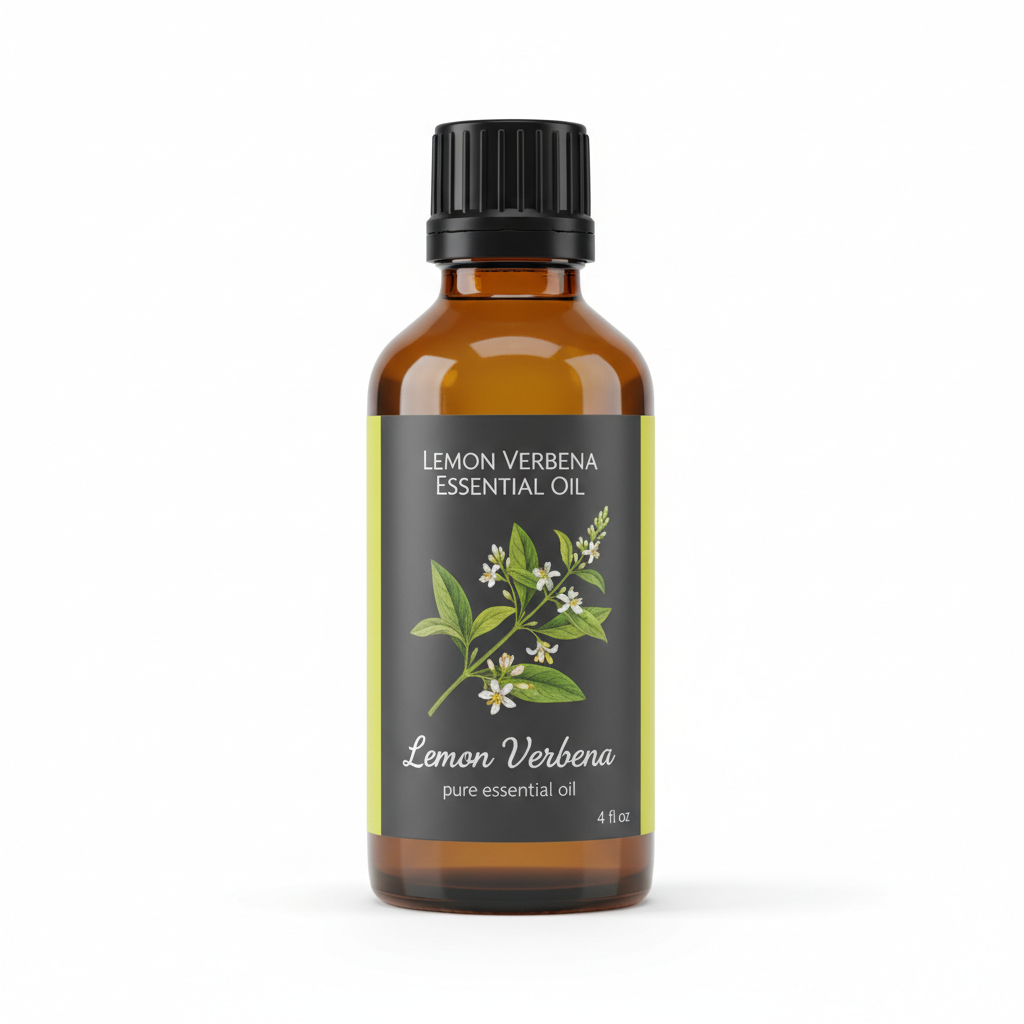
Lemon Verbena Essential Oil
Our own Lemon Verbena Essential Oil, in sizes from 0.5 oz to bulk.
From $12.99
Shop Now →This guide breaks down the real differences between retail channels, tells you exactly what quality looks like, and flags the shortcuts that compromise your purchase. Whether you spend $18 or $85, the principles for choosing wisely are the same.
Understanding the Retail Landscape
Lemon verbena oil retail falls into three broad categories: general natural grocery chains, large e-commerce platforms, and dedicated specialist oil suppliers. Each channel has a different relationship with the product, and that relationship shapes quality in ways that are not always visible on the label.
Natural Grocery Chains (Including Whole Foods)
Searching for lemon verbena oil Whole Foods or similar retailers is a reasonable starting point. These stores have category standards that filter out the lowest-quality products. Their buyers negotiate with established brands, products go through some vetting, and returns are easy if something is wrong.
The trade-off is shelf life and storage. Essential oils are sensitive to heat, light, and oxygen. A bottle sitting under fluorescent lighting in a warm aisle for several months is already aging before you open it. Natural grocery retailers also tend to carry a small selection, often just one or two brands per oil, which limits comparison shopping.
What you gain in convenience and accountability, you often lose in freshness and choice.
Large Online Marketplaces
Platforms like Amazon carry hundreds of lemon verbena oil listings. Price competition is intense, and that pressure tends to push quality down rather than up. Third-party sellers on these platforms face minimal scrutiny for labeling accuracy, and the same ASIN can ship from multiple warehouses with inconsistent storage conditions.
Marketplace shopping works best when you already know a specific brand and are using the platform purely for convenience. Browsing for the best lemon verbena oil by price alone on these platforms is a reliable path to disappointment.
Specialist Oil Suppliers
This is where serious buyers eventually land. Specialist oil suppliers are companies whose entire business model depends on the quality and accuracy of their botanical oils. They typically publish Gas Chromatography / Mass Spectrometry (GC/MS) testing results, provide country-of-origin information, and maintain transparency about their supply chains.
The upfront cost is often higher. The value, however, is significantly better. You are buying a known product with documented chemistry rather than a label with appealing branding.
For a deeper look at vetting online sources specifically, see our checklist for buying lemon verbena essential oil online.
Quality Indicators: What to Look For
The label tells part of the story. The rest requires a little research before you commit to a purchase.
Botanical Name and Country of Origin
Genuine lemon verbena essential oil comes from Aloysia citrodora (sometimes still listed as Lippia citriodora). If a product only says "lemon verbena" without the Latin name, that is an immediate concern. Some products sold as lemon verbena oil are actually lemon balm (Melissa officinalis), lemongrass, or synthetic blends that mimic the scent profile at a fraction of the cost.
Country of origin matters too. Morocco, France, and Argentina are the primary producing regions. Each origin produces a slightly different scent character, but all three are legitimate. An unspecified origin suggests the supplier does not know or does not want you to know where the oil came from.
Extraction Method
True lemon verbena essential oil is steam distilled. Some products labeled as lemon verbena are actually CO2 extracts or absolutes, which have different chemical profiles and are not interchangeable for most aromatic applications. Neither is inherently inferior, but they are different products and should be labeled accordingly.
GC/MS Testing
Gas Chromatography / Mass Spectrometry testing breaks down the chemical constituents of an oil and verifies its authenticity. Reputable specialist suppliers make these reports available, either on their website or on request. A key marker to look for in genuine Aloysia citrodora oil is the presence of citral (geranial and neral), along with limonene and other characteristic compounds.
If a supplier cannot or will not provide testing documentation, consider that a significant red flag regardless of how appealing the product page looks.
Packaging
Essential oils should be sold in dark amber or cobalt glass bottles. Clear glass accelerates degradation from light exposure. Plastic is unsuitable because essential oils can leach compounds from certain plastic types over time. Any lemon verbena oil in a clear or plastic bottle should be passed over, regardless of price or branding.
Aroma Accuracy
Genuine lemon verbena oil has a bright, intensely citrusy top note with a warm, slightly herbaceous green quality underneath. It is rounder and more complex than lemongrass, and more delicate than lemon. If a sample smells flat, harsh, or one-dimensionally "lemon cleaning product," it is almost certainly adulterated or synthetic.
Ordering samples before committing to a full bottle is always worth the small added cost. Our guide on why a 10ml bottle is the smart starting point explains exactly why starting small protects your investment.
Key Features to Compare Across Suppliers
| Feature | Natural Grocery Retail | Online Marketplace | Specialist Supplier |
|---|---|---|---|
| GC/MS documentation | Rarely available | Occasionally, by brand | Standard practice |
| Country of origin listed | Sometimes | Inconsistent | Usually yes |
| Botanical name on label | Usually | Often missing | Always |
| Storage conditions | Variable | Unknown | Controlled |
| Sample availability | No | Rarely | Often yes |
| Price for 10ml | $18 to $30 | $8 to $40 | $25 to $85 |
| Adulteration risk | Low to moderate | Moderate to high | Low |
Price Points: What Each Tier Actually Gets You
Budget Range: Under $20 for 10ml
At this price point, genuine steam-distilled Aloysia citrodora is essentially impossible to source profitably. The plant material is expensive. The yield from steam distillation is low. A 10ml bottle retailing under $20 is almost certainly adulterated, blended with a carrier, or mislabeled as lemon verbena when it contains a cheaper citrus oil or synthetic fragrance.
There are exceptions where a supplier runs a genuine introductory offer or sells direct from their own distillation, but these are rare. Approach any sub-$20 listing with significant skepticism unless you can verify GC/MS documentation.
Mid Range: $25 to $50 for 10ml
This is where credible retail options begin. Several well-regarded aromatics brands and some specialist suppliers price their Aloysia citrodora in this range, particularly for Moroccan or Argentinian origin oils. At this tier, you should still verify botanical naming, country of origin, and request or locate GC/MS data.
Brands in this range that are sold through natural grocery channels, including lemon verbena oil Whole Foods selections from established aromatherapy companies, can be legitimate choices if the labeling checks out. Always cross-reference the brand's own website for documentation.
Premium Range: $55 and Above for 10ml
Specialist oil suppliers operating at this level typically source from specific distilleries, often with harvest-year documentation and full traceability. French-origin lemon verbena oil, for example, commands a premium due to limited production volume and the particular aromatic profile of the region.
At this price, you are paying for provenance, freshness, and verified chemistry. For perfumers, serious hobbyists, and those using the oil in refined cosmetic formulations, the difference in scent quality is noticeable and worth the cost. For casual diffuser use, the mid-range tier often serves well enough.
Red Flags to Avoid
- No Latin name on the label. Any genuine supplier knows and uses Aloysia citrodora. Its absence suggests either ignorance of the product or deliberate vagueness.
- Uniformly low prices across multiple oils. If a brand sells every essential oil at the same price per volume regardless of rarity, the products are almost certainly standardized or synthetic. Lemon verbena should cost noticeably more than lavender or orange.
- "Fragrance oil" or "perfume oil" language. These are entirely different product categories and are not essential oils. Fragrance oils may contain synthetic aromatic compounds and are not appropriate substitutes in cosmetic formulations expecting essential oil properties.
- No contact information or physical address for the company. Legitimate suppliers stand behind their products and are reachable. Anonymous online storefronts with no verifiable business information are a consistent marker of low-quality or mislabeled products.
- Overpromising on the label. Any product making specific outcome claims on the packaging is not complying with standard labeling guidelines. It is also a signal that the company's culture prioritizes marketing over accuracy.
- Clear or plastic bottles. As noted above, this is a basic quality failure. It signals that the company does not understand or does not care about the stability of the product they are selling.
Where to Buy: A Practical Summary
For Convenience Shopping
Natural grocery chains, including Whole Foods and similar retailers, are acceptable starting points if you are buying from an established aromatherapy brand with good labeling practices. Stick to brands whose websites provide batch testing or country-of-origin documentation. Avoid anything that seems priced too low for the category.
For Research-Led Online Buying
Dedicated aromatics e-commerce sites from specialist oil suppliers are the most reliable online channel. Look for companies that have been operating for more than five years, publish GC/MS reports publicly, and offer sample sizes. Paying shipping on a 1ml or 2ml sample is a worthwhile investment before committing to a full bottle.
For Professional or High-Volume Use
Direct supplier relationships, often established through trade shows or referrals within the cosmetic formulation community, are worth pursuing if you use lemon verbena oil regularly. Some distillers sell directly to formulators and hobbyists at wholesale-adjacent pricing in exchange for minimum order quantities.
For a comprehensive breakdown of quality factors to evaluate before any purchase, our detailed guide on buying lemon verbena essential oil: the complete quality guide covers every verification step in depth.
A Note on Diluted and Pre-Blended Products
Some retailers sell lemon verbena products that are already diluted in a carrier oil. These are not the same as essential oil and should not be used as direct substitutes. They can be perfectly useful products for specific applications, particularly in ready-to-use body care formats, but the labeling should make the dilution clear, including the percentage of essential oil present.
If a product lists a carrier oil (jojoba, fractionated coconut, sweet almond) as an ingredient, it is a diluted blend. This is not a quality failure, but it does affect how you would use the product and makes direct price comparisons with undiluted essential oils misleading.
Always read the full ingredient list, not just the product name.
Final Buying Checklist
- Confirm the label reads Aloysia citrodora (not just "lemon verbena")
- Verify country of origin is listed (Morocco, France, or Argentina are common legitimate sources)
- Check that the bottle is dark amber or cobalt glass
- Locate or request GC/MS batch testing documentation
- Assess whether the price is realistic for genuine distilled oil (generally above $25 per 10ml)
- Confirm the supplier has verifiable contact information and a track record
- Order a sample size before purchasing a large volume from an unfamiliar supplier
Lemon verbena is one of the more expensive and more frequently adulterated essential oils in retail. The price difference between a well-sourced, documented bottle and a mislabeled substitute is often only a few dollars. Spending that difference, and taking five minutes to verify the basics, is the single most effective thing a buyer can do to get what they are actually paying for.