
Lemon Verbena vs Litsea Cubeba: The Classic Adulteration Story
If you have spent any time shopping for lemon verbena essential oil, you have almost certainly encountered litsea cubeba without knowing it. The two oils smell remarkably similar at first sniff. They share a citrusy, aldehydic brightness that catches the nose in nearly the same way. And yet they are entirely different plants, with different chemistry, different sourcing realities, and very different price points.
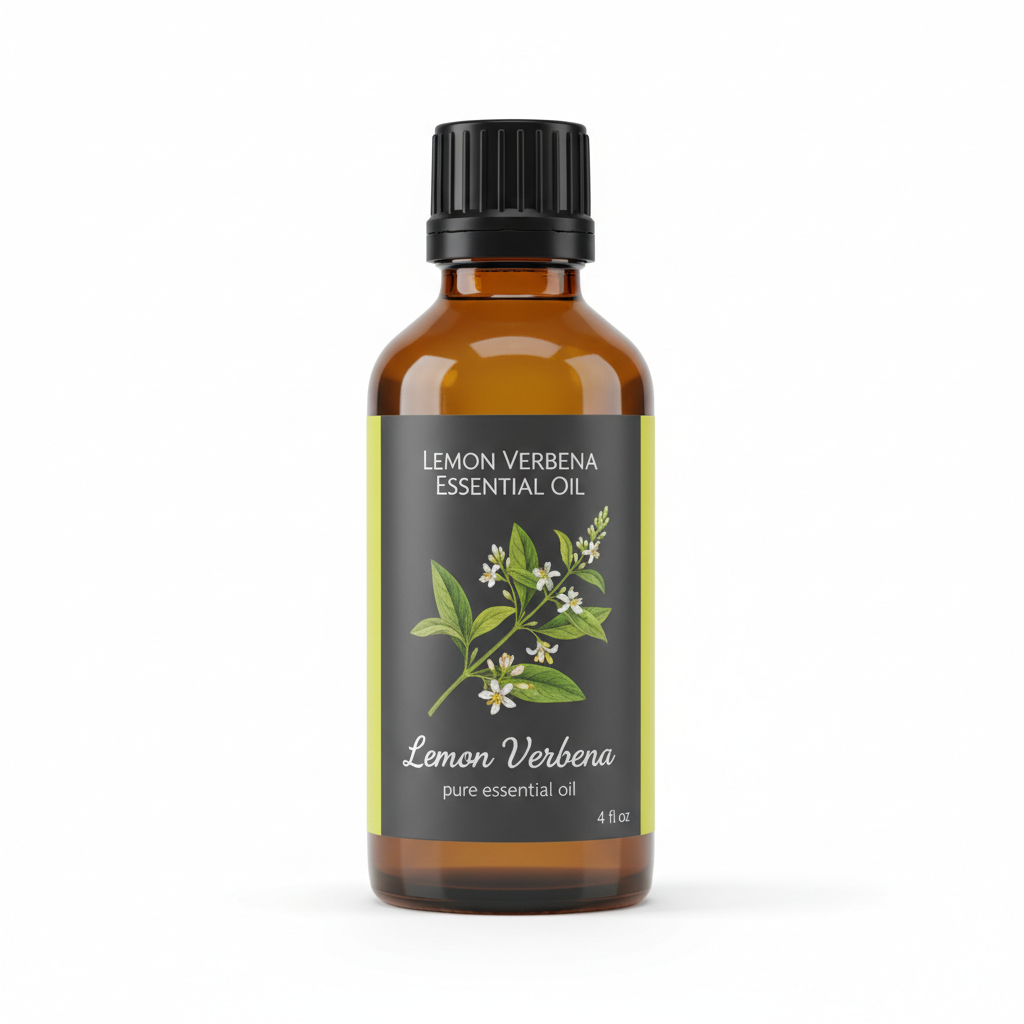
Lemon Verbena Essential Oil
Our own Lemon Verbena Essential Oil, in sizes from 0.5 oz to bulk.
From $12.99
Shop Now →This comparison exists because the adulteration is so widespread. Lemon verbena (Lippia citriodora) is one of the most frequently substituted oils in the essential oil market. Litsea cubeba (Litsea cubeba, also called may chang) is the most common substitute. Understanding the difference is not just an academic exercise. It directly affects what you are buying, what you are paying, and what you are getting in your finished product.
The Plants Behind the Oils
Lemon Verbena (Lippia citriodora)
Lemon verbena is a flowering shrub native to South America, now cultivated primarily in France, Morocco, and Argentina for its essential oil. The oil is steam-distilled from the leaves and flowering tops. Yields are notoriously low. A significant quantity of plant material produces a very modest quantity of oil, which is the core reason genuine lemon verbena commands a high price. The scent is complex: bright lemon up front, with a herbal, slightly floral dry-down that has real depth.
Because of those low yields, buying genuine lemon verbena essential oil requires some due diligence. Prices below a certain threshold are a reliable signal that something has been substituted or extended.
Litsea Cubeba (May Chang)
Litsea cubeba is a small tree native to China and Southeast Asia. The oil is steam-distilled from the tiny pepper-like fruits of the tree. Yields are generous compared to lemon verbena. The chemistry is dominated by citral, typically in the range of 65 to 85 percent, which produces that intense, clean lemon character. May chang is abundantly available, affordably priced, and a genuinely excellent oil in its own right.
The problem is not that litsea cubeba is a poor oil. The problem is when it is sold as lemon verbena, or quietly blended in without disclosure.
Chemistry: Where the Difference Really Lives
Both oils contain citral as a significant component, and this is the chemical foundation of their shared lemon character. But the profiles diverge considerably beyond that single compound.
Genuine lemon verbena oil contains citral (geranial and neral), along with limonene, caryophyllene, spathulenol, and a range of minor sesquiterpene compounds that contribute to its complex, rounded character. The citral content in authentic lemon verbena typically falls somewhere between 30 and 45 percent. The supporting cast of other constituents is what gives the oil its herbal depth and lasting complexity on the dry-down.
Litsea cubeba, by contrast, is far more citral-dominant. That singular intensity is part of its appeal for certain applications. But it lacks the sesquiterpene complexity that distinguishes genuine lemon verbena to an experienced nose.
Gas chromatography-mass spectrometry (GC-MS) testing is the reliable way to verify what you have. A reputable supplier will make these reports available. If they do not, that is worth noting before you finalize a purchase.
Comparison Table: Lemon Verbena vs Litsea Cubeba
| Attribute | Lemon Verbena (Lippia citriodora) | Litsea Cubeba (May Chang) |
|---|---|---|
| Botanical source | Leaves and flowering tops of Lippia citriodora | Fruits of Litsea cubeba |
| Primary growing regions | France, Morocco, Argentina | China, Southeast Asia |
| Citral content (approx.) | 30 to 45% | 65 to 85% |
| Scent character | Complex lemon with herbal, floral dry-down | Clean, intense, bright lemon; less herbal depth |
| Yield from plant material | Very low | Generous |
| Typical price (pure) | High | Low to moderate |
| Skin sensitivity potential | Moderate (citral content; patch testing advised) | Higher (elevated citral; patch testing strongly advised) |
| GC-MS verification availability | Should be provided by reputable suppliers | Generally available; citral dominance is easily confirmed |
| Adulteration risk | High (frequently substituted or extended) | Low (often the adulterant, not the adulterated) |
| Perfumery use | Top to heart note; valued for complexity | Top note; valued for brightness and affordability |
| Candle and soap use | Used, but expensive for high-volume applications | Very popular; cost-effective and stable lemon scent |
Pros and Cons
Lemon Verbena Essential Oil
Pros
- Genuinely complex scent profile with herbal and floral nuance that litsea cubeba cannot replicate
- Highly prized in fine fragrance and premium cosmetics for its authenticity
- Provenance stories (French or Moroccan origin) add meaningful value to product storytelling
- Moderate citral content relative to litsea cubeba, which may reduce some sensitivity concerns at equivalent dilutions
- When sourced correctly, the scent performance in personal care products is considered superior by many formulators
Cons
- Expensive, sometimes prohibitively so for high-volume applications
- High adulteration risk in the supply chain means verification is essential on every purchase
- Scent can fade more quickly in some applications compared to synthetic or citral-heavy alternatives
- Requires careful supplier relationships and documentation review
Litsea Cubeba (May Chang) Essential Oil
Pros
- Affordably priced and widely available from reputable suppliers
- Clean, bright, intensely citrusy scent performs well in candles, soaps, and diffuser blends
- Consistent citral profile makes it predictable and reliable for formulation
- Excellent when used honestly and labeled accurately for what it is
- Pairs well with other citrus oils, florals, and woody bases
Cons
- High citral content elevates skin sensitivity risk; thorough patch testing is essential before use
- Lacks the herbal, sesquiterpene complexity of genuine lemon verbena
- Its affordability is precisely what makes it the go-to substitution in fraudulent lemon verbena products
- When sold as lemon verbena, it represents a straightforward breach of consumer trust
The Adulteration Story in Practice
The substitution happens at several points in the supply chain. Sometimes a distiller blends litsea cubeba into lemon verbena oil to stretch the volume. Sometimes a broker sells pure litsea cubeba under the lemon verbena name. And sometimes a retailer simply does not know what they purchased, because verification was never part of their sourcing process.
There is also a subtler version of the story: synthetic citral, or isolated citral from other sources, added to a small base of genuine lemon verbena oil. This creates something that passes a casual sniff test and even a basic citral percentage check, but falls apart under full GC-MS analysis.
Knowing how to spot genuine lemon verbena oil before you pay is the practical skill that protects you from these scenarios. The key markers are price, supplier documentation, and the scent profile on the dry-down. Litsea cubeba stays bright and linear. Genuine lemon verbena evolves.
It is also worth noting that this comparison is not unique to lemon verbena. Citral-rich oils are frequently used to extend or substitute for more expensive botanicals throughout the industry. The difference here is the scale and consistency of the substitution. Lemon verbena is one of the most reliably adulterated oils on the market.
You can read more about how this plays out in product labeling in this look at lemon verbena essential oil versus verbena fragrance oil, which covers a related but distinct form of mislabeling.
Best-For Recommendations by Use Case
Fine Fragrance and Niche Perfumery
Choose lemon verbena. The complexity is irreplaceable in this context. The herbal dry-down, the sesquiterpene depth, the provenance narrative: these are exactly what fine fragrance formulators are paying for. Litsea cubeba, used honestly, can play a supporting role as a citral booster, but it cannot stand in for the real thing at the creative level.
Candle Making and Home Fragrance
Consider litsea cubeba. At the volumes involved in candle production, genuine lemon verbena becomes cost-prohibitive for most makers. Litsea cubeba delivers a clean, satisfying lemon scent that performs well under heat. The key is to label it accurately. A candle with a "may chang" or "litsea cubeba" lemon scent is an honest product. A candle claiming lemon verbena when it contains may chang is not.
Skincare and Facial Formulation
Choose lemon verbena with careful dilution. Litsea cubeba's elevated citral content makes it a higher-sensitivity option for leave-on skincare. Lemon verbena at appropriate dilution (typically 0.5 percent or below in leave-on products; always patch-test first) may be better suited for facial applications. Consult current IFRA guidelines for both oils before formulating.
Aromatherapy Blending and Diffusion
Either works, depending on your goals. For diffuser blends where lemon clarity is the primary aim, litsea cubeba is a cost-effective, high-performing option. For blends where you want herbal complexity and a more nuanced citrus character, genuine lemon verbena is worth the investment.
Body Care and Rinse-Off Products
Litsea cubeba is a practical choice at appropriate dilution. In rinse-off applications like shower gels and shampoos, the citral sensitivity concern is reduced compared to leave-on products. Litsea cubeba performs well here. Again, accurate labeling matters.
A Note on Honest Labeling
Neither oil is the "winner" of this comparison in any absolute sense. Litsea cubeba is a genuinely worthwhile oil when used for what it actually is. The issue is when it replaces lemon verbena without disclosure. That is a sourcing and ethics problem, not a chemistry problem.
If you are a formulator or maker purchasing in volume, build supplier verification into your process from the start. Request GC-MS reports, ask about origin, and consider an unusually low price as a prompt for deeper questions rather than a fortunate find. The guidance in this complete quality guide to buying lemon verbena covers the documentation process in practical detail.
The Verdict
Lemon verbena and litsea cubeba share a citrusy headline but diverge significantly in complexity, price, and appropriate use cases. Genuine lemon verbena earns its premium through a scent profile that no citral-dominant oil can fully replicate. Litsea cubeba earns its place in the market through honest, affordable performance in applications where its clean lemon character is exactly what is needed.
The adulteration story persists because the substitution is easy to make, hard to detect without testing, and financially rewarding for anyone willing to misrepresent what is in the bottle. The best protection for buyers is straightforward: know the price range of genuine lemon verbena, ask for documentation, and trust suppliers who provide it without hesitation.
When you know what you are looking for, the two oils are not difficult to distinguish. The problem has never been that they are identical. The problem is that too few people know to look closely in the first place.