
Lemon Verbena vs Lemongrass Oil: Do Not Pay Verbena Prices for Lemongrass
If you have ever opened a bottle labeled "lemon verbena" and thought, "this smells oddly sharp, almost like a candle," your nose was probably onto something. Lemongrass oil is one of the most common materials used to stretch, imitate, or outright replace genuine Lippia citriodora essential oil, and the price difference between the two makes the motive obvious. A quality lemon verbena essential oil can cost ten to twenty times more per milliliter than lemongrass. That gap creates serious temptation in the supply chain.
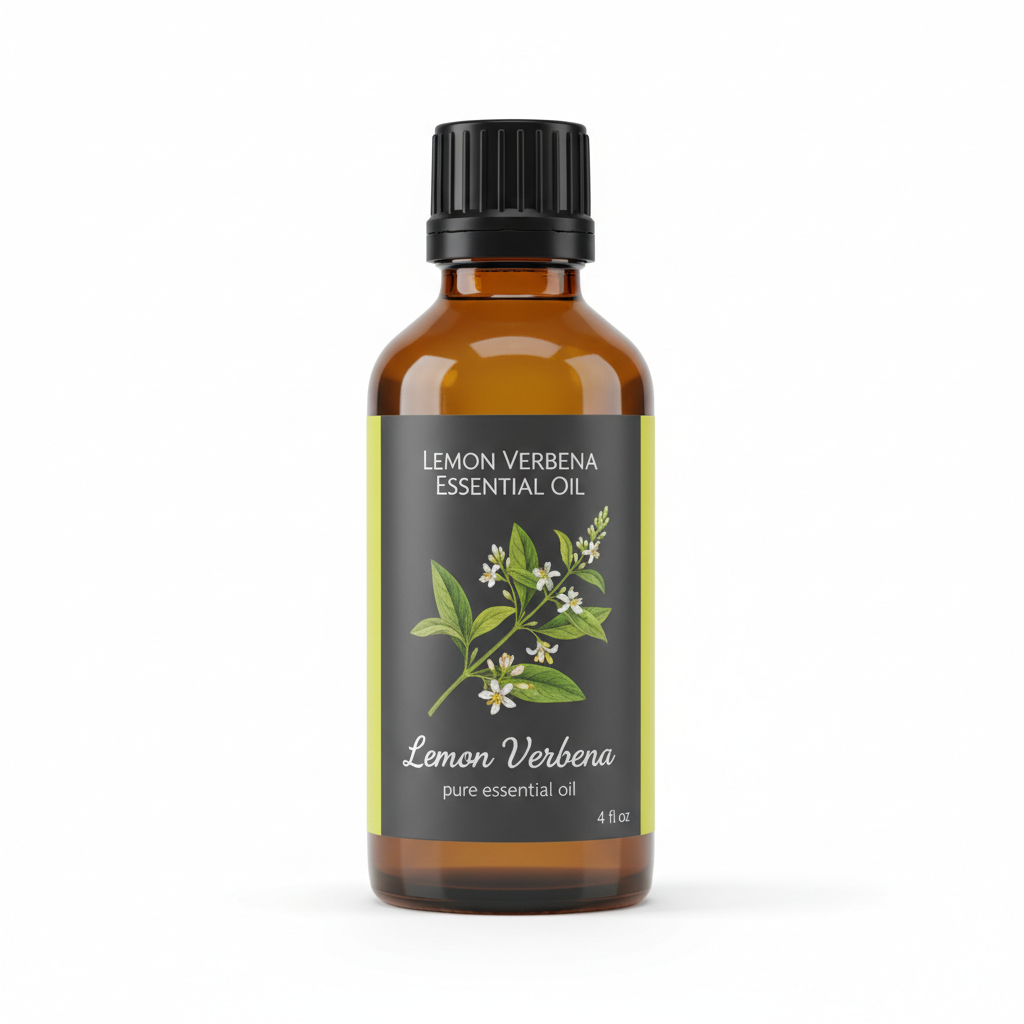
Lemon Verbena Essential Oil
Our own Lemon Verbena Essential Oil, in sizes from 0.5 oz to bulk.
From $12.99
Shop Now →This post is not about demonizing lemongrass. It is a genuinely useful oil with real merits and a legitimate fan base. The problem is paying premium verbena prices for a lemongrass product, or choosing the wrong oil for a project because the marketing copy was vague. Below you will find a structured, honest comparison so you can make the right call for your budget and your purpose.
The Basics: Two Very Different Plants
Lemon verbena (Lippia citriodora, also written Aloysia citrodora) is a woody flowering shrub native to South America, now cultivated primarily in Spain, Morocco, and Argentina. Its leaves are intensely fragrant, and the essential oil is extracted by steam distillation of those leaves. Yields are low. Very low. It takes a large quantity of plant material to produce even a small amount of oil, which is the central reason for its high cost.
Lemongrass (Cymbopogon citratus or Cymbopogon flexuosus) is a tropical grass cultivated widely across India, Guatemala, and parts of Africa. It is a high-yield crop. Steam distillation of the leaves and stalks produces substantial quantities of oil relatively efficiently. The result is an affordable, widely available citrus-forward oil with industrial-scale production behind it.
Both oils smell lemony. That is where the easy comparison ends.
Scent Profile: The Critical Difference
Fragrance professionals describe lemon verbena essential oil as bright, refined, and complex. The opening note is sparkling lemon, but underneath you find green herbal facets, a faint floral softness, and a dry, slightly powdery drydown. It does not shout. It suggests. That layered, nuanced character is exactly what perfumers and high-end cosmetic formulators pay for.
Lemongrass is louder. The scent is bold, grassy, and linear, dominated by citral with a pronounced green, almost reedy quality. It has excellent diffusion and projection, which makes it popular in room sprays, candles, and massage blends. There is nothing subtle about it, and in many applications that directness is exactly what you want.
The problem arises when lemongrass is positioned as a stand-in for verbena in fine fragrance or in products where the botanical story matters. A trained nose will notice immediately. Even an untrained nose, given both oils side by side, will usually say something like, "one smells expensive and the other smells like a spa locker room." That is not a knock on lemongrass. It is simply the wrong tool for certain jobs.
Key Chemical Constituents
Both oils are citral-dominant, which is why they share a family resemblance. Citral is actually a mixture of two isomers, geranial and neral, and both oils contain significant amounts of each. But the supporting cast differs considerably.
Genuine lemon verbena essential oil contains notable quantities of limonene, 1,8-cineole, and various oxygenated monoterpenes that contribute its herbal and floral complexity. It also contains geraniol and nerol, which soften and round the citral edge.
Lemongrass oil is more straightforwardly citral-heavy, sometimes reaching 70 to 85 percent combined citral content, with myrcene, geraniol, and farnesol as secondary constituents. That high citral level is part of why lemongrass has a stronger, more linear scent and also why it requires more careful dilution in leave-on skin applications.
For a deeper look at how adulteration works at the chemical level, including how litsea cubeba is often used alongside lemongrass to mimic verbena's citral profile, see our article on lemon verbena vs litsea cubeba and the classic adulteration patterns.
Comparison Table: Lemon Verbena vs Lemongrass at a Glance
| Attribute | Lemon Verbena Essential Oil | Lemongrass Essential Oil |
|---|---|---|
| Botanical source | Lippia citriodora (shrub) | Cymbopogon citratus / flexuosus (grass) |
| Primary growing regions | Spain, Morocco, Argentina | India, Guatemala, West Africa |
| Extraction method | Steam distillation of leaves | Steam distillation of leaves and stalks |
| Typical citral content | 30 to 55 percent | 65 to 85 percent |
| Scent character | Nuanced, herbal-floral, layered | Bold, grassy, linear, intense |
| Yield and availability | Low yield, limited supply | High yield, widely available |
| Relative price | High (often $40 to $120+ per 5ml) | Low (often $5 to $15 per 30ml) |
| Adulteration risk | High (frequently stretched or replaced) | Low (rarely worth adulterating) |
| Skin sensitivity notes | Photosensitizing, dilute carefully | Sensitizing at high citral levels, dilute carefully |
| Best aromatic use | Fine fragrance, prestige cosmetics | Diffusion, candles, room sprays |
Pros and Cons: Lemon Verbena Essential Oil
Pros
- Unmatched aromatic complexity in the lemon-citrus family
- Carries genuine botanical provenance and storytelling value
- Performs beautifully in fine fragrance and prestige personal care
- Lower citral concentration means a softer, less linear scent
- Highly prized by perfumers for its green, floral undertones
Cons
- Expensive, sometimes prohibitively so for large-batch production
- Significant adulteration risk: many products on the market are not what they claim
- Limited supply can affect batch-to-batch consistency
- Photosensitizing: should not be used in leave-on daytime products above recommended dilution rates
- Requires verified sourcing and GC/MS documentation to buy with confidence
Pros and Cons: Lemongrass Essential Oil
Pros
- Excellent value for money
- Strong, consistent scent with great diffusion and projection
- Widely available from reputable suppliers with traceable sourcing
- Well-suited to high-volume products such as candles, soaps, and room sprays
- Lower adulteration risk because the price point does not incentivize fraud
Cons
- Lacks the complexity and refinement of genuine verbena
- High citral content requires careful dilution in leave-on skin formulations
- Can dominate a blend if overused, drowning out more delicate notes
- Sometimes mislabeled or used to fraudulently replace lemon verbena
- Scent is perceived as less premium, which can limit its use in luxury positioning
Best For: Choosing the Right Oil by Use Case
Fine Fragrance and Perfumery
Lemon verbena wins decisively here. Perfumers reach for genuine Lippia citriodora when they want that refined, green-floral lemon note that reads as sophisticated rather than functional. Lemongrass in a fine fragrance formula can work as an accent, but it will not replicate what verbena brings to the top and heart notes.
Candles, Room Diffusers, and Home Fragrance
Lemongrass is the practical choice. Its high citral content means strong throw at lower usage rates, which is exactly what you want in a candle or diffuser blend. Using premium verbena oil in a soy candle is an expensive way to get a subtler result. Save the verbena for products where its nuance can actually be appreciated.
Prestige Skincare and Body Care
If the product is positioned as artisanal, botanically authentic, or luxury-tier, lemon verbena essential oil earns its price point. The botanical story is genuine, the scent is distinctive, and the sourcing narrative adds real value for discerning buyers. That said, always verify your supplier's GC/MS data. Our complete quality guide to buying lemon verbena essential oil walks through exactly what to look for.
Soap Making (Cold Process and Melt-and-Pour)
This is a split decision. Lemongrass holds its scent reasonably well through saponification and is a cost-effective option for natural soaps. Lemon verbena is less stable through the soap-making process and considerably more expensive, making lemongrass the more sensible choice for most soap makers unless authentic verbena branding is central to the product identity.
Personal Aromatics: Inhalers and Pulse-Point Rollers
Here the quality and character of the oil matter more. Lemon verbena's layered scent profile rewards close-range use. If you are creating a personal aromatic roller for a calm evening wind-down ritual or a morning pick-me-up blend, verbena's nuance is perceptible and worth the investment. Lemongrass at the same close range can feel overpowering if not carefully balanced.
Budget-Conscious Blending for Beginners
Start with lemongrass. Get comfortable with citral-dominant oils, practice your dilution ratios, and build a sensory reference point for the lemon family before investing in verbena. When you are ready to explore what genuine verbena adds, you will have the context to appreciate the difference.
A Note on Fragrance Oils Labeled "Verbena"
A third category worth mentioning: synthetic or blended fragrance oils sold as "verbena" or "lemon verbena." These are not essential oils. They are typically constructed from synthetic aroma chemicals, sometimes including citral, sometimes including linalool, sometimes structured around a vague citrus-floral brief that a perfumer has decided reads as verbena-adjacent. They may smell lovely. They serve a purpose in many applications. But they should not be confused with, or priced like, genuine botanical essential oil. If you have encountered this confusion, our comparison of lemon verbena essential oil versus verbena fragrance oil covers the practical and ethical distinctions in detail.
The Verdict
Lemon verbena and lemongrass are not interchangeable. They share a botanical family resemblance in scent and some overlap in chemical composition, but they serve different creative and commercial purposes. The danger lies not in choosing lemongrass over verbena intentionally, but in buying lemongrass unknowingly at verbena prices.
If you want lemon verbena, verify. Ask for GC/MS reports. Buy from suppliers who can tell you the country of origin, the distillation date, and the exact botanical species. Be skeptical of prices that seem too good for what the market actually supports. Genuine Lippia citriodora essential oil is not cheap, and a cheap bottle labeled verbena is almost certainly not verbena.
If you want lemongrass, buy it confidently and joyfully. It is an honest, capable oil that earns its place in countless formulas. Just make sure you are buying it because you want it, not because someone substituted it without telling you.
Your nose and your budget both deserve that clarity.
Safety note: Both lemon verbena and lemongrass essential oils require proper dilution before any skin application. Recommended usage rates for leave-on products are typically 0.5 to 1 percent or lower, depending on the formula type. Both oils may cause sensitization reactions in some individuals. Always perform a patch test before wider use. Lemon verbena in particular has photosensitizing potential and should not be used in leave-on daytime applications without appropriate guidance. Consult a qualified aromatherapist or cosmetic formulator for specific dilution recommendations. These oils are for cosmetic and aromatic use only. Consult your healthcare provider for any health concerns.