
Lemon Verbena Essential Oil vs Verbena Fragrance Oil: The Honest Difference
The lemon verbena section of any supplier's catalog can be genuinely confusing. You'll find bottles labeled "lemon verbena essential oil," others marked "verbena fragrance oil," and still others that blur the line with vague wording like "verbena aromatic blend." The price differences are dramatic. The scent descriptions sound almost identical. So what are you actually buying, and does it matter for your particular project?
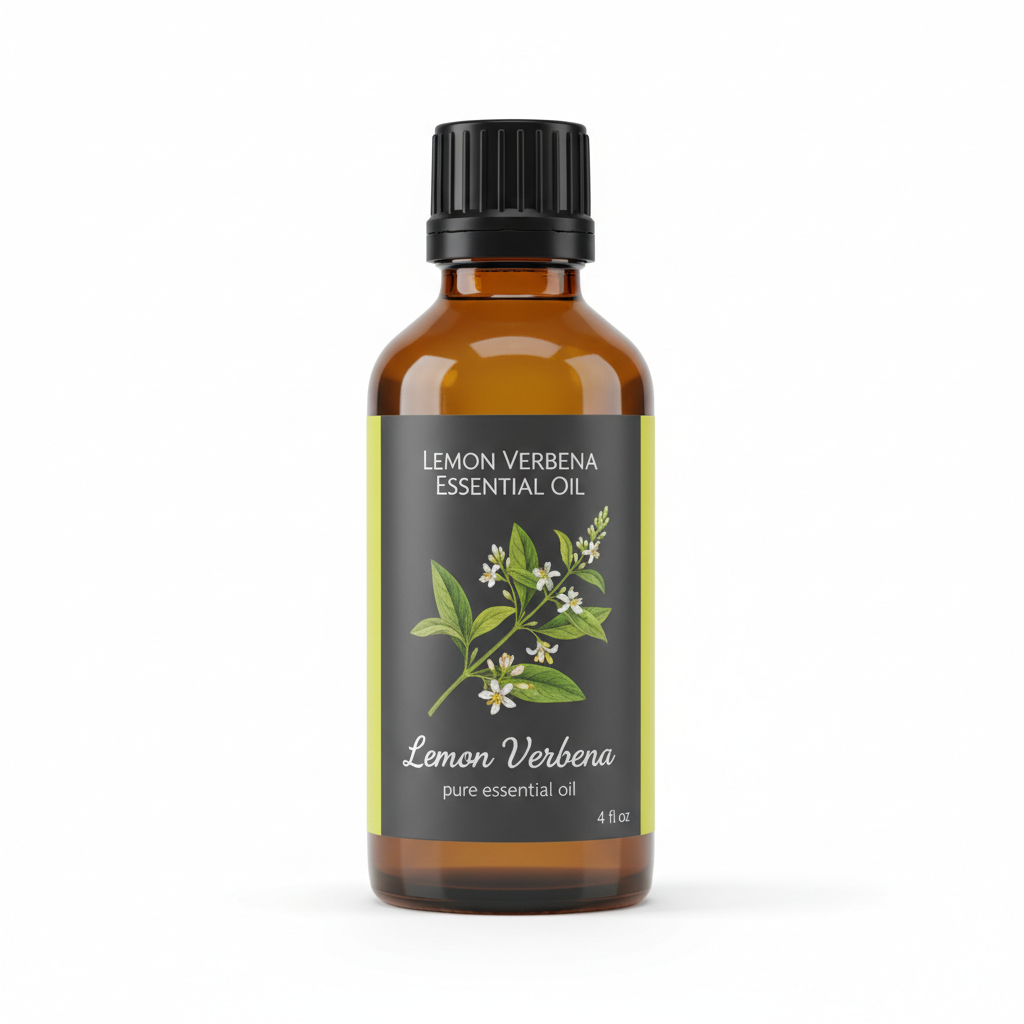
Lemon Verbena Essential Oil
Our own Lemon Verbena Essential Oil, in sizes from 0.5 oz to bulk.
From $12.99
Shop Now →This is a fair comparison, not a sales pitch for one category over the other. Both options have legitimate uses. Knowing the real differences will save you money, disappointment, and the occasional ruined batch of homemade products.
What Each Product Actually Is
Lemon Verbena Essential Oil
True lemon verbena essential oil is steam-distilled or cold-expressed from the leaves of Aloysia citrodora (also listed as Aloysia triphylla or Lippia citriodora). The plant is native to South America and cultivated primarily in Morocco, Spain, and France for the fragrance and cosmetic industries. Distillation yields are notoriously low: roughly 0.1 to 0.4 percent by weight, which explains the high price point. A genuine, unadulterated oil carries chemical markers including citral, geraniol, limonene, and neral that can be verified by gas chromatography-mass spectrometry (GC-MS) testing.
Because the oil is so costly to produce, adulteration is widespread. Lemon verbena oil is one of the most frequently stretched or substituted botanicals in the market. If you're purchasing it for cosmetic or aromatic work and quality matters, reading the full guide on spotting genuine lemon verbena oil before you pay is worth your time before placing any order.
Verbena Fragrance Oil
A fragrance oil is a manufactured scent compound. It may contain synthetic aroma chemicals, natural isolates, carrier oils, solvents, or any combination of these. Some fragrance oils include a small percentage of real essential oil blended with synthetics to round out the scent profile. Others are entirely lab-created. Either way, the formulation is proprietary and does not need to be disclosed in detail.
Fragrance oils designed to replicate lemon verbena typically combine synthetic citral, linalool, and various green or floral modifiers to approximate the botanical's signature brightness. High-quality fragrance oils from reputable suppliers can be impressively convincing. Lower-quality versions tend to smell sharp, flat, or overtly chemical.
Side-by-Side Comparison
| Attribute | Lemon Verbena Essential Oil | Verbena Fragrance Oil |
|---|---|---|
| Source | Distilled from Aloysia citrodora leaves | Manufactured aroma compound; may include natural isolates |
| Scent character | Complex, herbaceous citrus with green and slightly floral depth | Variable; ranges from bright and convincing to harsh or one-dimensional |
| Scent longevity (in product) | Moderate; citrus top notes fade relatively quickly | Often longer-lasting due to synthetic fixatives and carriers |
| Scent longevity (in diffuser) | Bright and immediate; dissipates within 1 to 2 hours | Varies; some linger longer, some project less authentically |
| Cost per milliliter | High (can reach $4 to $10+ per ml for genuine product) | Low to moderate (often $0.10 to $0.50 per ml) |
| Transparency of ingredients | High; botanical source and batch GC-MS available from reputable sellers | Low; formulations are proprietary |
| Skin use suitability | Suitable at proper dilution; some individuals may have sensitivities | Depends on formulation; cosmetic-grade fragrance oils required for skin use |
| Candle and soap use | Poor scent throw in most waxes; degrades under heat | Excellent; formulated for hot and cold process applications |
| Diffuser use | Well-suited; delivers authentic botanical character | Suitable for ultrasonic diffusers; not ideal for nebulizing diffusers |
| Adulteration risk | Very high in the general market | Not applicable; the product is a formulated compound by design |
| Vegan and natural claims | Naturally derived; supports "botanical" and "natural" labeling | Usually not eligible for "natural" product claims |
Pros and Cons
Lemon Verbena Essential Oil
Pros
- Authentic botanical origin with verifiable chemistry
- Complex, nuanced scent profile that synthetic versions approximate but rarely match perfectly
- Suitable for "natural" and "botanical" product labeling when formulating cosmetics
- Pairs beautifully with other essential oils in blending work
- Preferred choice for aromatic diffusion where scent authenticity is the priority
Cons
- Expensive, often prohibitively so for large-batch production
- Poor performer in candles and most soap bases due to heat sensitivity
- Scent longevity in finished products is modest compared to synthetic alternatives
- Adulteration is rampant; finding a trustworthy source requires real diligence
- Supply can be inconsistent; harvests vary year to year
Verbena Fragrance Oil
Pros
- Significantly more affordable, especially for volume production
- Superior performance in candles, wax melts, soaps, and bath products
- Consistent batch-to-batch scent; not subject to seasonal variation
- Longer-lasting scent in many applications due to synthetic fixatives
- Wide range of suppliers and price points; easier to source
Cons
- Ingredient transparency is limited; formulations are proprietary
- Quality varies enormously between suppliers; the verbena scent category has many poor performers
- Cannot support "natural," "botanical," or "essential oil" claims on product labels
- Some individuals have sensitivities to specific synthetic fragrance components
- The scent, even in premium versions, tends to lack the green, herbaceous complexity of the real botanical
Best For: Use Case Recommendations
Choose Essential Oil When:
You are diffusing for home atmosphere. For morning routines, a citrus-fresh desk environment, or an evening wind-down ritual, the genuine botanical oil delivers a scent experience that fragrance oils in a diffuser rarely replicate with the same subtlety and depth.
You are formulating natural or botanical cosmetics. If your product line uses "natural" or "botanical" claims, or if you're selling to consumers who read ingredient labels carefully, the essential oil is the appropriate choice. A fragrance oil labeled "verbena" cannot substitute here, regardless of how pleasant it smells.
You want to blend with other essential oils. Lemon verbena essential oil integrates naturally into blends with rose, neroli, lavender, palmarosa, and green herb oils in ways that synthetic fragrance compounds cannot match with the same fluidity.
You are making a personal scent experience that prioritizes authenticity. If the botanical origin of what you're inhaling or applying to your skin matters to you, there's no substitute for the real distillate.
Choose Fragrance Oil When:
You are making candles, wax melts, or soaps. This is the clearest recommendation in this entire comparison. Essential oil performs poorly in these applications. Fragrance oil is the correct choice, full stop. Look for suppliers who provide usage rate guidance and IFRA compliance documentation.
You are producing at scale with a budget to manage. For makers producing dozens or hundreds of units, the cost difference between essential oil and fragrance oil is not trivial. A fragrance oil that honestly represents itself as a synthetic compound is a legitimate, economical choice for volume production.
You need batch-to-batch consistency. Seasonal variation affects essential oil quality and availability. A well-formulated fragrance oil will smell the same in January as it does in July, from one order to the next.
You are new to soapmaking or candle work. Starting with fragrance oil while you learn process variables is sensible. Essential oil is an expensive ingredient to lose to a failed candle test.
A Note on the Verbena Scent Comparison Problem
Many buyers expect fragrance oil to smell like the essential oil, and this is where disappointment sets in. The verbena scent category is one of the more difficult to replicate synthetically. The genuine essential oil has a distinctive green, slightly grassy undertone beneath its citrus brightness. Most fragrance oils push the citrus notes harder and lose that green complexity entirely. Some people prefer the fragrance oil version. Others find it hollow by comparison. Smelling samples before committing to a large purchase matters here more than with many other scent categories.
The reverse disappointment also happens. Buyers who purchase an essential oil expecting the clean, long-lasting citrus projection of a fragrance oil find the botanical version softer, more nuanced, and shorter-lived in their products. Neither outcome reflects a bad product. It reflects a mismatch between expectations and the nature of what was purchased.
Sourcing Quality in Both Categories
For essential oil, the sourcing question is the most critical factor. Lemon verbena essential oil is one of the botanicals most frequently adulterated with cheaper citrus oils or synthetic citral. Buying from suppliers who publish GC-MS results, clearly state the Latin botanical name, and name the country of origin is non-negotiable if quality matters. The complete quality guide to buying lemon verbena essential oil covers what to look for in supplier documentation and what red flags to watch for in pricing and labeling.
For fragrance oil, look for suppliers who provide IFRA compliance sheets (which indicate safe usage levels across different application types), clear guidance on candle or soap usage rates, and confirmation of cosmetic-grade status if you intend skin contact applications. A supplier who cannot provide this documentation is not worth your business. The question of where to source either product is explored in more depth in the retail grocery aisles vs specialist supplier comparison, which covers both channels honestly.
The Verdict
The choice between lemon verbena essential oil and a verbena fragrance oil is not really a quality contest. It's a question of application fit.
If your priority is botanical authenticity, diffuser use, natural cosmetic formulation, or the specific pleasure of working with a genuine plant distillate, the essential oil is worth the investment and the sourcing effort. Expect to pay for quality, verify your supplier's documentation, and accept that scent longevity in finished products will be modest.
If you're making candles, soaps, or wax products, or if you need consistent, affordable scenting for volume production, a well-sourced cosmetic-grade or candle-grade fragrance oil is the right tool. Buy from suppliers who publish compliance data, sample before committing to bulk quantities, and be honest with your customers about what's in your products.
The verbena scent category rewards buyers who know what they're looking for. Now you do.