
How to Spot Genuine Lemon Verbena Oil Before You Pay
Lemon verbena is one of the most coveted scents in botanical perfumery and high-end cosmetics. It is also one of the most frequently adulterated. Walk into any natural beauty retailer and you will find dozens of bottles labeled "lemon verbena" at wildly different prices. Some are the real thing. Many are not. Knowing how to read the signals of pure lemon verbena oil before you hand over your credit card will save you money, disappointment, and wasted shelf space.
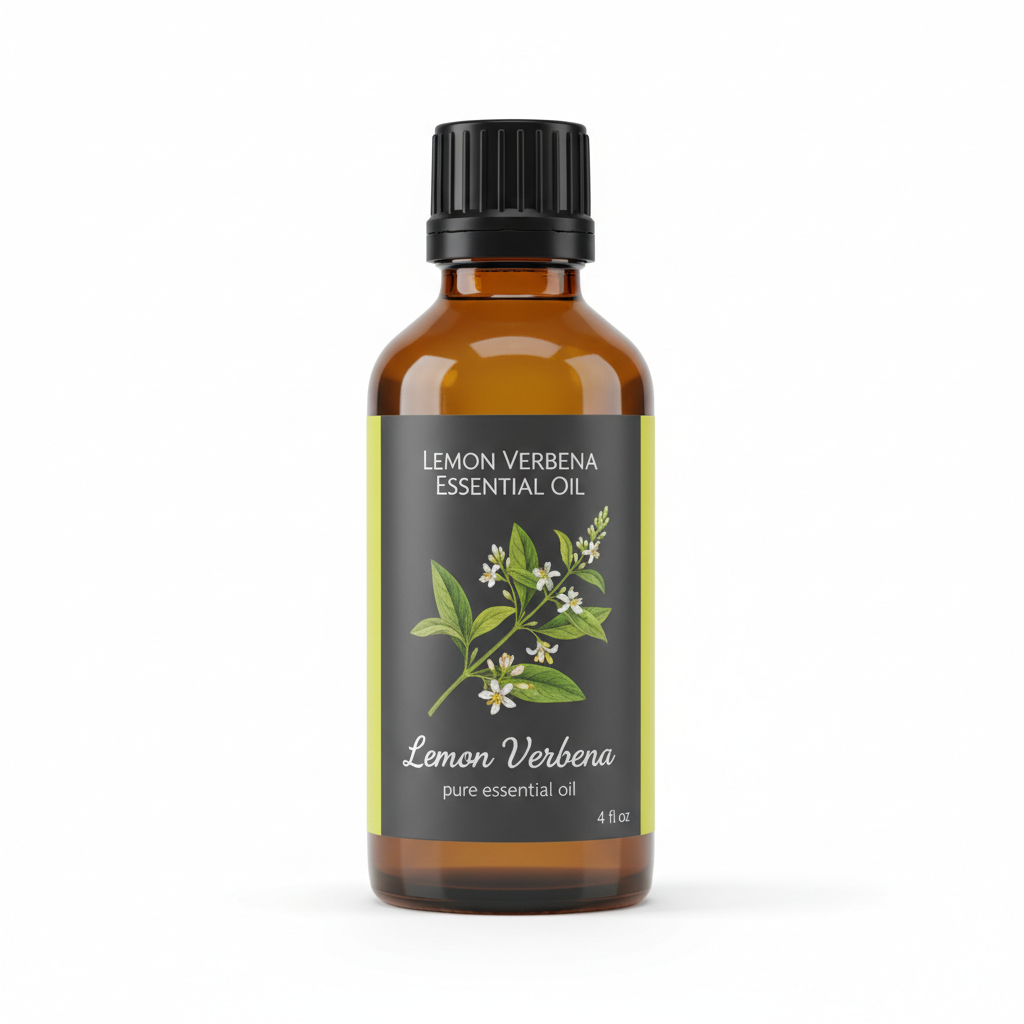
Lemon Verbena Essential Oil
Our own Lemon Verbena Essential Oil, in sizes from 0.5 oz to bulk.
From $12.99
Shop Now →This guide covers every checkpoint worth knowing: what genuine verbena oil actually smells, looks, and reads like on a label; the features that separate budget from premium; the top picks across price points; the red flags that should stop you cold; and the sourcing channels most likely to deliver the real article.
Why Lemon Verbena Authenticity Is Such a Problem
Pure steam-distilled Lippia citriodora oil is expensive to produce. The plant yields a relatively small volume of oil per harvest, and the growing regions (primarily Argentina, Chile, Morocco, and parts of southern France) add logistics costs. That economic reality creates a powerful incentive to stretch or replace the oil entirely.
The most common substitutes you will encounter are:
- Lemon verbena fragrance oil: A synthetic blend that mimics the scent profile but contains no actual plant extract. Often labeled in ways that look botanical at a glance.
- Lemongrass oil: Cheaper, more abundant, and superficially similar in citrus character. Frequently passed off as verbena in low-cost products.
- Citral isolates: Single aromatic compounds (often derived from litsea cubeba or lemon myrtle) blended with a carrier and relabeled.
- Blended "verbena" oils: Diluted genuine oil cut with a carrier such as fractionated coconut oil or jojoba, sold without disclosure of the dilution.
For a deeper look at the quality landscape before you shop, the guide on buying lemon verbena essential oil: the complete quality breakdown is worth reading first.
What Genuine Verbena Oil Looks and Smells Like
Color and Consistency
Authentic steam-distilled lemon verbena essential oil is pale yellow to light greenish-yellow. The color can shift toward a slightly deeper amber as the oil ages, but a fresh batch should look bright and clear, not murky or cloudy. Cloudiness at room temperature (that does not resolve with gentle warming) is a signal worth questioning.
The viscosity is thin, similar to water. It should flow freely from a dropper without any drag or thickness. If the oil pours slowly or feels syrupy, it has almost certainly been diluted with a heavier carrier oil.
The Scent Profile
This is the most important test, and it requires some practice. Genuine lemon verbena oil has a layered, complex citrus fragrance. The top note is sharply lemony, bright and almost fizzy, with a green, slightly herbal undertone. As it dries down, a subtle floral quality emerges. That complexity is the hallmark of the real plant.
Synthetic versions tend to smell "flat" or aggressively one-dimensional. Lemongrass smells coarser, with a grassier, almost soapy register that lacks the delicate floral base note. If a "lemon verbena" oil smells like furniture polish or cheap cleaning product, trust your nose.
Label and Documentation Checkpoints
The label is the first document a seller controls, and it tells you a great deal about their integrity.
What a Trustworthy Label Includes
- Latin binomial: The label should state Lippia citriodora (also listed as Aloysia citrodora or Aloysia triphylla in older sourcing). If only the common name appears, be cautious.
- Country of origin: Argentina, Morocco, and Chile are the primary legitimate sources. France produces smaller quantities of premium quality. A vague "imported" or no origin at all is a red flag.
- Extraction method: Should say "steam distilled" for a true essential oil. "Cold pressed" is not applicable to verbena leaves. "Solvent extracted" produces an absolute, which is a different (and legitimate) product, but it should be clearly labeled as such.
- Batch number and bottling date: Quality producers track their inventory. A batch number allows you to request the corresponding GC/MS report.
- Net volume in milliliters: Standard sizes for essential oils are 5 ml, 10 ml, and 15 ml. Unusually large volumes at low prices are a reliable warning sign.
Gas Chromatography/Mass Spectrometry (GC/MS) Reports
A GC/MS report is the chemical fingerprint of an oil. Reputable suppliers publish these reports for each batch or provide them on request. For lemon verbena, the key compounds to look for in the report include geranial, neral (the two forms of citral), limonene, and geraniol. Their relative percentages vary by harvest and origin, but their presence in meaningful proportions confirms you are working with a genuine plant-derived product. If a seller cannot produce a GC/MS report or looks puzzled by the request, shop elsewhere.
Key Features to Compare When Shopping
| Feature | What to Look For | Red Flag |
|---|---|---|
| Latin name on label | Lippia citriodora or Aloysia citrodora | Common name only, or "verbena blend" |
| Country of origin | Argentina, Morocco, Chile, France | No origin listed |
| Extraction method | Steam distilled | "Natural fragrance," no method stated |
| GC/MS report availability | Publicly posted or available on request | Seller unfamiliar with the term |
| Price per ml | Typically $3 to $8+ per ml for genuine oil | Under $1 per ml for "pure" oil |
| Bottle type | Dark amber or cobalt glass with orifice reducer | Clear plastic or oversized clear glass |
| Scent on blotter | Complex, layered citrus with herbal and floral notes | Flat, synthetic, or strongly grassy |
Top Picks at Different Price Points
Rather than naming specific brands (which change formulations and sourcing), this section describes what each price tier typically delivers, so you can evaluate any product you encounter against realistic expectations.
Entry Level: $15 to $30 for 5 ml
At this price, you are on the edge of plausibility for genuine oil. Some reputable smaller suppliers offer authentic verbena at the lower end of this range by sourcing cooperatively or selling direct to consumer without retail markup. Always request the GC/MS report. If the seller cannot provide one, consider the price a signal that the oil is likely diluted or synthetic. Entry-level genuine oils often come from Argentinian harvests and carry a slightly more robust, less nuanced scent than their French counterparts.
Mid-Range: $30 to $60 for 5 ml
This is the sweet spot for most buyers who want verified quality without paying collector prices. Mid-range genuine verbena oils typically come with publicly available GC/MS data, clear origin labeling, and bottling dates. Scent quality at this tier is noticeably more refined. You will start to detect that subtle floral dry-down that distinguishes Lippia citriodora from its cheaper stand-ins.
Premium: $60 and Above for 5 ml
Premium pricing usually reflects French or small-batch Moroccan sourcing, organic certification, and artisan distillation. These oils are for perfumers, serious cosmetic formulators, and collectors who want the finest aromatic expression of the plant. The scent is more delicate, the documentation more thorough, and the supplier relationship more transparent. If you are formulating a high-end natural fragrance or a signature face serum, this tier is worth the investment.
Red Flags to Avoid
Some warning signs appear before you even open the bottle. Know them by heart.
- "Fragrance oil" or "nature-identical" anywhere on the label. These are not essential oils. They may smell pleasant, but they are synthetic compositions with different cosmetic properties.
- Prices that seem too good. Genuine lemon verbena oil cannot be produced cheaply. A 10 ml bottle priced under $10 is almost certainly not what the label claims.
- No dropper or orifice reducer. Legitimate essential oil sellers know that exposure to air degrades volatile oils. A bottle designed for easy pouring (rather than careful drop-by-drop dispensing) suggests the seller does not work with true essential oils regularly.
- Vague supplier descriptions. Phrases like "premium blend," "enriched verbena," or "verbena infusion" on an essential oil listing should prompt immediate skepticism.
- No return or lot-number policy. Reputable suppliers stand behind their product. If there is no way to trace a batch or return an unsatisfactory product, the seller has little accountability.
- Identical scent to other "lemon" oils in the same brand's range. If a company's lemon verbena, lemon myrtle, and lemongrass all smell suspiciously similar, they are probably using the same citral base compound across the line.
Where to Buy Genuine Verbena Oil
The channel you choose matters almost as much as the product itself.
Specialist Essential Oil Suppliers
Companies whose entire business is essential oils (not a sideline to candles, supplements, or home goods) tend to invest more in sourcing integrity and documentation. Look for suppliers who publish GC/MS reports on their website without you having to ask. Many operate direct-to-consumer online stores and ship internationally. The detailed checklist in the article where to buy lemon verbena essential oil online walks through the specific questions to ask any online supplier before purchasing.
Aromatherapy and Natural Perfumery Communities
Online communities of formulators and perfumers are excellent sources of supplier intelligence. Members share batch reviews, flag quality changes, and recommend suppliers who have earned consistent trust over years. Reddit's r/DIYfragrance, Basenotes forums, and the Natural Perfumers Guild are good starting points for unbiased sourcing recommendations.
Retail and Grocery Channels
Brick-and-mortar health food stores and pharmacy chains carry essential oils, but lemon verbena authenticity is harder to verify in a retail aisle. Packaging is designed to attract rather than inform, and staff are rarely in a position to answer sourcing questions. If retail shopping is your preference, the comparison piece on lemon verbena oil at retail vs. specialist suppliers breaks down exactly what you are likely to find in each channel and how to navigate those differences.
Farmer-Direct and Co-op Sourcing
A small number of importers work directly with verbena farms in Argentina and Morocco, sometimes offering seasonal batches with full farm-to-bottle traceability. These are harder to find but represent the gold standard for lemon verbena authenticity. Look for suppliers who name the specific farm, distillery, or cooperative they source from. That level of specificity is only possible when the relationship is real.
Before You Commit: A Quick Pre-Purchase Checklist
- Is the Latin name Lippia citriodora or Aloysia citrodora on the label?
- Is the country of origin listed and believable?
- Does the price per ml fall within a realistic range for genuine oil?
- Can the supplier provide a GC/MS report for the specific batch?
- Is the bottle dark glass with a proper dropper or orifice reducer?
- Does the supplier have a traceable lot number and a clear return policy?
- Does the scent on a blotter paper reveal layered citrus complexity, not a flat synthetic note?
Run any candidate product through this list and the picture clears quickly. Pure lemon verbena oil is one of the most rewarding botanical ingredients you can work with in cosmetic formulation, natural perfumery, and aromatic rituals. It rewards the buyer who does their homework with a scent that is genuinely irreplaceable. Shortcuts on sourcing consistently lead to bottles that smell like a cleaning aisle and perform like one too.
Take your time, ask the questions, and buy from people who are proud to answer them.