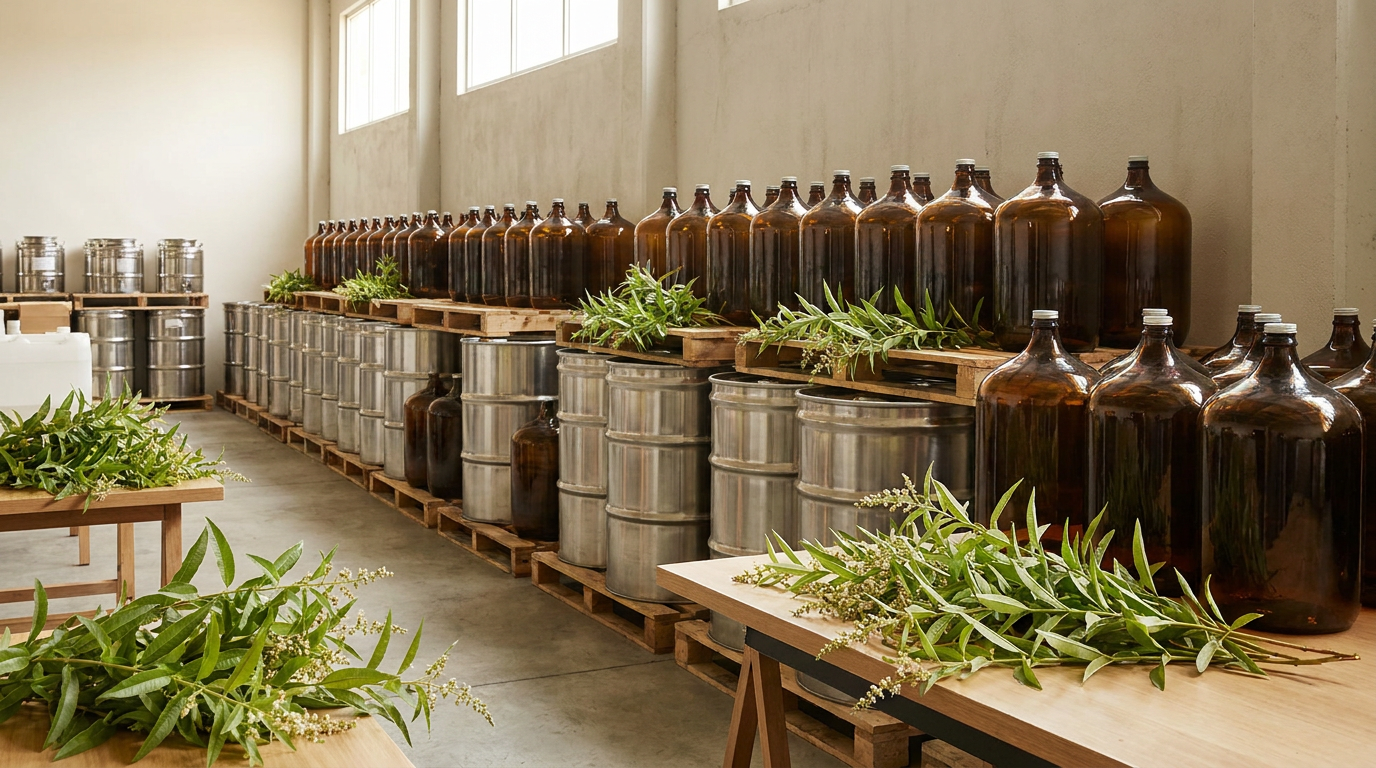
Fine perfumery is where lemon verbena earns its price, valued as a top-to-middle note more polished than lemon peel oil. This page is part of our Guide to Buying Lemon Verbena Essential Oil in Bulk.
Sample the oil first, then move to pound-scale pricing on the bulk page.
Perfumers reach for lemon verbena when a brief calls for a citrus opening that reads as refined rather than sharp, one that softens into a herbal-floral heart instead of fading flat. A short history of the oil in European perfumery traces how it earned that reputation long before synthetic citrus notes existed as an alternative.
It bridges citrus and floral families gracefully, which is why formulators pair it with neroli, lavender, geranium, and light woods rather than treating it as a standalone citrus. A rundown of the materials it partners well with and a broader blending guide both work from that same bridging role.
Fine fragrance and eau de cologne formulas typically work at low dilution against the finished concentrate, so even a small-batch perfume house can build a meaningful number of finished units from a pound-scale order. Solid perfume and balm formats extend that further, since wax-based carriers stretch the oil across more units than a liquid alcohol base; the solid perfume balm approach and a classic eau-style rollerball formula both illustrate the ratios at small scale before a production run is sized up.
A perfumer testing a new accord should sample before quoting a client, then move straight to the pound-scale size that matches the concentrate ratio in the finished formula, rather than stepping through every size in between.
A single perfumer testing a new formula usually starts at 1 oz or 2 oz, moves to 5 lbs once a formula is locked for a limited run, and steps up to 25 lbs or higher for a house producing at scale.
Reach out before a production run to confirm lot availability and documentation.
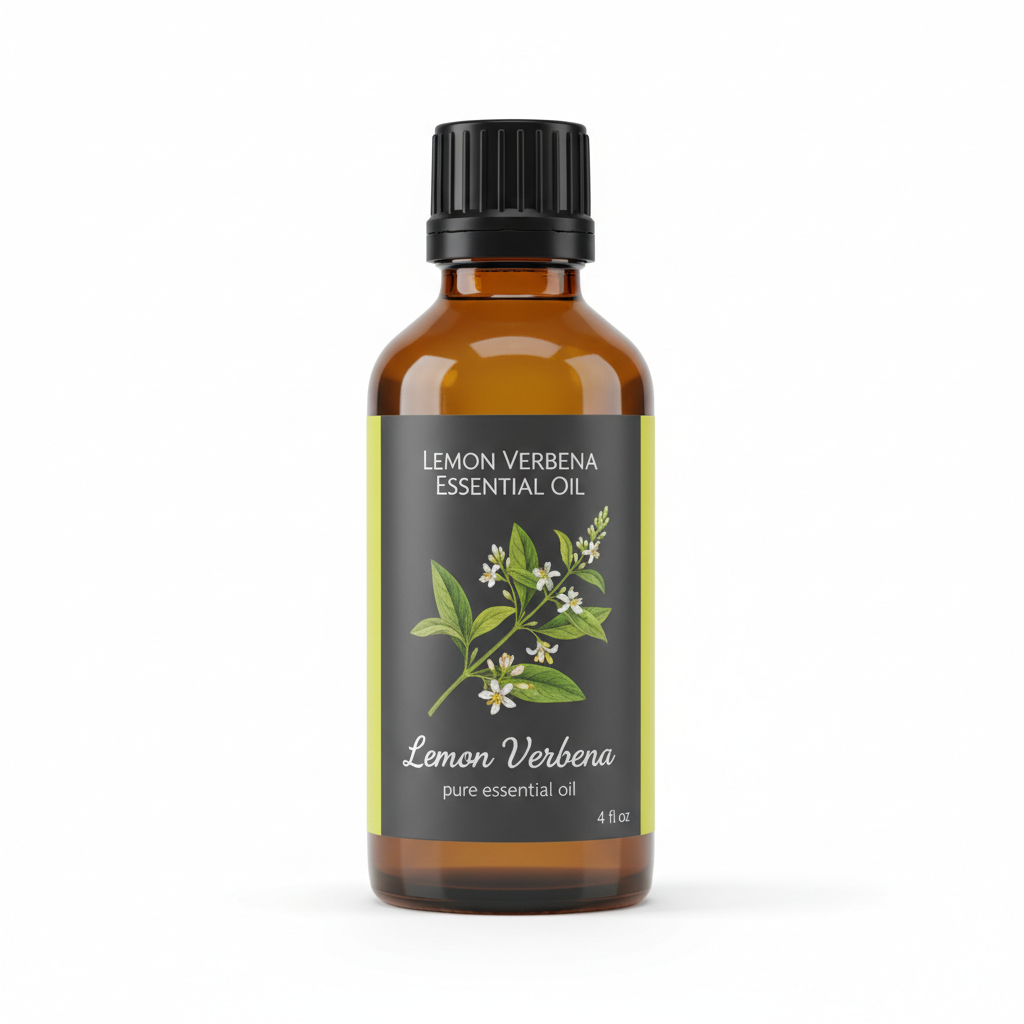
Our own Lemon Verbena Essential Oil, in sizes from 0.5 oz to bulk.
From $12.99
Shop Now →