Lemon Verbena in European Perfumery: A Short History
Few botanical ingredients have traveled as far, been misidentified as often, or shaped a fragrance tradition as quietly and persistently as lemon verbena. Since its arrival in Europe from South America in the late 1700s, the plant Aloysia citrodora has appeared in royal grooming cabinets, classic cologne formulas, and the ingredient lists of Parisian perfumers who valued its luminous, dry citrus character above almost any other green note. The complete guide to lemon verbena essential oil covers the modern picture; this piece goes deeper into where that picture came from.
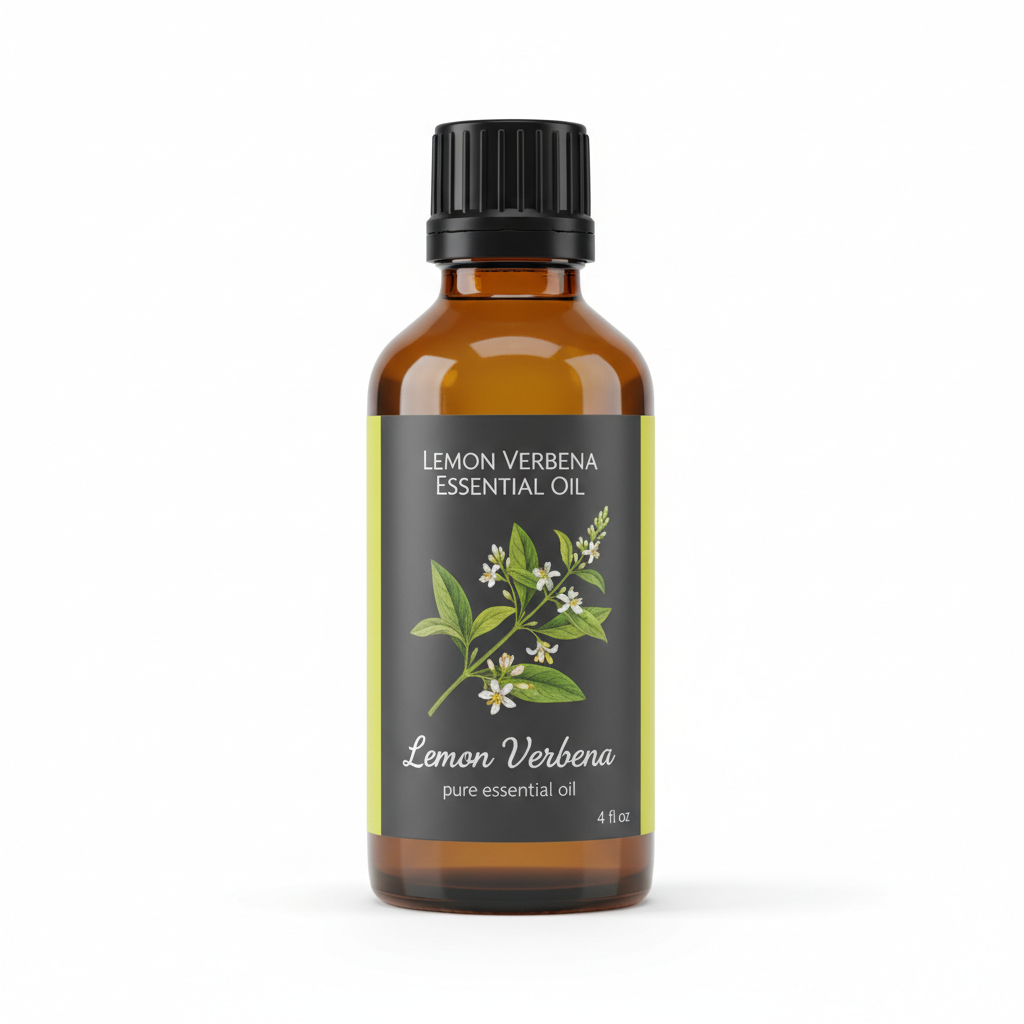
Lemon Verbena Essential Oil
Our own Lemon Verbena Essential Oil, in sizes from 0.5 oz to bulk.
From $12.99
Shop Now →Arrival in Europe: The Late Eighteenth Century
Lemon verbena is native to the western slopes of the Andes and the river valleys of what is now Argentina and Chile. Spanish and Portuguese botanical expeditions brought living specimens to the Iberian Peninsula around 1784. The plant was initially catalogued under several names, including Verbena triphylla and Lippia citriodora, before taxonomists eventually settled on Aloysia citrodora in honor of Maria Luisa, Princess of Parma.
Within a generation, the shrub had migrated north into French and Italian gardens. Its leaves crushed underfoot released something unprecedented: a citrus scent that was sharper, drier, and more herbal than lemon peel, with none of the sweetness of bergamot. Perfumers noticed immediately.
The Grasse fragrance houses, already dominant in European perfumery by the 1790s, began incorporating verbena absolute and distilled verbena water into their compositions. The vocabulary of the era described the scent as frais (fresh) and lumineux (luminous), two qualities that were technically difficult to achieve with the waxy florals and heavy musks that dominated earlier perfumery.
Eau de Verveine and the Cologne Tradition
The phrase eau de verveine appears in French pharmacy and cosmetic records as early as the 1820s. These early formulas were not the concentrated essential oil preparations we associate with modern aromatics. They were alcohol-based splash colognes, often redistilled over fresh verbena leaves to capture volatile compounds that would otherwise deteriorate quickly.
The cologne tradition that produced eau de verveine sat at an interesting intersection of cosmetics and household culture. Bottles appeared on washstands, in travel cases, and on the dressing tables of both men and women. The scent was considered appropriate across genders at a time when perfume was still sharply coded by sex. Its green, astringent brightness read as clean rather than decorative, which gave it social flexibility.
By the mid-nineteenth century, several Paris perfumers had a verbena cologne in their catalogues. Roger et Gallet, founded in 1862, eventually released what became one of the most enduring modern iterations of eau de verveine. Their formula drew on the classic structure: verbena as the luminous top note, supported by citrus peels and a faint herbal base. Versions of that structure remain commercially available today, demonstrating how stable the fragrance archetype has proven across nearly two centuries.
The Chemistry Behind the Character
Lemon verbena essential oil is steam-distilled from the fresh or partially dried leaves. Its scent character emerges from a complex mixture of volatile compounds, and understanding that mixture explains why perfumers have found it so technically useful.
Key Compounds
| Compound | Approximate Range in Oil | Sensory Contribution |
|---|---|---|
| Geranial (Citral a) | 16–35% | Sharp, bright lemon; dominant top note |
| Neral (Citral b) | 12–28% | Softer lemon, slightly floral |
| Limonene | 6–14% | Clean citrus lift |
| 1,8-Cineole | 3–9% | Herbal, slightly camphoraceous depth |
| beta-Caryophyllene | 2–6% | Spicy, dry, woody undertone |
| Caryophyllene oxide | 1–4% | Earthy, faint waxy note |
| Linalool | 1–3% | Soft floral bridge |
The combined citral fraction (geranial plus neral) is the defining chemical signature. High citral content is what gives lemon verbena its dry brightness, distinguishing it from the rounder, juicier profile of lemon essential oil, which is dominated by limonene. The presence of 1,8-cineole and beta-caryophyllene adds the herbal and spicy facets that make verbena more complex than a simple citrus material.
Research suggests that citral-rich essential oils interact with olfactory receptors in ways that may support perceptions of freshness and alertness. Some observations from sensory evaluation studies indicate that high citral concentrations are associated with mood-uplifting sensory experiences. These are fragrance and sensory observations, not medical claims, and they help explain why perfumers working empirically in the nineteenth century already knew to reach for verbena when they wanted a composition to feel awake.
The oil also contains trace quantities of nerol, geraniol, and several sesquiterpenes that contribute to its diffusive quality and moderate tenacity on skin. For a full breakdown of how these compounds influence the oil's practical profile, the lemon verbena essential oil FAQ addresses the most common sourcing and composition questions.
Sourcing, Adulterations, and the Question of Quality
Genuine lemon verbena essential oil has always been expensive and difficult to source in quantity. The plant yields relatively little oil per kilogram of leaf material, and the fresh top-note compounds are volatile enough to degrade quickly after distillation. These factors made adulteration a persistent commercial problem throughout the nineteenth and twentieth centuries.
The most common adulterant, historically and still today, is lemongrass essential oil (Cymbopogon citratus or Cymbopogon flexuosus). Lemongrass is also high in citral and costs a fraction of genuine verbena. A perfumer or consumer comparing the two without experience will find the citrus note convincing. The difference emerges in the herbal facets, the drydown, and the overall complexity. Lemongrass reads as grassy and slightly harsh. Verbena reads as refined and architecturally dry.
Citrus verbena fragrance compounds synthesized in a laboratory now appear in many commercial formulas labeled as verbena scents. There is nothing inherently dishonest about synthetic verbena accords; many are elegantly constructed and perform consistently in ways that the natural oil does not. However, the distinction matters to those working with the genuine botanical material.
Quality indicators for genuine lemon verbena essential oil include:
- A combined citral content (geranial plus neral) of at least 30% on GC-MS analysis
- Presence of 1,8-cineole in the 3-9% range, confirming genuine leaf distillation
- Country of origin documentation from established growing regions (Morocco, France, Argentina, Spain)
- Harvest date on the certificate of analysis; oil older than 18-24 months shows notable citral oxidation
- Distillation method noted as steam or hydro-distillation of fresh leaf material
Moroccan and French-distilled oils tend to command the highest market prices and generally show the cleanest citral profiles. Argentine production, historically the origin-source for the plant itself, has expanded in recent decades and produces competitive material when freshness is maintained in the supply chain.
Lemon Verbena in Modern Perfumery
The twentieth century saw verbena fragment across different fragrance categories. In fine perfumery, it appeared primarily as a top-note modifier: added to fresh fougères, aquatic compositions, and green chypres to supply luminosity in the opening minutes before base notes assumed control. Its relative brevity on skin was both a limitation and a feature, giving compositions a bright departure that softened into something warmer.
In functional fragrance (soaps, candles, room sprays, body care), verbena became a categorical descriptor. Entire product ranges are marketed as verbena-scented without necessarily containing any lemon verbena essential oil. The association between the name and a fresh, citrus-herbal character had become so established that it operated independently of the botanical ingredient. This created some consumer confusion that persists in the present.
It also contributed to the widespread mix-up between lemon verbena (Aloysia citrodora) and the unrelated herb vervain (Verbena officinalis). The name overlap is historically understandable but botanically and aromatically significant. The lemon verbena myths article on verbena, vervain, and common mix-ups addresses that specific confusion in detail.
Contemporary niche perfumers have shown renewed interest in the natural oil as part of a broader return to botanical complexity. Lemon verbena's citral-driven character pairs well with several modern fragrance trends: the interest in transparent, low-sillage compositions; the preference for green and aromatic structures over heavy florals; and the appetite for ingredients that have a traceable origin story.
Safety Profile and Contraindications
Lemon verbena essential oil is generally considered safe for cosmetic and aromatic use when properly diluted, but its high citral content requires attention to a specific caution profile.
Citral is a recognized skin sensitizer at elevated concentrations. The International Fragrance Association (IFRA) has published usage guidelines for citral-containing materials in cosmetic applications. Research suggests that repeated exposure to undiluted or high-concentration citral can increase the likelihood of sensitization reactions in some individuals. Once sensitization develops, it tends to be persistent.
Practical safety notes for cosmetic use:
- Dilution: A maximum of 0.5-1% in leave-on skin products is a commonly cited starting point for citral-rich oils. Always consult current IFRA guidelines and work with a qualified formulator for commercial applications.
- Patch testing: Conduct a 24-48 hour patch test on inner forearm skin before any new topical application, even at low dilution.
- Phototoxicity: Lemon verbena essential oil has shown phototoxic potential in some research observations. Avoid applying diluted oil to skin areas that will be exposed to direct sun or UV light.
- Storage: High citral content makes the oil susceptible to oxidation. Store in a dark glass bottle, away from heat, and use within 12-18 months of opening.
- Pregnancy and nursing: As with most essential oils, use during pregnancy or while nursing should follow guidance from a qualified healthcare provider.
- Children: Consult a qualified healthcare provider before using any essential oil product on or around young children.
None of the above constitutes a complete safety review. Anyone formulating with lemon verbena essential oil at a professional level should reference current IFRA standards, the IFRA/RIFM safety data for citral-containing materials, and consult a qualified aromatherapist or cosmetic formulator.
The citral content that makes lemon verbena so valuable to the nose is the same compound that demands careful handling. Respecting that duality is part of working intelligently with any high-quality botanical material.
A Fragrance Ingredient with Staying Power
Lemon verbena arrived in Europe carrying the freshness of a continent that perfumers had never smelled before. It found its way into colognes and cosmetics quickly, shaped a recognizable fragrance archetype that still sells hundreds of years later, and managed to survive the full industrialization of fragrance without losing its identity as a botanical original. The chemistry explains a great deal of that persistence. So does the fact that some scent characters simply resonate across time, regardless of what trends move around them.
The history of eau de verveine is also a useful case study in how a fragrance tradition can outlast the ingredient that started it. Whether you choose to work with the genuine oil, a well-constructed synthetic accord, or a historically informed recreation, knowing the origin sharpens your understanding of what you are trying to capture.