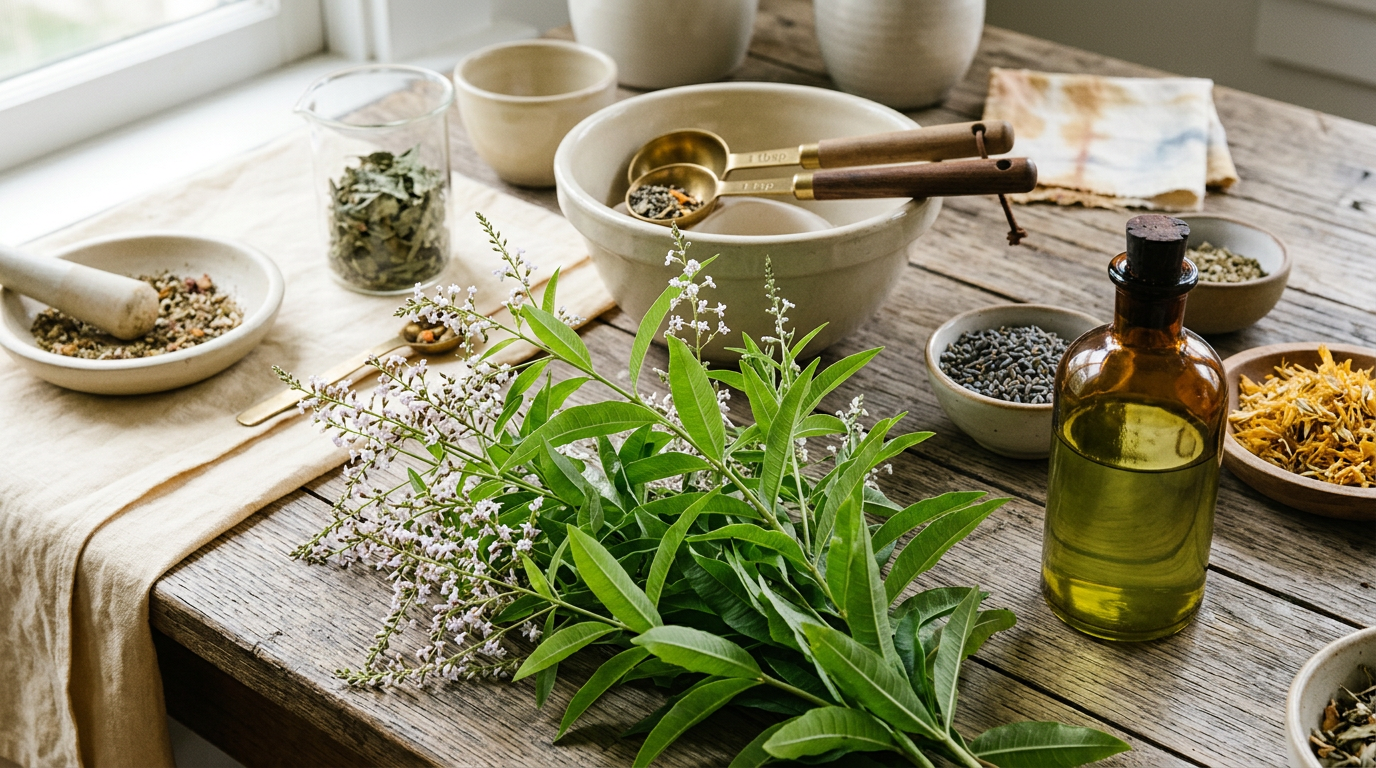
DIY Lemon Verbena Solid Perfume Balm: A Pocket Wax and Oil Blend
There's a particular kind of loyalty that builds around a solid perfume balm. It lives in a coat pocket or a desk drawer for months, and unlike a glass bottle, it never spills, never clouds through airport security, and never announces itself with a puff of alcohol. This DIY solid perfume balm recipe pairs the bright, lemony-green facets of lemon verbena essential oil with a simple beeswax and oil base, giving you a pocket-sized version of the scent without any of the guesswork that usually comes with blending fragrance at home.
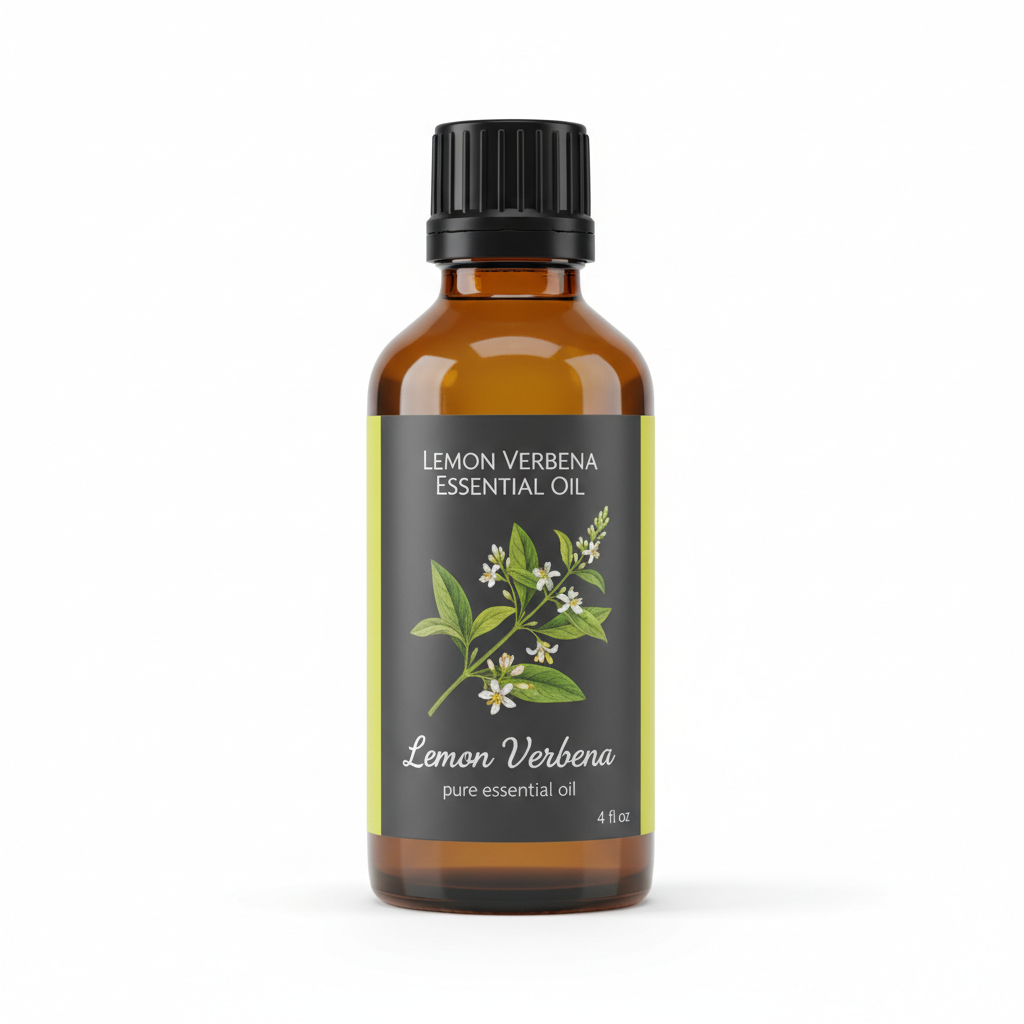
Lemon Verbena Essential Oil
Our own Lemon Verbena Essential Oil, in sizes from 0.5 oz to bulk.
From $10.99
Shop Now →Lemon verbena (Aloysia citrodora) has a scent that's hard to fake: sharp citrus up front, a green herbal undertone, and a soft floral finish that keeps it from reading as pure lemon rind. That complexity is exactly why it works so well in a solid format. A balm melts slowly against warm skin, and that slow release lets each facet of the oil unfold instead of blasting out all at once the way a spray does.
Difficulty and Prep Time
- Difficulty: Beginner
- Active prep time: 15 minutes
- Cooling and set time: 1 to 2 hours
- Yield: About four 0.5 oz (15 mL) tins
Full Ingredients List
This beeswax perfume balm essential oil recipe uses a straightforward 1:2 ratio of wax to carrier oil, which sets up firm enough to hold its shape in a warm pocket but soft enough to swipe on with a fingertip.
- 1 tablespoon (about 14 g) beeswax pellets, food-grade or cosmetic-grade
- 2 tablespoons (about 28 g) jojoba oil or fractionated coconut oil
- 1 teaspoon (about 5 g) shea butter, optional, for a creamier glide
- 10 drops lemon verbena essential oil
- 6 drops petitgrain, bergamot FCF (bergapten-free), or geranium essential oil, to round out the top notes
- Four empty 0.5 oz balm tins or small glass jars with lids
A note on sourcing: lemon verbena essential oil varies a lot by supplier, and cheaper bottles are sometimes cut with lemongrass or citral isolate to stretch the yield, since true verbena oil is a low-yield, labor-intensive distillation. A batch that smells flat, syrupy-sweet, or purely like lemon dish soap rather than green and layered is worth questioning. Buy from a supplier who publishes batch-specific GC-MS testing, and store your bottle away from light and heat so the top notes don't fade before you even get to blending.
Equipment You'll Need
- A small heatproof glass measuring cup or jar (for a makeshift double boiler)
- A small saucepan
- A metal spoon or glass stirring rod
- A kitchen scale (measuring by weight is more consistent than by volume for wax)
- Balm tins or small jars, labeled with the date
Step-by-Step Instructions
- Set up a double boiler. Fill the saucepan with about an inch of water and bring it to a gentle simmer. Place the heatproof measuring cup inside so it sits above, not in, the water.
- Melt the beeswax. Add the beeswax pellets to the cup and let them melt fully, stirring occasionally. This usually takes 5 to 8 minutes depending on your stove.
- Add the carrier oil and shea butter. Once the wax is fully liquid, stir in the jojoba oil (or fractionated coconut oil) and the shea butter if using. Keep stirring until everything is smooth and fully combined.
- Remove from heat and cool slightly. Take the cup off the double boiler and let the mixture cool for about 60 to 90 seconds. It should still be liquid but no longer scalding, since essential oils added to very hot wax will volatilize and the scent will fade fast.
- Add the essential oils. Stir in the lemon verbena essential oil and your chosen complementary oil. Mix well for about 30 seconds so the scent distributes evenly through the batch rather than pooling at the surface.
- Pour into tins. Working quickly before the mixture starts to set, pour it into your prepared tins, filling each about three-quarters full.
- Let set undisturbed. Leave the tins on a flat, level surface for at least an hour at room temperature, or speed things along in the refrigerator for about 20 minutes. Avoid moving them while the wax is still soft, or you'll get an uneven, cratered surface.
- Cap and label. Once fully set and cool to the touch, put the lids on and label each tin with the batch date.
How to Use Your Solid Perfume Balm
Warm a small amount between your fingertip and the pulse points at your wrists, the inside of your elbows, or behind your ears. A little goes further than you'd expect. Because it's a wax base rather than an alcohol spray, the scent tends to sit closer to the skin and last in a quieter, more personal way over several hours.
Safety Warnings
Essential oils are concentrated plant extracts, and lemon verbena oil in particular is worth handling with a bit more caution than some other citrus-family oils. It's high in citral, a compound that's associated with skin sensitivity in some people when used at higher concentrations, so this recipe intentionally keeps the total lemon verbena content low relative to the wax and oil base.
- Dilution: This recipe keeps lemon verbena oil at a low percentage of the total balm, in line with general cosmetic guidance for restricted oils. Do not increase the amount of lemon verbena oil beyond what's listed here without researching current dilution guidance for leave-on skin products.
- Patch test first: Before applying the finished balm anywhere near your face or neck, dab a small amount on the inside of your forearm and wait 24 to 48 hours. Watch for redness, itching, or discomfort. If any appears, wash the area and discontinue use.
- Avoid sensitive areas: Keep the balm away from eyes, ears, mucous membranes, and broken or irritated skin.
- Sun exposure: Some citrus-family oils increase skin sensitivity to sunlight. While lemon verbena oil is not typically classified among the strongest phototoxic citrus oils, it's still sensible to avoid applying any citrus-scented balm to skin that will get direct, prolonged sun exposure shortly after.
- Pregnancy, nursing, and existing health considerations: If you're pregnant, nursing, or managing any ongoing health situation, talk with a qualified healthcare provider before introducing a new essential oil blend to your routine.
- Children and pets: Keep finished balms and raw essential oils well out of reach of children and pets.
- Discontinue if irritation occurs: If you notice any irritation during regular use, even after a clear patch test, stop using the balm and consult a qualified healthcare provider if symptoms persist.
This recipe is intended for cosmetic and aromatic use only. It is not intended to diagnose, and this content should not be read as medical guidance.
Storage Instructions and Shelf Life
Store your solid perfume balm in a cool, dry spot away from direct sunlight and heat sources. A bathroom cabinet or bedroom drawer works better than a car console or a sunny windowsill, since heat will soften the wax and can shorten how long the top notes hold.
Made with jojoba oil, which resists rancidity better than many carrier oils, this balm should keep well for around 6 to 12 months. If you swap in a different carrier oil, check its typical shelf life separately, since some oils go off faster than others. Signs it's time to make a fresh batch include a change in smell (particularly anything sour, waxy-off, or flat), a change in color, or visible separation between the wax and oil layers.
Because there's no added water in this recipe, you don't need a preservative, but good hygiene still matters: use clean fingertips or a small spatula to scoop the balm rather than double-dipping with a fingertip that's touched other products first.
Variations and Substitutions
Once you've made the base recipe once, it's easy to adjust to taste or to what's in your pantry.
- Vegan version: Swap the beeswax for candelilla wax, using about half the amount by weight since candelilla sets up firmer than beeswax. Start with 2 teaspoons and adjust from there.
- Richer, creamier texture: Increase the shea butter to 2 teaspoons and reduce the jojoba oil slightly to keep the ratio balanced.
- Deeper, warmer scent profile: Add 2 to 3 drops of sandalwood or cedarwood essential oil alongside the lemon verbena for a base note that grounds the citrus brightness.
- Brighter, sunnier profile: Swap the petitgrain or geranium for sweet orange essential oil to lean further into the citrus character.
- Travel tins vs. jars: Small metal balm tins are the most pocket-friendly, but a tiny glass jar with a tight lid works just as well for a bedside or desk version.
- Carrier oil swaps: Fractionated coconut oil is nearly scentless and keeps well, while sweet almond oil adds a very faint nutty note that some people enjoy layered under the lemon verbena.
A Few Practical Notes Before You Start
If this is your first time working with essential oils in a DIY solid perfume balm recipe, resist the urge to add more drops than the recipe calls for. It's tempting to think more oil means a stronger, longer-lasting scent, but past a certain point you're mostly just increasing the chance of skin sensitivity without much gain in how the balm actually smells once it's warmed against your skin. Small batches like this one are also useful for testing: if you're not sure whether you'll like the petitgrain pairing versus the geranium one, make two half-batches in separate tins before committing a full bottle of lemon verbena oil to one blend.
Keep a small notebook or note on your phone with the ratios and oils you used for each batch. Scent memory is powerful, but exact measurements fade fast, and it's worth being able to recreate (or deliberately tweak) a blend you loved three months from now.