DIY Verbena Perfume Oil: A Classic Eau-Style Rollerball
A well-made rollerball perfume is one of the most satisfying projects in home fragrance craft. It travels easily, applies precisely, and lasts far longer on the skin than a spritz formula. When lemon verbena essential oil sits at the heart of the blend, you get something genuinely distinctive: a citrus note with a kind of green, herbal clarity that most commercial perfumes approximate but rarely achieve.
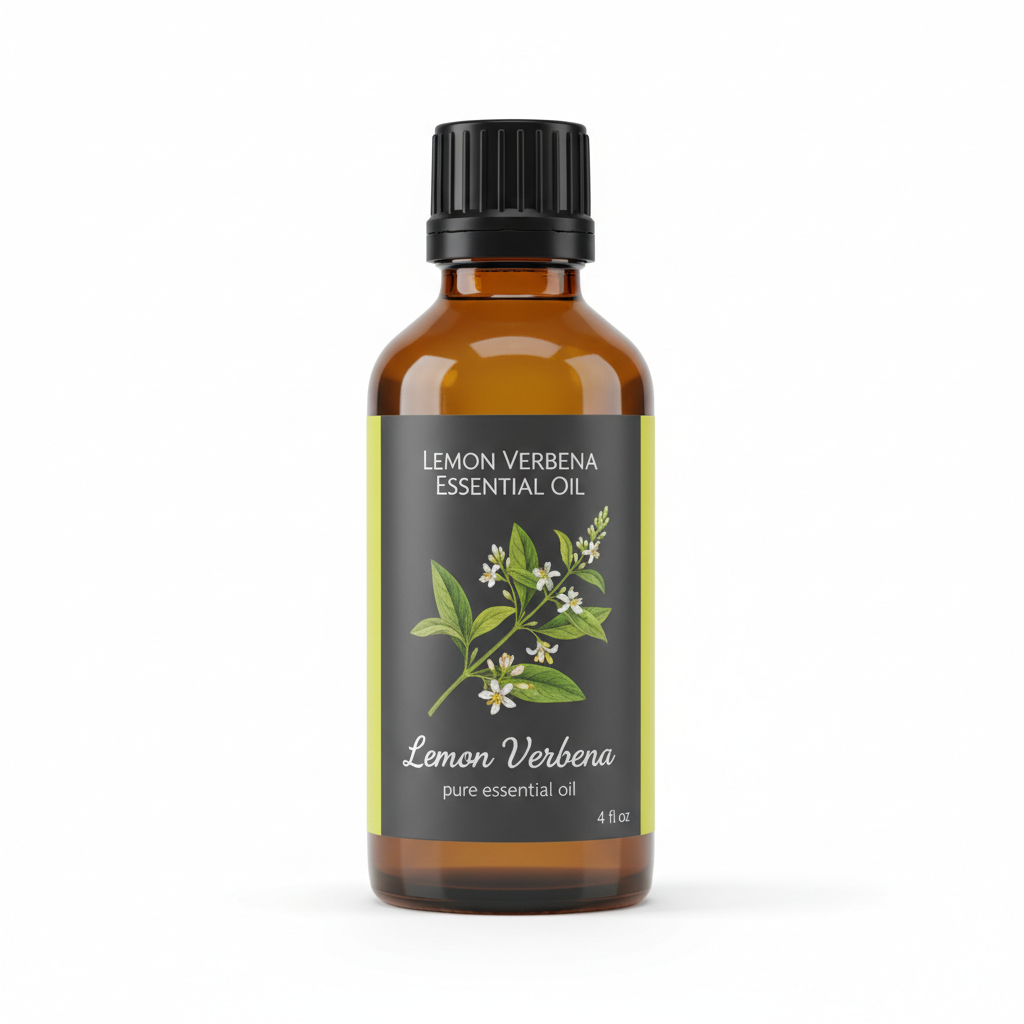
Lemon Verbena Essential Oil
Our own Lemon Verbena Essential Oil, in sizes from 0.5 oz to bulk.
From $12.99
Shop Now →This recipe is built around a classic eau-style dilution, light enough for daily wear but rich enough to carry the scent through a full afternoon. The result is a lemon verbena perfume oil with real structure: a sparkling top, a softly floral mid, and a dry-down that lingers without announcing itself from across the room.
Before You Begin: A Note on Lemon Verbena Essential Oil
Genuine lemon verbena essential oil (from Aloysia citrodora) is one of the more expensive citrus-family oils on the market. This is not a caution against using it. It is simply useful information when you are scaling a batch. The oil is steam-distilled from the flowering tops and leaves of the plant, and it carries a complexity that lemon, lemongrass, or citronella cannot replicate. If you are curious about how it differs from its botanical relatives and which other oils share its character, the ultimate guide to using and blending lemon verbena oil is worth reading first.
For this recipe, a little goes a long way. You are working at a 10% to 12% dilution, which is within the standard range for a skin-safe perfume oil. Do not be tempted to increase the concentration to stretch the scent. More does not always mean stronger on the skin, and with a delicate oil like this, balance matters more than volume.
Recipe Overview
- Difficulty: Beginner to Intermediate
- Active Prep Time: 20 to 30 minutes
- Resting Time: 48 to 72 hours (recommended before first wear)
- Yield: One 10 ml rollerball bottle (approximately 200 drops of finished product)
- Shelf Life: 12 to 18 months with proper storage
Ingredients
| Ingredient | Amount | Notes |
|---|---|---|
| Lemon verbena essential oil | 8 drops | Top to heart note; use a reputable steam-distilled source |
| Bergamot essential oil (bergapten-free) | 4 drops | Top note; bergapten-free is required for skin-safe use |
| Palmarosa essential oil | 4 drops | Heart note; adds a soft, rosy-green quality |
| Cedarwood essential oil (Virginian or Atlas) | 3 drops | Base note; grounds the blend without heaviness |
| Vetiver essential oil | 1 drop | Base note; use sparingly, it is powerful |
| Fractionated coconut oil | Fill to 10 ml (approximately 180 drops or 9 ml) | Carrier oil; stays liquid, odorless, absorbs cleanly |
Total essential oil drops: 20 drops in approximately 9 ml of carrier. This produces a dilution of roughly 10%, appropriate for a leave-on perfume oil applied to pulse points.
Equipment
- One 10 ml amber or cobalt glass rollerball bottle with stainless steel roller ball
- A small glass stirring rod or toothpick
- A 1 ml or 3 ml pipette or dropper (for precise measurement)
- A label and fine-point pen or printed label sheet
- A small piece of fragrance testing strip or blotter paper (optional but useful)
Step-by-Step Instructions
-
Prepare Your Workspace
Work on a clean, flat surface away from open flames. Essential oils are flammable. Lay down a paper towel to catch any drips, and have your rollerball bottle uncapped and ready. Glass is strongly preferred over plastic here, as some essential oils can degrade low-quality plastic over time.
-
Add the Essential Oils First
Remove the roller ball assembly from the bottle (most 10 ml rollerballs allow you to pull the roller ball cap off). Add your essential oils directly into the empty bottle in this order: vetiver first (the heaviest and most viscous), then cedarwood, then palmarosa, then bergamot, then lemon verbena last. Adding lighter, more volatile oils last helps minimize evaporation during the process.
-
Swirl the Essential Oil Blend
Before adding your carrier, cap the bottle loosely and swirl gently for 15 to 20 seconds. This allows the oils to begin blending with each other rather than simply sitting in layers. If you have a blotter strip, dip one end briefly into the bottle at this stage. You will smell the raw blend, which will be sharper and less cohesive than the finished product. Note it for comparison later.
-
Add the Carrier Oil
Using your pipette, fill the bottle with fractionated coconut oil to the shoulder of the bottle, leaving a small air gap below where the roller ball assembly sits. Do not overfill. A slight gap ensures the roller ball can spin freely once replaced. Fill slowly to avoid creating air bubbles.
-
Replace the Roller Ball and Cap
Press the roller ball assembly firmly back into the bottle neck. You should hear or feel a faint click or resistance as it seats. Cap tightly. Turn the bottle upside down once to check for leaks before labeling.
-
Label and Date the Bottle
Label with the name of the blend, the date made, and the dilution percentage (10%). Include any known allergen oils in the blend on the label if you are making this as a gift. A simple label might read: Verbena Rollerball No. 1 / 10% / [date].
-
Rest the Blend
Set the bottle in a cool, dark spot and leave it for at least 48 hours before wearing. This resting period allows the oils to marry and the scent to settle into something more rounded. Vetiver in particular needs time to soften and integrate. At 72 hours, test it on the inside of your wrist and allow it to dry down for 30 minutes before evaluating the full arc of the scent.
Safety Information: Please Read Before Use
Patch Test Required. Before wearing any new DIY perfume oil on pulse points, apply a small amount to the inside of your elbow and wait 24 hours. If you notice redness, itching, or irritation, discontinue use and consult a healthcare provider.
- Dilution ratio: This recipe is formulated at approximately 10%, which is within standard guidelines for a leave-on, skin-applied perfume oil. Do not increase the essential oil count without recalculating your dilution percentage.
- Bergamot: Use only bergapten-free (FCF) bergamot essential oil. Standard bergamot contains furanocoumarins that may cause photosensitivity reactions on sun-exposed skin. This recipe is intended for pulse points that may be exposed to sunlight.
- Lemon verbena sensitization: Some individuals are sensitized to Aloysia citrodora. If you have a known citrus or plant sensitivity, consult a qualified healthcare provider before use.
- Pregnancy and nursing: Consult a qualified healthcare provider before using any essential oil blend during pregnancy or while nursing.
- Children: This formula is intended for adult use. Keep all essential oils and the finished product out of reach of children.
- Eyes and mucous membranes: Avoid contact. If contact occurs, flush with a plain carrier oil first, then rinse with water. Do not use water alone on undiluted essential oil.
- Not for internal use.
Storage Instructions and Shelf Life
Store your verbena rollerball in a cool, dark location. A bathroom cabinet away from the shower steam is fine. A bedside drawer works well. Avoid windowsills or areas with temperature fluctuations, which accelerate oxidation.
Fractionated coconut oil is notably stable and does not go rancid as quickly as some other carriers. The limiting factor here will be the citrus components, particularly lemon verbena and bergamot. Citrus-forward oils are more volatile and have a shorter shelf life than resinous or woody base notes. Expect 12 to 18 months of good quality, with the scent profile shifting subtly after the 12-month mark as the top notes fade.
If the blend develops an off, rancid, or crayon-like smell before that window, discard it. Do not use oxidized essential oil blends on the skin.
Variations and Substitutions
The Greener Version
Replace palmarosa with violet leaf absolute (diluted in jojoba) at 2 drops. This pushes the blend toward a cool, green-watery direction rather than a rosy one. The lemon verbena note will read as sharper and more botanical.
The Warmer, Woodsier Version
Swap vetiver for 2 drops of sandalwood (Australian or Mysore, ethically sourced) and reduce cedarwood to 2 drops. This creates a creamier dry-down that pairs especially well with the green-citrus quality of verbena in cooler months.
The Florals-Forward Version
Add 2 drops of neroli essential oil and reduce bergamot to 2 drops. Neroli shares a citrus-blossom quality with lemon verbena and creates a more clearly feminine, classic eau de cologne character. For more on which oils harmonize naturally with verbena, see the full guide to what blends well with lemon verbena.
Carrier Oil Substitutions
Jojoba oil is an excellent alternative to fractionated coconut oil. It is technically a liquid wax and has an exceptionally long shelf life. It is slightly heavier on application than fractionated coconut but absorbs cleanly. Avoid sweet almond or apricot kernel oil in rollerballs, as they go rancid more quickly and may shorten the overall shelf life of the finished product.
Making a Larger Batch
To fill three 10 ml rollerballs from one mixing session, multiply every measurement by three and mix in a small glass beaker before filling. This is more efficient and reduces the chance of measurement error when working in small-drop quantities. A dedicated dropper per oil is strongly recommended when working at this scale.
A Few Words on the Scent Experience
On first application, the lemon verbena and bergamot will be immediately present: bright, slightly tart, very clean. Within about ten minutes, as the top notes settle, the palmarosa begins to show. It softens the citrus without sweetening it, adding a kind of quiet green-floral quality that extends the mid-stage considerably longer than a single-note citrus oil would.
The dry-down is where cedarwood and vetiver do their work. The cedar is dry and pencil-shaving clean. The single drop of vetiver is almost imperceptible as vetiver on its own, but it adds something difficult to name: a rootedness, a sense that the scent has a floor. Most lemon-based DIY citrus perfume blends miss this and end up smelling pleasant but insubstantial. That single drop is not optional.
The finished oil wears close to the skin. It is a personal scent in the traditional sense, something someone notices when they are near you rather than before you enter the room. For those used to commercial eau de toilette strength, this may take some adjustment. You may find yourself reapplying after a few hours, which is normal for an oil-based formula at this dilution.
If you find yourself wanting to explore lemon verbena beyond the perfume bottle, it is worth knowing that the leaf itself has a long history in the kitchen as well. Chefs have worked with it as a flavoring for decades, and reading about how chefs use lemon verbena leaf can give you a richer sense of the plant's range. And if you want to go deeper into the sourcing and quality questions that matter when purchasing the essential oil, start with the complete blending guide before you build out your collection.
This is a project that rewards patience. The 72-hour resting period is not ceremonial. The blend you smell on day three is meaningfully different from what you mixed on day one. Give it the time, and the result is a lemon verbena perfume oil that is genuinely yours: cohesive, considered, and far more interesting than anything a mass-market citrus cologne is likely to offer.