
What Does Lemon Verbena Smell Like? A Sparkling Scent Profile
The first time you encounter a true lemon verbena essential oil, the experience is genuinely disorienting in the best possible way. You expect something citrusy and simple. What arrives is layered, luminous, and almost impossibly bright. The lemon verbena smell has stopped people mid-sentence. It has the quality of fresh lemon zest lifted through warm, green air, but with an herbal depth that keeps you reaching for words that don't quite fit. Floral? Not exactly. Herbal? Partially. Citrus? Yes, but more refined than that.
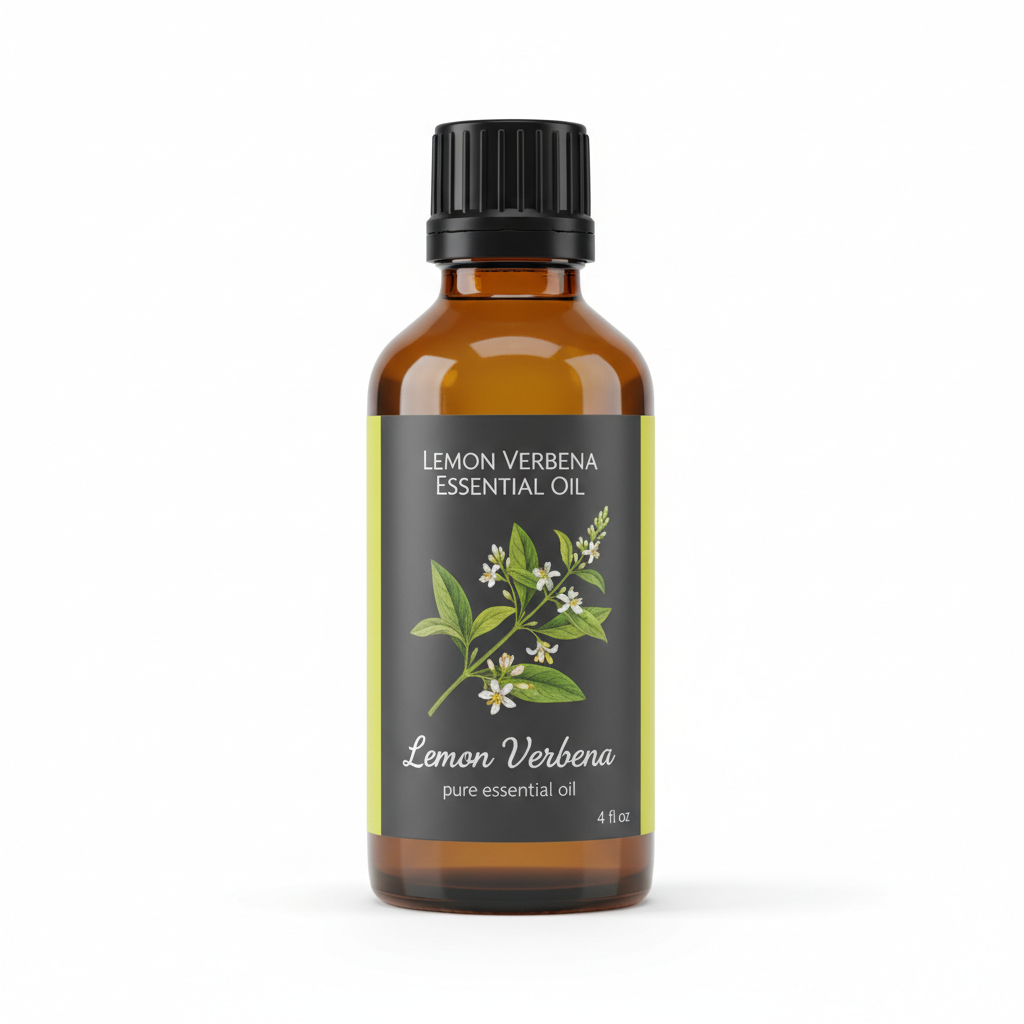
Lemon Verbena Essential Oil
Our own Lemon Verbena Essential Oil, in sizes from 0.5 oz to bulk.
From $12.99
Shop Now →This deep dive explores the chemistry behind that remarkable lemon verbena scent, what the research literature observes about its key constituents, how to identify a quality oil by nose and by lab report, and what you need to know before working with it.
The Scent, Described
A quality lemon verbena essential oil opens with an intensely bright, almost piercing citrus note. It reads as lemon, but not the flat, one-dimensional lemon of a cleaning product. The refined lemon aroma here carries a green, slightly floral undertone that emerges within the first few seconds. As it dries down, a soft herbal quality surfaces, sometimes described as faintly minty or faintly rose-like, depending on the batch's origin and the nose doing the evaluating.
Perfumers classify lemon verbena in the citrus-herbal family. It sits in an interesting space on the olfactory map: sharper and more complex than lemon essential oil, more overtly citrusy than melissa (lemon balm), and far more nuanced than lemongrass. The drydown lingers with a clean, slightly powdery warmth that distinguishes it from other lemon-forward oils entirely.
This complexity is not accidental. It flows directly from an unusually rich chemical profile, which the research community has spent considerable effort mapping over the past few decades.
Chemical Composition: What Creates That Scent
Lemon verbena essential oil is extracted from the leaves and flowering tops of Aloysia citrodora, a shrub native to South America and now widely cultivated across Spain, Morocco, France, and Argentina. The oil is obtained by steam distillation, a process that captures volatile aromatic compounds while leaving heavier, non-volatile constituents behind. For more on how that distillation process works and why the yield is exceptionally small, the article on how lemon verbena oil is made and why the yield is so small covers the production side in detail.
The aromatic profile is built from dozens of volatile compounds, but a handful of key constituents do most of the olfactory heavy lifting.
Geranial and Neral (the Citral Complex)
These two aldehydes, collectively known as citral, typically account for between 30% and 45% of the oil's composition, depending on origin and harvest timing. Research consistently identifies this citral complex as the primary driver of the sharp, vivid lemon character in lemon verbena scent. Geranial (also called citral a) contributes the more intensely lemon-like note. Neral (citral b) is softer and slightly sweeter. Together they create the luminous citrus opening that defines the oil's first impression.
Limonene
A familiar compound to anyone who has studied citrus oils, limonene typically appears in lemon verbena essential oil at concentrations ranging from roughly 8% to 16%. It amplifies the fresh, juicy citrus quality and contributes to the oil's bright, clean top note. Limonene is also a well-studied compound in the fragrance research literature, appearing in hundreds of peer-reviewed studies examining aromatic compounds' sensory properties.
1,8-Cineole
Here is where the profile gets interesting. Eucalyptol, commonly called 1,8-cineole, appears in many lemon verbena oils at concentrations between 5% and 12%. This is the compound responsible for that faintly cool, slightly camphoraceous undertone you detect on careful evaluation. It adds complexity and prevents the oil from reading as purely citrus. When you smell lemon verbena and sense something herbal, slightly medicinal in character (though not in any clinical sense), something that doesn't quite belong to a lemon grove, you are likely picking up cineole.
Linalool
Linalool is one of the most widely distributed aroma compounds in nature, present in hundreds of plant species. In lemon verbena essential oil, it appears in modest quantities, typically 3% to 8%, but its contribution to the drydown is significant. Linalool's soft, slightly floral, faintly woody character is what gives lemon verbena its sophistication in the base notes. It softens the aldehyde sharpness and adds the powdery, almost rose-adjacent warmth that distinguishes a fine lemon verbena oil from a sharp, linear citrus.
Beta-Caryophyllene and Other Sesquiterpenes
Sesquiterpenes contribute the subtle earthy, woody depth that emerges in the far drydown. Beta-caryophyllene, also found in black pepper and cloves, appears in small concentrations in lemon verbena essential oil. Its presence is part of why experienced noses describe the oil's drydown as grounded rather than fleeting.
What Research Observes About the Key Compounds
The scientific literature on Aloysia citrodora and its essential oil is more developed than many people expect. Researchers have examined the oil's aromatic composition extensively, particularly in the context of its sensory properties and its behavior in cosmetic formulations.
Studies examining citral-dominant essential oils, including lemon verbena, suggest that the citral complex may contribute to a sense of alertness and perceptual brightness when used aromatically. Some research in the field of environmental psychology observes that bright citrus aromas are associated with elevated mood states in controlled atmospheric settings. These are observational associations, not causal claims.
Research on linalool's sensory properties suggests that this compound may support a sense of calm atmosphere when diffused, with several studies noting associations between linalool-containing environments and reduced physiological markers of stress response. Again, these are preliminary observations from specific research contexts, not a basis for clinical recommendations.
A 2019 compositional study published in the journal Natural Product Communications examined lemon verbena oils from multiple geographic origins and noted significant variation in citral concentrations depending on harvest timing and altitude. This finding has practical implications for quality assessment, which we address below.
For a full portrait of the plant behind all of this chemistry, the article on Aloysia citrodora: the shrub behind the connoisseur's lemon explores the botany and cultivation in depth.
Variability in Lemon Verbena Scent: Why Batches Differ
One of the first things you notice when sourcing lemon verbena essential oil seriously is that not all bottles smell the same. The variation can be striking. A Spanish-origin oil may lean sharper and more citrus-forward. A Moroccan oil might present a softer, slightly more herbal character. An oil distilled from early-season leaves often carries a higher citral content and reads as more intensely lemon-like. Late-season or multiple-distillation oils sometimes exhibit a more complex, rounded profile with stronger cineole and sesquiterpene presence.
Altitude, soil composition, harvesting moment relative to flowering, and distillation technique all influence the final aromatic profile. This variability is part of what makes lemon verbena a connoisseur's oil. It rewards attention to sourcing details in a way that more standardized essential oils simply do not.
Quality Indicators: How to Evaluate What You Buy
Given the cost and rarity of genuine lemon verbena essential oil, adulteration is a real concern in the market. Cheaper citrus oils, synthetic citral, or lemongrass fractions are sometimes used to extend or imitate the oil. Knowing what a genuine oil should smell like, and what documentation to request, protects your investment.
By Nose
A genuine lemon verbena essential oil should open with bright, vivid citrus brightness. Within two to three minutes of drying on a blotter, the green herbal and slightly floral facets should emerge. The drydown should be clean but complex, never flat. If an oil smells entirely one-dimensional, persistently sharp without any evolution, that is worth questioning. Lemongrass, a common adulterant, has a cruder, grassier, less refined character and lacks the powdery drydown of authentic verbena.
By Documentation
Request a gas chromatography-mass spectrometry (GC-MS) report from any supplier you're considering. A genuine lemon verbena essential oil should show citral (combined geranial and neral) in the range of 30% to 45%, limonene between 8% and 16%, and the presence of linalool, cineole, and sesquiterpenes in the ranges described above. An oil showing very high citral above 50% may have been adulterated with synthetic citral. An oil showing almost no cineole or linalool deserves scrutiny.
Look for GCMS reports that list the specific percentages of individual compounds, not just a generic "tested for purity" statement. The more transparent the supplier, the more confidence you can place in what you're buying.
The complete guide to lemon verbena essential oil includes a broader overview of sourcing, storage, and what to look for when comparing suppliers.
Safety Profile and Contraindications
Lemon verbena essential oil is a potent aromatic material. Its high citral content means it carries a real risk of skin sensitization, particularly for people with reactive skin or existing sensitivities.
Dermal Application
The International Fragrance Association (IFRA) sets usage guidelines for lemon verbena oil in leave-on skin products based on its citral concentration. For leave-on formulations applied to skin that may be exposed to sunlight, a maximum dermal use rate of approximately 0.2% is commonly cited in formulation guidance. Always consult current IFRA standards and the specific guidelines that apply to your product category.
Citral is a known contact sensitizer. Repeated exposure to products containing high concentrations may increase the likelihood of sensitization over time. This is not unique to lemon verbena; it applies to all citral-rich essential oils, including lemon myrtle and may chang.
Patch testing is strongly recommended before any leave-on application. Apply your diluted product to a small area of skin on the inner forearm. Wait 24 to 48 hours and observe for redness, itching, or irritation before broader use.
Phototoxicity
Unlike cold-pressed citrus oils, steam-distilled lemon verbena essential oil is generally considered non-phototoxic because the distillation process does not carry over the furanocoumarins responsible for phototoxic reactions. However, formulation context matters. If you are blending lemon verbena with cold-pressed citrus oils (bergamot, lime, grapefruit), the phototoxicity risk of those other oils should be factored into your usage calculations.
Pregnancy and Other Populations
Lemon verbena essential oil is generally not recommended for use during pregnancy or while nursing, given the lack of safety data for these populations. It should be kept well out of reach of children and should not be used on or around infants. People with known citrus or aldehyde sensitivities should approach this oil with particular care.
If you have any specific concerns about how this oil may interact with your individual circumstances, consulting a qualified healthcare provider is always the right approach.
Shelf Life and Oxidation
Citral-dominant oils oxidize over time. Oxidized citral is a stronger sensitizer than fresh citral, which makes storage and shelf life important quality considerations. Store lemon verbena essential oil in a dark glass bottle, tightly sealed, away from heat and light. Most sources recommend using the oil within one to two years of opening. If the scent shifts from bright and vivid to flat, musty, or harshly sharp, oxidation has likely begun and the oil should not be used in skin-contact applications.
The Bottom Line on Lemon Verbena Smell
The lemon verbena scent is genuinely singular in the aromatic world. Its refined lemon aroma comes from a precise interplay of citral aldehydes that deliver the brightness, linalool that adds the soft floral depth, cineole that introduces herbal complexity, and sesquiterpenes that ground the drydown. No single compound is responsible. The experience is the sum of all of them working together.
Understanding what you're smelling, and why, changes how you use it. It sharpens your nose when evaluating quality. It helps you understand why certain blends work and others fall flat. And it gives you a more informed starting point for sourcing oil that genuinely represents what this remarkable plant is capable of producing.