
How Lemon Verbena Oil Is Made: Why the Yield Is So Small
If you have ever held a small bottle of lemon verbena essential oil and wondered why it costs so much for so little, the answer lives in the distillation process. Getting oil out of Aloysia citrodora leaves is genuinely difficult. The plant is generous with its fragrance but stingy with its oil, and understanding why helps you appreciate every drop you use.
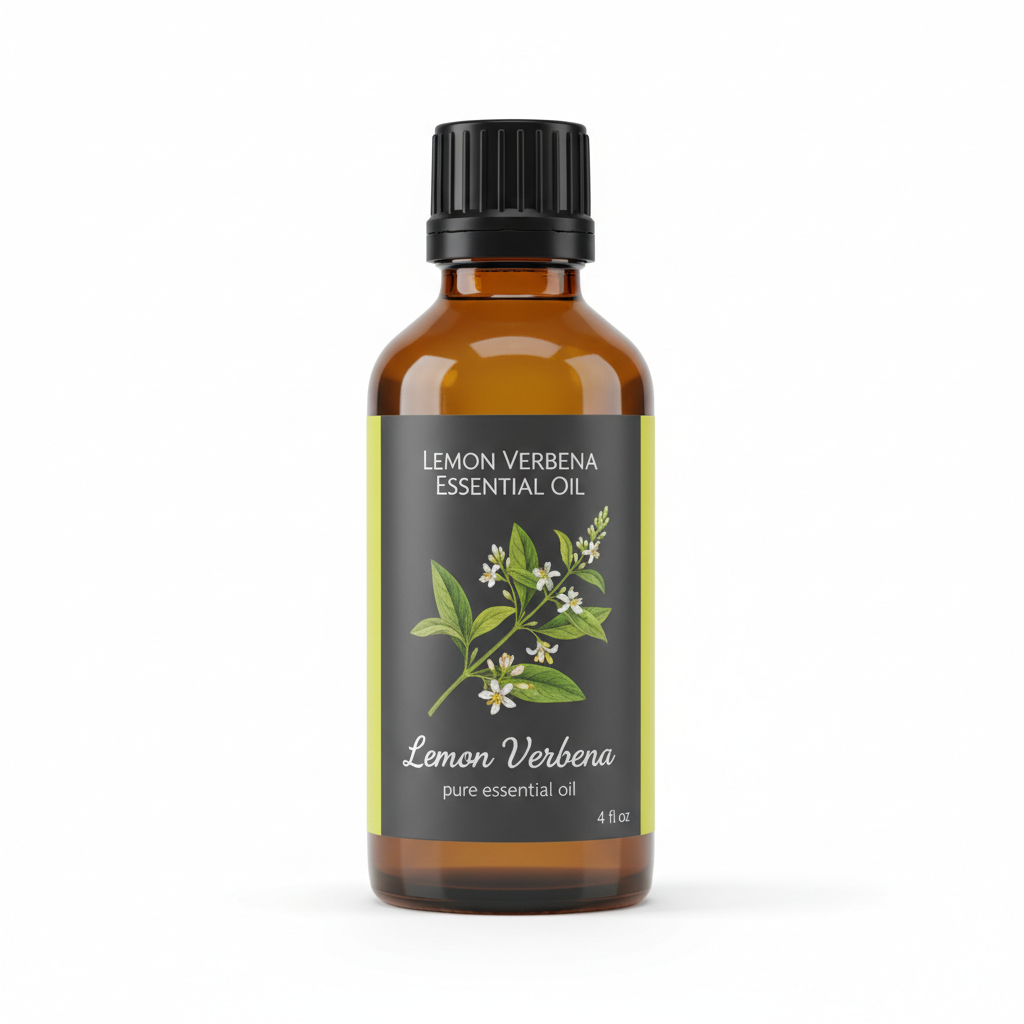
Lemon Verbena Essential Oil
Our own Lemon Verbena Essential Oil, in sizes from 0.5 oz to bulk.
From $12.99
Shop Now →This article walks through the full production process, from field to finished bottle. Along the way, you will find out what makes a good harvest, how steam distillation works for this particular plant, and why the yield figures that distillers report can seem almost comically small.
For background on the plant itself before diving into production, the article on Aloysia citrodora: the shrub behind the connoisseur's lemon covers the botanical details. And if you want to know what the finished oil is used for, the complete guide to lemon verbena essential oil is a good companion read.
What You Need to Understand Before You Start
Lemon verbena oil is produced almost exclusively by steam distillation of fresh or partially dried leaves and flowering tops. Some producers in Morocco, Argentina, and France also process the small terminal branches, since the oil glands are concentrated near the leaf surface rather than in the woody stem.
Home distillation of essential oils is legal in most places for personal, non-commercial use, but it requires proper equipment and realistic expectations. The process described here mirrors small-scale artisan and hobbyist production. Commercial distilleries operate on a larger scale but follow the same fundamental steps.
Materials and Equipment
- Fresh lemon verbena leaves and flowering tops (minimum 5 kg / 11 lb for a meaningful yield)
- A copper or stainless-steel still with a capacity of at least 10 liters (for small-batch work)
- Clean water, ideally soft or distilled
- A condenser (usually included with the still)
- A Florentine flask or separatory funnel for oil separation
- Dark glass collection bottles with tight-fitting lids
- A thermometer to monitor still temperature
- A precision scale
- Patience. A lot of it.
Good equipment matters. Cheap aluminum stills can introduce metallic notes into the distillate, which is particularly noticeable in a delicate oil like lemon verbena. Copper or food-grade stainless steel is strongly preferred.
Step-by-Step: How Lemon Verbena Essential Oil Is Made
Step 1: Harvest at the Right Moment
Timing the harvest is the single most important decision in the entire process. Lemon verbena oil content peaks when the plant is in early flower: the point at which the small white or pale-lilac flowers are just beginning to open on the terminal spikes. Before flowering, the leaves carry less oil. After full bloom and seed set, the aroma becomes slightly woody and less bright.
Harvest in the morning, after the dew has dried but before the afternoon heat drives off volatile compounds. Cut the leafy stems back by roughly one-third to two-thirds of their length, leaving enough foliage for the plant to recover. In warm climates, a healthy shrub can be harvested two or three times per growing season.
Common mistake: Harvesting at the wrong time of day. Harvesting in midday heat, especially in summer, can noticeably reduce the aromatic quality of the material before it even reaches the still.
Step 2: Prepare the Plant Material
Fresh material can go directly into the still, and many distillers prefer it this way for lemon verbena because the bright citrus-green top notes are most vivid from fresh leaves.
Some producers opt for a light wilt: spreading the harvested material on clean racks in the shade for 12 to 24 hours before distillation. Wilting reduces water content slightly, which can allow a larger mass of plant material to fit into the still. It also concentrates the oil very modestly. The trade-off is some loss of the very fresh, almost tea-like green quality that makes lemon verbena oil distinctive.
Remove any obviously woody stems thicker than a pencil. They add bulk without contributing meaningful oil. Strip or loosely pack the leafy material so that steam can move through the charge evenly.
Common mistake: Packing the still too tightly. Dense packing creates channels where steam bypasses much of the plant material, reducing yield and producing an uneven distillate.
Step 3: Load the Still and Begin Distillation
Fill the still's water chamber (the boiler) with clean water. Load the plant material into the retort or charge basket above the water. Do not submerge the leaves directly in the water for steam distillation; they sit above it, and rising steam passes through them.
Apply gentle, even heat. The goal is a steady stream of steam, not a violent boil. Too much heat too quickly can scorch plant material against hot surfaces and introduce off-notes into the oil. Commercial distillers often describe the ideal rate as a slow, rhythmic condensate drip from the cooling coil.
Monitor the still temperature. For lemon verbena, most small-scale distillers aim to keep the steam temperature between 100°C and 102°C (212°F to 216°F) at the still head. Higher temperatures can alter the more delicate volatile compounds.
Step 4: Collect the Distillate
As steam carrying volatile aromatic compounds passes through the condenser, it cools and condenses into a liquid called the distillate. This liquid is a mixture of water (called the hydrosol or hydrolat) and a very small amount of essential oil.
The oil and water will separate because essential oils are not water-soluble. For lemon verbena, the oil is slightly lighter than water, so it floats on the surface in the collection flask. A Florentine flask (also called a Florentine separator) makes this separation easy: the water drains from the bottom, and the oil accumulates at the top.
The hydrosol that drains away is not waste. Lemon verbena hydrosol carries a gentle, true-to-plant citrus aroma and is valued in its own right for misting, toning, and crafting.
Common mistake: Discarding the hydrosol. Even if you are primarily after the essential oil, collect the hydrosol separately in a clean dark bottle. It has real aromatic value.
Step 5: Separate and Store the Oil
Once the distillation run is complete (typically 1.5 to 3 hours for a small still), carefully decant the accumulated oil into a dark amber or cobalt glass bottle. Fill it as close to the top as practical to minimize the air space above the oil, since oxygen degrades volatile compounds over time.
Store the bottle in a cool, dark location. A temperature of 10°C to 15°C (50°F to 59°F) is ideal, which makes a temperature-controlled wine fridge a popular choice among small producers and collectors.
Label the bottle with the distillation date, the plant material source, and the batch weight. This matters more than it might seem. Lemon verbena oil from the same farm can vary noticeably between batches harvested at different points in the season.
The Yield Question: Why So Little?
Here is where lemon verbena distillation gets humbling. The oil yield from Aloysia citrodora is exceptionally low, even by essential oil standards.
Most sources report a yield of between 0.2% and 0.5% by weight. In practical terms, this means that 100 kilograms (220 lb) of fresh lemon verbena material produces somewhere between 200 ml and 500 ml of essential oil. On a bad harvest or with suboptimal distillation, yields can fall below 0.1%.
| Plant Material (fresh) | Low Yield (0.1%) | Average Yield (0.3%) | High Yield (0.5%) |
|---|---|---|---|
| 5 kg (11 lb) | 5 ml | 15 ml | 25 ml |
| 20 kg (44 lb) | 20 ml | 60 ml | 100 ml |
| 100 kg (220 lb) | 100 ml | 300 ml | 500 ml |
Compare this with lavender, which typically yields 1% to 3%, or peppermint at 1% to 2.5%. Lemon verbena produces a fraction of what most familiar oils yield per kilogram of plant material.
Why Is the Yield So Low?
Several factors contribute to lemon verbena's notoriously low oil output.
Oil gland structure. The essential oil in lemon verbena is stored in small, fragile glandular trichomes on the leaf surface. These glands rupture easily when you rub a leaf between your fingers, which is why the scent is so immediately powerful. But fragile glands also mean that oil can be lost during harvest, handling, and loading of the still before distillation even begins.
Leaf anatomy. Lemon verbena has a relatively high water content in its leaves compared to some aromatic shrubs, and the ratio of oil-bearing tissue to total leaf mass is modest. Much of what goes into the still is simply water and cellulose.
Volatile compound profile. A significant portion of lemon verbena's aroma comes from very light, highly volatile compounds (including citral, limonene, and various terpene alcohols) that can be partially lost during distillation if the process is not carefully managed. Some of what makes the plant smell so extraordinary is genuinely difficult to capture.
Harvest and handling losses. The time between cutting and distillation matters. Every hour that passes after harvest is an hour during which delicate volatiles evaporate from the cut material. Distillers who work closest to the field consistently report better yields.
"You are not just buying a product. You are buying the labor of an entire harvest season compressed into a few milliliters. The price reflects reality, not marketing."
Common sentiment among small-scale lemon verbena producers in southern France and Morocco.
What Good Lemon Verbena Distillation Produces
A carefully distilled lemon verbena essential oil is pale yellow to light olive-yellow in color. The aroma is intensely citrus-forward with green, floral, and very faintly woody undertones. The top notes are almost effervescent. The dry-down is softer, sometimes described as slightly herbal or reminiscent of lemon verbena tisane.
Poor distillation produces an oil that smells flat, slightly cooked, or even slightly musty. Overheating during distillation is a frequent culprit. So is using old or poorly stored plant material.
One practical test: a drop of genuine, high-quality lemon verbena oil on a scent strip should stay recognizably bright and lemony for several hours. If the scent evaporates almost immediately or smells sharply chemical, the oil may have been adulterated with synthetic citral or blended with cheaper oils such as lemon eucalyptus or citronella. Adulteration is, unfortunately, common given how expensive genuine lemon verbena oil is to produce.
For ideas on how to use the finished oil at home, the article on 15 refined ideas for home and craft covers diffusing, blending, and creative applications across a range of everyday rituals.
Tips for Getting the Most from Small-Batch Distillation
- Harvest just before or at first flower. This is when oil content is highest. Mark the calendar and watch the plant, not just the season.
- Distill within a few hours of harvest. The longer fresh material sits, the more volatile top notes dissipate.
- Use a cohobation option if your still has one. Cohobation recirculates the hydrosol water through the still, which can recover some water-soluble components and modestly improve yield.
- Keep heat steady and moderate. A slow, consistent distillation run consistently outperforms a fast, hot one for aromatic quality.
- Do not open the still mid-run. Releasing pressure loses volatile compounds.
- Record everything. Weight of plant material, distillation duration, final oil volume, and sensory notes. Over multiple batches, patterns emerge that help you improve.
A Note on Sourcing vs. Home Production
Home distillation is a deeply satisfying practice, and producing even a small amount of your own lemon verbena oil is an education in just how much effort goes into a commercial bottle. That said, the economics rarely work in the hobbyist's favor if the goal is cost savings.
Growing enough plant material for a meaningful yield requires either a substantial garden or access to farm-scale quantities. Most home distillers who pursue lemon verbena do so for the experience and the pleasure of working with the plant, not to undercut retail prices.
Whether you distill your own or purchase from a reputable supplier, understanding the production process changes how you use the oil. Small yields mean concentrated value. A single drop in a diffuser blend, a careful addition to a perfumer's formula, or a few drops incorporated into a room spray: each represents a surprising amount of plant material and skilled work. Use it with intention.