
Aloysia Citrodora: The Shrub Behind the Connoisseur's Lemon Oil
Most essential oil enthusiasts can name a dozen citrus oils without pausing. Lemon. Bergamot. Grapefruit. Yet when they finally encounter Aloysia citrodora, the botanical source of lemon verbena essential oil, something shifts. The scent is recognizable as lemon, yes, but more complex, more green, more complete. Understanding why requires looking closely at the shrub itself: its chemistry, its research footprint, its genuine quirks, and the sourcing realities that separate a fine oil from an ordinary one.
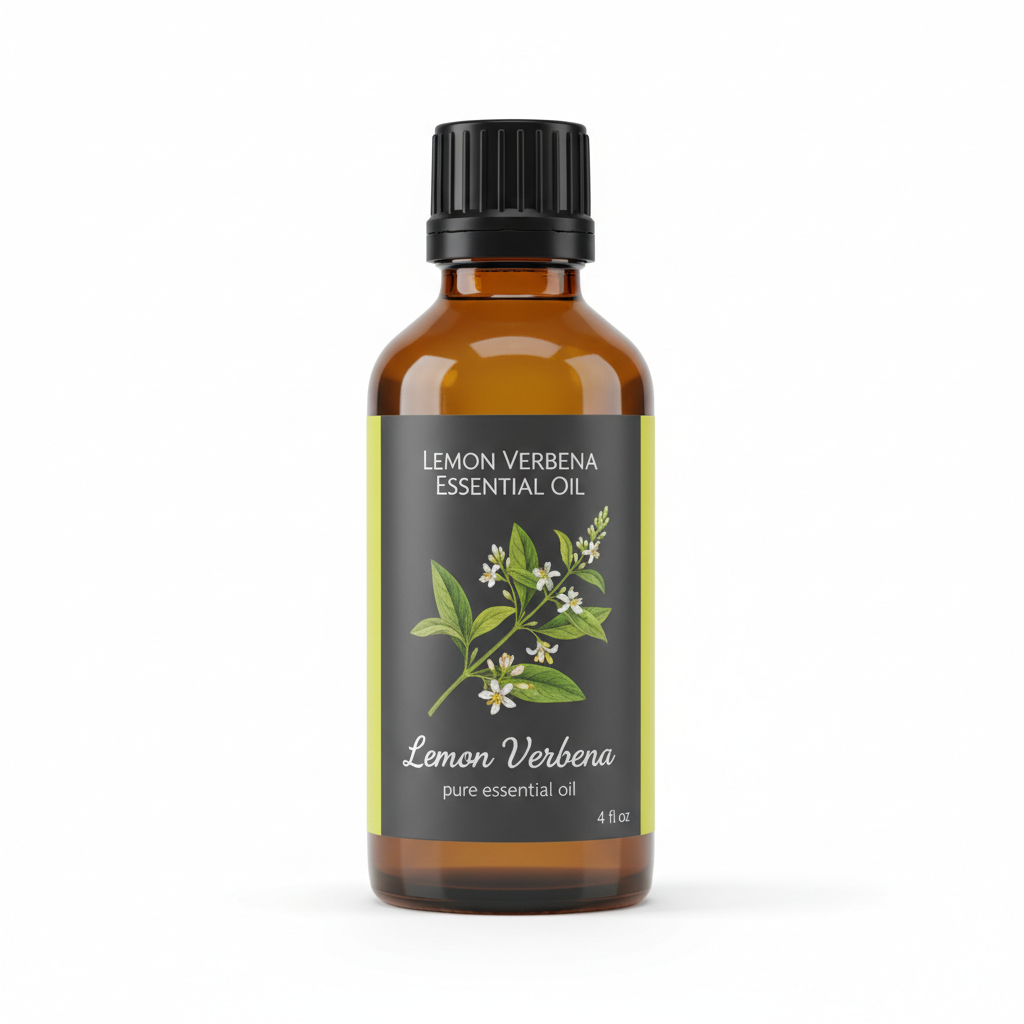
Lemon Verbena Essential Oil
Our own Lemon Verbena Essential Oil, in sizes from 0.5 oz to bulk.
From $12.99
Shop Now →Meet the Plant: A South American Native with a Long European History
The lemon verbena plant is a deciduous woody shrub native to western South America, primarily Argentina, Chile, and Peru. Spanish explorers brought it to Europe in the seventeenth century, where it found enthusiastic audiences in French and Spanish perfumery. It became a fashionable garden herb across the Mediterranean, and distillers in Morocco, Argentina, and Spain began producing its essential oil commercially. Today those same regions remain the primary sources of quality material.
Botanically, Aloysia citrodora sits within the Verbenaceae family. It was historically known as Lippia citriodora and Verbena triphylla, names that still appear occasionally on supplier certificates of analysis. If you see those synonyms, they refer to the same species. Knowing that matters when you are reading research literature, because studies published under older nomenclature are often overlooked in searches limited to the current name.
The lemon verbena leaves are the commercially important part of the plant. Long, lance-shaped, and arranged in whorls of three along pale woody stems, they release their scent explosively when touched. That immediate release is the first clue to the oil's chemistry: the aromatic compounds sit close to the leaf surface in specialized glandular trichomes, ready to volatilize with the slightest pressure.
Chemical Composition: What Is Actually Inside Lemon Verbena Essential Oil
Steam distillation of the lemon verbena leaves produces an oil that is chemically more sophisticated than most single-note citrus oils. Published compositional analyses consistently identify a handful of dominant compounds, though exact percentages shift depending on harvest timing, growing region, and distillation parameters.
The Primary Compounds
- Geranial and neral (collectively called citral): These two aldehyde isomers typically account for anywhere from 30 to 45 percent of the oil's composition in high-quality material. They are responsible for the sharp, bright, clean lemon character. Citral content is widely used as a benchmark for oil quality, and certified analytical reports should reflect robust citral levels in any oil marketed as premium.
- Limonene: A monoterpene found across the citrus family, limonene adds a familiar, slightly sweet citrus backdrop. It generally represents 5 to 15 percent of the composition.
- Linalool: A floral-leaning alcohol that softens the sharper aldehyde notes and contributes the oil's refined quality. Some analyses report linalool at 3 to 8 percent.
- 1,8-cineole (eucalyptol): A cool, slightly camphoraceous oxide present in moderate amounts. Its inclusion distinguishes lemon verbena from straightforward lemon peel oils and adds complexity to blending applications.
- Beta-caryophyllene: A sesquiterpene that introduces a faint woody, spiced undertone in the drydown.
- Geraniol and nerol: Terpene alcohols that contribute floral nuances and reinforce the rosy facets that experienced blenders notice beneath the citrus top notes.
Minor compounds including methyl heptenone, spathulenol, and various esters round out the profile. No single compound defines the oil's character entirely. The ratio between geranial and neral, for instance, shifts subtly between Moroccan and Argentine material, which is part of why origin matters to blenders who work with the oil closely.
How the Chemistry Compares to Other Citrus Oils
Lemon peel oil (Citrus limon) is predominantly limonene, often 60 to 70 percent or more. Lemongrass oil (Cymbopogon citratus) is extremely citral-forward but lacks the floral and woody complexity that Aloysia citrodora carries. This is why lemon verbena essential oil has historically commanded higher prices in fine fragrance and cosmetic applications: its profile is not easily replicated by blending cheaper components.
For a broader orientation to how this oil fits into the lemon-family landscape, the complete guide to lemon verbena essential oil provides useful context on identity, grades, and how the oil differs from the herb infusion and the absolute.
Research Observations: What the Science Has Explored
The research literature on Aloysia citrodora and its constituents is meaningful, though modest by pharmaceutical standards. It is worth understanding what kind of evidence exists and what it does not yet establish.
Citral and Aromatic Research
Citral, the dominant compound class in the oil, has received considerable scientific attention. Some research suggests that citral's distinctive sensory properties make it a useful reference compound in olfactory and fragrance studies. In cosmetic science, citral is a recognized active in certain skin-care formulations, though it is also a known sensitizer at higher concentrations, a point returned to in the safety section below.
Polyphenols in the Plant
Much of the published research on Aloysia citrodora focuses on the whole plant extract or dried herb rather than the distilled essential oil. The lemon verbena leaves are notably rich in polyphenolic compounds, particularly verbascoside (also called acteoside) and luteolin derivatives. Research suggests these compounds are of interest to food scientists and nutraceutical researchers, though that research pertains to aqueous or ethanolic extracts. These hydrophilic compounds do not transfer meaningfully into steam-distilled essential oil, which captures primarily volatile lipophilic molecules. The research on plant extracts and the research on the essential oil are, in practice, exploring different things.
Sensory and Atmospheric Observations
Some studies examining citral-rich essential oils in inhalation contexts report that participants describe perceived shifts in mood and alertness, though researchers frame these as subjective sensory responses rather than clinical outcomes. People who use lemon verbena oil in diffusion frequently report a sense of lightness and mental clarity during their sessions. Those observations are consistent with what the sensory literature on citrus-dominant aromas generally documents, even if they do not rise to the level of medical evidence.
For practical ideas on how to incorporate these aromatic qualities into everyday routines, the article on 15 refined uses for lemon verbena oil in home and craft offers starting points grounded in cosmetic and atmospheric applications.
Safety Profile: Honest About the Risks
Lemon verbena essential oil has a well-documented safety profile, and it is not without cautions. Responsible use requires understanding both.
Citral Sensitization
Citral is classified as a known skin sensitizer by the Research Institute for Fragrance Materials (RIFM) and is subject to concentration limits in cosmetic products under European Union regulations. Repeated or high-concentration exposure can initiate sensitization in some individuals. Once sensitized, future exposure to citral-containing materials may produce a reaction.
Practical implications:
- Always dilute lemon verbena essential oil before applying to skin. A dilution of 0.5 to 1 percent in a carrier oil is a conservative and appropriate range for leave-on cosmetic applications. Rinse-off applications like body wash may tolerate slightly higher dilutions, but conservative practice is wise.
- Conduct a patch test before broader skin application. Apply the diluted blend to the inner forearm, cover for 24 hours, and observe for any reaction.
- Avoid use on compromised, broken, or recently exfoliated skin.
- Do not apply undiluted oil directly to skin under any circumstances.
Phototoxicity
Unlike many cold-pressed citrus oils, steam-distilled lemon verbena essential oil is not considered a primary phototoxicity risk. The furanocoumarins responsible for phototoxic reactions in bergamot and lemon peel oil are largely absent from steam-distilled material. That said, current IFRA guidelines should always be consulted for the most up-to-date concentration guidance, as formulation context matters.
Pregnancy, Children, and Pets
As a general precaution with any concentrated essential oil, use during pregnancy and nursing warrants consultation with a qualified healthcare provider before proceeding. Use around infants and young children should be approached very conservatively, with significant further dilution and avoidance of direct skin application on children under two years of age. Keep all essential oils out of reach of children and pets. Cats in particular lack certain liver enzymes that metabolize specific terpenes, and many essential oils are considered inappropriate for use around them.
A Note on Internal Use
This article addresses cosmetic and aromatic applications only. Any question about internal use should be directed to a qualified healthcare provider, not addressed through editorial content.
Sourcing and Quality Indicators
Lemon verbena essential oil is one of the more frequently adulterated oils in the market, a reality driven by its relatively high cost and the ease with which cheaper citral-rich materials can be used as substitutes or extenders.
Common Adulterations
Lemongrass oil, citral isolates, and lemon-scented eucalyptus oil are the most commonly reported adulterants. A synthetic citral addition will boost total citral percentage on a gas chromatography report but will produce an enantiomeric ratio inconsistent with true Aloysia citrodora. Chiral analysis (also called enantioselective GC) is the analytical method that distinguishes genuine material from citral-spiked material, because natural and synthetic citral have different ratios of their stereoisomers.
What to Look for in a Supplier
Quality indicators when evaluating a lemon verbena essential oil supplier:
- Botanical name on the label: It should read Aloysia citrodora (or a recognized synonym such as Lippia citriodora). Generic labels reading only "lemon verbena" without a Latin name are a flag.
- Country of origin: Morocco, Argentina, and Spain are the primary sources of genuine commercial oil. Some quality material comes from France. Be cautious of origins not associated with established production.
- GC/MS report availability: Any reputable supplier of Aloysia citrodora oil should be able to provide a gas chromatography/mass spectrometry report on request. Verify that citral (geranial plus neral) levels are appropriate, typically above 30 percent for genuine material.
- Harvest and distillation dates: Lemon verbena essential oil is not particularly long-lived. Citral compounds oxidize over time, affecting both scent quality and safety profile. Fresh oil from a documented recent distillation is preferable.
- Packaging: The oil should arrive in amber or dark violet glass, never in plastic or clear glass. Light and heat degrade the volatile aldehydes quickly.
Proper storage after purchase is equally important. Exposure to light, heat, and air all accelerate oxidation. The detailed guide on how to store lemon verbena oil covers best practices for protecting your investment once the bottle is in hand.
Price as a Quality Signal
Genuine Aloysia citrodora essential oil is expensive relative to most citrus oils. The plant yields relatively little oil per kilogram of leaf material, and the labor-intensive harvesting of the delicate leaves adds to production costs. A price that seems implausibly low for the volume offered is worth questioning. That does not mean the most expensive option is always the best, but it does mean suspiciously cheap material warrants scrutiny before purchase.
The Compound That Makes the Oil Worth Knowing
Citral content tells part of the story. But what makes Aloysia citrodora genuinely interesting to perfumers and cosmetic formulators is the layered architecture of its chemistry: the brightness of citral over the roundness of linalool and geraniol, grounded by the cooler facets of 1,8-cineole and a faint woody base from sesquiterpenes. No other commercially available essential oil replicates that profile without blending.
The lemon verbena plant took centuries to travel from the Andean foothills to European perfumery laboratories and eventually to the broader essential oil market. Its complexity rewards the effort required to source it well, use it carefully, and store it properly. That, more than any single compound or research finding, is what makes it the connoisseur's citrus.