
Reading a Lemon Verbena Label and GC-MS Report Before You Order
Lemon verbena essential oil sits in a strange position in the marketplace. It is genuinely rare, genuinely expensive to produce, and genuinely worth scrutinizing before you spend your money. The problem is that most buyers click "add to cart" after reading little more than a product name and a star rating. That habit works fine for many commodities. For lemon verbena, it is a reliable way to end up with something that bears almost no resemblance to the real plant.
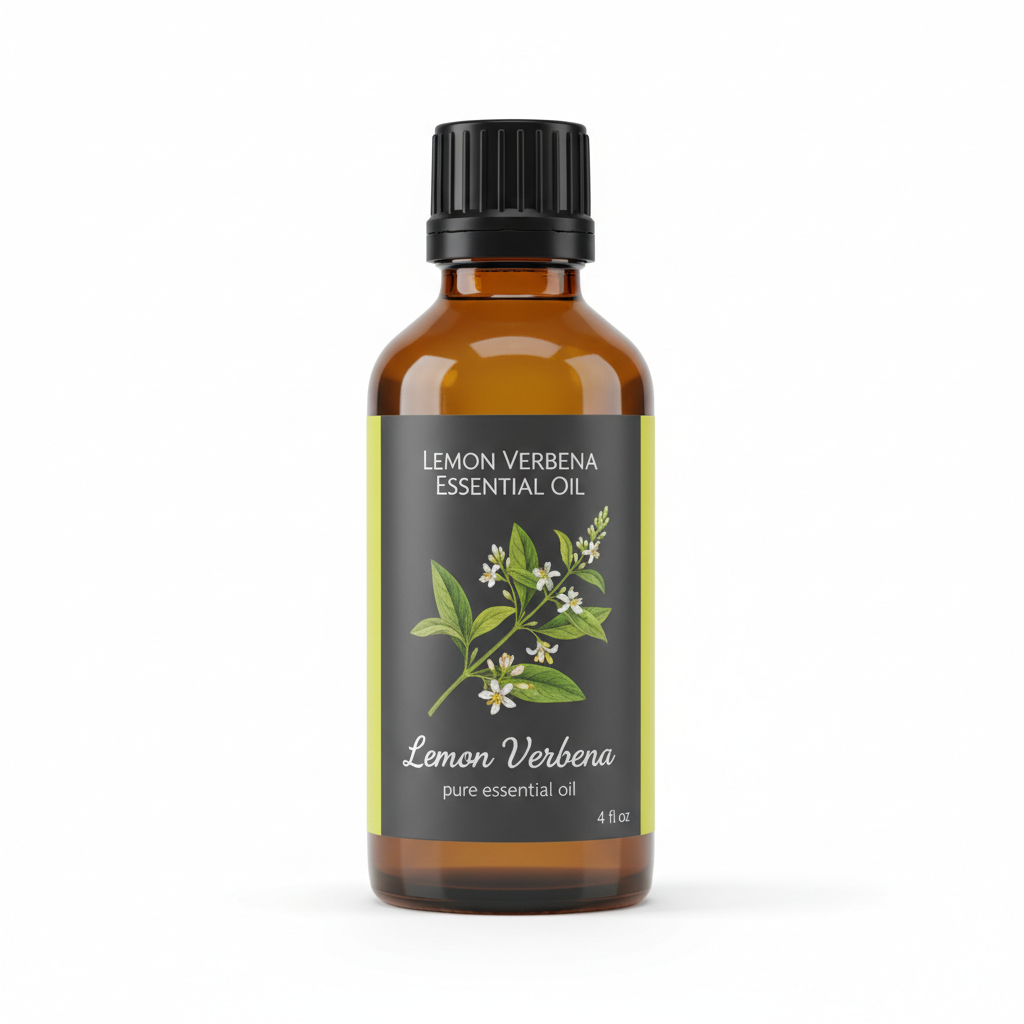
Lemon Verbena Essential Oil
Our own Lemon Verbena Essential Oil, in sizes from 0.5 oz to bulk.
From $12.99
Shop Now →This guide walks you through the two documents that matter most before any purchase: the product label and the gas chromatography-mass spectrometry (GC-MS) report. Neither requires a chemistry degree to interpret. You need only know what to look for and, just as importantly, what to walk away from.
What You Will Need
- The URL or product listing of the oil you are considering
- Access to the supplier's GC-MS report (downloadable PDF or viewable on the product page)
- The product label image (usually in the listing photos)
- A second browser tab for cross-referencing botanical names and supplier details
- This article as your reference checklist
If a supplier does not publish a GC-MS report at all, that absence is itself useful information. You can read more about what separates credible sourcing from convenience sourcing in our guide to buying lemon verbena essential oil: the complete quality breakdown.
Step 1: Start With the Label, Not the Marketing Copy
Marketing copy is written to sell. The label, by contrast, is where regulatory and botanical facts must appear. Open the product listing and locate the label image directly. Look for the following elements in this order.
The Botanical Name
Genuine lemon verbena essential oil comes from one species: Aloysia citrodora (sometimes still listed under older synonyms Aloysia triphylla or Lippia citriodora). All three names refer to the same plant. Any other botanical name is a different oil entirely.
This step alone eliminates a significant number of mislabeled products. Lemongrass (Cymbopogon citratus) and lemon-scented eucalyptus (Eucalyptus citriodora) both appear on labels that lean heavily on the word "lemon" in their common names. The botanical name does not lie the way a common name can. If it is not Aloysia citrodora or one of its accepted synonyms, keep shopping.
Our article on lemon verbena vs. lemongrass oil covers this substitution problem in more detail, including how to spot it in the scent profile itself.
Country of Origin
The primary producing countries for quality lemon verbena oil are France, Morocco, Chile, and Argentina. Spanish production exists but has declined. An unlisted country of origin is a minor flag. A country with no established lemon verbena cultivation history is a larger one.
Plant Part and Extraction Method
Lemon verbena essential oil is steam-distilled from the leaves (and sometimes flowering tops) of the plant. If the label says "cold-pressed," that is incorrect for this oil. If it says "solvent extracted" or "CO2 extracted," those are different products with different profiles. For an essential oil in the traditional sense, you want steam distillation from leaves.
Lot or Batch Number
A batch number ties the product to a specific production run and, critically, to a specific GC-MS report. If the label carries no batch number, you cannot confirm that any published report actually matches the oil in that bottle. This is not a dealbreaker on its own, but it matters when you move to Step 3.
Step 2: Understand Why a GC-MS Report Exists
GC-MS stands for gas chromatography-mass spectrometry. It is the analytical method used to identify and quantify the individual chemical constituents inside an essential oil sample. Think of it as a fingerprint of the oil's chemistry. No two plant sources or distillation batches produce an identical fingerprint, but genuine lemon verbena oil has a characteristic profile that a trained eye (or a careful checklist) can verify.
The report matters for two reasons. First, it confirms that the oil contains the compounds you would expect from Aloysia citrodora. Second, it reveals whether synthetic compounds, extenders, or carrier oils have been added. Given how expensive genuine lemon verbena is to produce, adulteration is common. You can read more about the yield challenges that drive pricing in our article on why lemon verbena oil is so expensive.
Step 3: Locate and Open the GC-MS Report
Reputable suppliers post GC-MS reports on the product page, in a dedicated "certificates" or "testing" section of their website, or make them available on request. Download the PDF or keep it open in a browser tab alongside this guide.
Check that the report includes:
- The testing laboratory's name (an independent third-party lab is preferable to in-house testing)
- The date of analysis
- The batch or lot number (match this to the label you reviewed in Step 1)
- A list of identified constituents with their percentage ranges
A report with no laboratory name, no date, or no batch reference should be treated with skepticism. These are not bureaucratic formalities. They are the chain of custody that connects the report to the actual product.
Step 4: Read the Constituent Profile
This is the core of the lemon verbena GC-MS analysis. The constituent list will look like a column of chemical names paired with percentage figures. You do not need to know every compound. Focus on the key markers below.
Citral
Citral is actually two related compounds: neral and geranial (sometimes labeled as citral-a and citral-b, or listed separately). In genuine lemon verbena oil, combined citral content typically ranges from roughly 30 to 45 percent of the total composition, though some sources cite wider ranges depending on origin and harvest timing. Citral is responsible for the bright, sharp, intensely lemony top note that makes this oil so prized in perfumery and cosmetic formulation.
An unusually high citral reading, say above 55 to 60 percent, may suggest the oil has been adulterated with synthetic citral or blended with lemon myrtle oil, which naturally runs much higher in citral. A very low reading may indicate dilution or a poor-quality distillation.
Limonene
Expect limonene in the range of roughly 8 to 16 percent in an authentic profile. It contributes brightness and a softer citrus quality underneath the sharper citral notes.
Caryophyllene and Sesquiterpenes
Authentic lemon verbena contains a moderate sesquiterpene fraction. Caryophyllene oxide and similar compounds appear in smaller percentages and contribute to the dry-down character that distinguishes this oil from simple citrus top notes. Their presence is a positive indicator of genuine plant material.
What Should Not Be There
Watch for compounds that signal adulteration or synthetic extension. These include unusually large proportions of linalool (associated with lavender adulteration), synthetic dihydromyrcenol, or any compound labeled with a note like "added" or "fortified." A well-constructed GC-MS report from an honest supplier will not show these. If you see constituent percentages that add up to well over 100 percent or round numbers that look suspiciously tidy across the board, that is worth questioning.
Step 5: Cross-Reference Label and Report
Place the label information and the GC-MS report side by side, even if that means two open browser tabs. Confirm the following:
- The botanical name on the label matches the species named in the report header.
- The country of origin on the label matches the origin noted in the report, if listed.
- The batch number on the label (if present) matches the lot number on the report.
- The report date is recent enough to be relevant. An oil tested two or three years ago may not reflect the current batch.
Discrepancies at this stage are significant. A supplier selling Moroccan-origin oil whose report is clearly from a French distillery may simply have updated their sourcing without updating their documentation. Or the report may be a generic file used across multiple products. Either way, it is reasonable to ask the supplier directly before ordering.
Step 6: Evaluate the Supplier's Transparency Practices
Reading a single label and report is useful. Understanding a supplier's overall documentation culture is more useful still. As you review the product page, ask:
- Is the GC-MS report posted publicly or only available on request?
- Does the supplier update reports when they receive new stock?
- Is there a clear return or quality guarantee policy?
- Does the supplier name their distillery partners or growing regions, or is the sourcing described only in vague terms?
Suppliers who publish batch-specific reports, name their testing laboratories, and update documentation regularly are making a meaningful commitment to accountability. That commitment costs them time and money. It also gives you something concrete to evaluate rather than a marketing claim.
Common Mistakes to Avoid
Accepting a Generic Report
Some suppliers post a single GC-MS report and apply it to every bottle they sell, regardless of batch. If the report date is years old or the batch number does not match current stock, the document is decorative rather than informative.
Confusing "Natural" With "Pure"
An oil can be composed entirely of natural plant-derived ingredients and still not be pure lemon verbena. Blending lemon myrtle, lemongrass, or citrus oils creates a product that is natural in composition but is not Aloysia citrodora. The GC-MS profile will reveal this where a label might not.
Skipping the Botanical Name Check
It takes ten seconds. Do it anyway. The common name "lemon verbena" is used loosely enough in some markets that skipping this step is an expensive habit.
Treating Price as a Proxy for Quality
A high price tag does not guarantee an authentic oil. It does, however, serve as a rough filter. Genuine lemon verbena oil is costly to produce, and a bottle priced significantly below market rate for comparable volume deserves closer scrutiny, not more trust. The economics of why that is true are worth understanding before you shop.
What to Expect From a Quality Oil
Once you have confirmed label accuracy and reviewed a credible essential oil report, you have a reasonable basis for confidence in what you are ordering. A well-sourced, authenticated lemon verbena oil will have an intensely bright, sharp citrus scent on opening, with a softer, slightly herbaceous and floral character as it settles. The top notes are vivid. The dry-down is more complex than a simple lemon peel oil.
In cosmetic and aromatic applications, people who work with authenticated lemon verbena often report that the scent quality is noticeably more refined and multidimensional than what they had experienced with lower-cost substitutes. That difference, when you can trace it back to a clean label and a credible lemon verbena GC-MS result, is exactly what this verification process is designed to protect.
The few minutes spent reading documentation before you order are the most cost-effective part of buying lemon verbena oil. The oil itself is too rare and too easily faked to skip them.