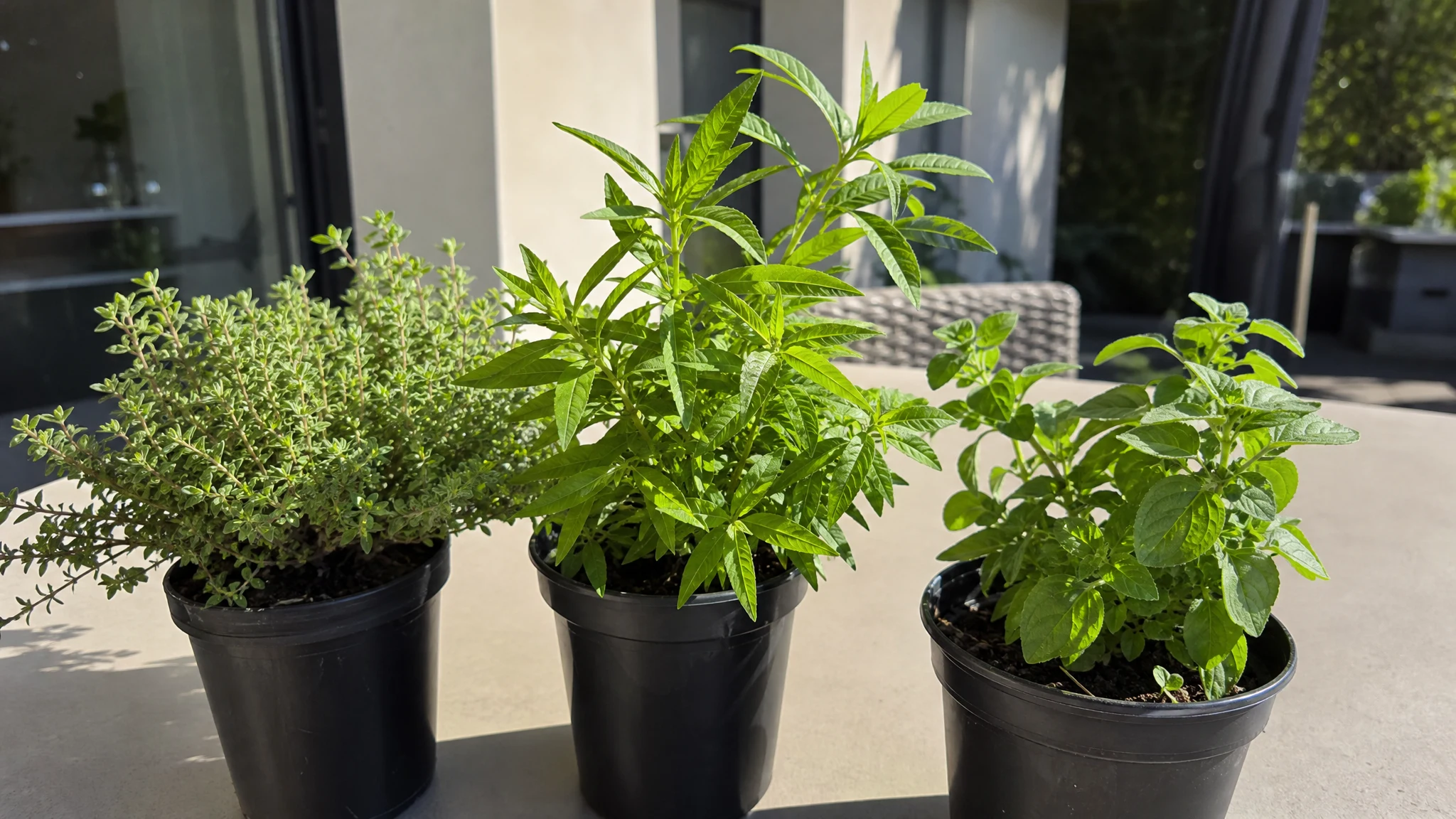
Organic vs Conventional Lemon Verbena Oil: What a Label Shows
On a bottle of lemon verbena oil, the word "organic" is worth something only if you can trace it to a certifier and a certificate. Our oil is not sold as organic and we publish no organic certificate, so this is not a pitch. It is a way to decide whether you need a certificate at all, what one does and does not guarantee, and how to check a seller who offers one.
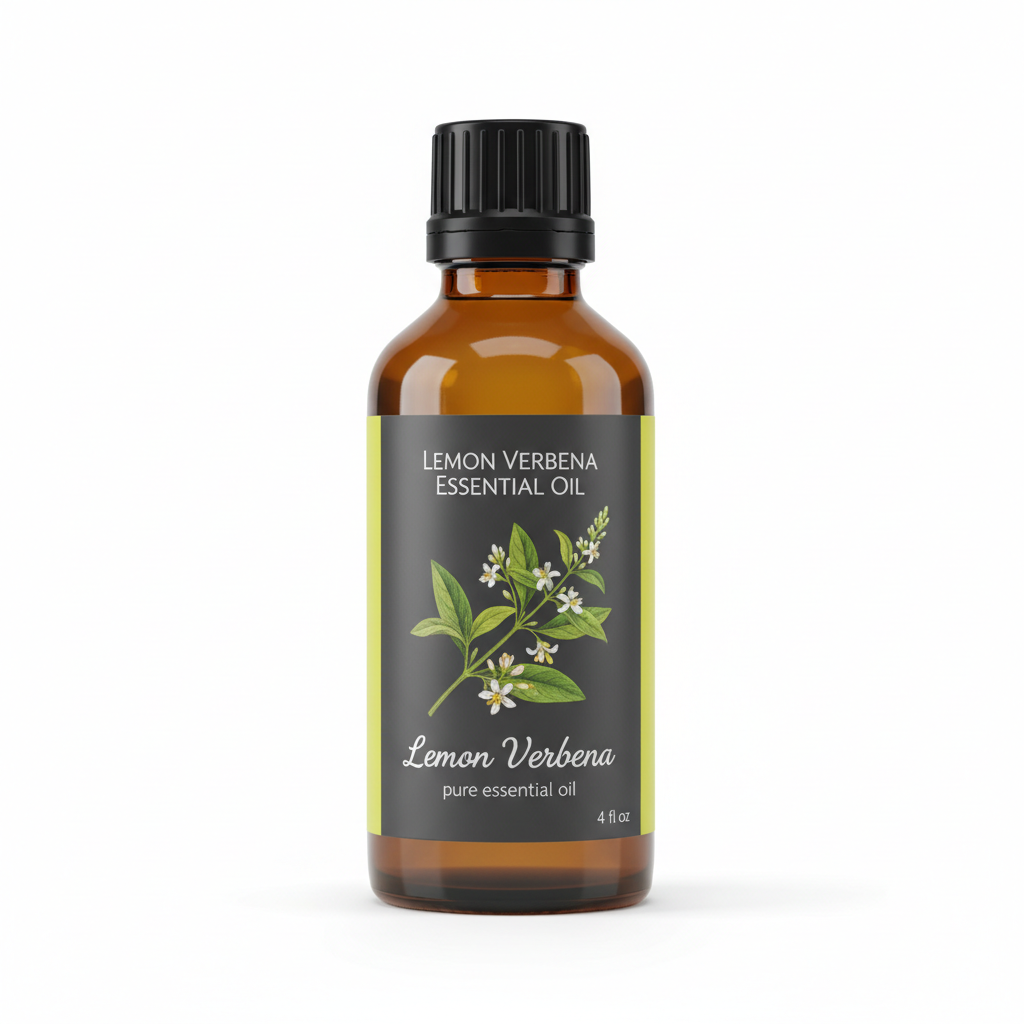
Lemon Verbena Essential Oil
Our own Lemon Verbena Essential Oil, in sizes from 0.5 oz to bulk.
From $12.99
Shop Now →What the rules make a seller do
In the United States the term is regulated by USDA's National Organic Program under 7 CFR Part 205. Section 205.300 limits the word "organic" on labels and in labeling to raw or processed agricultural products produced and handled under that part. Section 205.100 says anyone producing or handling agricultural products sold or labeled as organic must be certified, unless an exemption applies, and that knowing violations carry civil penalties (eCFR, 7 CFR Part 205, text of the 2024-01-01 version read).
The exemption matters to a buyer. Section 205.101(a) exempts an operation whose gross agricultural income from organic sales is five thousand dollars or less a year. Those operations must still follow the production, handling and labeling rules, and keep records for at least three years, but they hold no certificate. So a missing certificate does not prove a claim is false, and it also means a buyer has nothing independent to check. If you need proof, the certificate is the proof.
Does this reach an essential oil? USDA's Agricultural Marketing Service says a cosmetic or personal care product made of agricultural ingredients can be certified if it meets the standards, and that the grower of the ingredients, the handler and the final manufacturer must all be certified by a USDA-accredited certifier (USDA AMS, Cosmetics, Body Care, and Personal Care Products). I found no USDA page that names essential oils specifically, so for a particular oil the certifier's scope listing is the answer, not a general rule. Rules change; confirm current text before you print a claim on a label.
Label arithmetic if you make products
Section 205.301 sets the content tiers, and water and salt are left out of the calculation: 100 percent organic requires 100 percent organic ingredients; "organic" requires at least 95 percent; "made with organic" at least 70 percent. Take a body oil that is 1% essential oil by weight. The arithmetic says 99% of it could be organic carrier. The rule is not only arithmetic, though: for the 95 percent tier, the remaining ingredients must also be organic unless organic versions are not commercially available, or they are nonagricultural substances or items on the National List. Whether a non-organic oil at 1% fits is a question for your certifier before you print anything.
What "organic" does not tell you
It does not say the oil is milder. FDA states that an ingredient's source does not determine its safety, and that many plants, grown organically or not, contain substances that can be toxic or allergenic (FDA, "Organic" Cosmetics, content current as of 2022-02-25). That applies here: the fragrance industry's own Standard 083 says verbena oil should not be used as a fragrance ingredient because of its sensitizing and phototoxic potential, with no exception for farming method (IFRA, 2020). Our safety copy for skin use is the same whatever the farm: 0.5% to 2% in a carrier, patch test first, keep treated skin out of strong sun.
It also does not say what is in the oil. Chemistry in this species swings by place, plant and method. In a study of 36 collections from wild populations in north-western Argentina, only two had citral as the main component, and the authors found five chemotypes (Elechosa et al., 2017). A 2025 Chilean oil from plants collected in Valparaíso Region listed spathulenol at 38.84% and citral at 3.16% (Silva et al., 2025), whereas an Ecuadorian oil from cultivated plants gave geranial 26.8% and neral 21.0% (Parichanon et al., 2025). A certificate answers none of that. The origin post goes through the differences, and the GC-MS reading guide shows how to ask the composition question properly.
The residue question, with what is actually measured
The plan behind this article assumed that distillation concentrates what is fat-soluble in the leaf, so residues in the oil are a worry. I could not verify that. I searched for a study that spiked or tracked pesticide through a distillation and measured how much reached the oil, and found none to cite. What I could read is a 2025 pilot study from Italy's national institute of health: a multiresidue method was developed, twelve essential oils bought on the Italian market were tested, citrus oils showed the highest contamination, batch-to-batch variability was evident, and the authors' preliminary risk assessment saw no risk to consumers (Stefanelli et al., 2025). The abstract does not break results out by oil, and I found no residue study of lemon verbena oil. Twelve products is a pilot, not a market survey.
The abstract's note on batch-to-batch variability is the practical point: a certificate tells you about the farm's system, and USDA says certifiers inspect every certified operation at least annually, make unannounced visits and collect samples for pesticide and prohibited-substance analysis (USDA AMS, Organic Enforcement). Nothing I read says those results are issued to a buyer for a given lot. A lot-specific residue report is a separate document, available for conventional and certified oil alike.
A decision rule
| Your situation | What to ask for |
|---|---|
| You will label your product organic or "made with organic" | A certificate listing the exact material in scope, and your own certifier's view on the 205.301 arithmetic |
| Leave-on product, you want residue assurance | A written lot residue or contaminant report; a certificate does not substitute for it |
| You need to know the chemistry | A GC-MS report for the lot, in writing, before ordering |
| Candle or soap scent, no organic claim on your label | Nothing under the rules above is triggered by your label; judge the oil on its documents and your own safety assessment |
How to check a certificate
USDA's Organic Integrity Database is the public list. AMS says its list of suspended and revoked operations sits there, that a suspended or revoked operation cannot sell or label products as organic, that each certifier has a profile linking its accreditation documents, and that USDA posts fraudulent certificates it has found (USDA AMS, Organic Enforcement). We describe the database only from the AMS page. In practice: get the certificate, read the certifier, the scope and the expiry, look the operation up, and ask the certifier if anything does not match.
Where we stand
Our oil is sold neat as lemon verbena, Aloysia citrodora, steam-distilled from the leaf, in sizes from 0.5 oz. We make no organic claim and publish no organic certificate, residue report, GC-MS report or origin statement. The COA we publish for the batch shown covers appearance, smell, a relative density of 0.869 and a refractive index of 1.472, and nothing more. If your product needs more documents than that, ask for them in writing before you order and get the answer in writing; that is the sound way to buy from anyone. Our buying guide lists the other checks, and the IFRA explainer covers the fragrance-ingredient rule mentioned above.
Lemon Verbena Essential Oil
Lemon Verbena Essential Oil from our own shop, in sizes from 0.5 oz to bulk.
From $12.99
Shop Now →Sources & Further Reading
- US eCFR, 2024. 7 CFR Part 205, sections 205.100, 205.101, 205.300, 205.301. ecfr.gov/part-205
- USDA AMS. Cosmetics, Body Care, and Personal Care Products. ams.usda.gov
- USDA AMS. Organic Enforcement. ams.usda.gov/enforcement/organic
- FDA, 2022. "Organic" Cosmetics. fda.gov/organic-cosmetics
- IFRA, 2020. Standard 083, Verbena oil and absolute (Amendment 49). ifrafragrance.org/IFRA_STD_083
- Stefanelli P et al., 2025. Determination of pesticide residues in essential oils and related risk assessment for consumers: a pilot study. Food Addit Contam A 42(11):1503-1517. PMID 41105862
- Elechosa MA et al., 2017. Essential oil chemotypes of Aloysia citrodora in Northwestern Argentina. Biochem Syst Ecol 74:19-29. repositorio.inta.gob.ar/3738
- Silva V et al., 2025. Chilean Aloysia Essential Oils: A Medicinal Plant Resource for Postharvest Disease Control. Plants 14. PMC12566967
- Parichanon P et al., 2025. Chemical Profiling, Sensory Qualities, and Bioactivities of Essential Oils from Aloysia citrodora and Bursera graveolens Ecuadorian Plants. Insects 16(2):202. PMC11857052