
Lemon Verbena Myths: Verbena, Vervain, and Other Mix-Ups
Few plants in the botanical world carry as much naming baggage as lemon verbena. Walk into any herb shop, browse an essential oil marketplace, or flip through a vintage aromatherapy book, and you will almost certainly encounter at least one of the classic mix-ups: "verbena" sold as "lemon verbena," lemon verbena labeled as vervain, or products marketing "verbena oil" that bear almost no relationship to the citrusy shrub from South America. These are not small distinctions. They affect scent, chemistry, sourcing, and the informed choices you make as a buyer. This article works through the most persistent myths, explains why they exist, and sets the lemon verbena facts straight.
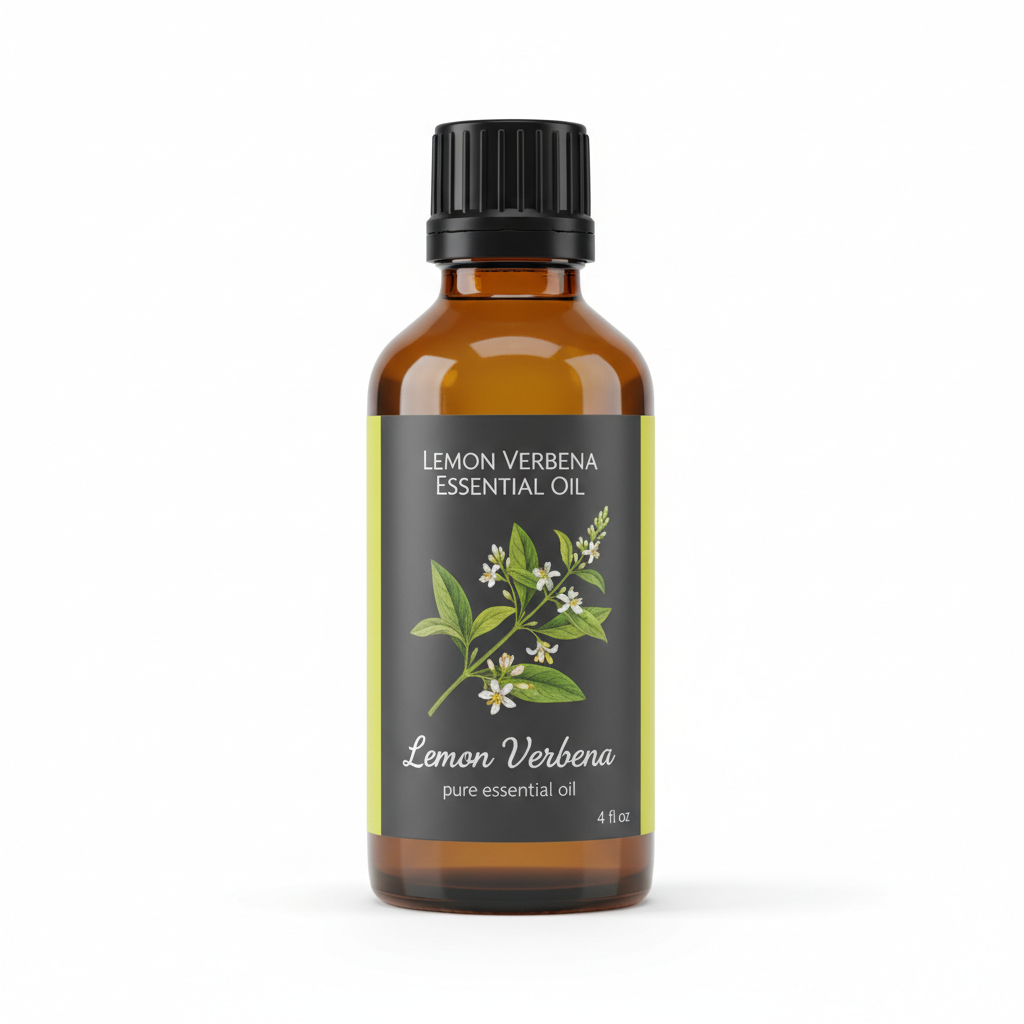
Lemon Verbena Essential Oil
Our own Lemon Verbena Essential Oil, in sizes from 0.5 oz to bulk.
From $12.99
Shop Now →Why the Confusion Exists in the First Place
The root of nearly all verbena confusion is taxonomy. Lemon verbena (Aloysia citrodora, sometimes listed as Lippia citriodora) was historically placed inside the Verbenaceae family, which also contains the genus Verbena. That shared family name gave early botanists and herbalists reason to group them together. Later reclassification moved Aloysia into the Lamiaceae family in some systems, but the old family association had already embedded itself in common names, trade names, and popular writing. The result is a centuries-old tangle that still trips up buyers and sellers today.
Understanding what lemon verbena essential oil actually is is the single most useful step toward cutting through the noise. Once you know the plant, its origin, and its chemistry, the myths become far easier to spot.
Myth 1: "Verbena Oil" and Lemon Verbena Oil Are the Same Thing
The Myth
A product labeled simply "verbena oil" or "verbena essential oil" is lemon verbena oil. The names are interchangeable.
The Truth
They are not interchangeable, and the distinction matters considerably. "Verbena" as a genus contains over 250 species. When a product says "verbena oil" without specifying Aloysia citrodora on the label, it could be distilled from common vervain (Verbena officinalis), iron verbena, or a hybrid. None of these smell like lemon verbena. True lemon verbena oil has a bright, sparkling citrus character driven primarily by citral, limonene, and geraniol. A generic "verbena" product may smell herbal, slightly medicinal, or simply green, with none of the sunny lemon lift that defines the real thing.
Evidence from gas chromatography analyses published in botanical chemistry literature consistently shows that the aromatic profiles of Aloysia citrodora and Verbena officinalis are chemically distinct. Citral, the compound most responsible for lemon verbena's characteristic brightness, is typically present at high percentages in genuine Aloysia citrodora oil and at far lower or negligible levels in Verbena officinalis.
Why the Myth Persists
Suppliers and marketers have used "verbena" as a shorthand for decades. It sounds familiar, it has romantic associations with French perfumery, and it sidesteps the need to explain the full botanical name on packaging aimed at casual buyers. The word also appears in popular fragrance lines (eau de verbena, verbena cologne) where it often refers to a synthetic accord inspired by lemon verbena rather than any single plant species. That overlap between fragrance marketing and botanical reality keeps the confusion cycling through new generations of customers.
Myth 2: Lemon Verbena and Vervain Are the Same Herb
The Myth
"Lemon verbena" is just another name for vervain (Verbena officinalis). They are the same plant with different common names.
The Truth
Lemon verbena and vervain are entirely different plants. Verbena officinalis (common vervain or common verbena) is a slender, low-growing European wildflower with tiny lilac blooms. Aloysia citrodora is a woody, aromatic shrub native to Argentina and Chile that can reach two meters in height and produces strongly lemon-scented lance-shaped leaves. They look different, smell different, and have different chemical compositions. The only thing they genuinely share is a historical association through the old Verbenaceae family classification.
The lemon verbena vs vervain distinction shows up clearly in sensory terms. If you crush a leaf of each, vervain produces a faint, slightly bitter green scent. Lemon verbena produces an immediate, exuberant lemon burst. That scent profile is one of the most recognizable in the botanical world and cannot be mistaken for vervain by anyone who has encountered both plants.
Why the Myth Persists
In older English-language herbals, both plants sometimes appear under the heading "verbena," with modifiers like "lemon" or "common" used inconsistently. Translations from French and Spanish sources added further variation because the naming conventions differ across languages. In French, verveine can refer to both plants depending on context, a fact that has caused particular confusion in herbal tisane recipes and essential oil guides translated from French sources.
Myth 3: Lemon Verbena Oil Is Easy to Find Pure and Affordable
The Myth
Lemon verbena essential oil is widely available and reasonably priced. Cheap bottles labeled "lemon verbena" contain the same oil as expensive specialist versions.
The Truth
Genuine Aloysia citrodora essential oil is one of the more costly and less commonly available oils in the botanical market. The reasons are straightforward: the plant yields very little oil per kilogram of plant material, cultivation is labor intensive, and quality harvests depend on precise timing and careful distillation. The production process explains why authentic oil commands a significant price premium over other citrus-adjacent oils.
What fills the gap in the affordable "lemon verbena" market? Several things. Lemon-scented eucalyptus oil (Eucalyptus citriodora) is sometimes used as a partial substitute. Citronella, synthetic citral, and blends of lemongrass with other oils also appear in cheaper products. Some suppliers use lemon verbena as a fragrance description for a compound or accord rather than a single-origin botanical oil. Research suggests that without gas chromatography testing and a verified certificate of analysis from the supplier, there is no reliable way to confirm the identity of a budget "lemon verbena" oil by nose alone, since experienced blenders can create convincing approximations.
Why the Myth Persists
Online marketplaces have made it easy to list almost any lemon-scented oil under whatever name generates searches. Buyers who have never smelled a reference-quality lemon verbena oil have no benchmark for comparison. The low price feels like a good deal rather than a warning sign, and without botanical Latin on the label and third-party testing to back it up, the myth of easy availability lives on.
Myth 4: Lemon Verbena Oil and Lemon Oil Are Basically Equivalent for Fragrance
The Myth
If you want a lemony scent, any lemon-named oil will do the same job. Lemon verbena oil is just a fancy, expensive version of ordinary lemon essential oil.
The Truth
Lemon essential oil (distilled or cold-pressed from Citrus limon peel) and lemon verbena oil are chemically and aromatically distinct. Lemon oil is dominated by limonene, which gives it a sharp, clean, almost candy-bright citrus note. Lemon verbena oil is richer and more complex: high in citral (a combination of the isomers neral and geranial), but also containing geraniol, linalool, and a supporting cast of minor compounds that add floral warmth and herbal depth beneath the citrus brightness.
Perfumers and natural fragrance specialists routinely describe lemon verbena oil as having a three-dimensional quality that simple lemon oil does not replicate. Where lemon oil is linear and immediate, lemon verbena has a mid-note presence and a gentle dry-down that makes it genuinely useful in cosmetic formulations, candle blends, and fine fragrance in ways that cold-pressed lemon peel oil is not. The two oils also behave differently in formulations: lemon oil's dominant limonene content makes it more prone to oxidation, while lemon verbena's citral-rich profile presents its own considerations around skin sensitivity and formulation stability.
Why the Myth Persists
To someone who has not smelled them side by side, both smell "lemony." For buyers without a developed botanical nose, the distinction can seem academic. Cost-conscious formulators also sometimes substitute lemon oil when lemon verbena is called for in older recipes, and the end product smells close enough that the substitution is not immediately obvious to the uninitiated.
Myth 5: Any Lemon Verbena Herbal Tea or Supplement Contains the Same Compounds as the Essential Oil
The Myth
Because the tea and the essential oil come from the same plant, they are essentially equivalent and can be used interchangeably.
The Truth
Lemon verbena herbal tisane (the dried leaf infused in hot water) and lemon verbena essential oil are categorically different products, even though they originate from the same plant. Steam distillation for essential oil production captures volatile aromatic compounds, particularly the citral-rich fraction that defines the oil's scent profile. An aqueous infusion, by contrast, extracts water-soluble compounds including certain polyphenols and flavonoids that are not meaningfully present in the essential oil.
This means the two products have different compositions, different sensory profiles, and different appropriate uses. Essential oil is used aromatically and, when properly diluted, in topical cosmetic applications. Herbal tisane is consumed as a beverage. They are not substitutes for each other, and claims about one should not be assumed to apply to the other. Any questions about internal use of either form should be directed to a qualified healthcare provider.
Why the Myth Persists
The plant's name on both product labels creates an assumption of sameness. Popular wellness content also tends to blur the lines between whole-herb preparations and essential oils, presenting "lemon verbena benefits" as if they apply uniformly across all product forms. Evidence indicates that the specific compounds present, and therefore the specific properties of each product, depend entirely on the extraction method used.
A Quick Reference: Common Mix-Ups at a Glance
| What the Label Says | What It Might Actually Be | How to Tell the Difference |
|---|---|---|
| Verbena oil | Verbena officinalis, a blend, or a synthetic accord | Ask for the botanical Latin name and a certificate of analysis |
| Lemon verbena oil (budget price) | Lemongrass, citronella, or a blended approximation | Check for Aloysia citrodora on the label; request GC-MS data |
| Vervain oil | Verbena officinalis distillate (genuinely different plant) | Smell test: no bright lemon note; herbal and faintly green |
| Verbena fragrance oil | A synthetic or blended fragrance compound | "Fragrance oil" indicates a compound, not a botanical essential oil |
| Lemon verbena essential oil (with Latin name) | Likely genuine, especially with third-party testing documentation | Bright, complex citrus with floral depth; GC-MS confirms citral-rich profile |
How to Buy with Confidence
The practical takeaway from all of these myths is that label literacy is your best asset. When shopping for genuine lemon verbena essential oil, look for Aloysia citrodora as the declared botanical name. Ask suppliers for a gas chromatography-mass spectrometry (GC-MS) report, which should show the characteristic citral-dominant profile of authentic oil. A reputable supplier will provide country of origin (Morocco, Argentina, Spain, and France are among the established producing regions) and batch-specific documentation.
Price is also a signal worth taking seriously. Because the yield from lemon verbena is so small, a bottle priced comparably to lavender or sweet orange should prompt questions about what is actually inside it. That is not cynicism. It is simply how botanical economics works, and understanding it protects you from the most common forms of verbena confusion in the market.
Lemon verbena facts are not complicated once the plant taxonomy is clear. A South American woody shrub with lance-shaped, intensely aromatic leaves, distilled at low yield into a citral-rich oil with genuine character. Everything else is either a different plant, a different product, or a marketing shortcut. Knowing the difference lets you seek out the real thing with confidence.