Lemon Verbena Essential Oil FAQ: Your Questions Answered
If you have landed here with a list of lemon verbena questions, you are in good company. This oil inspires genuine curiosity, partly because it is so different from other citrus-family fragrances, and partly because it is so easy to confuse with other plants. Below you will find answers grouped by theme, from the basics of what this oil actually is, to practical blending ratios and storage tips. Bookmark this page as your go-to lemon verbena essential oil FAQ reference.
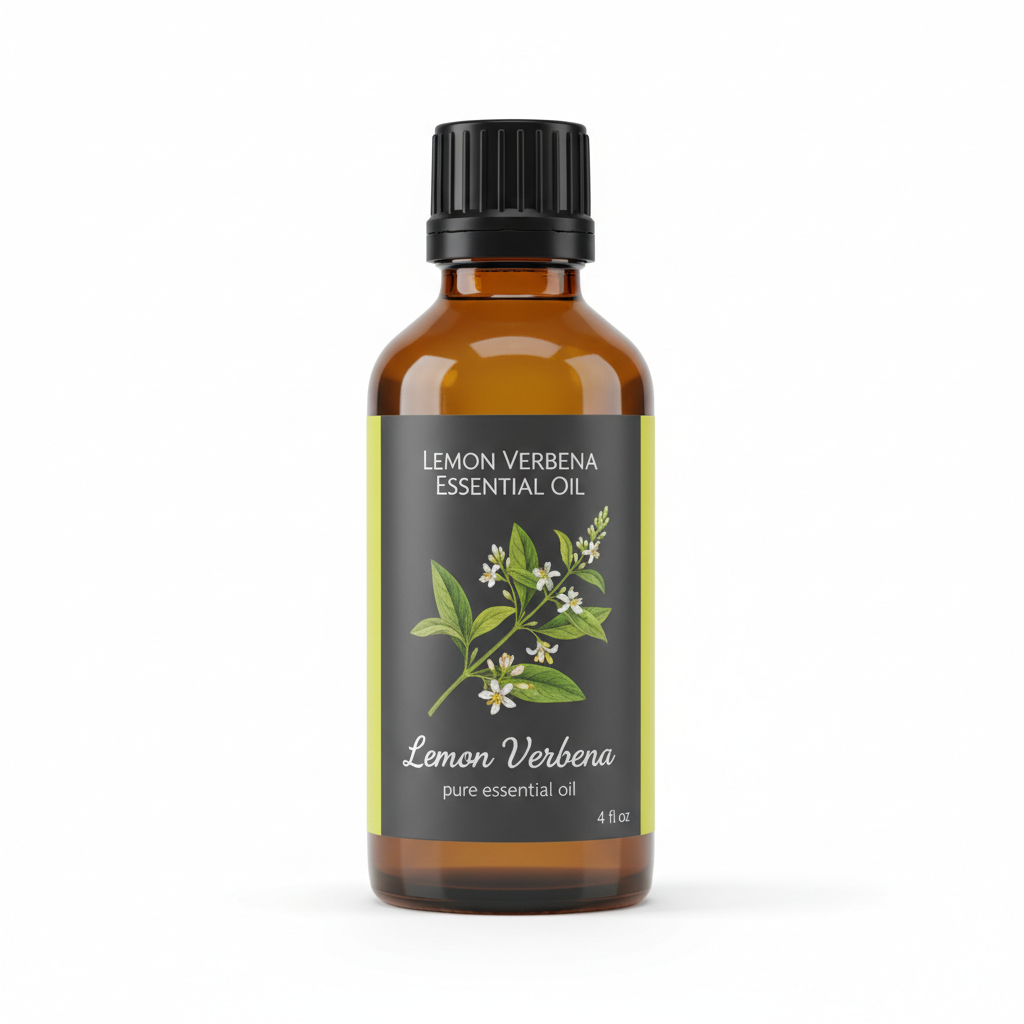
Lemon Verbena Essential Oil
Our own Lemon Verbena Essential Oil, in sizes from 0.5 oz to bulk.
From $12.99
Shop Now →The Basics: What Lemon Verbena Essential Oil Actually Is
What plant does lemon verbena essential oil come from?
Lemon verbena essential oil is steam-distilled from the leaves of Aloysia citrodora, a flowering shrub native to South America and now widely cultivated in Spain, Morocco, and Argentina. The plant belongs to the Verbenaceae family and is prized almost entirely for its extraordinary fragrance. For a deeper look at the botany, see our complete guide to what lemon verbena essential oil is.
Is lemon verbena the same as lemongrass or lemon balm?
No, these are three entirely separate plants with different botanical families, scent profiles, and chemical compositions. The confusion is understandable because all three share that bright, citrus-forward character. Our article on lemon verbena myths, verbena, vervain, and other mix-ups untangles the most common cases of mistaken identity.
How is lemon verbena essential oil extracted?
The most common method is steam distillation of the fresh or partially dried leaves. Some producers use solvent extraction to create an absolute, which yields a richer, more complex aromatic profile but is considered less suitable for skin application. When purchasing, always check the extraction method listed on the bottle so you know exactly what you are working with.
Why is lemon verbena essential oil so expensive?
The yield is genuinely low. It takes a significant quantity of fresh leaf material to produce even a small amount of essential oil, which makes production labor-intensive and costly. Add to that the relatively limited growing regions and the plant's sensitivity to frost, and you have a commodity that will almost always carry a premium price tag. If you see a very cheap "lemon verbena essential oil," treat that as a red flag worth investigating before purchasing.
Scent and Quality: What to Expect
What does lemon verbena essential oil smell like?
The scent is bright and sparkling with a clarity that most citrus oils cannot quite match. There is a green, slightly herbal quality underneath the lemony top note, and on dry-down many people detect a faint floral softness. For a thorough breakdown of the aromatic layers, our lemon verbena scent profile guide covers it in full detail.
How can I tell if a lemon verbena essential oil is genuine?
Request a Gas Chromatography/Mass Spectrometry (GC/MS) report from the supplier. Authentic lemon verbena oil should show a characteristic profile of citral isomers (geranial and neral), limonene, and various oxygenated compounds. A reputable supplier will share this documentation readily. If a company cannot or will not provide it, that is worth noting.
Is adulteration common with lemon verbena essential oil?
Yes, adulteration is one of the most significant quality concerns in this particular oil. Because the genuine article is expensive and yield is low, some suppliers blend it with lemongrass oil or add synthetic citral to stretch the volume. This is exactly why sourcing from transparent suppliers and reviewing GC/MS data matters so much with lemon verbena specifically.
Does lemon verbena essential oil fade quickly?
Its top-note character means it does volatilize faster than base-note oils such as vetiver or sandalwood. In a diffuser blend or room spray, expect the brightness to peak early and soften within an hour or two. In a fixed carrier oil or wax, the scent tends to linger a bit longer because the carrier slows evaporation.
Safety and Skin Use
Is lemon verbena essential oil safe for skin?
Lemon verbena essential oil contains compounds that can cause photosensitization, meaning skin exposed to sunlight after topical use may become more sensitive to UV radiation. Always dilute properly in a suitable carrier oil (a standard starting point is 1 percent or lower for leave-on skin products), and avoid sun exposure on treated areas for at least 12 hours. Conduct a patch test before any broader skin application, and consult a qualified healthcare provider if you have any skin sensitivities.
What dilution ratio should I use for lemon verbena essential oil?
For leave-on products such as body lotions or serums, stay at or below 1 percent (roughly 6 drops per ounce of carrier). For rinse-off products such as shower gels, up to 2 percent is more commonly cited in industry safety guidelines. Always refer to the most current published safety data from organizations such as IFRA, and consult a certified aromatherapist for personalized guidance.
Can children or people who are pregnant use lemon verbena essential oil?
This is genuinely a question for a qualified healthcare provider, not a product FAQ. As a general principle, essential oil safety guidelines recommend extra caution with young children, people who are pregnant, and people who are nursing. Please seek personalized advice from a healthcare professional before using any essential oil in these circumstances.
Can I use lemon verbena essential oil neat, without dilution?
Applying undiluted essential oils directly to skin is not considered best practice by most aromatherapy safety bodies, and lemon verbena is no exception. The photosensitizing potential and concentrated nature of the oil make proper dilution genuinely important here, not just a precaution for beginners. Dilute every time.
Lemon Verbena Essential Oil Benefits and Everyday Uses
What are the main lemon verbena essential oil benefits in aromatherapy?
In an aromatic context, lemon verbena is prized for its uplifting, clarifying quality. People often reach for it during a midday slump or use it in a diffuser blend for a morning routine, reporting that the bright, green-citrus scent feels both energizing and grounding at once. These are personal and experiential observations, and individual responses to scent will always vary.
How do I use lemon verbena essential oil in a diffuser?
Start with 3 to 5 drops in an ultrasonic diffuser for a standard-sized room, and run it in intervals of 30 to 60 minutes rather than continuously. Lemon verbena pairs especially well with other bright botanicals, and because the scent fades relatively quickly, shorter diffusion sessions often feel more satisfying than long ones. Good ventilation in the room is always worth having.
Can I add lemon verbena essential oil to a bath?
You can, but essential oils do not disperse safely in water on their own. Always pre-dilute your lemon verbena oil in a dispersant such as a carrier oil, full-fat milk, or a bath salts base before adding it to bathwater. Given the photosensitizing potential, an evening soak rather than a daytime one is a sensible choice.
Is lemon verbena essential oil useful in skincare or cosmetic formulating?
It is used at low concentrations in high-end fragrance and cosmetic formulations, primarily for its scent contribution. Its aromatic clarity can lift a blend that might otherwise skew too heavy or earthy. Cosmetic formulators do need to observe IFRA usage guidelines carefully given the photosensitizing compounds present in the oil.
Blending and Formulation
What does lemon verbena essential oil blend well with?
Lemon verbena harmonizes beautifully with floral oils such as neroli, rose absolute, and ylang-ylang, where it adds brightness without turning sharp. Woody base notes like cedarwood or sandalwood give it something to anchor to, helping the scent last longer in a blend. Herbaceous companions such as rosemary or basil echo its own green quality in interesting ways.
Can I use lemon verbena essential oil in candle making?
Essential oils generally have lower flash points than synthetic fragrance oils, which affects how well the scent performs and at what temperatures it is safe to work with. Lemon verbena essential oil can be used in candles, but you will want to check its flash point against the temperature of your wax and follow all standard candle-making safety protocols. Many candle makers find that blending it with a complementary fragrance oil helps extend the throw.
Does lemon verbena essential oil work in cold-process soap?
Citrus-forward oils, including lemon verbena, are known to fade quickly in cold-process soap due to the high pH environment of the saponification process. Many formulators anchor the scent by blending lemon verbena with more stable companions or by adding a fixative such as a small amount of a resinous base note. Testing your blend in a small batch before committing to a full pour is always a sound approach.
Storage and Shelf Life
How should I store lemon verbena essential oil?
Store it in a dark glass bottle (amber or cobalt) in a cool, consistent-temperature location away from direct light and heat. Essential oils are vulnerable to oxidation, and temperature fluctuations accelerate that process. A cupboard or dedicated storage box works well; a refrigerator can work too if the oil is allowed to warm to room temperature before use.
What is the shelf life of lemon verbena essential oil?
Under good storage conditions, expect a shelf life of around 1 to 2 years, possibly a bit longer for an oil that has been kept meticulously. Citral-rich oils like lemon verbena are more prone to oxidation than many others, so proper storage genuinely extends usable life here. Smell the oil periodically: an off, flat, or sour note is usually a reliable sign that oxidation has advanced.
Can I use lemon verbena essential oil past its best-by date?
An oxidized essential oil can be more likely to cause skin sensitivity, so using an old or degraded oil on skin is not advisable. For diffusing purposes only, some people continue using slightly aged oils if the scent still reads as pleasant, though the aromatic quality will have diminished. When in doubt, the safest choice is to replace it.
Sourcing and Shopping
Where is the best lemon verbena essential oil produced?
Spain and Morocco are considered two of the most reputable producing regions, valued for their climate conditions and established distillation expertise with this crop. Argentinian lemon verbena oil also has a strong reputation among formulators. Origin matters, but consistent quality from a specific producer matters more than geography alone, so always look for GC/MS documentation regardless of where the oil comes from.
What should I look for on the label when buying lemon verbena essential oil?
A trustworthy label should include the full Latin botanical name (Aloysia citrodora), the country of origin, the extraction method, the plant part used (leaf), and a lot or batch number that links to testing documentation. Vague labels that say only "lemon verbena oil" without any supporting detail are worth approaching with caution. Transparency from a supplier is usually a reliable proxy for quality.
Still have questions that are not covered here? Explore our full resource library, starting with the complete guide to lemon verbena essential oil, for everything from cultivation to cosmetic use.