Lemon Verbena Diffuser Blends: 10 Crisp, Elegant Recipes
Lemon verbena essential oil has a reputation that precedes it. Brighter than lemongrass, more refined than lemon, and far more complex than lime, it carries a crystalline citrus character that perfumers and home blenders alike find irresistible. It also happens to be a slightly difficult oil to pair well. Its sharpness can overwhelm, and its fleeting top-note quality means it needs a careful anchor.
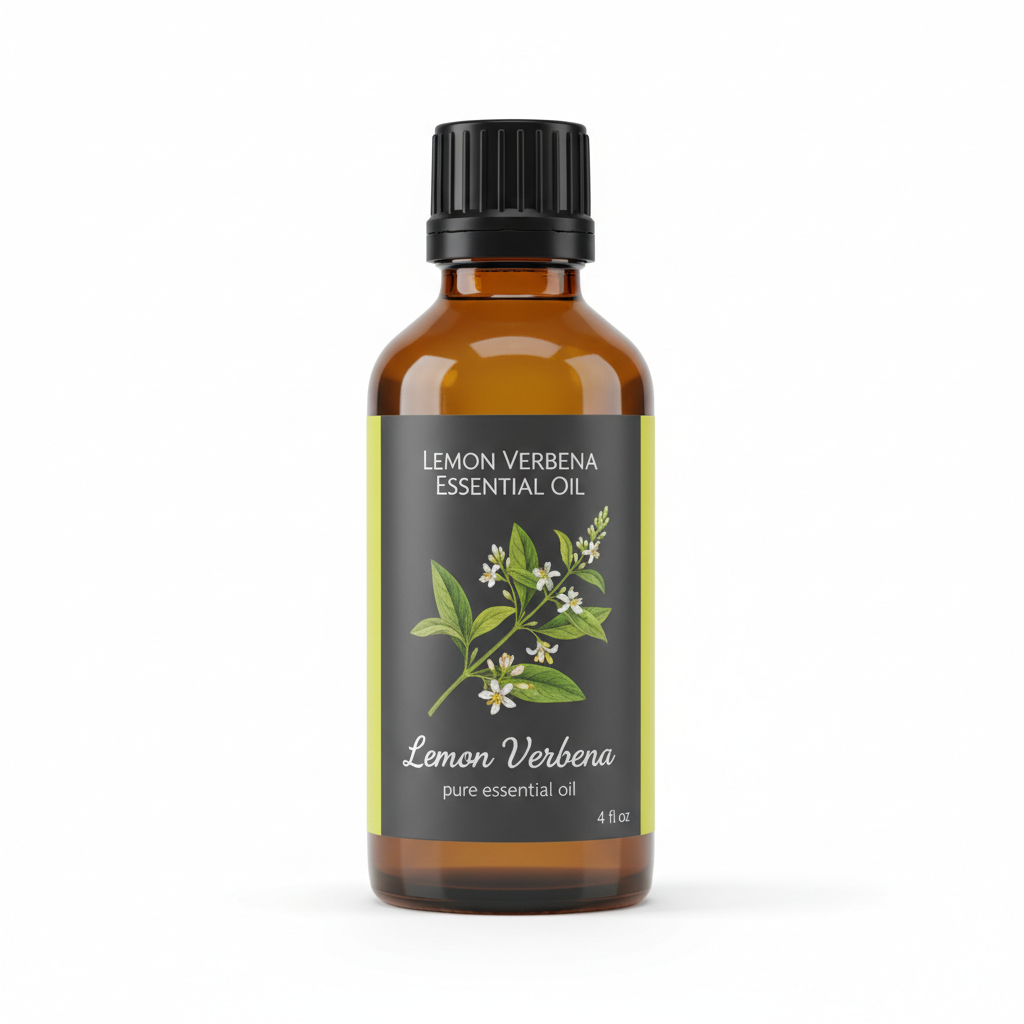
Lemon Verbena Essential Oil
Our own Lemon Verbena Essential Oil, in sizes from 0.5 oz to bulk.
From $12.99
Shop Now →That anchor, in every recipe below, is frankincense carterii. Together, these two oils form the backbone of some of the most sophisticated lemon verbena diffuser blends you can make at home. This guide walks through ten verbena diffuser recipes, the reasoning behind the carterii choice, full drop counts, blending steps, and everything you need to blend safely and enjoyably.
Why Frankincense Carterii? A Quick Character Study
There are several frankincense species worth knowing: serrata from India, sacra from Oman, frereana from Somalia, neglecta and rivae from East Africa. Each has its own aromatic identity. Frankincense carterii, sourced primarily from northern Somalia and Ethiopia, sits in a particularly useful aromatic position for citrus blending.
Its scent profile combines a clean, slightly sweet resinous warmth with a faintly lemony top note of its own. Unlike the deeper, smokier character of sacra, or the dry, piney quality of serrata, carterii is approachable and almost airy. That citrus-adjacent warmth is exactly what lemon verbena needs beneath it: a base that doesn't compete, but quietly completes.
Carterii also diffuses beautifully. Its lighter molecular weight means it doesn't sit heavily in a room the way some resins can. The result is a blend that feels expansive rather than dense, which suits lemon verbena's bright, uplifting character perfectly. For elegant citrus blends built around verbena, carterii is the frankincense to reach for.
Before You Start: Blending Basics and Safety Notes
Diffuser Use: What You Need to Know
All ten recipes below are formulated for use in an ultrasonic or nebulizing diffuser. Diffuser blends are not applied to skin, so standard dilution ratios don't apply in the same way. That said, a few practical rules keep your experience both safe and enjoyable:
- Diffuse in a well-ventilated room, not a sealed space.
- Run your diffuser in intervals of 30 to 60 minutes rather than continuously.
- Keep pets, particularly cats and birds, out of the diffusing area. Certain essential oils may be poorly tolerated by companion animals.
- Children under 10 and anyone with respiratory sensitivities should not be in a heavily diffused space. Consult a qualified healthcare provider if you have concerns.
- Lemon verbena oil contains citral, which can be sensitizing at high concentrations. In diffuser blends, this is a low-risk context, but keep the room ventilated.
Skin Application Disclaimer (If You Adapt These Blends)
These recipes are written for diffuser use only. If you want to adapt any blend for a skin application (such as a body oil or bath blend), start with a 1% to 2% dilution in a carrier oil and perform a patch test: apply a small amount to the inner forearm, wait 24 hours, and check for any reaction before broader use. For more on skin-safe citrus blending, see our guide to DIY lemon verbena bath oil.
Storage and Shelf Life
Pre-mixed diffuser blends should be stored in small amber or cobalt glass bottles with tight-fitting caps, away from direct sunlight and heat. Properly stored, a blend using lemon verbena and frankincense carterii will keep its aromatic quality for 12 to 18 months. Citral-rich oils like lemon verbena oxidize faster than resins, so blending in small batches (5 to 10 ml at a time) is practical advice. Label every bottle with the blend name and date.
How to Blend: Step-by-Step Instructions
- Gather your materials. You'll need your essential oils, a small amber glass bottle (5 ml or 10 ml), a dropper or pipette, and a label.
- Add the heaviest or most anchoring oils first. For these blends, that means frankincense carterii goes in before lemon verbena.
- Add remaining oils in order of weight (base to top notes).
- Cap and roll gently between your palms for 20 to 30 seconds. Do not shake vigorously; rolling integrates the oils without introducing air.
- Let the blend rest for 24 hours before first use. The oils will marry and the overall scent will shift and soften slightly.
- Add to your diffuser according to its manufacturer's recommendations, typically 5 to 10 drops of your pre-mixed blend per water fill.
For a deeper introduction to working with lemon verbena oil across different applications, the ultimate blending guide for lemon verbena covers ratios, note structures, and pairing logic in full detail.
The 10 Lemon Verbena Diffuser Blends
Each recipe below lists drops for a 5 ml pre-mixed concentrate. Use 5 to 10 drops of the concentrate per diffuser fill. Milliliter equivalents are approximate, based on a standard drop size of 0.05 ml.
1. Morning Clarity
A crisp, clean opener with a grounded warmth underneath. Ideal for a bright start to a work-from-home morning.
| Oil | Drops | Approximate ml |
|---|---|---|
| Lemon verbena | 12 | 0.60 ml |
| Frankincense carterii | 6 | 0.30 ml |
| Bergamot (bergapten-free) | 6 | 0.30 ml |
| Spearmint | 4 | 0.20 ml |
2. Coastal Study
A quiet, focused atmosphere with a faint oceanic suggestion from amyris and a whisper of vetiver depth.
| Oil | Drops | Approximate ml |
|---|---|---|
| Lemon verbena | 10 | 0.50 ml |
| Frankincense carterii | 8 | 0.40 ml |
| Amyris | 6 | 0.30 ml |
| Vetiver | 2 | 0.10 ml |
3. Herb Garden After Rain
Green, damp, and gently earthy. Rosemary ct. camphor gives structure; lavender softens the whole thing.
| Oil | Drops | Approximate ml |
|---|---|---|
| Lemon verbena | 10 | 0.50 ml |
| Frankincense carterii | 6 | 0.30 ml |
| Rosemary ct. camphor | 4 | 0.20 ml |
| True lavender (40/42) | 4 | 0.20 ml |
| Clary sage | 2 | 0.10 ml |
4. Golden Afternoon
Warm and luminous. Sandalwood Australian lends a creamy softness that carterii and verbena lift elegantly.
| Oil | Drops | Approximate ml |
|---|---|---|
| Lemon verbena | 8 | 0.40 ml |
| Frankincense carterii | 8 | 0.40 ml |
| Sandalwood (Australian) | 6 | 0.30 ml |
| Sweet orange | 4 | 0.20 ml |
5. White Linen
Clean and almost floral. This is the blend for freshly aired rooms and slow weekend mornings.
| Oil | Drops | Approximate ml |
|---|---|---|
| Lemon verbena | 12 | 0.60 ml |
| Frankincense carterii | 5 | 0.25 ml |
| Geranium (Egyptian) | 5 | 0.25 ml |
| Palmarosa | 4 | 0.20 ml |
6. Ink and Citrus
A bookish, contemplative blend. Cedarwood Virginia adds a pencil-shaving quality that makes carterii and verbena feel intellectual somehow.
| Oil | Drops | Approximate ml |
|---|---|---|
| Lemon verbena | 10 | 0.50 ml |
| Frankincense carterii | 7 | 0.35 ml |
| Cedarwood Virginia | 6 | 0.30 ml |
| Black pepper CO2 | 3 | 0.15 ml |
7. Silk Road
Spiced, resinous, and still bright. A complex blend that suits evening diffusing when you want something with more presence.
| Oil | Drops | Approximate ml |
|---|---|---|
| Lemon verbena | 8 | 0.40 ml |
| Frankincense carterii | 8 | 0.40 ml |
| Cardamom | 4 | 0.20 ml |
| Myrrh | 3 | 0.15 ml |
| Patchouli (light) | 3 | 0.15 ml |
8. Evening Wind-Down
Soft and still. The verbena keeps it from going too heavy, while carterii and Roman chamomile create a genuinely restful atmosphere for the hour before bed.
| Oil | Drops | Approximate ml |
|---|---|---|
| Lemon verbena | 8 | 0.40 ml |
| Frankincense carterii | 8 | 0.40 ml |
| Roman chamomile | 4 | 0.20 ml |
| Lavender (fine) | 4 | 0.20 ml |
9. Green Citrus Mist
Light, lively, and distinctly fresh. This is a good introductory blend for anyone new to lemon verbena diffuser blends.
| Oil | Drops | Approximate ml |
|---|---|---|
| Lemon verbena | 12 | 0.60 ml |
| Frankincense carterii | 5 | 0.25 ml |
| Lime (steam-distilled) | 6 | 0.30 ml |
| Basil (linalool type) | 3 | 0.15 ml |
10. The Connoisseur's Blend
Reserved for days when you want something genuinely exceptional. Neroli and ylang ylang in small quantities give this its floral depth, while carterii and verbena keep the character precise and elegant. This is what elegant citrus blends aspire to.
| Oil | Drops | Approximate ml |
|---|---|---|
| Lemon verbena | 10 | 0.50 ml |
| Frankincense carterii | 8 | 0.40 ml |
| Neroli | 4 | 0.20 ml |
| Ylang ylang (extra) | 2 | 0.10 ml |
| Cedarwood Atlas | 2 | 0.10 ml |
Three Variations Worth Exploring
Variation 1: Carterii-Forward Version of Any Blend
If you find lemon verbena's brightness a little sharp for an evening room, reduce the verbena by 2 drops in any recipe and increase the carterii by the same amount. The blend becomes warmer and more resinous, with the citrus present as an accent rather than a lead note. This works particularly well with Silk Road and Evening Wind-Down.
Variation 2: Verbena-Forward (The Bright Edit)
For daytime use in a large or open-plan space, increase lemon verbena by 3 drops and reduce the base-note oils proportionally. The carterii still provides its characteristic warmth, but the overall impression is lighter and more immediate. Morning Clarity and Green Citrus Mist suit this adjustment especially well.
Variation 3: Solid Perfume Base Adaptation
Select any of the ten blends and use the same proportional ratios in a 3% dilution in a beeswax and jojoba solid perfume base. Keep the total essential oil content at or below 3% of the final product weight, conduct a patch test before extended skin contact, and note that citrus-forward blends may increase photosensitivity. Avoid sun exposure on application areas. If you're drawn to the idea of lemon verbena beyond the diffuser, the guide on making lemon verbena infused oil from garden leaves opens up another approach entirely.
Pairing Notes: What Makes Carterii and Verbena Work
The combination succeeds for one clear reason: complementary citrus notes. Carterii's own faint citrus lift mirrors lemon verbena's dominant character without duplicating it. The result is a citrus accord that feels layered rather than flat. Add the resinous warmth that carterii carries into the drydown, and you have a structure that keeps verbena's brightness present long after the initial diffusion burst.
Most citrus-dominant verbena diffuser recipes fall apart in 20 minutes because there's nothing to hold the fragrance up. Frankincense carterii solves that problem quietly and elegantly. It's the reason this particular species shows up in every blend in this collection.
"Lemon verbena without an anchor is a beautiful opening with nowhere to go. Carterii gives it somewhere to land."
Experiment freely with the ten recipes above. Note what shifts when you adjust ratios, swap a secondary oil, or let a blend rest for 48 hours instead of 24. Good blending is iterative, and lemon verbena rewards patience. The more time you spend with it, the better you understand what it needs.