
Cooking Inspiration: How Chefs Use Lemon Verbena Leaf, and Where the Oil Fits
Walk through the kitchen garden of almost any serious French or Spanish cook and you will find a lemon verbena plant tucked somewhere near the door. The fresh leaves have flavored everything from summer tisanes to elegant desserts for centuries. But the plant is seasonal, the fresh leaf wilts fast, and dried versions lose much of their brightness within weeks. That is where lemon verbena oil enters the conversation, carefully and with a few important caveats.
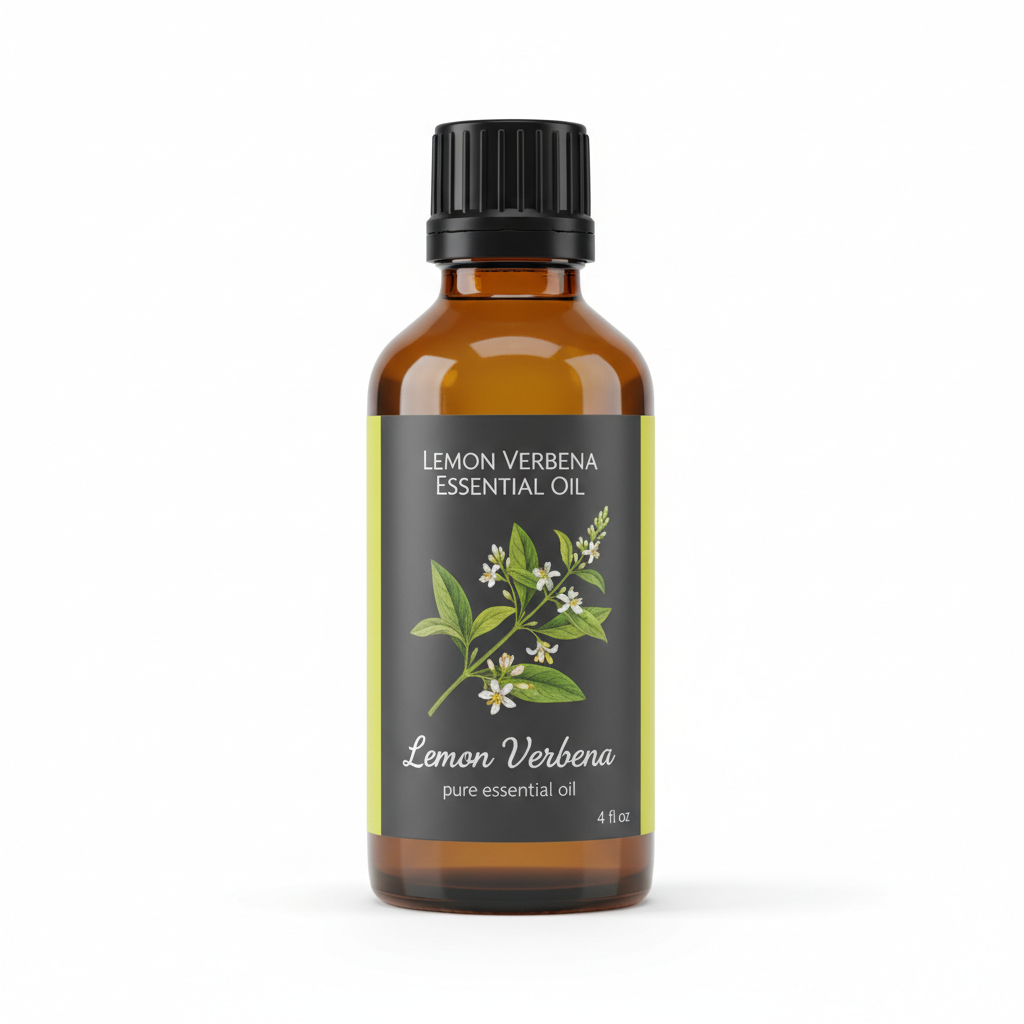
Lemon Verbena Essential Oil
Our own Lemon Verbena Essential Oil, in sizes from 0.5 oz to bulk.
From $12.99
Shop Now →This article is for curious home cooks and culinary professionals who want to understand how chefs work with the fresh and dried leaf, and how food-grade lemon verbena oil can occasionally step in. We will cover sourcing, safety, technique, and the specific applications where the oil genuinely earns its place.
First, a Critical Distinction: Not All Lemon Verbena Oil Is Edible
Before any technique discussion, this point deserves its own section. The question of lemon verbena oil edible use hinges entirely on which product you are holding.
There are two main categories:
- Food-grade lemon verbena flavor oil or extract: Produced under food-safety standards, labeled for culinary use, and tested for purity and contaminants. These are appropriate for cooking.
- Aromatherapy or cosmetic-grade essential oil: Steam-distilled or cold-pressed for aromatic and topical use. These are highly concentrated and not tested or approved as food ingredients. Do not cook with them.
Always check the label. A food-grade product will state that it is intended for consumption and will list a serving size or usage guideline. If a bottle says "for aromatherapy use only" or "not for internal use," respect that designation. Using a cosmetic-grade oil in food is not safe, and no amount of culinary technique changes that.
For a broader look at how lemon verbena oil is used across aromatic and cosmetic applications, the ultimate guide to using and blending lemon verbena oil is a useful companion read.
How Chefs Actually Use the Fresh Leaf
Understanding the leaf helps you understand where the oil fits and where it does not. Fresh lemon verbena leaves deliver a bright, almost crystalline citrus note with a faint floral undertone. The scent is cleaner than lemon balm and more complex than a simple lemon zest. Chefs reach for it in specific situations.
Infusions and Syrups
The most common professional application is infusion. Bruised or roughly torn leaves are steeped in warm (not boiling) liquid, which draws out the volatile aromatic compounds without scorching them. Simple syrups, cream bases for panna cotta, and warm poaching liquids for stone fruit are all classic candidates.
The standard approach in pastry kitchens is to heat the liquid to around 70 to 80 degrees Celsius, add a generous handful of leaves, cover, and let steep for 15 to 20 minutes. Then strain, taste, and proceed. The result is a subtly perfumed base that does not shout "lemon" but layers complexity into the finished dish.
Fresh Leaf as a Finishing Garnish
Young, tender leaves can be sliced into a fine chiffonade and scattered over fruit salads, cold soups, or even a simple plate of sliced tomatoes with good olive oil. The leaf is edible but slightly fibrous, so this approach works best when the leaves are very fresh and very young.
Dry Rubs and Salts
Dried lemon verbena crumbled into a finishing salt is a technique you will find in modernist and farm-to-table kitchens alike. The dried leaf loses some brightness but retains a pleasant herbal citrus note that works well with grilled fish or roasted vegetables.
Where Food-Grade Lemon Verbena Oil Fits In
Using lemon verbena oil for cooking is not about replicating what the fresh leaf does. It is about solving a specific problem: the need for a consistent, shelf-stable, intensely aromatic source of that flavor when fresh leaf is unavailable or when precision matters.
Here are the applications where a food-grade oil genuinely performs well.
Flavoring Cold Preparations
Vinaigrettes, cold sauces, and no-bake confections are ideal candidates. Because there is no heat involved, the delicate aromatic compounds in the oil are preserved exactly as intended. A single small drop (always start with one drop) stirred into a citrus vinaigrette can add a lifted, almost perfumed note that complements the acidity without competing with it.
Finishing Warm Dishes Off the Heat
Adding food-grade lemon verbena oil directly to a simmering pot is not recommended. Heat degrades the aromatic compounds quickly, and the result will be muted or slightly altered in character. Instead, incorporate it after the pan comes off the heat, stirring in just before plating. This preserves the fragrance and keeps the flavor true.
Confectionery and Chocolatework
Ganaches, truffle centers, and fondant fillings absorb oil-based flavors readily because of their fat content. Professional chocolatiers who work with lemon verbena often use a food-grade oil or extract precisely because the concentration is consistent from batch to batch, which matters when you are scaling a confectionery recipe.
Beverages and Cocktails
A drop of food-grade lemon verbena oil stirred into a simple syrup before it is used in a cocktail or mocktail can create a striking aromatic effect. Because the oil disperses into the sugar syrup before dilution, it integrates more evenly than adding it directly to a glass of liquid.
Step-by-Step: Lemon Verbena Infused Simple Syrup (Fresh Leaf Method)
This is the foundational technique for lemon verbena in the kitchen. Master this and you have a base for dozens of applications.
What You Need
- 200g (1 cup) caster sugar or white granulated sugar
- 200ml (just under 1 cup) filtered water
- 20 to 25 fresh lemon verbena leaves, rinsed and lightly bruised
- Small saucepan
- Heatproof bowl or jug
- Fine mesh strainer
- Sterilized glass jar with lid
Steps
- Combine sugar and water. Place sugar and water in a small saucepan over medium-low heat. Stir gently until the sugar fully dissolves. Do not boil at this stage.
- Remove from heat at the right moment. As soon as the sugar is dissolved and the liquid just begins to shimmer (around 75 to 80 degrees Celsius if you are using a thermometer), remove the pan from the heat entirely. This temperature draws out volatile aromatics without destroying them.
- Add the leaves immediately. Drop in the bruised lemon verbena leaves and press them gently under the surface with a spoon. Cover the saucepan with a lid or plate to trap the aromatic steam.
- Steep for 15 to 20 minutes. Do not stir. Let the leaves sit undisturbed. The syrup will take on a faint pale gold or very faintly green tinge depending on the leaves.
- Taste before straining. At 15 minutes, lift the lid and smell. Then taste a small amount with a clean spoon. The flavor should be present but not overwhelming. If you want more intensity, replace the lid and wait another 5 minutes.
- Strain into your jar. Pour the syrup through a fine mesh strainer into a sterilized jar. Press the leaves lightly to extract remaining liquid, then discard the spent leaves.
- Cool and store. Allow the syrup to cool completely before sealing. Refrigerate and use within two to three weeks.
Tips and Common Mistakes
- Do not boil the leaves. Boiling drives off the most delicate aromatic compounds within seconds. You will be left with a flat, slightly grassy result instead of the bright citrus you are after.
- Use young leaves when possible. The smaller, lighter green leaves at the top of the stem carry more aromatic oil than the older, larger leaves further down.
- Do not over-steep. Beyond 25 minutes, the flavor can shift from bright and citrusy to slightly bitter and herbaceous.
- Scale with care. More leaves do not always mean more flavor. If you add too many leaves to a small amount of syrup, bitterness from the plant material can overwhelm the aromatic brightness.
Step-by-Step: Using Food-Grade Lemon Verbena Oil in a Vinaigrette
What You Need
- 60ml (4 tablespoons) good quality extra virgin olive oil
- 20ml (about 1.5 tablespoons) white wine vinegar or Champagne vinegar
- 1 teaspoon honey or light agave syrup
- Pinch of fine sea salt
- 1 small drop of food-grade lemon verbena flavor oil (measured with a toothpick if needed for precision)
- Small bowl and whisk, or a jar with a tight lid for shaking
Steps
- Combine the acid and sweetener first. Whisk together the vinegar, honey, and salt until the salt dissolves.
- Add the oil drop. Before adding your olive oil, stir the single drop of food-grade lemon verbena oil into the vinegar mixture. This helps it disperse more evenly during emulsification.
- Emulsify. Slowly drizzle in the olive oil while whisking constantly, or add everything to a jar and shake firmly for 30 seconds.
- Taste and adjust. The lemon verbena note should be present but restrained, a background brightness rather than a dominant flavor. If it is too subtle, add a second drop. If it is too strong, increase the olive oil slightly.
- Use immediately or within a few hours. The aromatic character is most vivid when fresh. Store any remainder in the refrigerator for up to two days.
Flavor Pairing: What Works with Lemon Verbena
Lemon verbena in the kitchen performs best when paired with flavors that either complement its bright citrus register or gently contrast it with richness or earthiness.
| Category | Works Well With | Why It Works |
|---|---|---|
| Stone fruit | Peach, apricot, nectarine | The floral citrus note lifts the natural sweetness |
| Dairy | Cream, creme fraiche, white chocolate | Fat carries and rounds out the aromatic compounds |
| Herbs | Mint, tarragon, basil | Shares a fresh, green aromatic family |
| Seafood | Scallops, white fish, crab | Citrus brightness cuts through delicate richness |
| Vinegar | White wine, Champagne, rice wine | Acidity echoes and amplifies the citrus register |
For more pairing ideas beyond the kitchen context, the article on 12 refined aromatic partners for lemon verbena explores how this note interacts with other botanicals. And if you are working with lemon verbena oil in seasonal contexts, lemon verbena for spring and summer offers further inspiration for how the oil and the leaf each come into their own during warmer months.
A Few Honest Notes on Limitations
Lemon verbena oil for cooking is not a pantry staple for most home cooks, and it does not need to be. The fresh leaf, when available, is almost always preferable in culinary applications because it delivers texture, visual appeal, and a complexity that an extracted oil cannot fully replicate.
The oil earns its place in specific, defined situations: off-season access, confectionery precision work, cold preparations where freshness matters, and situations where a single consistent aromatic note is needed without plant material. Outside those contexts, grow a plant or source fresh leaves from a specialty supplier and use them directly.
What the oil offers is precision and shelf stability. What the fresh leaf offers is life, variation, and a certain irreplaceable quality that anyone who has ever bruised a verbena leaf between their fingers will immediately recognize. Both have a seat at the table. Knowing which to reach for, and when, is simply a matter of good kitchen judgment.