A Signature Verveine Garden Blend for the Diffuser
There is a particular pleasure in building a diffuser blend from the ground up. Not reaching for a pre-mixed formula, but choosing each oil with intention, understanding what it contributes, and then watching the aroma that emerges become something greater than its individual parts. This guide is built around one of the most rewarding combinations in a citrus blender's repertoire: lemon verbena paired with frankincense serrata, anchored by a small cast of botanical companions that let both stars breathe.
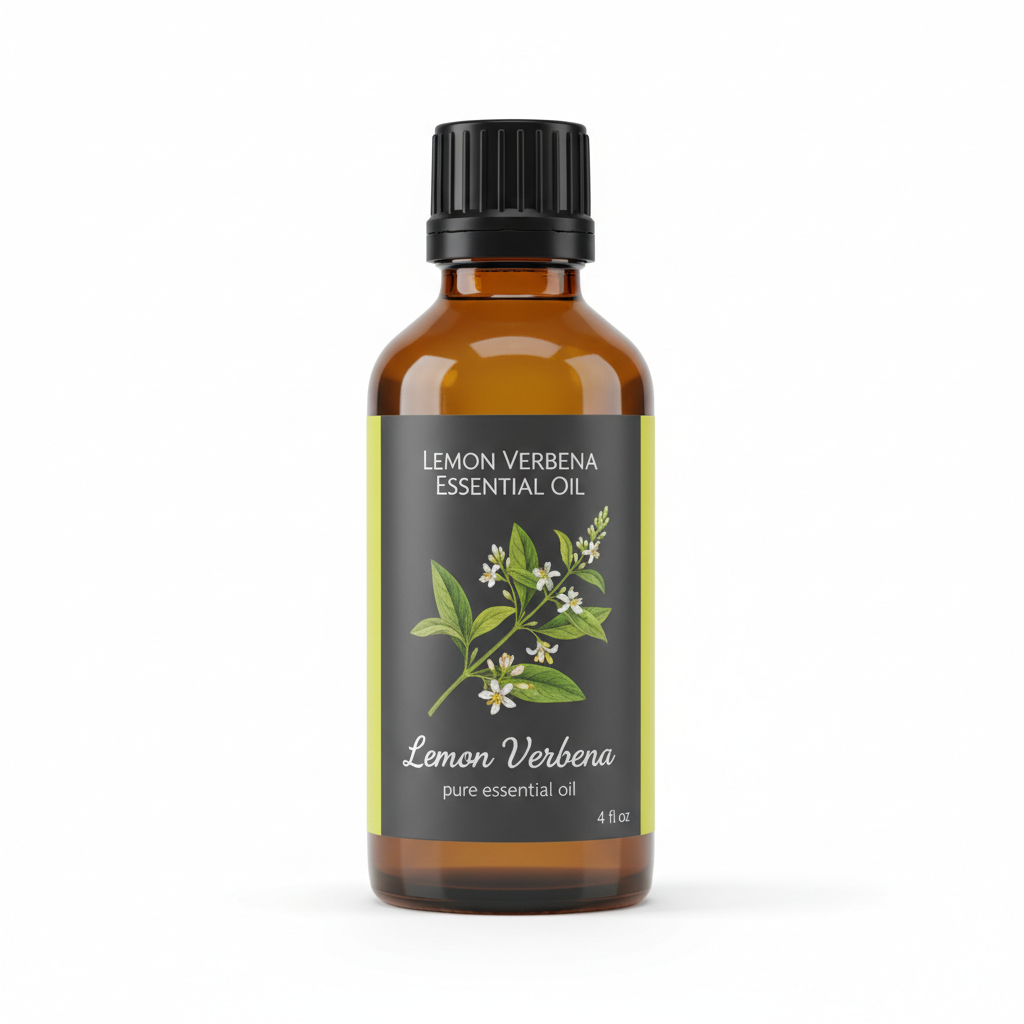
Lemon Verbena Essential Oil
Our own Lemon Verbena Essential Oil, in sizes from 0.5 oz to bulk.
From $12.99
Shop Now →The result is what we call a verveine garden blend. Crisp and green at the top, softly resinous underneath, with a middle register that genuinely conjures the experience of walking through a sun-warmed herb garden in the early afternoon. If you have been exploring lemon verbena diffuser blends and want to take your practice further, this signature citrus blend is a natural next step.
Why Frankincense Serrata?
Several frankincense species earn a place in an aromatic blender's kit, and each has its own personality. Frankincense serrata deserves a closer look here, because its character suits lemon verbena in ways that the more commonly discussed carterii or sacra do not quite match.
Serrata is sourced from Boswellia serrata, a tree native to the dry forests of India, sometimes called Indian frankincense or shallaki in its country of origin. The resin has been harvested there for centuries, and the essential oil distilled from it carries a profile that is noticeably warmer and woodier than the sharp, almost medicinal brightness of Omani sacra, and softer than the rich, balsamic depth of carterii. Serrata sits in a middle space: slightly sweet, gently earthy, with a faint pencil-cedar quality that blends seamlessly into green, herbaceous accords.
That cedar-and-earth quality is precisely what lemon verbena needs. Verbena on its own is vivid and brilliant, almost fizzing with citral freshness. It is a top note that commands attention immediately but can fade quickly in a diffuser if nothing in the blend gives it a foundation to rest on. Serrata's warm woodiness acts as that foundation without competing. It does not push the verbena aside the way a heavy resin might. It simply extends it, giving the citrus-green accord time and depth to unfold.
You can explore our sourced frankincense serrata if you want to compare it directly with other varieties before you blend. The difference in the bottle is subtle; the difference in a finished diffuser blend is noticeable.
The Full Blend: Ingredients and Measurements
This formula is scaled for a standard 10 ml blend bottle, which you will dilute into your diffuser according to the manufacturer's water-to-oil ratio. All drop counts are based on a standard 20-drop-per-milliliter convention. Measurements in milliliters are provided for those blending with a pipette or precision dropper.
| Oil | Drops | Milliliters (approx.) | Role in Blend |
|---|---|---|---|
| Lemon verbena essential oil | 30 | 1.5 ml | Top note, green citrus signature |
| Frankincense serrata essential oil | 20 | 1.0 ml | Warm woody base, anchor |
| Petitgrain essential oil | 16 | 0.8 ml | Middle note, green-floral bridge |
| Lime essential oil (cold-pressed) | 20 | 1.0 ml | Top note, bright citrus support |
| Cedarwood atlas essential oil | 10 | 0.5 ml | Base note, soft dry-wood depth |
| Clary sage essential oil | 4 | 0.2 ml | Herbal nuance, subtle warmth |
Total: 100 drops / 5.0 ml concentrate. Fill the remainder of your 10 ml bottle with a carrier oil (fractioned coconut oil works well) if you prefer a ready-to-dilute blend, or leave it as a pure essential oil concentrate and add drops directly to your diffuser water as needed.
Step-by-Step Blending Instructions
- Gather your materials. You will need a clean 10 ml amber or cobalt glass bottle, a dropper or pipette for each oil (or a clean glass dropper that you wipe between oils), and a strip of perfumer's blotter paper or a small square of unscented tissue for test evaluations.
- Start with the base notes. Add cedarwood atlas first, then frankincense serrata. Base notes are the heaviest molecules and will settle to the bottom of the bottle; adding them first means they disperse evenly as you layer lighter oils on top.
- Add the middle note. Drop in the petitgrain and the clary sage. Cap the bottle loosely and give it a gentle roll between your palms for ten seconds. This is not about shaking; it is about encouraging the oils to meet without introducing air bubbles that can accelerate oxidation.
- Add the top notes last. Lemon verbena and cold-pressed lime go in now. These are the most volatile components and benefit from being the final addition so their freshness is not diminished by prolonged exposure to the other oils during the blending process.
- Evaluate on a blotter. Place one drop on a blotter strip and wave it gently under your nose. Do not evaluate directly from the bottle opening; the concentration inside will be misleading. Notice the top notes first, then wait sixty seconds and smell again to sense how the middle and base notes follow.
- Let it marry. Cap the bottle, label it with the date and formula, and set it aside for at least 24 hours. This resting period allows the molecular structures to integrate. Many blenders find that a 48-hour rest produces a noticeably rounder, more cohesive aroma than evaluating immediately after mixing.
- Diffuse. Add 5 to 8 drops to your diffuser water reservoir per 100 ml of water, adjusting to your personal preference and room size. The garden diffuser blend is well-suited to rooms between 15 and 30 square meters.
Dilution, Patch Testing, and Safety Notes
This blend is formulated for diffuser use only. It is not intended for direct skin application without further dilution.
If you wish to adapt any portion of this signature citrus blend for topical use in a carrier oil, a dilution of 1% to 2% is a reasonable starting point for most adults (1% equals approximately 6 drops of essential oil per 30 ml of carrier oil). Lemon verbena in particular is potent, and some individuals find citrus-forward blends warrant a conservative approach on the skin.
Patch test protocol: Apply a small amount of the diluted blend to the inner forearm or the crook of the elbow. Leave undisturbed for 24 hours. If you notice any redness, warmth, or irritation, rinse with a plain carrier oil (not water) and discontinue use.
Cold-pressed lime oil carries a phototoxic potential due to naturally occurring furanocoumarins. When this blend is used in a diffuser, phototoxicity is not a concern. If you ever adapt it for topical use, substitute steam-distilled lime oil for the cold-pressed variety, or avoid sun and UV exposure on any treated skin for at least 12 hours after application.
Clary sage is generally considered best avoided during pregnancy. If you are pregnant or nursing, consult a qualified healthcare provider before using this or any essential oil blend.
Keep all essential oils out of reach of children and pets. Diffuse in well-ventilated spaces, and take breaks every 30 to 60 minutes of continuous diffusion.
Storage and Shelf Life
Store your blend bottle upright in a cool, dark location away from heat sources and direct sunlight. A drawer or small essential oil box works well. Amber or cobalt glass provides meaningful UV protection; clear glass does not.
Properly stored, this concentrate can be expected to perform well for 12 to 18 months. The top notes (lemon verbena and lime) will fade more quickly than the base, so blends that are older than a year may present as more woody and less citrus-bright. This is not spoilage; it is simply the natural arc of a citrus-forward blend over time.
If your blend begins to smell sharp, sour, or genuinely off rather than simply less bright, it has likely oxidized beyond its useful life. Oxidized oils are not suitable for diffusing or skin use; dispose of them and blend a fresh batch.
Label every bottle with the blend name, date, and full formula. Memory is unreliable; labels are not.
Variations on the Garden Blend
Variation 1: The Shaded Courtyard
For evenings when you want the blend to lean quieter and more contemplative, reduce the lemon verbena to 20 drops and increase the frankincense serrata to 28 drops. Add 6 drops of vetiver in place of the clary sage. The result is a garden blend that has moved from midday sun into a cool, shaded corner: citrus is still present but recedes behind a deeper, earthier resin-and-root accord. This variation suits a gentle evening wind-down diffusion session.
Variation 2: The Floral Hedgerow
To bring a floral dimension into the signature citrus blend, substitute the petitgrain for 14 drops of geranium bourbon and add 6 drops of palmarosa. Keep all other elements identical. Geranium bourbon introduces a rosy-green quality that connects naturally to verbena's own slight floral undertone, while palmarosa softens the overall accord and adds gentle sweetness. This variation tends to read as more summery and expressive, well-suited to a bright weekend morning in a sitting room or studio.
Variation 3: The Herbalist's Workbench
For those who enjoy a more distinctly herbal character, reduce the lime to 10 drops and add 8 drops of rosemary ct. verbenone and 4 drops of thyme linalool in place of the clary sage. The verbenone chemotype of rosemary carries a camphorous-green note that has a kinship with verbena's own aroma family, reinforcing the garden quality of the blend without duplicating it. Thyme linalool adds warmth. The overall effect is complex and slightly more assertive, best suited to a study or creative workspace.
For more ideas on building with lemon verbena as your anchor note, the ultimate guide to using and blending lemon verbena oil covers pairing principles and drop ratios in depth. And if you are curious about what drives quality differences in the raw material, the small grower harvest case study offers an honest look at how farming choices shape the oil you eventually drop into your diffuser.
A Few Final Notes on Developing Your Own Signature Blend
The formula above is a starting point, not a fixed destination. Every blender's nose is different, and the oils you have in your kit will vary in intensity depending on their origin, distillation method, and age. Trust your own evaluation. If your lemon verbena reads particularly bright and strong, dial it back by four or five drops and re-evaluate. If your serrata seems quiet and restrained in the bottle, give it an extra four drops and see what changes.
Blending is a practice of attention. The best verveine garden blend you will ever make is the one you have learned to adjust, not the one you followed perfectly from a page. Keep notes, be patient with the 24-hour marriage period, and diffuse with intention.